- Company Articles
- Products and Technology
- Product knowledge
- Factors to Consider When Selecting End Support for Roller Track Placon Mount with Stop

Factors to Consider When Selecting End Support for Roller Track Placon Mount with Stop
Related Product
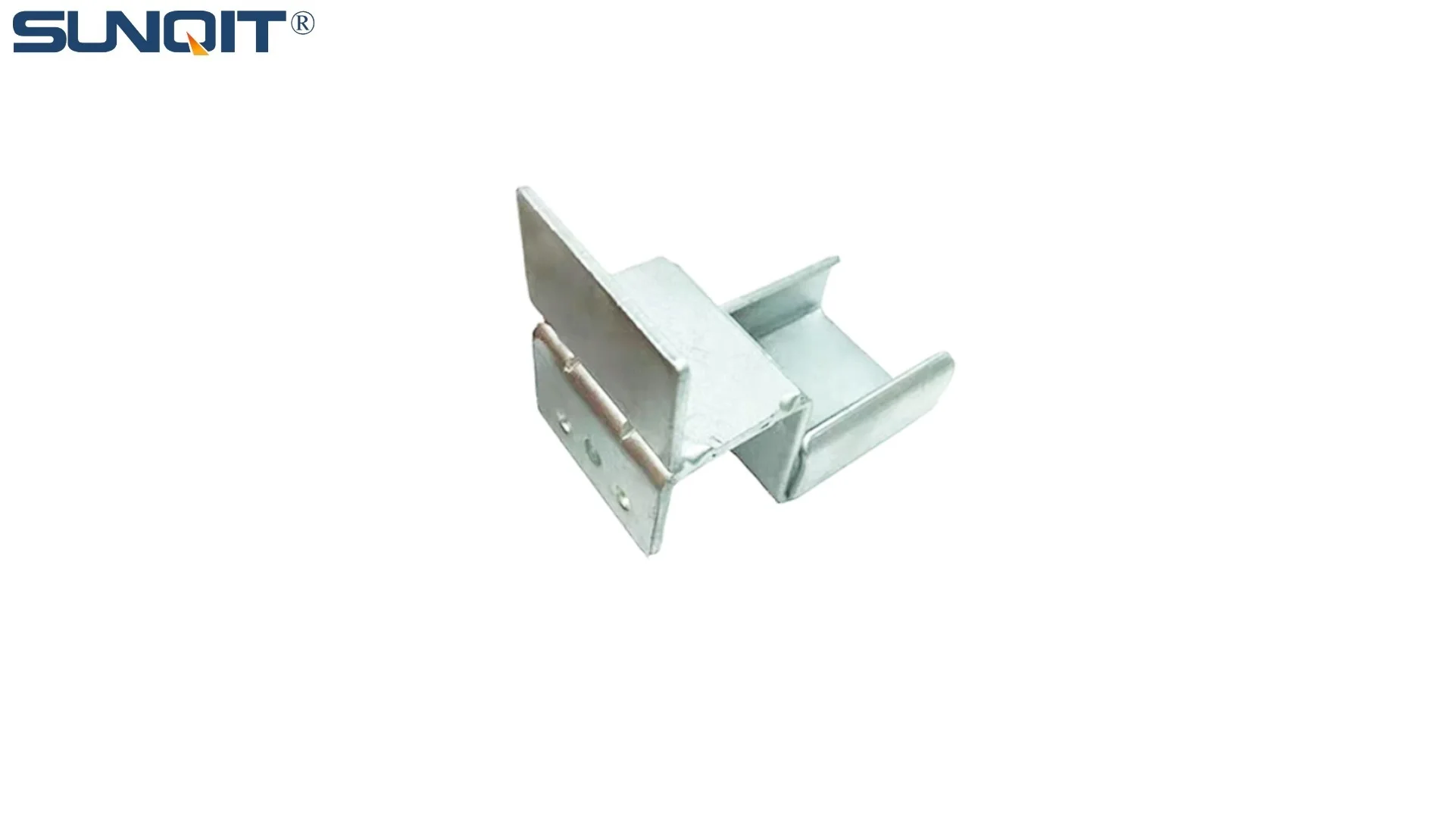
End Support for Roller Track Placon Mount with Stop
Roller track placon mount work as a connector for roller track and pipe or aluminum profile in rack syetem, it is a necessary parts in rack system which widely used in industrial plant and logistic,warehouse storage.
In the fast-paced world of manufacturing and logistics, every component in your workflow matters—especially the ones that keep things moving smoothly and safely. When it comes to roller track systems, the end support with a stop might seem like a small part, but it's the unsung hero that prevents spills, protects products, and keeps your operations on track. Whether you're setting up a new production line for 3C assembly or upgrading a medical device warehouse, choosing the right end support requires more than just picking a part off a shelf. Let's break down the key factors that will ensure your choice aligns with your needs, your industry, and your long-term goals.
1. Load Capacity: Know What You're Carrying
First things first: how much weight will your end support actually handle? This isn't just about the static weight of products sitting on the roller track—it's about the dynamic forces of items sliding, stopping, and even bouncing as they move through your facility. Take a busy automotive parts warehouse, for example: metal components weighing 30-50kg might glide down roller tracks multiple times per minute. If the end support isn't built to withstand that repeated impact, you're looking at bent brackets, failed stops, and worst-case scenario, damaged goods or worker injuries.
Start by calculating your maximum load. Consider both the heaviest single item and the cumulative weight if multiple products stack up (yes, that happens during peak production!). Then, add a safety margin—industry standards often recommend 20-30% above your calculated maximum to account for unexpected surges. For instance, if your typical load is 40kg, aim for an end support rated for at least 50kg. This isn't overkill; it's peace of mind.
| Load Range (kg) | Typical Application | End Support Recommendation |
|---|---|---|
| 0-20 | Small electronics, medical devices | Light-duty aluminum or plastic |
| 20-50 | 3C assembly components, automotive parts | Medium-duty aluminum or steel |
| 50+ | Heavy machinery parts, bulk materials | Heavy-duty steel with reinforced brackets |
Don't forget to factor in the direction of the load. If items are sliding downhill on an inclined roller track, the stop will face more force than on a flat track. In these cases, look for end supports with reinforced backplates or angled stop mechanisms that distribute force evenly.
2. Material Selection: Durability Meets Practicality
The material of your end support isn't just about strength—it's about how well it fits your environment and your budget. The most common options are aluminum, steel, and stainless steel, each with its own pros and cons. Let's dive into what makes each stand out.
Aluminum is a popular choice for many manufacturers, and for good reason. It's lightweight, resistant to rust, and easy to work with—perfect for lean systems where flexibility and quick adjustments are key. If your facility uses aluminum profile framing for workbenches or flow racks, an aluminum end support will integrate seamlessly, keeping your setup consistent and reducing compatibility headaches. Plus, aluminum's natural corrosion resistance makes it a solid pick for environments with moderate moisture, like food packaging or pharmaceutical warehouses.
Steel, on the other hand, is the heavyweight champion. When you need raw strength for those 50kg+ loads, steel end supports won't back down. They're tough, affordable, and ideal for high-impact areas like automotive assembly lines. The tradeoff? Steel is prone to rust if not coated, so you'll want to look for powder-coated or galvanized options if your space is humid or exposed to chemicals.
Stainless steel sits in the premium category. It offers the best of both worlds: strength like steel and corrosion resistance like aluminum. This makes it indispensable in strict environments like medical device manufacturing or cleanrooms, where hygiene and durability are non-negotiable. Yes, it costs more upfront, but the long-term savings on replacements and maintenance often justify the investment.
| Material | Strength | Corrosion Resistance | Weight | Best For |
|---|---|---|---|---|
| Aluminum | Medium | High | Light | Lean systems, cleanrooms, moderate loads |
| Steel (Coated) | High | Medium | Heavy | Heavy loads, dry industrial environments |
| Stainless Steel | High | Very High | Medium-Heavy | Medical, food processing, humid areas |

3. Stop Mechanism Design: It's All in the "Stop"
What good is an end support without a reliable stop? The stop mechanism is the part that actually makes contact with your products, so its design directly impacts safety and product protection. Let's talk about what to look for here.
First, consider the stop's surface. Hard plastic or metal stops might be durable, but they can scratch delicate items like glass displays or polished medical tools. In these cases, a rubber or urethane pad on the stop will act as a buffer, absorbing impact and keeping products intact. For example, in a 3C assembly line where smartphones glide along roller tracks, a soft-stop end support could be the difference between a flawless device and a cracked screen.
Next, think about adjustability. Can you tweak the stop's height or angle to fit different product sizes? A one-size-fits-all stop might work for a single product line, but if your facility handles varying items—say, small circuit boards in the morning and larger power supplies in the afternoon—adjustable stops save time and reduce the need for multiple end support models. Look for stops with bolt-on or clip-on pads that can be swapped out easily, or slotted brackets that let you raise/lower the stop as needed.
Another key point: how does the stop attach to the support? Welded stops are strong but permanent—great if your setup never changes. However, in lean manufacturing environments where lean pipe systems are reconfigured regularly, detachable stops (secured with screws or clips) are far more practical. Imagine needing to rearrange your roller track layout for a new product launch; with detachable stops, you can reuse the same end supports instead of buying new ones.

4. Mounting Compatibility: Fit Your Existing Setup
You've checked the load, picked the material, and loved the stop design—but if the end support doesn't fit your roller track or mounting system, it's all for nothing. Compatibility is where many buyers stumble, so let's avoid that.
Start by matching the end support to your roller track type. Roller tracks come in various sizes and styles: 40mm steel wheel tracks, 85mm staggered aluminum tracks, mini aluminum tracks for small parts—the list goes on. Your end support should be specifically designed for your track's width and mounting style. For example, a roller track with a "placon mount" (a common mounting system using plastic or metal brackets) will need an end support with corresponding holes and attachment points. Mixing and matching here can lead to wobbly installations or even track misalignment.
Don't forget about your frame system, either. Many facilities use aluminum profiles or lean pipe frames to build roller track structures. If your roller track is mounted on 40x40mm aluminum profiles, ensure the end support's base plate aligns with the profile's T-slots or pre-drilled holes. Some suppliers offer universal brackets, but "universal" often means "compromised fit"—when possible, opt for end supports designed to work with your existing frame system. It'll save you hours of drilling, filing, or worse, returning incompatible parts.
And yes, mobility matters too. If your roller track is part of a mobile workstation (think a workbench on caster wheels ), the end support needs to handle not just vertical loads but also the side-to-side movement of the cart. Look for end supports with reinforced mounting plates and lockable connections to keep everything stable, even when the workstation is rolled across the factory floor.

5. Environmental Adaptability: Your Space, Your Rules
Your facility isn't a one-size-fits-all environment, and your end support shouldn't be either. Factors like moisture, temperature, and even chemicals can turn a reliable end support into a rusted, broken mess if it's not built for the job.
Humidity is a common culprit. In food processing plants or coastal warehouses, salt air and moisture can corrode steel end supports quickly. Here, stainless steel or anodized aluminum is a must—their protective layers resist rust and keep the support functional for years. Similarly, in cold storage facilities, extreme low temperatures can make plastic stops brittle; opt for cold-resistant materials like polypropylene instead of standard PVC.
What about cleanrooms or medical environments? These spaces demand strict hygiene, so end supports with smooth, non-porous surfaces are essential—no crevices for dirt or bacteria to hide. Some suppliers even offer ESD (Electrostatic Discharge) safe end supports, which are critical in electronics manufacturing where static electricity can fry sensitive components. If your workflow includes ESD workstations, an ESD-compliant end support isn't optional; it's a requirement.
6. Sustainability and Maintainability: Think Long-Term
In today's manufacturing landscape, sustainability isn't just a buzzword—it's a business imperative. The best end supports are those that align with lean principles of reusability and continuous improvement, while also being easy to maintain.
Start with material sustainability. Aluminum, for example, is 100% recyclable and requires minimal energy to repurpose—perfect if your company prioritizes eco-friendly practices. Many lean system suppliers now offer end supports made from recycled aluminum or steel, so ask about that. Additionally, look for modular designs where individual parts (like stop pads or mounting brackets) can be replaced instead of the entire support. If a stop pad wears out after a year, swapping it out is cheaper and greener than buying a brand-new end support.
Maintenance is another angle. How easy is it to clean or repair the end support? In busy facilities, downtime for maintenance is costly. End supports with tool-free assembly (think quick-release clips instead of tiny screws) let your team replace parts in minutes, not hours. Similarly, smooth surfaces that wipe clean with a damp cloth are a boon for hygiene-focused industries like medical device manufacturing.
Finally, consider future-proofing. As your business grows, your needs might change. Will this end support work if you upgrade to a heavier-duty roller track next year? Can it be adapted if you shift from manual to automated material handling? Choosing a versatile, well-built end support now means you won't have to replace it when your operations evolve.
Wrapping Up: Your End Support, Your Success
Selecting an end support for your roller track placon mount with stop might seem like a small decision, but it's one that ripples through your entire operation—affecting efficiency, safety, and even your bottom line. By focusing on load capacity, material, stop design, compatibility, environment, and sustainability, you're not just buying a part; you're investing in a solution that grows with you.
Remember, the best end support is the one that fits your unique workflow. Whether you're moving delicate medical tools or heavy automotive parts, in a dry warehouse or a humid cleanroom, there's a perfect match out there. Take the time to assess your needs, ask suppliers the tough questions, and don't settle for "good enough." After all, in the world of manufacturing, the details—like a reliable end support—are what make the difference between a good day and a great day.