- Company Articles
- Products and Technology
- Product knowledge
- Factors to Consider When Selecting Gusset ALP 4040: Load, Environment, and Compatibility

Factors to Consider When Selecting Gusset ALP 4040: Load, Environment, and Compatibility
Related Product
Gusset ALP 4040
The 4040 bracket/Gusset is an external fastening method that creates a 90 degree connection. 4040 means this size is used for 40 series aluminum profile with a quick connection by bolt and nut. It is a lightweight bracket that requires no machining servic
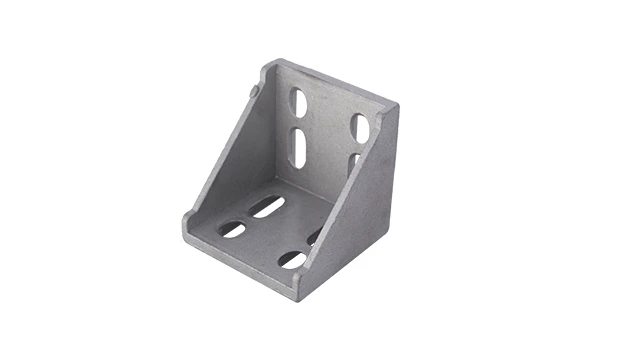
Walk into any bustling manufacturing plant, a well-organized warehouse, or a precision-focused workshop, and you'll quickly realize that the backbone of their efficiency lies in the small, often overlooked components that hold everything together. Among these unsung heroes is the gusset ALP 4040—a humble yet critical piece that reinforces structures, distributes weight, and ensures stability in modular setups like workbenches, material racks, and assembly lines. But choosing the right gusset ALP 4040 isn't as simple as grabbing the first one off the shelf. It's about understanding how it will perform under pressure, adapt to its surroundings, and work with the other components in your system. Let's break down the three key factors that will guide you to the perfect choice: load capacity, environmental conditions, and compatibility with your existing setup.
1. Load Capacity: Ensuring It Can Handle the Weight
At the end of the day, a gusset's job is to strengthen connections—whether it's holding up a workbench loaded with tools or stabilizing a material rack stacked with heavy parts. If it can't handle the weight, the entire structure becomes a safety risk, prone to wobbling, bending, or even collapsing. So, the first question to ask is: What kind of load will this gusset actually be supporting?
Understanding Your Load Requirements: Static vs. Dynamic
Start by distinguishing between static and dynamic loads. Static loads are the steady, unchanging weights—think of a workbench holding a set of power tools that rarely move, or a material rack storing boxes that sit for hours at a time. Dynamic loads, on the other hand, involve movement: parts sliding down a roller track, a turnover trolley being pushed into place, or workers regularly placing and removing heavy items from a shelf. Dynamic loads are trickier because they add stress from sudden impacts or vibrations, which means your gusset ALP 4040 needs a little extra strength to handle the "shock" of these movements.
Let's say you're setting up a material rack B (3 row and 3 floor) in a warehouse. Each shelf might hold 10 turnover boxes, each weighing 25 kg. That's 250 kg per shelf, and with three shelves, the total static load on the rack's frame could be around 750 kg. But if workers are constantly sliding boxes on and off using swivel roller balls (maybe 1 inch or 0.5 inch depending on the box size), that adds dynamic stress. In this case, skimping on a gusset that can't handle both the static weight and the dynamic movement could lead to the rack bending over time—or worse, a shelf giving way.
Material Strength: Why Aluminum Extrusion Profile Matters
Gusset ALP 4040 is typically made from aluminum extrusion profile, and there's a good reason for that. Aluminum offers an excellent balance of strength and lightweight, which is why it's a staple in modular systems. But not all aluminum is created equal. The thickness of the gusset, the quality of the extrusion process, and even the alloy type (like 6063 or 6061) affect how much weight it can support. Thicker gussets (say, 3mm vs. 2mm) generally handle more load, but they also add weight to the structure—so you don't want to overdo it if you don't need to.
For example, a light-duty setup like a workbench E (single deck-without caster) used for assembling small electronics might only need a 2mm gusset. It's holding a few hand tools, a soldering iron, and circuit boards—maybe 50 kg total. But if that same workbench is upgraded to hold a 200 kg testing machine, you'd need a 4mm or 5mm gusset to ensure the frame doesn't twist under the weight. Always check the manufacturer's specs for load ratings, and if in doubt, size up—it's better to have a gusset that's slightly overqualified than one that's stretched to its limits.
Design and Installation: Distributing Load Evenly
Even the strongest gusset will fail if it's installed incorrectly. The way you attach it to the aluminum profile, the number of gussets used, and their placement all impact load distribution. For instance, a corner joint between two aluminum pipes might need two gussets (one on each side) to spread the weight, rather than just one. Skipping that second gusset could put all the stress on a single point, leading to cracks or bending over time.
Another common mistake is overtightening the bolts that secure the gusset to the aluminum profile. Aluminum extrusion profiles have T-slots that hold bolts and nuts, but cranking the bolts too hard can strip the threads or warp the profile—weakening the entire connection. A good rule of thumb? Tighten until the gusset is snug, then add a quarter-turn. And always use the right accessories: aluminum profile accessories like T-slot nuts and bolts designed for your specific profile size (4040 in this case) ensure a secure fit.
| Load Scenario | Recommended Gusset Thickness | Estimated Max Load Supported | Common Application |
|---|---|---|---|
| Light-Duty (Static) | 2mm | Up to 100 kg per joint | Small workbench with hand tools |
| Medium-Duty (Static + Low Dynamic) | 3-4mm | 100-300 kg per joint | Material rack B with turnover boxes |
| Heavy-Duty (High Static + Dynamic) | 5mm+ | 300+ kg per joint | Industrial workbench with machinery |
2. Environmental Considerations: Where Will It Live?
Your gusset ALP 4040 doesn't exist in a vacuum—it has to survive and perform in the unique conditions of your workspace. A gusset that works perfectly in a dry, climate-controlled factory might rust away in a humid warehouse or fail in an ESD-sensitive cleanroom. Let's look at the key environmental factors that should influence your choice.
Corrosion Resistance: Battling Moisture and Chemicals
Moisture is aluminum's silent enemy—even though aluminum forms a natural oxide layer that resists rust, prolonged exposure to humidity, water, or chemicals can break down that layer over time. If your workspace is a food processing plant with daily washdowns, a coastal warehouse with salt air, or a workshop where oils and coolants are common, you need to think about corrosion resistance.
Some gusset ALP 4040 options come with anodized finishes, which thicken the oxide layer and add extra protection against corrosion. For even harsher environments, you might consider stainless steel pipe series components instead, but keep in mind that stainless steel is heavier and less modular than aluminum. If aluminum is still the way to go, look for gussets with a clear anodized coating or ask your supplier about custom treatments for extra durability.
ESD Sensitivity: Protecting Sensitive Electronics
If you're building an ESD workbench or ESD workstation (common in electronics manufacturing, where static electricity can fry circuit boards), your gusset ALP 4040 needs to be part of the ESD protection system. Standard aluminum isn't inherently ESD-safe, but some manufacturers offer gussets with conductive coatings that dissipate static charges. These coatings ensure that any static buildup on the workbench or material rack is safely grounded, rather than zapping sensitive components.
Don't assume all aluminum gussets are ESD-friendly—check the specs for surface resistance (usually between 10^6 and 10^9 ohms for ESD compliance). And remember, the gusset is just one part of the system: you'll also need ESD-safe casters, workbench tops, and even floor mats to create a fully protected environment. But skimping on the gusset here could create a "weak link" where static can accumulate, defeating the purpose of the ESD setup.
Temperature Extremes: Heat, Cold, and Everything In Between
Aluminum handles temperature changes better than some materials, but extreme heat or cold can still affect its performance. In a foundry or bakery where temperatures regularly hit 50°C (122°F), the aluminum in the gusset might expand slightly, which could loosen bolts over time. Conversely, in a freezer warehouse (-20°C/-4°F), the metal might contract, making the gusset more brittle. In these cases, look for gussets made from heat-treated aluminum alloys (like 6061-T6) that offer better thermal stability, and use bolts with lock washers to prevent loosening due to temperature fluctuations.

3. Compatibility: Making Sure It Plays Well With Others
A gusset ALP 4040 is never alone—it's part of a team, working with aluminum profiles, joints, accessories, and the larger structure (like a workbench or material rack). If it doesn't play well with the other components, you'll end up with a wobbly, inefficient setup that's frustrating to assemble and prone to failure. Here's what to check for compatibility.
Fit with Aluminum Profile: T-Slots and Dimensions
Gusset ALP 4040 is designed for 4040 aluminum profiles, but "4040" can vary slightly between manufacturers. The profile's width, height, and T-slot size (like slot width and depth) need to match the gusset's mounting holes and tabs. For example, a gusset made for a 4040 profile with 8mm T-slots won't fit a profile with 6mm slots—the bolts simply won't seat properly. Always double-check the profile's specs (you can usually find them on the supplier's website) and confirm that the gusset is labeled as compatible with 4040 aluminum extrusion profile.
Accessories matter here too. If you're using 4040 aluminum profile end caps to finish off the ends of the profile, make sure the gusset doesn't block the end cap from fitting. Some gussets extend all the way to the end of the profile, which might require trimming the end cap or choosing a different style. It's the little details like this that can turn a quick assembly into a frustrating afternoon of trial and error.
Compatibility with Joints and Connectors
Your gusset will likely be used alongside other connectors, like lean pipe joints, aluminum pipe clamps, or parallel aluminum joints. For example, a 90° aluminum crossing joint might need a gusset to reinforce the connection between two perpendicular aluminum pipes. If the gusset is too thick, it might bump into the joint, preventing a tight fit. If it's too narrow, it might not reach both pipes, leaving the joint unstable.
Let's say you're building a turnover trolley using basic aluminum tubes and internal rotatary aluminum joints. The trolley's frame has several corner joints, each secured with a gusset. If the gusset's holes don't align with the joint's mounting points, you'll have to drill new holes (which weakens the gusset) or use washers to bridge the gap—both of which compromise stability. To avoid this, stick with a single supplier for your gusset, joints, and aluminum profile if possible. Suppliers like lean pipe suppliers or aluminum profile suppliers often design their components to work together seamlessly, reducing compatibility headaches.
Assembly with Larger Systems: Workbenches, Racks, and Trolleys
Finally, consider how the gusset ALP 4040 fits into the larger system you're building. A material rack B (3 row and 3 floor) uses upright aluminum profiles connected by horizontal beams, with gussets reinforcing the beam-to-upright joints. If the gusset is too short, it might only cover half the beam's width, leaving the other half unsupported. If it's too tall, it might interfere with the roller track or swivel roller balls used to slide boxes onto the shelves.
The same goes for workbenches: a workbench with a double-deck design (upper shelf for tools, lower shelf for storage) needs gussets that don't block access to the lower shelf. Measure twice, buy once here—sketch out your design or use 3D modeling software if you're unsure. Most suppliers also offer sample kits, which include a gusset, a small section of aluminum profile, and a few joints, so you can test the fit before ordering in bulk.

Conclusion: Choosing a Gusset That Grows With Your Needs
Selecting the right gusset ALP 4040 might seem like a small decision, but it has a big impact on the safety, durability, and efficiency of your modular system. By focusing on load capacity (matching strength to your static and dynamic needs), environment (corrosion, ESD, temperature), and compatibility (with profiles, joints, and larger systems), you'll ensure that your workbench, material rack, or assembly line stands the test of time.
And remember, you don't have to do this alone. A reputable aluminum profile supplier or lean pipe supplier can help you assess your needs, recommend the right gusset thickness and material, and even provide samples to test. After all, their expertise is part of what you're paying for—so don't hesitate to ask questions. With the right gusset in place, you'll have a structure that not only holds the weight but also adapts as your business grows—whether that means adding more shelves, upgrading to heavier tools, or expanding into new, challenging environments.
At the end of the day, the best gusset is the one you barely notice—quietly doing its job, keeping everything stable, and letting you focus on what matters most: getting work done efficiently and safely.