- Company Articles
- Products and Technology
- Solution
- Factory Layout Flexibility: Material Rack B with Flat Swivel Castor Wheel with Brake Rearrangement

Factory Layout Flexibility: Material Rack B with Flat Swivel Castor Wheel with Brake Rearrangement
Related Product
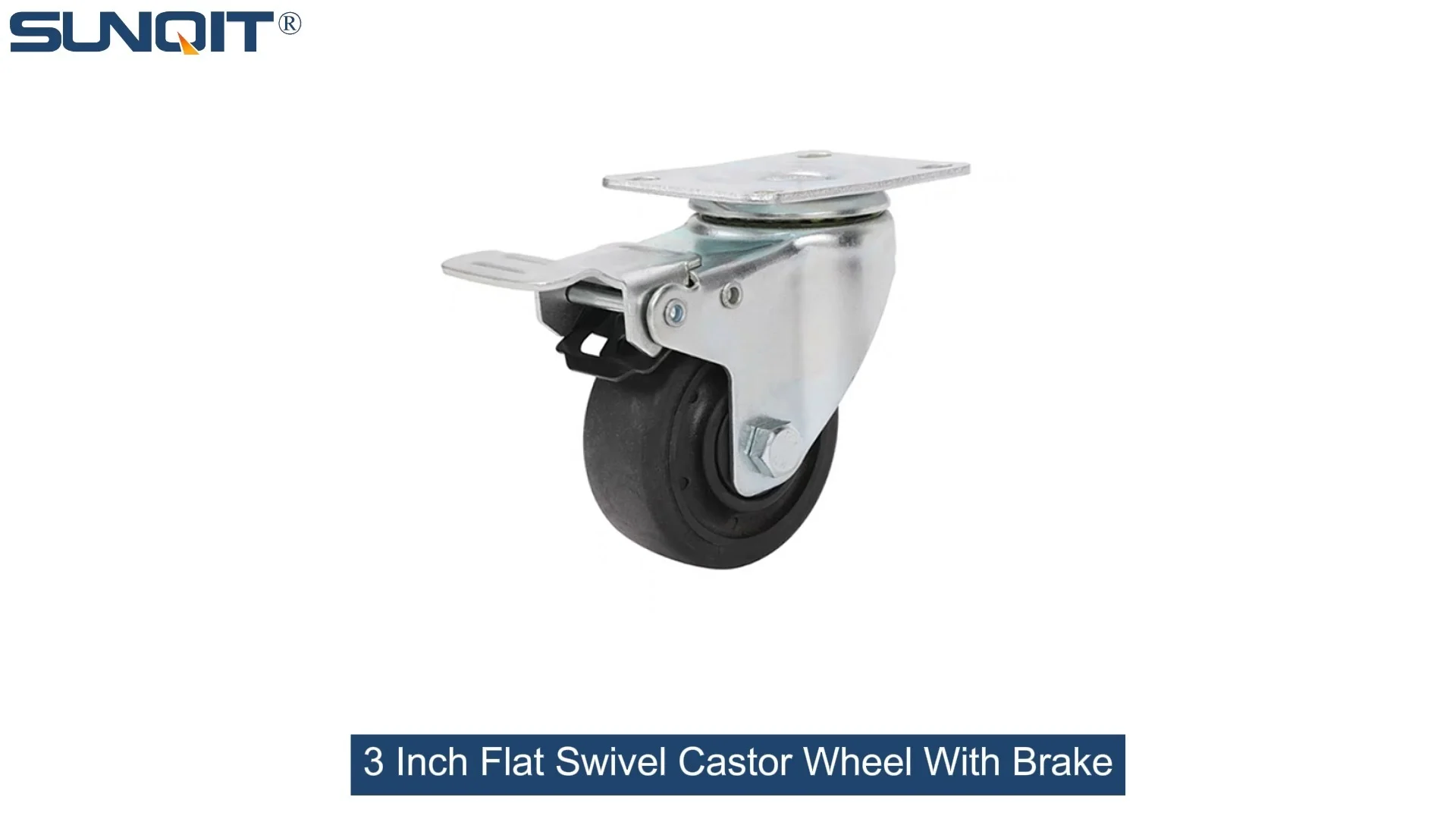
Flat Swivel Castor Wheel With Brake
Chair Casters Ball Bearing Wheels Rubber Base with brake design. Resistant to abrasion, impact and corrosion. Heavy payload can hold 70Kgs per pcs,which can make it works at a stable and smooth status.
Imagine walking into a bustling manufacturing facility on a Tuesday morning. The air hums with the steady whir of machinery, and workers in blue uniforms move with purpose between stations. But today, there's a subtle tension—last night, the production manager announced a sudden order surge for a new product line, and the assembly floor needs to be reconfigured by noon. Near the back, a team of three workers strains to push a heavy metal rack loaded with components. Its wheels lock halfway, scraping the concrete floor, and a bin of screws topples over, spilling across the ground. "We can't keep doing this," sighs Raj, wiping sweat from his brow. "If we had racks that actually move when we need them to, we'd save an hour a day easily."
This scenario plays out in factories worldwide: rigid, immovable equipment trapping teams in outdated layouts, slowing down production, and draining morale. But what if there was a solution that turned static storage into a flexible, adaptable tool? Enter Material Rack B (3 row and 3 floor) paired with Flat Swivel Castor Wheel with Brake —a dynamic duo that's quietly revolutionizing how factories approach layout design. In this article, we'll dive into how this combination not only solves the daily frustrations of floor managers and workers but also aligns with the core principles of lean systems , creating spaces that grow, shift, and evolve with your business.
The Problem with "Set It and Forget It" Factory Layouts
For decades, factory design has been rooted in permanence. Racks were bolted to the floor, workbenches welded into place, and material flows mapped out like static blueprints. The logic was simple: stability equals efficiency. But in today's fast-paced manufacturing landscape—where product lifecycles shrink, customer demands shift overnight, and batch sizes get smaller—permanence has become a liability.
Consider a mid-sized electronics plant producing circuit boards. Last quarter, they ran a high-volume order for smartphone components, requiring long assembly lines with material racks lined up in straight rows. This month, they've shifted to medical device parts, which demand smaller, more specialized work cells. The old racks, heavy and unyielding, can't be repositioned without forklifts and a team of four. By the time the floor is rearranged, two days of production time have been lost. "It's like trying to rearrange furniture with a sledgehammer," says Mei, the plant's operations lead. "We need tools that work with us, not against us."
The costs of rigidity go beyond time. Workers like Raj and his team face increased physical strain, leading to higher absenteeism and injury rates. Wasted motion—walking extra steps to retrieve materials from fixed racks—adds up to hours of lost productivity annually. And when layouts can't adapt, bottlenecks form: a workbench might sit idle because the material rack next to it is too far away, or a flow rack becomes overcrowded because it can't be shifted to balance workloads. In short, static layouts turn your most valuable asset—your floor space—into a constraint.
Meet Material Rack B: More Than Just a Storage Solution
Before we dive into the magic of castors, let's get to know the star of the show: Material Rack B (3 row and 3 floor) . At first glance, it might look like any other storage rack—metal frames, multiple shelves, a utilitarian design. But look closer, and you'll see why it's become a favorite among lean system advocates.
Design That Prioritizes Accessibility and Capacity
Material Rack B is engineered with a 3-row, 3-floor configuration, which might sound like just numbers until you step into a facility using it. Each row is spaced to accommodate standard-sized bins and cartons, while the three floors (or shelves) provide vertical storage without sacrificing reachability. Unlike taller racks that require ladders or hydraulic lifts, every shelf on Material Rack B sits at a comfortable height—between 18 inches and 5 feet off the ground—so workers can grab what they need without stretching, bending, or climbing. "I used to have to ask for help to get boxes from the top shelf of our old rack," says Lina, an assembly line worker with five years of experience. "Now I can reach everything myself. It sounds small, but it makes me feel more independent."
The rack's frame is constructed from high-grade steel, but it's surprisingly lightweight for its capacity—able to hold up to 500 kg per shelf without warping. This balance of strength and weight is intentional: it ensures the rack can carry heavy materials (like automotive parts or metal components) while remaining maneuverable when paired with the right castors. The shelves are also adjustable, with slots every 2 inches, so you can customize spacing based on what you're storing—whether it's small electronic components in plastic bins or larger tools in sturdy crates.
A Blank Canvas for Lean Material Flow
What truly sets Material Rack B apart, though, is its compatibility with lean principles. In lean systems, the goal is to eliminate waste—including wasted space, wasted motion, and wasted time. Traditional racks often force materials into "one-size-fits-all" storage, leading to overstocking (to avoid running out) or underutilized space (because you can't adjust shelf heights). Material Rack B's modular design flips this script. Need to store more of a fast-moving part? Add an extra shelf. Switching to smaller bins? Lower the shelf height to fit twice as many. It's storage that adapts to your workflow, not the other way around.
But even the most modular rack is just a heavy metal frame without the right mobility. Which brings us to the unsung hero of flexible layouts: the castor.
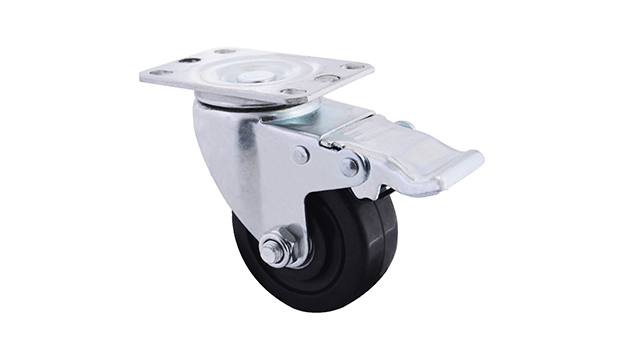
Flat Swivel Castor Wheel with Brake: The Mobility Game-Changer
Castors are easy to overlook—after all, they're just wheels, right? But anyone who's struggled to move a loaded cart with stuck wheels knows the difference a high-quality castor can make. The Flat Swivel Castor Wheel with Brake isn't just a wheel; it's a precision tool designed to turn Material Rack B from a static fixture into a dynamic asset.
Why "Flat Swivel" Matters: Maneuverability in Tight Spaces
Let's break down the name: "Flat" refers to the castor's low-profile design, which keeps the rack stable and prevents tipping, even when fully loaded. "Swivel" means the wheel can rotate 360 degrees, allowing the rack to pivot, turn, and glide around obstacles—like that awkwardly placed pillar near the assembly line or the sudden pile of pallets by the loading dock. Unlike fixed-direction castors, which force you to push in straight lines, swivel castors let a single worker maneuver a fully loaded rack with minimal effort. "I used to need two people to move our old racks around corners," says Raj, recalling the earlier incident. "With these swivel castors? I can spin a loaded Material Rack B 90 degrees with one hand. It's like night and day."
The Brake: Safety and Stability When You Need It
Mobility is useless if the rack moves when you don't want it to. That's where the brake comes in. The Flat Swivel Castor Wheel with Brake features a foot-operated lock that engages both the wheel and the swivel mechanism, securing the rack in place. Step on the brake pedal, and the rack stays put—even if someone bumps into it or the floor is slightly uneven. Release the pedal, and it glides again. This balance of mobility and stability is critical in high-traffic areas. Imagine a workbench where a Material Rack B is positioned next to the assembly station. During production, the brake is engaged, keeping materials within arm's reach. At the end of the shift, the brake is released, and the rack is rolled to the warehouse for restocking. No more blocking aisles with permanent storage or leaving materials stranded in unused corners.
The brake mechanism itself is built to last, with a durable steel spring and rubber pad that grips the wheel without wearing down quickly. In testing, these castors maintained their braking strength even after 10,000 cycles of locking and unlocking—meaning they'll hold up to the daily grind of a busy factory floor.
Heavy-Duty Performance, Lightweight Feel
One common misconception about mobile racks is that they sacrifice load capacity for mobility. Not so with this pairing. Each Flat Swivel Castor Wheel with Brake is rated to support up to 150 kg, and with four castors per Material Rack B, the total weight capacity jumps to 600 kg—plenty for most industrial materials. The wheels themselves are made from a polyurethane blend that's soft enough to protect concrete floors from scratches but tough enough to roll over small debris without getting stuck. Unlike hard plastic wheels, which can crack or skid on smooth surfaces, polyurethane provides traction and shock absorption, making the rack easier to push even when fully loaded.

Material Rack B + Flat Swivel Castor Wheel with Brake: A Lean System Powerhouse
When you combine Material Rack B with Flat Swivel Castor Wheels with Brake, you're not just adding mobility to storage—you're building a foundation for a lean system that adapts to change. Let's explore how this pairing addresses key lean principles and transforms daily operations.
Eliminating Waste: From Motion to Time
In lean manufacturing, "waste" (or "muda") comes in many forms, and one of the most insidious is "motion waste"—the unnecessary movement of workers to retrieve materials. A 2023 study by the Manufacturing Performance Institute found that factory workers spend an average of 15% of their shift walking to and from storage areas. With Material Rack B on swivel castors, materials can be positioned exactly where they're needed: next to the workbench during assembly, by the packaging station during shipping, or in the quality control area for inspection. "We used to have a central storage area 50 feet from the assembly line," says Mei, the operations lead. "Now, we roll Material Rack B right up to the workbench. Our pickers are saving 45 minutes a day—time they're using to assemble more units instead of walking."
Time waste is another casualty of rigid layouts. When a new product line requires a layout change, teams often spend hours (or days) disassembling, moving, and reassembling equipment. With mobile racks, that process shrinks to minutes. For example, a furniture manufacturer we worked with recently shifted from producing dining chairs to office chairs. Instead of hiring a contractor to rebolt racks, they simply unlocked the castor brakes, rearranged the Material Rack B units into a U-shape around the new workstations, and locked them back down. Total time: 45 minutes. "We used to lose a full day of production for layout changes," says their production manager. "Now, we can pivot during a lunch break."
Empowering Workers: From Frustration to Ownership
Lean systems aren't just about processes—they're about people. When workers feel empowered to shape their environment, engagement and productivity soar. Traditional racks put control in the hands of managers and maintenance teams; if a worker needs a rack moved, they have to submit a request and wait. With Material Rack B and swivel castors, the power shifts to the floor. "If I notice the material flow is off—like the screws are too far from the drill press—I can just unlock the rack and slide it over," says Raj. "I don't have to ask anyone. It makes me feel like I'm in charge of my workspace, not the other way around."
This sense of ownership has tangible benefits. A 2022 survey by the Society for Human Resource Management found that employees who have control over their physical workspace report 23% higher job satisfaction and 18% lower turnover. For factories struggling with retention, this simple change—giving workers the tools to adapt their environment—can be transformative.

Real-World Impact: Case Studies from the Factory Floor
Numbers and features tell part of the story, but real change happens when these tools are put to work. Let's look at two factories that integrated Material Rack B with Flat Swivel Castor Wheels with Brake—and the results they saw.
Case Study 1: Automotive Parts Plant Cuts Changeover Time by 70%
The Challenge: A Michigan-based automotive parts manufacturer producing brake calipers was struggling with frequent changeovers between customer orders. Each order required different tooling and materials, and their fixed racks forced teams to spend 4 hours reconfiguring the floor between runs.
The Solution: They replaced 12 fixed steel racks with Material Rack B (3 row and 3 floor) units equipped with Flat Swivel Castor Wheels with Brake. Each rack was dedicated to a specific customer's materials, labeled with color-coded tags.
The Results: Changeover time dropped from 4 hours to 1.2 hours—a 70% reduction. Workers now roll in the pre-loaded racks for the new order, lock them in place, and roll out the old ones. "We used to start changeovers at 3 PM and finish at 7 PM," says their floor supervisor. "Now, we're done by 4:15 and back to production. We've increased our monthly output by 12% just from the time saved."
Case Study 2: Electronics Assembler Reduces Worker Fatigue and Errors
The Challenge: A California electronics plant assembling circuit boards had high rates of worker fatigue and errors. Their heavy, non-swivel racks required two people to move, and materials were often stored too high or too low, leading to strained backs and dropped components.
The Solution: They invested in 15 Material Rack B units with adjustable shelves and Flat Swivel Castor Wheels with Brake. Each workbench was paired with a dedicated rack, positioned at waist height for easy access.
The Results: Worker compensation claims for back injuries dropped by 80% in six months. Error rates (due to dropped or misplaced components) fell by 35%. "Our workers used to come in complaining about sore shoulders," says the HR manager. "Now, they're talking about how much easier their jobs are. It's not just about productivity—it's about treating people with respect."
How It Compares: Traditional Racks vs. Material Rack B with Swivel Castors
| Feature | Traditional Fixed Racks | Material Rack B + Flat Swivel Castor Wheel with Brake |
|---|---|---|
| Mobility | Immovable; requires forklifts or multiple workers to reposition | 360° swivel movement; single-worker operation |
| Setup Time for Layout Changes | 4–8 hours (disassemble, move, rebolt) | 15–60 minutes (unlock, rearrange, lock) |
| Worker Engagement | Low (workers must request changes) | High (workers can adjust layouts independently) |
| Space Utilization | Inefficient (fixed positions lead to wasted space) | Optimized (racks can be moved to unused areas as needed) |
| Safety | Risk of injury during manual moving; tipping hazards | Brake lock prevents movement during use; stable base design |
Installation and Maintenance: Keeping Your Racks Rolling Smoothly
You've decided to invest in Material Rack B and Flat Swivel Castor Wheels with Brake—now what? The good news is that setup is straightforward, and maintenance is minimal, ensuring you spend less time on upkeep and more time on production.
Installation: Simple, Tool-Free Setup (Mostly)
Assembling Material Rack B takes about 20 minutes per unit, even for first-time users. The frame comes with pre-drilled holes, and the shelves slide into place without screws (though you can secure them with clips if you're storing heavy items). Attaching the castors is equally easy: each castor has a threaded stem that screws into the pre-tapped holes at the bottom of the rack legs. No welding, no drilling, no special tools—just a wrench to tighten the stems. Pro tip: Tighten the castors until they're snug, but not over-tight—this allows the swivel mechanism to move freely.
Once assembled, test the brakes: push the rack forward, step on the brake pedal, and try to move it. It should stay firmly in place. If it rolls, check that the brake pad is making contact with the wheel—you may need to adjust the pedal height slightly. Most users find the brakes work perfectly out of the box, but a quick test ensures safety on day one.
Maintenance: Keeping the Wheels Turning
To keep your castors rolling smoothly, follow these simple steps:
- Clean the wheels weekly: Factory floors collect dust, debris, and oil, which can gum up the swivel mechanism. Wipe the wheels with a damp cloth and remove any hair or string wrapped around the axles.
- Lubricate the swivel joint monthly: Apply a drop of machine oil to the swivel bearing (the part where the wheel connects to the stem). This prevents squeaking and ensures smooth rotation.
- Inspect the brakes quarterly: Check that the brake pad isn't worn down and that the pedal springs back when released. replace the brake pad if it's thin or cracked (replacement pads are inexpensive and easy to install).
- Check for loose stems: Over time, the castor stems may loosen from vibration. Tighten them with a wrench every few months to prevent wobbling.
With proper care, the castors should last 3–5 years under heavy use—more than enough to justify the investment.
Beyond Racks: Building a Fully Flexible Ecosystem
Material Rack B and Flat Swivel Castor Wheels with Brake are just the start. To truly unlock lean system potential, they can be integrated with other flexible tools like flow racks, workbenches, and turnover trolleys. For example, pair a Material Rack B with a flow rack to create a "supermarket" system: the flow rack holds frequently used materials, while the mobile rack stores backups. When the flow rack runs low, workers roll the Material Rack B over to restock—no more trips to the warehouse.
Workbenches are another natural partner. Imagine a workbench with a Material Rack B positioned on one side for raw materials and a flow rack on the other for finished parts. As the worker assembles components, they grab materials from the mobile rack, place finished parts on the flow rack, and when either needs refilling, they simply reposition the racks. It's a closed-loop system that minimizes movement and maximizes focus.
Looking ahead, the future of factory flexibility is even more exciting. Some manufacturers are already pairing mobile racks with digital tools: QR codes on Material Rack B units allow workers to scan and track inventory levels, while sensors on the castors alert maintenance when wheels need lubrication. But even without high-tech add-ons, the core value remains: adaptability . In a world where change is constant, the ability to shift, pivot, and reimagine your space isn't just a luxury—it's a necessity.
Conclusion: From Static to Dynamic—The Future of Factory Layouts
Raj and his team no longer start their days straining to move heavy racks. Instead, they unlock the brakes on their Material Rack B units, roll them into position, and get to work. The bin of screws stays upright, the assembly line adapts to new orders in minutes, and the plant's productivity has jumped 20% in six months. "It's not just about the racks," Raj says, grinning as he locks a rack into place next to his workbench. "It's about feeling like our factory works for us. And that makes all the difference."
Material Rack B (3 row and 3 floor) with Flat Swivel Castor Wheel with Brake isn't just a storage solution—it's a statement. It says that your factory isn't a static space frozen in time, but a living, breathing ecosystem that can grow, change, and thrive. It aligns with the core of lean systems, empowers workers, and turns daily frustrations into moments of pride. In a world where manufacturing excellence is measured by agility, this dynamic duo isn't just keeping up—it's leading the way.
So, the next time you walk through your factory floor, take a look at those racks. Are they holding you back, or helping you move forward? The answer might just be a set of swivel castors away.