- Company Articles
- Products and Technology
- Product knowledge
- Fatigue Strength of 1.0mm Stainless Steel Pipe Under Repeated Loads

Fatigue Strength of 1.0mm Stainless Steel Pipe Under Repeated Loads
Related Product
1.0mm Stainless Steel Pipe
Stainless steel pipe, lean pipe, diameter is 28mm, material is SS201 or SS304, SS201 is normally used in the market. It knows a KARAKURI, KAIZEN material for industrial plant to improve efficiency, save labor cost, standard management.
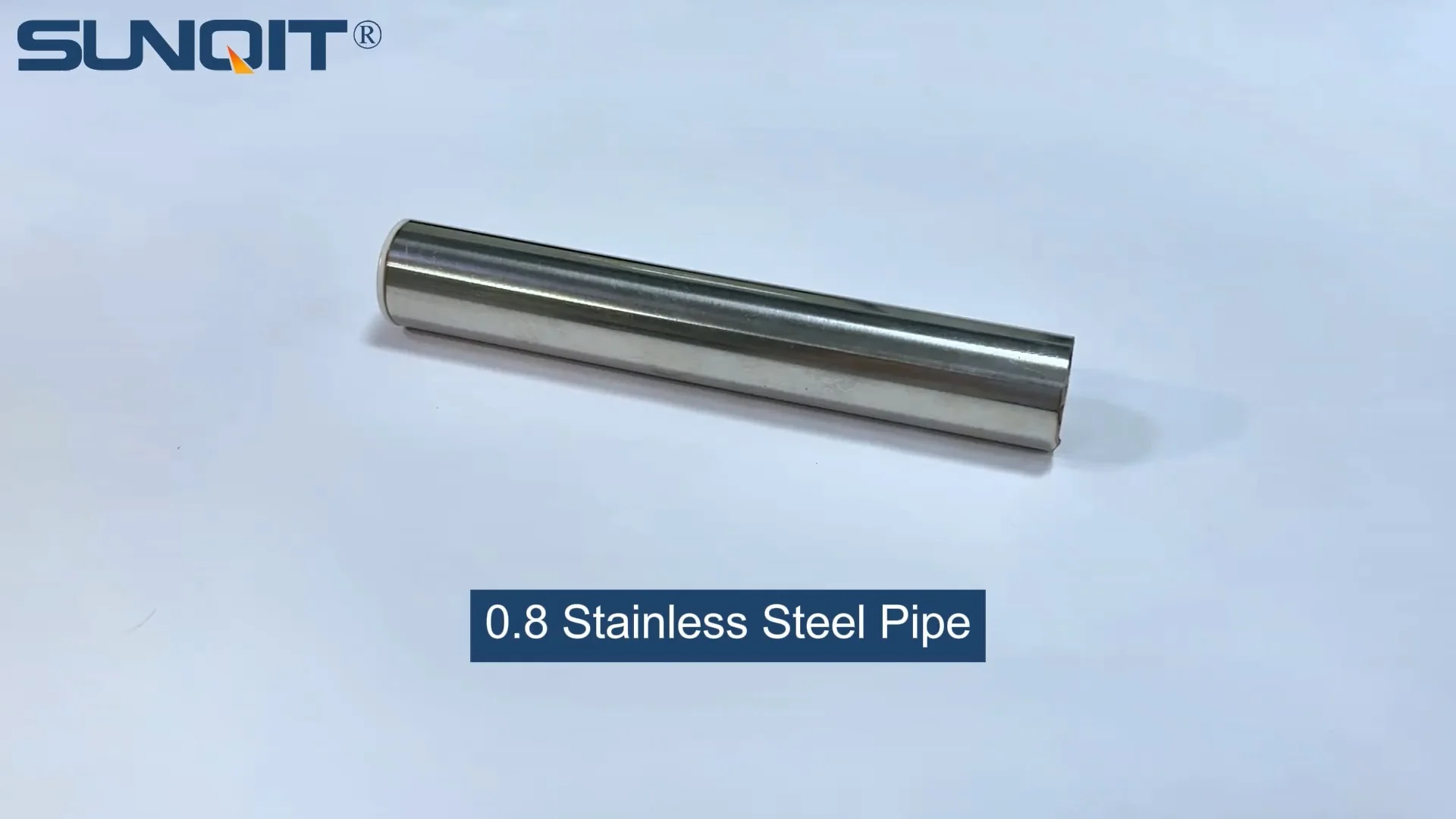
Walk into any busy manufacturing plant, and you'll likely see a symphony of moving parts: conveyor belts shuttling components, workbenches holding assembly tools, and material racks stacked with supplies. Behind this orchestration lies a quiet workhorse: the stainless steel pipe series . These pipes, often at first glance, form the backbone of everything from lean production lines to heavy-duty machinery. But here's the thing: even the sturdiest pipes have a breaking point—especially when they're subjected to the relentless back-and-forth of repeated loads. Today, we're zeroing in on a critical player in this space: the 1.0mm stainless steel pipe. What makes its fatigue strength so vital? How does it hold up when stressed day in and day out? Let's dive in.
What Even Is "Fatigue Strength," Anyway?
Before we get into the nitty-gritty of 1.0mm stainless steel pipes, let's demystify the term "fatigue strength." Think of it like this: if you bend a paperclip back and forth, it doesn't break on the first bend. But keep doing it, and eventually, it snaps. That's fatigue in action. For materials, fatigue strength is the maximum stress a material can withstand repeatedly without failing. It's not about lifting a heavy weight once (that's static strength); it's about lifting a lighter weight thousands—even millions—of times. And in industrial settings, where machines run 24/7 and parts are constantly in motion, this "repeated stress" is the norm, not the exception.
Why does this matter for stainless steel pipes? Imagine a roller track in a warehouse, where boxes glide over metal rollers hour after hour. The pipes supporting that track are being jostled, bent, and pressured with every passing load. If their fatigue strength is too low, a tiny crack could form, grow, and eventually cause the track to collapse—disrupting production, risking worker safety, and costing thousands in repairs. So, when we talk about the fatigue strength of a 1.0mm stainless steel pipe, we're really talking about reliability, safety, and the bottom line.
The 1.0mm Stainless Steel Pipe: Small Size, Big Responsibility
At first glance, 1.0mm might seem thin—after all, a standard drinking straw is roughly 0.5mm thick. But in the world of industrial piping, 1.0mm stainless steel pipe strikes a sweet spot. It's lightweight enough to keep structures agile (think: mobile workbenches or adjustable racks) but strong enough to handle consistent stress. This balance makes it a favorite in lean manufacturing systems, where efficiency and flexibility are king. You'll find it in everything from lean pipe workstations to material handling carts, and even in the frames of automated assembly lines.
But why stainless steel specifically? Unlike regular steel, stainless steel contains chromium, which forms a protective oxide layer that resists rust and corrosion. In damp factories or environments with chemicals, this is a game-changer. A 1.0mm stainless steel pipe won't degrade as quickly as a galvanized steel alternative, which means it maintains its structural integrity longer—even when exposed to moisture or industrial fumes. That durability directly impacts fatigue strength: a pipe that resists corrosion is less likely to develop weak spots, which are often the starting points for fatigue cracks.

What Actually Affects Fatigue Strength in 1.0mm Stainless Steel Pipes?
Fatigue strength isn't just about the material itself—it's a mix of factors that can either boost a pipe's resilience or leave it vulnerable. Let's break down the key players:
1. Material Composition: Not all stainless steel is created equal. The 1.0mm pipes in the stainless steel pipe series are often made from 304 or 316 grade stainless steel. 304 is the most common, with high nickel and chromium content for general corrosion resistance. 316 adds molybdenum, making it even more resistant to acids and saltwater. Why does this matter for fatigue? Alloys with higher nickel content tend to have better ductility—the ability to bend without breaking—which helps absorb repeated stress. So, a 316-grade 1.0mm pipe might outlast a lower-grade alternative under the same cyclic load.
2. Surface Finish: A smooth pipe is a happy pipe—at least when it comes to fatigue strength. Rough surfaces, scratches, or dents act like "stress concentrators." Think of a scratch as a tiny notch: when the pipe bends, the stress around that notch amplifies, making it easier for a crack to start. That's why manufacturers often polish or deburr 1.0mm stainless steel pipes before use. Even something as small as a leftover weld bead can reduce fatigue strength by 20-30%—a huge difference in a part that's supposed to last years.
3. Load Type and Frequency: How the pipe is stressed matters just as much as how often. There are two main types of cyclic stress: axial (pulling/pushing along the pipe's length) and bending (like a seesaw). Bending stress is more likely to cause fatigue because it creates tension on one side and compression on the other, which wears the material faster. Then there's frequency: a pipe stressed 10 times per minute will fail later than one stressed 100 times per minute, even if the force per cycle is the same. In high-speed applications—like a roller track in an automotive plant, where parts zip by every few seconds—frequency is a critical factor.
4. Joint Design: Pipes don't work alone—they're connected by lean pipe joint s, clamps, or welds. These joints are often the weakest links in a structure. A poorly designed joint can create uneven stress distribution: for example, if a lean pipe joint is too tight, it might pinch the pipe, creating a stress point. Or if it's loose, the pipe might vibrate, adding extra cyclic stress. That's why engineers spend so much time designing joints that distribute load evenly. A well-made joint can make a 1.0mm pipe feel "stronger" than its thickness suggests, simply by reducing stress concentration.
5. Environment: Heat, humidity, and chemicals can all take a toll. High temperatures make stainless steel more brittle over time, lowering its fatigue strength. In contrast, cold temperatures can make it more prone to cracking under repeated stress. Even something as simple as humidity can corrosion, which, as we mentioned earlier, weakens the pipe's structure. A 1.0mm stainless steel pipe in a dry, temperature-controlled factory will almost always outlast one in a hot, humid warehouse—unless it's 316-grade, which handles moisture better.

Testing Fatigue Strength: How Do We Know It Holds Up?
You can't just guess at fatigue strength—you have to test it. The most common method is the "rotating beam test," where a sample of the 1.0mm pipe is mounted like a crankshaft and spun while a weight hangs from one end. As it spins, the pipe bends back and forth, simulating cyclic stress. The test runs until the pipe breaks, and engineers record how many cycles it took. This gives a "S-N curve" (Stress vs. Number of cycles to failure), which shows the maximum stress the pipe can handle for a given number of cycles.
For industrial use, pipes are often rated for "infinite life"—the stress level where they can withstand 10 million cycles without failing. For 1.0mm stainless steel pipe, this infinite life stress is typically around 200-250 MPa (megapascals), depending on the grade and finish. To put that in perspective, a MPa is roughly the pressure of 145 pounds per square inch, so 200 MPa is like having a small car balanced on a square inch of pipe—repeatedly, 10 million times. That's impressive, but it's not a guarantee. Real-world conditions are messier than lab tests, which is why manufacturers often build in a safety factor (usually 2-3x the expected load) to account for variables like temperature or unexpected impacts.
To illustrate, let's look at a simplified test data table for 1.0mm 304 stainless steel pipe under bending stress:
| Stress Amplitude (MPa) | Number of Cycles to Failure | Surface Finish | Test Environment |
|---|---|---|---|
| 300 | 500,000 | Rough (unpolished) | Room temperature, dry |
| 250 | 2,000,000 | Rough (unpolished) | Room temperature, dry |
| 250 | 5,000,000 | Smooth (polished) | Room temperature, dry |
| 200 | >10,000,000 (infinite life) | Smooth (polished) | Room temperature, dry |
| 200 | 7,500,000 | Smooth (polished) | High humidity (90%) |
The table tells a clear story: polish the surface, and the pipe lasts twice as long at 250 MPa. Add humidity, and even the polished pipe's lifespan drops. These are the kinds of insights engineers use to recommend 1.0mm stainless steel pipe for specific applications—like a dry electronics factory vs. a damp food processing plant.
Real-World Scenarios: When Fatigue Strength Matters Most
Let's step out of the lab and into a factory. Imagine a roller track used to move small engine parts from one assembly station to the next. The track is supported by a frame made of 1.0mm stainless steel pipe, and each part weighs about 5 kg. Over an 8-hour shift, 1,000 parts pass through—so the track and its supporting pipes bend slightly under each part's weight, 1,000 times a day. Multiply that by 250 workdays a year, and you're looking at 250,000 cycles annually. In 10 years, that's 2.5 million cycles. If the pipe's fatigue strength at 2.5 million cycles is 250 MPa, and the actual stress from the parts is 100 MPa (well below the limit), it's safe. But if the track is overloaded with 10 kg parts, the stress jumps to 200 MPa—now, it's teetering on the edge of failure after 10 years. That's why load limits aren't just suggestions; they're based on fatigue strength data.
Another example: a lean pipe workstation in a warehouse, where workers repeatedly place and remove heavy boxes. The workstation's frame, made with 1.0mm stainless steel pipe and lean pipe joint s, takes a beating every time a box is set down. If the joints are loose, the frame wobbles, adding extra cyclic stress. Over time, this could cause the pipes to crack at the joints—exactly where the stress is highest. A well-designed workstation with tight, evenly spaced joints distributes the load, keeping stress below the pipe's fatigue limit.
How Does It Compare to Other Pipes?
1.0mm stainless steel pipe isn't the only option out there. Let's see how it stacks up against two common alternatives: aluminum pipe and PE-coated lean pipe.
Aluminum Pipe: Aluminum is lighter than stainless steel, which is great for mobile structures like carts. But it has lower fatigue strength—around 100-150 MPa for 1.0mm aluminum pipe. That means it can handle fewer cycles before failing, making it better for light, occasional loads rather than constant, repeated stress. It also dents more easily, creating those stress concentrators we talked about earlier.
PE-Coated Lean Pipe: These are steel pipes coated in polyethylene (PE) for corrosion resistance. They're cheaper than stainless steel but have similar fatigue strength to regular steel—around 150-200 MPa. The downside? The PE coating can chip, exposing the steel underneath to rust, which weakens the pipe over time. In dry environments, they're a solid budget choice, but in damp or corrosive settings, stainless steel wins.
So, 1.0mm stainless steel pipe isn't the lightest or cheapest, but it's the most reliable for high-cycle, high-stress applications. It's the pipe you want when failure isn't an option.
Keeping Your Pipes Strong: Maintenance Tips
Even the toughest 1.0mm stainless steel pipe needs a little care to maintain its fatigue strength. Here are a few practical tips:
1. Inspect Regularly: Look for cracks, especially at lean pipe joint s and welds. A small crack today can turn into a big failure tomorrow. Use a magnifying glass or dye penetrant (a liquid that seeps into cracks and glows under UV light) for hard-to-see flaws.
2. Keep It Clean: Wipe down pipes in damp environments to prevent corrosion. A simple soap-and-water clean removes salt, oil, or chemicals that can eat away at the stainless steel's protective layer.
3. Tighten Joints: Loose lean pipe joint s cause vibration, which adds cyclic stress. Check and tighten joints quarterly, or more often if the structure is used heavily.
4. Avoid Overloading: Stick to the manufacturer's load limits. If you need to handle heavier items, upgrade to a thicker pipe (1.2mm or 1.5mm) or switch to a higher-grade stainless steel.
5. Smooth Out Scratches: If you notice a deep scratch, sand it down with fine-grit sandpaper to reduce stress concentration. Polish the area afterward to restore the protective layer.
Wrapping Up: Why Fatigue Strength Matters for Your Bottom Line
At the end of the day, the fatigue strength of 1.0mm stainless steel pipe is about more than just materials science—it's about reliability. A pipe that fails prematurely leads to downtime, repairs, and even safety risks. By understanding the factors that affect fatigue strength—material grade, surface finish, joint design, and environment—you can choose the right pipe for the job and maintain it properly. Whether you're building a roller track , a workstation, or a conveyor system, the stainless steel pipe series offers a balance of strength, durability, and flexibility that's hard to beat.
So, the next time you walk through a factory, take a second look at those unassuming stainless steel pipes. They're not just metal tubes—they're the silent guardians of efficiency, working tirelessly, cycle after cycle, to keep production moving. And when you choose 1.0mm stainless steel pipe, you're choosing peace of mind: knowing that even under repeated loads, it's built to last.