- Company Articles
- Products and Technology
- Product knowledge
- Finishing Options for 4040F EU Standard Aluminum Profile: Matte, Glossy & Custom Colors

Finishing Options for 4040F EU Standard Aluminum Profile: Matte, Glossy & Custom Colors
Related Product
4040F EU Standard Aluminum Profile
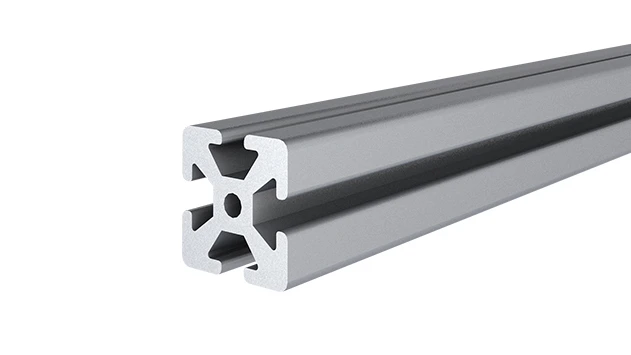
4040F is a 4.00x4.00 CM fractional 40 series square extrusion T-slot profile with four side open T-slots, each side with 4.00cm face. The profile has align-a-grooves to assist in aligning connecting profiles.
Introduction: The Unsung Hero of Modern Workspaces
Walk into any manufacturing plant, electronics workshop, or logistics hub today, and you'll likely spot a common thread weaving through the chaos of productivity: aluminum profiles. These unassuming metal structures—sleek, sturdy, and surprisingly versatile—are the backbone of everything from workbenches to conveyor systems, material racks to lean production lines. Among the countless profiles available, the 4040F EU Standard Aluminum Profile stands out as a workhorse, prized for its perfect balance of strength, lightweight design, and adaptability. But here's the thing: while the profile's structural integrity gets all the attention, its finish plays a quietly critical role in how well it performs, looks, and integrates into your workspace.
Think about it: a workbench in a busy factory takes daily hits from tools, parts, and the occasional coffee spill. A conveyor system in a warehouse needs to stay clean despite dust and debris. A lean system in an electronics plant might need to align with strict ESD (Electrostatic Discharge) protocols, right down to color coding. The finish on your 4040F profile isn't just about aesthetics—it's about durability, functionality, and even workflow efficiency. Whether you're a small workshop owner outfitting a single workbench or a large-scale manufacturer designing an entire production line, choosing between matte, glossy, or custom colors can make a bigger difference than you might expect. Let's dive into the details.
Understanding the 4040F EU Standard Aluminum Profile
Before we jump into finishes, let's get to know the star of the show: the 4040F EU Standard Aluminum Profile. If you're new to the world of aluminum extrusions, "4040F" might sound like a random code, but it's actually a roadmap to its design. The "4040" refers to its cross-section dimensions—40mm by 40mm—making it wide enough to support heavy loads but compact enough to fit into tight spaces. The "F" denotes its "flat" face design, a subtle but useful feature that provides a smooth surface for mounting accessories like brackets, panels, or aluminum profile accessories (think end caps, connectors, or even wheel flanges for roller tracks).
What makes the 4040F so popular? For starters, it's built to the EU standard, meaning it adheres to strict quality and dimensional tolerances—no guesswork when ordering replacement parts or adding extensions. Its aluminum composition (typically 6063-T5, a common alloy for extrusions) gives it impressive strength without the weight of steel, making it easy to assemble, reconfigure, and move if needed. And let's not forget the T-slot design: those grooves running along its length let you slide in bolts, nuts, or specialized connectors, turning a simple profile into a fully customizable structure. From workbenches and material racks to conveyor frames and lean system workstations, the 4040F is the Swiss Army knife of industrial design.

The Finishing Touch: Matte, Glossy, or Custom Colors?
Now, onto the main event: finishes. When you order a 4040F profile, you're not just getting raw aluminum—you're choosing a surface treatment that will define its look, feel, and lifespan. Let's break down the three most common options, and why you might pick one over the others.
Matte Finish: The "No-Fuss" Workhorse
If there was a "default" finish for industrial aluminum profiles, matte would be it—and for good reason. Matte finishes, as the name suggests, have a low-sheen, almost velvety texture that avoids the shine of glossy surfaces. Instead of reflecting light, they absorb it, giving the profile a muted, understated look that's equal parts modern and practical.
How is a matte finish achieved? Most often through either anodizing or powder coating. Anodizing involves submerging the aluminum in an electrolytic solution, creating a protective oxide layer that's naturally matte. Powder coating, on the other hand, sprays a dry powder (usually polyester) onto the surface, which is then baked to form a hard, durable layer—matte powder coatings use additives to reduce sheen. Both processes result in a finish that's not just about looks: that textured surface is surprisingly tough.
So, what's in it for you? For starters, matte finishes are forgiving. In a workshop where tools slide across workbenches and parts get dropped, scratches and scuffs are inevitable—but matte hides them better than any other finish. Fingerprints? Oil smudges? They blend into the texture instead of standing out like a sore thumb, meaning less time wiping down surfaces and more time working. And let's talk about aesthetics: there's a quiet confidence to matte. It says, "I'm here to get the job done, not show off"—perfect for environments where function trumps flash.
Where does matte shine brightest? Think high-traffic areas: a workbench in a automotive repair shop, where mechanics are constantly leaning on it; a material rack in a warehouse, where boxes are slid on and off daily; or a lean system workstation in a factory, where the focus is on efficiency, not sparkle. It's also a favorite for ESD workbenches, where the non-reflective surface reduces eye strain during detailed tasks like circuit board assembly.
Glossy Finish: When Looks Matter (But Not at the Expense of Performance)
If matte is the "practical professional," glossy is the "sharp-dressed colleague." Glossy finishes are all about shine—highly reflective, smooth, and undeniably eye-catching. Run a finger across a glossy 4040F profile, and you'll feel a mirror-like smoothness that's a stark contrast to matte's texture. It's the finish you choose when you want your workspace to make a statement.
Creating a glossy finish takes a bit more finesse. The process often starts with polishing the aluminum to a smooth, reflective base, then applying a clear coat (like a high-gloss powder coating or a clear anodize) to lock in the shine. Some manufacturers even use specialized buffing techniques to enhance the reflectivity, turning the profile into something that looks more like a premium appliance than an industrial part.
The benefits here are twofold: aesthetics and ease of cleaning. A glossy finish adds a touch of professionalism to any space—imagine a retail display workbench showcasing products, or a conveyor system in a customer-facing warehouse where first impressions count. And because the surface is so smooth, spills, dust, and grime wipe off easily with a damp cloth—no scrubbing required. That's a big plus for environments like commercial kitchens or cleanrooms, where hygiene is non-negotiable.
But glossy isn't just for show. In industries like automotive or aerospace, where precision is key, the reflective surface can actually help workers spot imperfections in parts placed on a glossy workbench. And in conveyor systems, the smooth finish reduces friction, making it easier for items to glide along—especially useful for delicate products that need gentle handling.
Custom Colors: Branding, Safety, and Beyond the Basics
Sometimes, standard matte or glossy just won't cut it. Maybe you want your workbenches to match your company's brand colors, or you need to color-code your lean system to separate "raw material" zones from "finished goods." That's where custom colors come in. Custom finishes let you step outside the black, silver, or white box and choose virtually any hue—from bright red for safety zones to soft blue for ESD workstations, or even your logo's exact Pantone shade.
How do you get a custom color? The most common method is powder coating with custom pigments. Powder coating works by electrostatically charging colored powder particles and spraying them onto the aluminum profile, which is then baked to melt and the powder into a smooth, durable layer. Since powder coatings can be mixed to match any color, the possibilities are nearly endless. Some suppliers even offer color-matching services, using samples or Pantone codes to replicate your exact shade.
The advantages of custom colors go beyond branding. In lean manufacturing, color-coding is a powerful tool for reducing errors and speeding up workflows. For example, a material rack with red profiles might signal "urgent parts," while green profiles indicate "safe for handling." In electronics, ESD workstations often use specific colors (like blue or gray) to visually confirm that the area meets anti-static requirements. And in schools or hospitals, bright colors can make equipment more visible and user-friendly—think a yellow conveyor for medical supplies or a purple workbench in a tech lab.
Of course, custom colors do come with a tradeoff: they're often pricier than standard finishes, and minimum order quantities may apply. But for businesses looking to stand out, improve safety, or align with strict brand guidelines, the investment is usually worth it.
Comparing the Finishes: A Side-by-Side Breakdown
Still on the fence? Let's put the three finishes head-to-head to see how they stack up in key areas like durability, maintenance, and ideal use cases.
| Finish Type | Sheen Level | Durability (Scratch Resistance) | Maintenance Needs | Best For… |
|---|---|---|---|---|
| Matte | Low (0-10% sheen) | High (textured surface hides minor scratches) | Moderate (fingerprints and dust less visible; occasional wipe-down) | Busy workshops, material racks, ESD workstations, high-traffic areas |
| Glossy | High (60-90% sheen) | Medium (scratches more visible, but smooth surface resists deep damage) | Low (easy to wipe clean; minimal scrubbing needed) | Retail displays, cleanrooms, customer-facing conveyor systems, precision workbenches |
| Custom Colors | Varies (matte or glossy available) | High (same as base finish; powder coating adds durability) | Varies (depends on base finish; matte custom colors need less upkeep than glossy custom) | Branding, color-coded lean systems, safety zones, ESD compliance |
Choosing the Right Finish: It's All About Context
So, how do you decide which finish is right for your 4040F profile? Start by asking yourself a few key questions:
1. Where will the profile be used? A workbench in a dusty warehouse needs a different finish than one in a corporate office. Matte is better for rough environments; glossy or custom colors work for visible or brand-focused spaces.
2. What's the daily wear and tear? If the profile will see heavy use (e.g., a material rack with constant loading/unloading), matte's scratch resistance is a lifesaver. For lighter use (e.g., a display workbench), glossy or custom colors can shine.
3. What's your budget? Custom colors are the priciest option, followed by glossy (due to extra polishing steps), then matte. If cost is a concern, matte is the most economical choice.
4. Do you need to align with brand or safety standards? If color-coding or branding is critical, custom colors are non-negotiable. Otherwise, stick to standard finishes.
And don't forget to consult your supplier! A reputable lean system supplier or aluminum profile accessories provider will have seen it all—they can share insights on what works in your industry, recommend finishes based on your specific use case, and even provide samples so you can see and feel the difference before committing.
Real-World Stories: How Finishes Impact Daily Work
Still not convinced? Let's look at a few examples of how the right (or wrong) finish choice has made a difference for real businesses.
Case 1: The Factory Workbench That Survived the Chaos A mid-sized automotive parts manufacturer in Germany recently upgraded their assembly line workbenches to 4040F profiles. Initially, they opted for glossy finishes, thinking it would look more professional. But within weeks, the workbenches were covered in scratches from tools, oil stains that wouldn't wipe off, and fingerprints that made the surfaces look perpetually dirty. The solution? They switched to matte finishes, and the difference was night and day. The new surfaces hid scratches, resisted stains, and the team reported feeling less stressed working at a bench that didn't look "ruined" by normal use.
Case 2: The E-Commerce Warehouse's Branded Conveyors An online retailer in the UK wanted their fulfillment center to feel more "on-brand" for visitors and employees. They worked with a lean system supplier to install custom blue glossy conveyors (matching their logo) and matte gray workbenches. The blue conveyors became a talking point for tours, and the color-coding helped new hires quickly learn which lines handled "fast-track" orders. Plus, the glossy finish made it easy to spot and remove debris, cutting down on jams and delays.
Case 3: The Electronics Lab's Color-Coded Lean System A medical device manufacturer in the US needed to comply with strict ESD regulations while also improving workflow efficiency. They used custom colors for their 4040F profiles: red for "ESD-sensitive zones" (workbenches and material racks where circuit boards were assembled), green for "non-sensitive zones," and yellow for "safety equipment areas." The color-coding reduced errors by 30% in the first month, and the matte finish on the red workbenches minimized static buildup—a critical detail for protecting delicate components.
Wrapping Up: More Than Just a Pretty Surface
At the end of the day, the finish on your 4040F EU Standard Aluminum Profile is about more than aesthetics—it's about creating a workspace that works for you. Whether you choose matte for its no-nonsense durability, glossy for its shine and easy cleaning, or custom colors for branding and safety, the right finish can boost efficiency, reduce maintenance headaches, and even improve morale. And when paired with high-quality aluminum profile accessories—like end caps, connectors, or roller tracks—your 4040F profiles become more than just structures; they become a seamless part of your workflow.
So, the next time you're ordering aluminum profiles, take a moment to think about the finish. Talk to your supplier, ask for samples, and consider how the surface will hold up to your daily grind. After all, in the world of workspaces, the smallest details often make the biggest difference.