- Company Articles
- Products and Technology
- Product knowledge
- Five Way Straight Lean Pipe Joint Chrome: Common Myths vs. Facts

Five Way Straight Lean Pipe Joint Chrome: Common Myths vs. Facts
Related Product
Five Way Straight Lean Pipe Joint Chrome
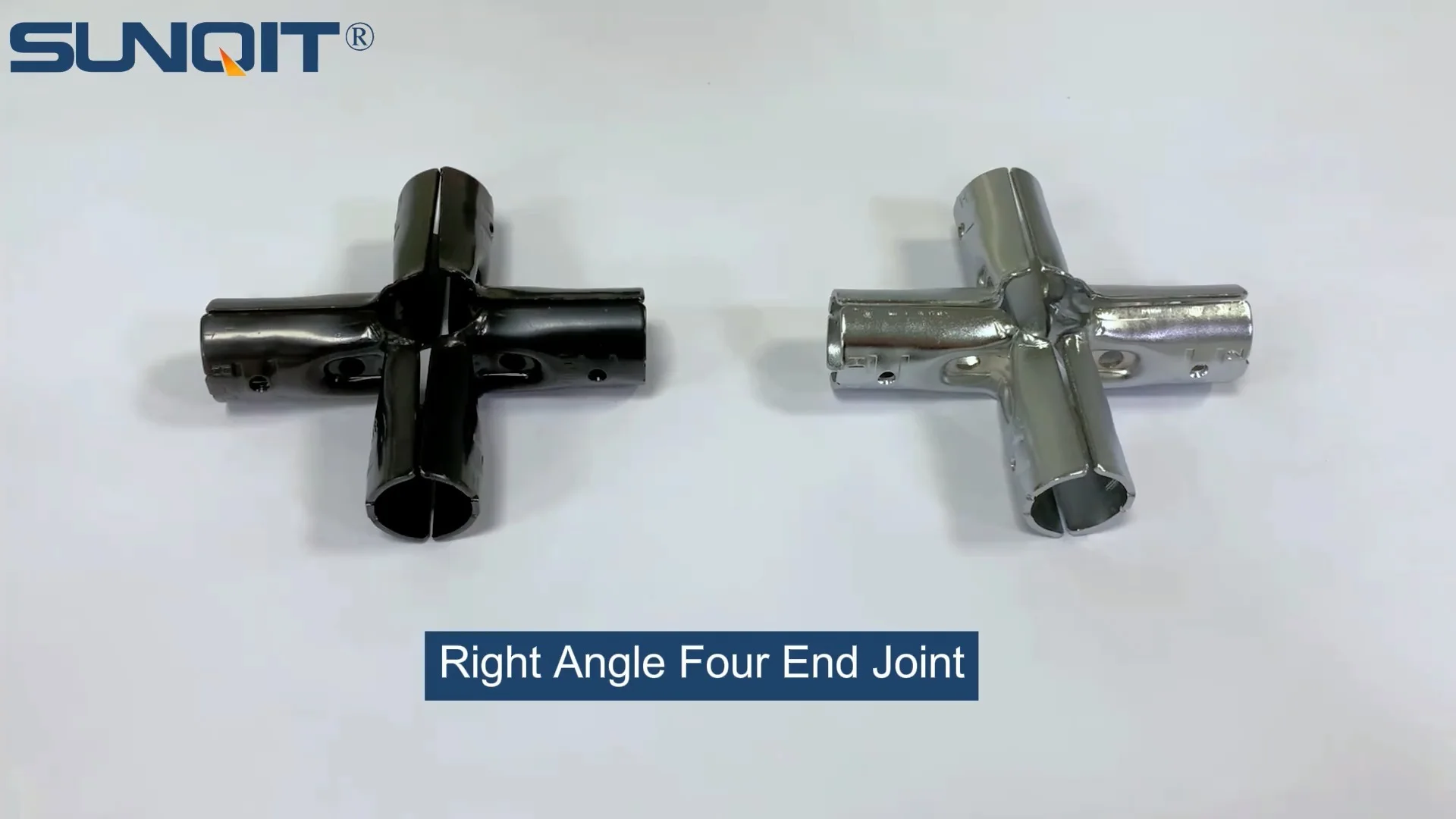
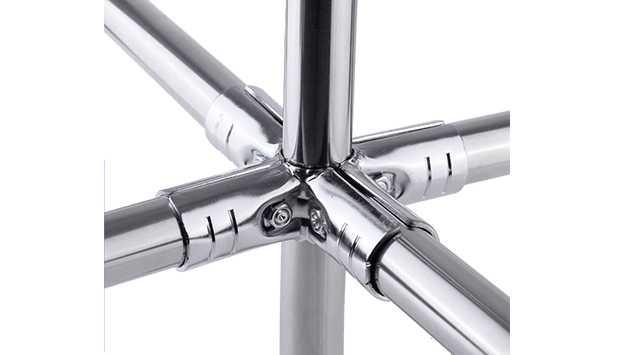
Five way straight lean pipe joint, for 5 pcs 28mm lean pipe connect in straight angle,which used widely in workbench, flow rack, hand trolley frame connection.
In the fast-paced world of manufacturing and assembly, efficiency isn't just a buzzword—it's the backbone of success. Every second saved, every movement streamlined, and every resource optimized adds up to better productivity, happier teams, and a healthier bottom line. At the heart of this efficiency revolution lies the concept of lean system —a philosophy that prioritizes eliminating waste while maximizing value. But lean systems don't run on alone; they rely on tangible, well-designed components that work in harmony. One such component, often overlooked yet critical, is the five way straight lean pipe joint chrome.
Walk through any modern factory, warehouse, or assembly line, and you'll likely spot structures built with lean pipes: workbenches tailored to specific tasks, flow racks that guide materials seamlessly, or roller tracks that keep production moving without hitches. These structures are only as strong and flexible as the joints that hold them together. The five way straight lean pipe joint chrome, with its ability to connect multiple pipes in different directions, is a workhorse in this ecosystem. Yet, despite its ubiquity, misconceptions about this small but mighty part persist—myths that can lead businesses to underutilize its potential, overspend on unnecessary alternatives, or even compromise safety.
Today, we're diving deep into the world of five way straight lean pipe joint chrome. We'll separate fact from fiction, debunk common myths, and shed light on why this unassuming component deserves a spot in your lean system toolkit. Whether you're a small workshop owner just starting to explore lean principles or a seasoned operations manager looking to refine your setup, understanding the truth behind these myths could be the key to unlocking smoother workflows, longer-lasting equipment, and a more resilient production line.
Why Lean Pipe Joints Matter in Your Lean System
Before we tackle the myths, let's take a moment to appreciate why lean pipe joints—especially the five way straight chrome variety—are so crucial. Think of a lean system as a puzzle: each piece (pipes, workbenches, roller tracks, etc.) needs to fit perfectly to create a cohesive, functional whole. Joints are the glue that holds this puzzle together. They determine how easily you can reconfigure a workbench, how much weight a flow rack can support, and how quickly your team can adapt to new production needs.
The five way straight lean pipe joint chrome, in particular, stands out for its versatility. With five connection points, it allows for the creation of complex, multi-directional structures without the need for custom welding or expensive tooling. This flexibility is a cornerstone of lean manufacturing, where adaptability can mean the difference between meeting a tight deadline and falling behind. But here's the catch: if you don't understand how to use these joints properly—or if you buy into myths about their limitations—you might as well be using a wrench to hammer a nail.
Let's consider a real-world example. A small electronics assembly plant recently reached out to a lean pipe supplier frustrated with their workflow. Their production line relied on a basic workbench setup that required workers to twist and reach for tools, wasting precious time. The supplier recommended integrating five way joints to build a custom overhead tool rack and side-mounted material holder, all connected to the existing workbench. The result? A 30% reduction in motion waste and a 15% boost in daily output—all because of a better understanding of how joints could transform their space.
Now, let's unpack the myths that might be holding your business back from similar gains.
Myth vs. Fact: Setting the Record Straight
Over the years, we've heard it all—from "these joints are only for big factories" to "chrome coating is just for show." Let's break down the most persistent myths and replace them with hard facts.
Myth 1: "Five Way Straight Lean Pipe Joints Are Only Useful for Large-Scale Factories"
The Misconception: Many small business owners assume that complex lean components like five way joints are overkill for their operations. "We're just a team of 10—we don't need all that fancy stuff," they say. They stick to basic, one-size-fits-all workbenches or makeshift shelving, figuring simplicity is better for small spaces.
The Truth: Small and medium-sized businesses (SMBs) stand to gain the most from flexible lean components. Unlike large factories with dedicated engineering teams and endless budgets, SMBs often operate with limited space and resources. This makes adaptability non-negotiable. A five way joint, for example, lets you build a compact, multi-functional workbench that can serve as an assembly station in the morning and a packaging area in the afternoon—all without taking up extra square footage.
Take a local bakery, for instance. They needed a way to organize mixing bowls, measuring tools, and cooling racks in a tight kitchen. By using five way joints, they constructed a tiered rack that fit into a corner, with pipes extending outward to hold tools at arm's reach. No more tripping over stacks of bowls or searching for a missing whisk. The joint's small size and multiple connection points made it perfect for their space-constrained environment.
Size doesn't dictate the need for efficiency—if anything, smaller operations have less room for waste. Five way joints aren't about "fancy equipment"; they're about making every inch of your workspace work harder for you.
Myth 2: "Chrome Coating Is Purely Aesthetic—It Doesn't Affect Performance"
The Misconception: Walk into a hardware store, and you'll see shiny chrome fixtures everywhere. It's easy to assume that the chrome on lean pipe joints is just another marketing ploy to make products look more appealing. "Why pay extra for chrome when plain steel works?" some ask, opting for cheaper, uncoated alternatives.
The Truth: Chrome coating is a workhorse, not a showpiece. Yes, it adds a sleek, professional look to your lean structures, but its real value lies in durability and longevity. Chrome acts as a barrier against rust, corrosion, and wear—three enemies of any production environment. Think about it: lean pipe joints are constantly under stress—they're twisted, tightened, and day in and day out. Without proper protection, steel joints can start to corrode, especially in humid or dusty settings, weakening the structure over time.
A manufacturer of automotive parts once shared a cautionary tale: they switched to uncoated joints to cut costs, only to find that within six months, the joints in their wash bay had developed rust spots. The rust spread to the pipes, causing them to seize up when the team tried to reconfigure a workbench. The "savings" from cheaper joints were wiped out by the cost of replacing corroded parts and the downtime during repairs.
Chrome coating also reduces friction, making it easier to adjust joints during reconfiguration. This might seem like a small detail, but when your team is racing to set up a new assembly line for a rush order, every second counts. So, no—chrome isn't just for looks. It's an investment in the lifespan of your lean system.
Myth 3: "All Lean Pipe Joints Are Interchangeable—Brand Doesn't Matter"
The Misconception: "A joint is a joint, right?" Many buyers assume that any lean pipe joint will work with any pipe, regardless of brand or specifications. They mix and match parts from different suppliers, figuring it's a way to save money or use up leftover inventory.
The Truth: Interchangeability is a myth—one that can lead to wobbly structures, safety hazards, and wasted time. Lean pipe joints come in various tolerances, materials, and designs, and not all are compatible with standard pipes or with each other. For example, a five way joint from a low-quality supplier might have slightly off-center threads, making it impossible to tighten securely with a pipe from another brand. Or the connection points might be too loose, causing the structure to shift under load.
This is where choosing a reputable lean pipe supplier becomes critical. Trusted suppliers design their joints to work seamlessly with their pipes and accessories, ensuring a snug, secure fit every time. They also test their products for load capacity, durability, and compatibility, so you don't have to.
Consider a warehouse that tried to save money by buying joints from three different suppliers. Their flow rack, built with a mix of these joints, began to sag after a few weeks, causing boxes to slide off unevenly. An inspection revealed that the joints had different thread depths, leading to uneven tension in the structure. The warehouse had to replace all the joints with a single brand, costing them more in the long run than if they'd chosen quality from the start.
When it comes to lean pipe joints, consistency matters. Stick to a single supplier or verify compatibility before mixing parts—your team's safety and your bottom line will thank you.
Myth 4: "Installing Five Way Joints Requires Specialized Training or Tools"
The Misconception: Some businesses shy away from using five way joints because they assume installation is complicated. "We don't have engineers on staff—how will we figure this out?" They hire expensive contractors to set up even basic structures, adding unnecessary costs to their lean initiatives.
The Truth: One of the greatest advantages of lean pipe systems is their simplicity—and five way joints are no exception. Most modern joints are designed for "tool-less" or "minimal-tool" assembly. With a basic hex key or wrench (often included with the joint), anyone on your team can learn to assemble, disassemble, or reconfigure a structure in minutes.
Reputable suppliers typically provide clear, step-by-step guides or video tutorials to walk your team through the process. For example, a furniture manufacturer we worked with trained their assembly line workers to build custom workbenches using five way joints in under an hour. The workers, who had no prior experience with lean systems, were able to follow the color-coded instructions and adjust the workbenches to fit different chair models as needed.
The key is to choose joints with intuitive designs—like those with clear marking for pipe insertion depth or easy-grip knobs for tightening. Avoid overcomplicating things: if a joint requires a special tool or a PhD to install, it's not aligned with the lean principle of simplicity.
Myth 5: "Five Way Joints Can't Support Heavy Loads—They're Only for Lightweight Use"
The Misconception: "These plastic or metal joints look flimsy—there's no way they can hold up heavy equipment or materials," skeptics argue. They stick to traditional steel racks or welded structures, assuming those are the only options for heavy-duty applications.
The Truth: Modern five way straight lean pipe joints are engineered to handle impressive weight capacities—often far more than the average workshop or factory needs. Most chrome-plated steel joints, for example, can support up to 500 pounds per connection point when properly installed with high-quality pipes. This makes them suitable for everything from holding power tools on a workbench to supporting bins of raw materials on a flow rack.
Let's put this in perspective: a standard five way joint used in a material rack can easily hold 10-15 boxes of electronics components (each weighing 20-30 pounds) without bending or slipping. In fact, many suppliers provide load-testing data to back up their claims. A lean pipe supplier we partner with, for instance, publishes test results showing that their five way joints can withstand 1,000 pounds of static load for 24 hours without deformation.
The secret lies in the joint's design—reinforced stress points, precision-machined threads, and high-grade materials like cold-rolled steel. When paired with sturdy pipes (such as aluminum profile or stainless steel), these joints create structures that are not only flexible but also remarkably strong.
A food processing plant recently used five way joints to build a custom drying rack for large baking trays. Each tray, loaded with freshly baked goods, weighs around 40 pounds, and the rack holds 12 trays at a time. The joints have held up flawlessly for over a year, even in the humid environment of the bakery.
Myth vs. Fact at a Glance
| Myth | Fact | Why It Matters |
|---|---|---|
| "Only useful for large factories" | Ideal for small businesses—maximizes space and adaptability | SMBs need efficiency too; small spaces benefit most from flexible design |
| "Chrome coating is just for aesthetics" | Chrome prevents rust, reduces friction, and extends joint life | Corrosion and seized joints lead to costly repairs and downtime |
| "All joints are interchangeable" | Brand and quality matter—mismatched parts cause instability | Wobbly structures risk injury and require frequent replacements |
| "Installation needs specialized training" | Tool-less design makes assembly accessible to any team member | Quick reconfiguration saves time during rush orders or layout changes |
| "Can't support heavy loads" | Engineered to handle 500+ pounds per connection point | Safe, reliable support for tools, materials, and equipment |

Choosing the Right Lean Pipe Supplier: What to Look For
Now that we've debunked the myths, let's talk about how to select the right five way straight lean pipe joint chrome (and other components) for your needs. The supplier you choose can make or break your lean system's performance, so it's worth taking the time to do your research.
1. Prioritize Quality Over Price
It's tempting to opt for the cheapest joints on the market, but as we've seen, low-quality parts often cost more in the long run. Look for suppliers who use high-grade materials (like cold-rolled steel for joints) and rigorous testing standards. Ask for load capacity data, corrosion resistance ratings, and warranty information. A reputable supplier will be happy to share these details—if they hesitate, that's a red flag.
2. Check Compatibility Across Products
Your lean system isn't just joints and pipes—it's a ecosystem of workbenches, roller track , casters, and accessories. Choose a supplier that offers a full range of compatible components. This ensures that your five way joints will work seamlessly with your aluminum profile workbench or your roller track conveyor, eliminating the frustration of mismatched parts.
3. Look for Responsive Customer Support
Even with the best products, questions will arise. Maybe you need help designing a custom flow rack, or you're unsure which joint to use for a specific application. A good supplier will have a knowledgeable customer support team that can guide you through the process. Test their responsiveness before placing a large order—send an email or make a call with a question and see how quickly and thoroughly they respond.
4. Consider Customization Options
Every business has unique needs. A supplier that offers customization—like custom-colored joints, specialized coatings, or modified connection points—can help you build a lean system that's tailored to your workflow. For example, if your team works with ESD-sensitive electronics, look for suppliers who offer ESD-safe joints to prevent static damage.
Final Thoughts: Embracing the Truth to Boost Efficiency
The five way straight lean pipe joint chrome is more than just a small part of your production line—it's a catalyst for efficiency, adaptability, and growth. By debunking the myths that surround it, you can unlock its full potential: creating custom workspaces that fit your team's needs, reducing waste in time and resources, and building a lean system that scales with your business.
Remember, lean manufacturing isn't about perfection—it's about progress. It starts with questioning assumptions, seeking out facts, and investing in tools that align with your goals. Whether you're a small bakery or a large automotive plant, the right joints (and the right mindset) can transform your operations from chaotic to streamlined.
So, the next time you look at your production floor, take a closer look at the joints holding it all together. Are they helping you thrive, or are they holding you back? With the facts in hand, you're ready to make the choice that will drive your business forward.