- Company Articles
- Products and Technology
- Product knowledge
- Five Way Straight Lean Pipe Joint Chrome: Compatibility with Different Lean Pipe Materials

Five Way Straight Lean Pipe Joint Chrome: Compatibility with Different Lean Pipe Materials
Related Product
Five Way Straight Lean Pipe Joint Chrome
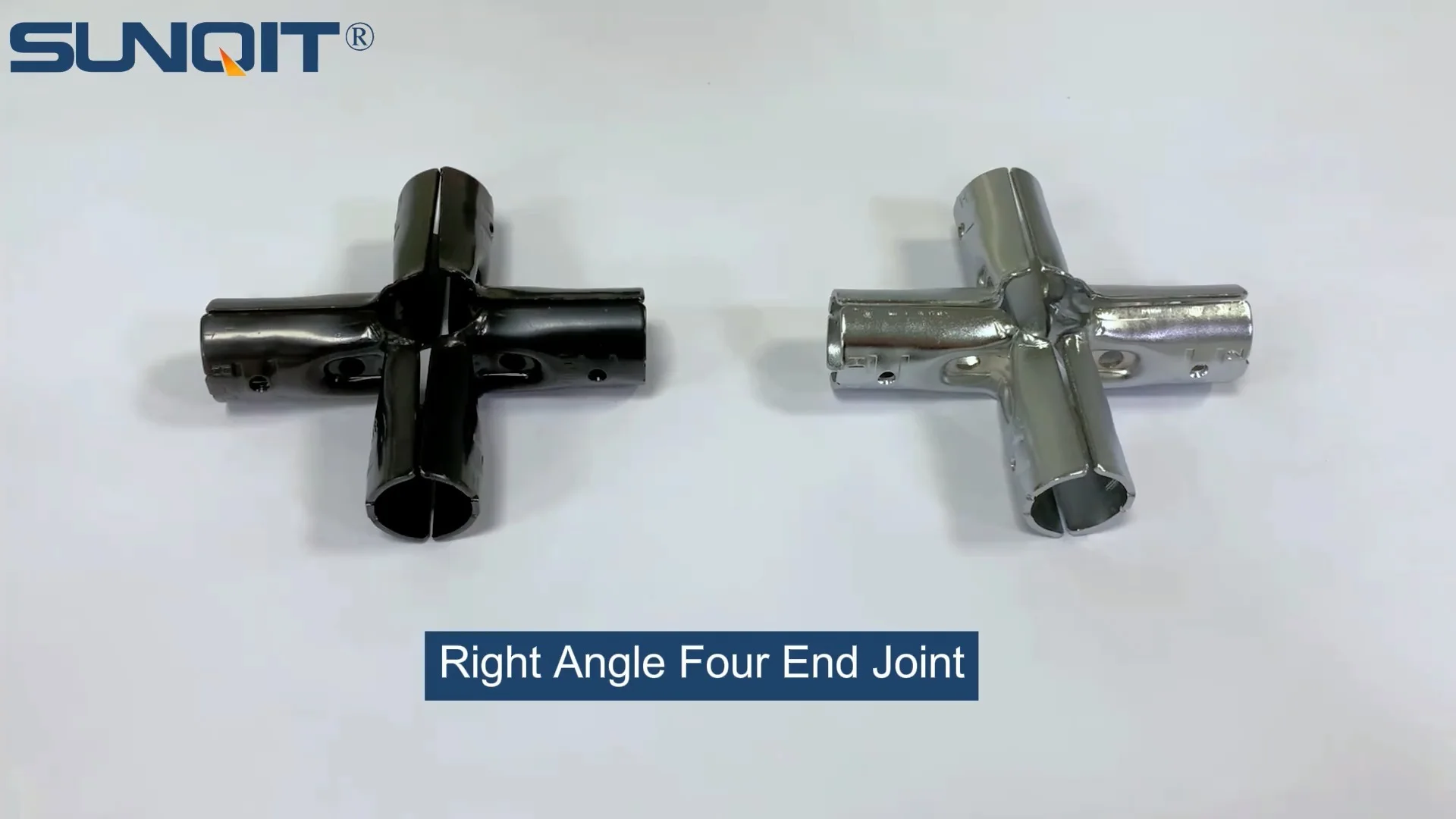
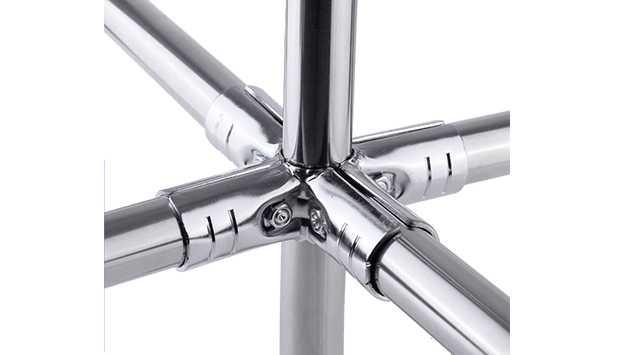
Five way straight lean pipe joint, for 5 pcs 28mm lean pipe connect in straight angle,which used widely in workbench, flow rack, hand trolley frame connection.
Picture this: Maria, a production supervisor at a mid-sized electronics assembly plant, stands in the middle of her factory floor, hands on her hips, staring at a chaotic workbench. Her team has been struggling all week—parts are piling up, tools keep sliding off the wobbly shelves, and every time someone bumps the flow rack, the whole structure creaks like it might collapse. "We need to fix this," she mutters, scrolling through a catalog of lean system components. She's heard about lean pipes and joints, but with so many options—PE coated, aluminum, stainless steel—how does she know which will work together? That's when her lands on a small but critical part: the five way straight lean pipe joint chrome. Little did she know, this unassuming component would be the key to transforming her messy assembly line into a streamlined, rock-solid workflow.
In the world of lean manufacturing, where efficiency and adaptability reign supreme, the smallest parts often make the biggest impact. The five way straight lean pipe joint chrome is one such part. It's not just a connector; it's the backbone of modular lean systems, allowing teams to build everything from workbenches and flow racks to conveyor systems and turnover trolleys. But its true power lies in its compatibility with different lean pipe materials. Whether you're working with traditional PE coated pipes, lightweight aluminum lean pipes, or heavy-duty stainless steel pipe series, this joint bridges the gap, turning disjointed components into cohesive, functional structures. Let's dive into how it works, why it matters, and how it can elevate your lean system—no matter what materials you choose.
Meet the Five Way Straight Lean Pipe Joint Chrome: A Connector Built for Versatility
First, let's get to know the star of the show. The five way straight lean pipe joint chrome isn't your average connector. At first glance, it looks like a small, shiny metal piece with five openings—one straight through, and four perpendicular (up, down, left, right). But its design is deceptively simple. The chrome plating isn't just for looks; it adds a layer of corrosion resistance, making it durable in humid or dusty factory environments. Inside each opening, precision-machined threads and a grippy inner surface ensure a tight, wobble-free fit with pipes. And unlike single or three-way joints, the five-way design reduces the need for multiple connectors, cutting down on assembly time and creating cleaner, more organized structures.
"We used to use three-way joints everywhere," says Tom, a maintenance technician at a automotive parts plant. "To build a basic workbench, we'd need at least 8 joints—now, with the five-way, we can do it with 4. It's like building with fewer Legos but getting a sturdier castle." That sturdiness is no accident. The joint is engineered to handle both vertical and horizontal loads, so whether you're mounting a shelf above a workbench or building a flow rack with multiple levels, it distributes weight evenly, preventing stress cracks or loosening over time.
Compatibility with Traditional Lean Pipes: PE Coated Pipes and the Joint That Holds Them Together
Let's start with the classic: traditional PE coated lean pipes. These are the workhorses of many factories—affordable, durable, and easy to work with. Typically made of steel with a 1.2mm, 1.5mm, or 2.0mm thick polyethylene coating, they're resistant to scratches and offer a non-slip surface, making them ideal for everything from assembly line workbenches to material racks. But even the best pipes are only as good as the joints holding them. That's where the five way straight lean pipe joint chrome shines.
The secret to their compatibility? The joint's inner grip. When you insert a PE coated pipe into one of the joint's openings and tighten the set screw, the grippy surface inside bites into the plastic coating without damaging it, creating a secure bond. Unlike some cheaper joints that slip or crack the coating, this chrome-plated joint applies even pressure, ensuring a tight fit that lasts. "We tested it with our old PE pipes," Maria recalls. "We built a flow rack with three levels, loaded it with 50kg of circuit boards, and shook it—nothing moved. The joints didn't budge, and the pipes didn't scratch. It was a game-changer for our assembly line."
Real-world results speak for themselves. Take a mid-sized appliance manufacturer in Ohio that was struggling with disorganized parts storage. Their old wooden shelves were heavy and hard to reconfigure, so they switched to PE coated lean pipes and five way joints. In a day, they built modular material racks that could be adjusted as their product lines changed. "We used to have to call a carpenter to modify shelves," says their production manager. "Now, two workers can reconfigure a rack in 30 minutes using these joints. And because the pipes and joints are so affordable, we saved 40% compared to custom metal shelving."
Aluminum Lean Pipes: Lightweight Power, Perfectly Paired with the Chrome Joint
While PE coated pipes are great for affordability, aluminum lean pipes are revolutionizing lean systems with their lightweight yet robust nature. Aluminum is 30% lighter than steel but just as strong, making it ideal for applications where portability matters—think mobile workbenches, ESD workstations for electronics, or turnover trolleys that need to be moved across the factory floor. But aluminum's smooth, sleek surface can be tricky for some joints; a poor fit can lead to slipping or instability. Not so with the five way straight lean pipe joint chrome.
The chrome-plated finish of the joint plays a key role here. Unlike rough steel joints that might scratch aluminum's anodized surface, the smooth chrome coating glides against aluminum pipes, preventing damage while still providing enough friction to hold tight. "We build ESD workstations for semiconductor manufacturing," explains Raj, an engineer at a tech firm. "Static control is critical, so we use aluminum lean pipes because they're conductive and can be grounded. But we need the workstations to be light enough to move with a caster wheel, yet sturdy enough to hold sensitive equipment. The five way joint is perfect— it connects the aluminum pipes without scratching them, and the whole structure feels solid, even when we roll it across the floor."
Another advantage? Aluminum and the five way joint create systems that are both modular and lightweight. A pharmaceutical company in California recently switched to aluminum lean pipes and these joints to build cleanroom workbenches. "We needed workstations that could be sanitized easily and moved quickly for deep cleaning," says their facility manager. "Aluminum doesn't rust, and the chrome joints resist corrosion from disinfectants. Plus, a two-person team can disassemble and reassemble a workstation in under an hour—something we could never do with our old steel benches."

Stainless Steel Pipe Series: When Hygiene and Durability Can't Be Compromised
Now, let's talk about the heavyweights: stainless steel pipe series. These are the go-to for industries where hygiene, corrosion resistance, and extreme durability are non-negotiable—think food processing, pharmaceuticals, or chemical manufacturing. Stainless steel pipes (often 1.0mm, 1.2mm, or 2.0mm thick) are impervious to water, chemicals, and bacteria, making them easy to sanitize and ideal for harsh environments. But connecting them requires a joint that can match their toughness. Enter the five way straight lean pipe joint chrome.
Chrome and stainless steel are a match made in manufacturing heaven. Both are resistant to corrosion, so even in wet or chemical-heavy environments, the joints won't rust or degrade. The joint's precision machining also ensures a tight fit with stainless steel's smooth surface. "We use stainless steel pipes in our bottling plant," says a quality control manager at a craft brewery. "Every day, we hose down the conveyor systems with hot water and sanitizer. Before, we used plastic joints that warped; now, with these chrome five way joints, we haven't had a single issue. They stay tight, don't rust, and the stainless steel pipes glide through them perfectly for our roller track systems."
Another benefit? Stainless steel's strength means it can handle heavier loads, and the five way joint is up to the task. A meat processing plant in Texas built a material rack using 2.0mm stainless steel pipes and five way joints, loading each shelf with 80kg of meat cuts. "The racks have been up for two years, and they're still as sturdy as day one," their operations director reports. "The joints haven't loosened, and we can pressure wash them without worrying about damage. It's the most reliable system we've ever had."
A Quick Guide: Which Pipe Material & Joint Combo is Right for You?
With so many options, how do you choose? It all comes down to your environment, load requirements, and budget. To help, here's a quick breakdown:
| Pipe Material | Best For | Key Benefit with Five Way Joint | Example Applications |
|---|---|---|---|
| PE Coated Lean Pipes | General manufacturing, assembly lines, budget-friendly setups | Affordable, non-slip, easy to assemble | Workbenches, material racks, turnover trolleys |
| Aluminum Lean Pipes | Electronics, cleanrooms, mobile systems | Lightweight, conductive (for ESD), corrosion-resistant | ESD workstations, portable flow racks, aluminum profile workbenches |
| Stainless Steel Pipe Series | Food processing, pharmaceuticals, harsh environments | Hygienic, rust-proof, extreme durability | Sanitary conveyor systems, chemical-resistant material racks |
Remember, there's no one-size-fits-all. Many teams mix materials: using aluminum for upper shelves (to save weight) and stainless steel for lower, heavy-load sections. The five way joint makes this possible, acting as the universal translator between different pipe types.
Installation Tips: Getting the Most Out of Your Five Way Joints
Even the best joint won't perform if installed incorrectly. Here are a few pro tips to ensure your lean system is stable, safe, and long-lasting:
- Don't overtighten the set screws. It's tempting to crank them down, but too much force can strip the threads or crack the pipe coating. Tighten until the pipe doesn't rotate—you'll feel resistance, but stop before it gets too hard.
- Check alignment before finalizing. Use a level to ensure pipes are straight and joints are square. A wobbly structure often starts with a misaligned joint.
- Clean the pipes first. Dust, oil, or debris on the pipe surface can prevent the joint from gripping properly. Wipe pipes with a dry cloth before assembly.
- Inspect regularly. Over time, vibrations can loosen set screws. A quick check every month (and a gentle tighten if needed) will keep your system stable.
"We learned the hard way about overtightening," laughs Tom. "A new technician cranked the screws so hard, he cracked a PE pipe. Now we train everyone to 'tighten until snug, not until it squeaks.'"
The Bottom Line: Building Lean Systems That Grow With You
At the end of the day, lean manufacturing is about adaptability. Your systems need to evolve as your products, team, and goals change. The five way straight lean pipe joint chrome isn't just a connector—it's a tool for adaptability. It works with the materials you have, connects the ones you want to try, and turns your vision of a streamlined workflow into reality.
Maria's story sums it up best. "After installing these joints with a mix of PE and aluminum pipes, our assembly line is unrecognizable. The workbenches are stable, the flow racks are organized, and my team is 25% more productive. And when we launch our new product line next month? We'll just reconfigure the joints and pipes—no need to buy all-new equipment. That's the power of a truly compatible lean system."
So whether you're just starting your lean journey or upgrading an existing setup, don't overlook the small parts. The five way straight lean pipe joint chrome might be tiny, but its impact is huge. It's the glue that holds your lean system together—strong, versatile, and ready to grow with you.