- Company Articles
- Products and Technology
- Product knowledge
- Five Way Straight Lean Pipe Joint Chrome: Cost-Effective Solutions for Small Factories

Five Way Straight Lean Pipe Joint Chrome: Cost-Effective Solutions for Small Factories
Related Product
Five Way Straight Lean Pipe Joint Chrome
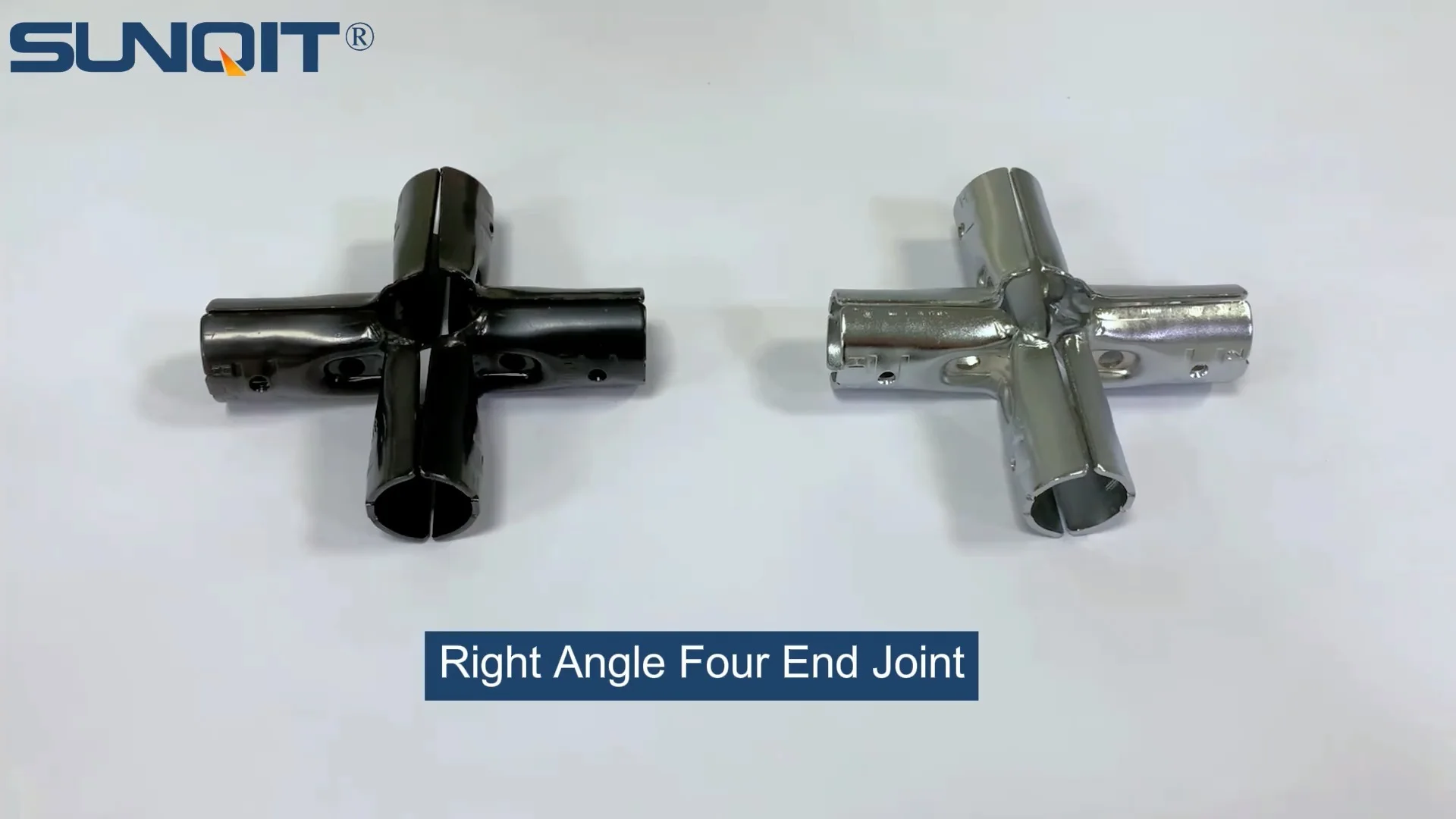
Five way straight lean pipe joint, for 5 pcs 28mm lean pipe connect in straight angle,which used widely in workbench, flow rack, hand trolley frame connection.
The Small Factory Struggle: Rigidity in a World That Demands Flexibility
Walk into any small manufacturing or assembly workshop, and you'll likely spot the same silent productivity killers: workbenches bolted to the floor that can't adjust when a new product line starts, flow racks that collect dust because they're too bulky to reconfigure, and workers spending precious minutes wrestling with heavy materials instead of focusing on assembly. For small factories, where every square foot and every minute counts, these inefficiencies aren't just frustrating—they're costly. When you're competing with larger players with deeper pockets, being stuck with rigid, one-size-fits-nobody equipment can feel like trying to run a race with concrete shoes.
Take Maria, for example. She runs a small electronics assembly plant with 15 workers. Last quarter, her team landed a contract to assemble smart home sensors, a product line with different dimensions than their usual circuit boards. Overnight, their existing workbenches—built for fixed-height tasks—became a problem. Workers hunched over, slowing down assembly, and the old flow rack, designed for wider components, left sensors teetering on the edges. Maria considered buying custom workbenches, but quotes came back at $5,000 a pop—money she couldn't afford without cutting into her already tight profit margin. "We either adapt or lose the contract," she told me. "But how do you adapt when your tools won't let you?"
This is where lean manufacturing principles step in—not as some lofty corporate buzzword, but as a lifeline for small operations. At its core, lean is about doing more with less: less space, less time, less waste. And the backbone of any lean system? Flexible, modular tools that grow and change with your needs. Enter the unsung hero of lean setups: the five way straight lean pipe joint chrome. It's not the flashiest piece of equipment, but for small factories like Maria's, it's the key to building a workspace that bends, not breaks, when demands shift.
What Is the Five Way Straight Lean Pipe Joint Chrome, Anyway?
Let's start with the basics. Imagine (oops—scratch that) Think of a lean pipe system as the ultimate building block set for adults. You've got metal or aluminum pipes (the "bricks"), and joints (the "connectors") that hold them together. The five way straight lean pipe joint chrome is one of those connectors, but with a superpower: it can link up to five pipes in straight or perpendicular directions, all from a single, sturdy point. Picture a central hub with five threaded openings, each designed to lock onto a lean pipe with a simple twist. No welding, no drilling, no calling in a contractor. Just hand-tightened stability that can support shelves, workbench frames, or flow rack rails.
The "chrome" in its name isn't just for show. Chrome plating adds a layer of durability, resisting rust and scratches even in dusty factory environments. Unlike plastic joints that crack under heavy loads or unplated steel that corrodes when exposed to moisture, these chrome joints are built to last. For small factories that can't afford to replace parts every few months, that longevity is a game-changer. "We've had the same set of chrome joints for three years," says Raj, who runs a automotive parts workshop. "They've been banged by trolleys, splashed with oil, and they still lock pipes in place like day one."
But the real magic? Versatility. A single five way joint can turn a bundle of lean pipes into almost anything: a height-adjustable workbench, a multi-tier flow rack for materials, or even a mobile trolley with caster wheels. Need to add a shelf to a workbench? Screw a pipe into the joint. Want to reposition a flow rack to shorten the distance between stations? Unscrew the joint, rearrange the pipes, and you're back in business—all in under an hour. For small factories, where production needs can shift weekly, that flexibility isn't just convenient; it's survival.
Building Blocks of Efficiency: How the Five Way Joint Transforms Your Workspace
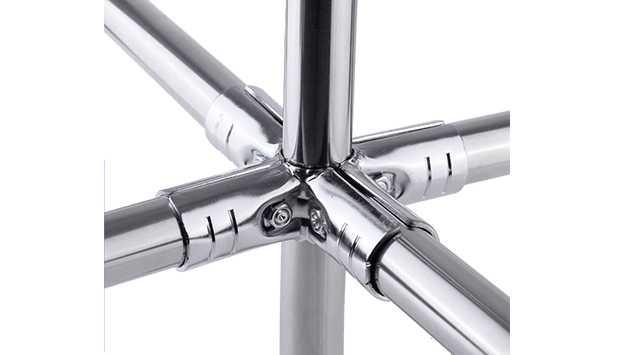
Let's break down how this humble joint works with other lean components to solve real problems. We'll focus on three key setups: the lean pipe workbench, the flow rack, and the mobile trolley—all staples in small factories.
1. The Lean Pipe Workbench: From Static to Adaptable
A traditional workbench is a one-trick pony. It's built for a specific task, and if your task changes, you're out of luck. But with a lean pipe workbench built using five way straight lean pipe joints, you're in control. Let's say you need a workbench for assembling small parts one week and larger components the next. Using the five way joint, you can adjust the height by adding or removing pipe sections. Need a shelf above for tools? Attach a horizontal pipe to the joint. A bin for screws and washers below? Add a lower shelf. Maria, from the electronics plant, did exactly this: her team built two workbenches using five way joints, aluminum lean pipes, and a lightweight aluminum honeycomb panel for the surface. When the smart sensor contract came in, they raised the benches by 6 inches in 20 minutes—no tools, no contractors, no $5,000 bill.
And because the joint allows for diagonal bracing (by connecting pipes at 45-degree angles), the workbench stays stable even when loaded with heavy equipment. "We were worried it might wobble," Maria admits. "But with the five way joints holding the vertical and diagonal pipes, it's sturdier than our old wooden bench. One worker even stood on it to reach a shelf, and it didn't budge."
2. Flow Racks: Materials That Move When You Do
Flow racks are supposed to make material handling easier—gravity pulls components from the back to the front, so workers don't have to bend or stretch. But traditional flow racks are often pre-built, with fixed shelf heights and widths. If your components change size, the rack becomes useless. Not so with a lean pipe flow rack built using five way joints. Here's how it works: use the joint to connect vertical pipes as the frame, then attach horizontal roller tracks (another key component) to create shelves. The five way joint lets you add as many tiers as you need—three for small parts, five for larger ones—and adjust the spacing between shelves in minutes.
Raj's automotive workshop uses this setup for storing gaskets and seals. "We used to have a metal flow rack with fixed shelves," he says. "Half the time, the gaskets would fall off because the shelves were too wide. Now, with the lean pipe rack, we can make each shelf exactly the width of the gasket boxes. The five way joints hold the roller tracks in place, and gravity does the rest. Workers just slide a box forward—no more bending or fumbling."
3. Mobile Trolleys: Taking the "Heavy" Out of Heavy Lifting
Ever watched workers push a loaded trolley across a factory floor, grunting as the wheels stick? That's not just hard on their backs—it's a productivity killer. A mobile trolley built with five way joints and caster wheels solves that. The joint connects the vertical pipes of the trolley frame, while caster wheels (lockable, for safety) attach to the base. Suddenly, a cart that once took two people to move can be pushed by one, even when loaded with 200 pounds of materials. "We built three trolleys using five way joints and 4-inch caster wheels," says Maria. "Now, instead of carrying sensor components from the storage room to the assembly line, workers wheel them over in 30 seconds. It's cut down on fatigue and freed up time for actual assembly."

Cost-Effective by Design: Why the Five Way Joint Saves You Money (Now and Later)
For small factories, budget is always top of mind. So let's talk numbers. A single five way straight lean pipe joint chrome costs around $8–$12, depending on the supplier. Compare that to the $500+ price tag for a custom metal bracket, or the $5,000 for a pre-built workbench. But the savings go beyond upfront costs. Let's break it down:
| Category | Traditional Fixed Equipment | Lean Pipe System with Five Way Joints |
|---|---|---|
| Upfront Cost | $3,000–$5,000 per workbench/flow rack | $300–$500 per setup (pipes + joints + accessories) |
| Reconfiguration Time | Days (requires tools/contractors) | Hours (no tools needed) |
| Reusability | Low (can't repurpose for new tasks) | High (disassemble and rebuild as needed) |
| Maintenance | High (welds crack, paint chips, bolts rust) | Low (chrome joints resist rust; pipes easy to replace) |
| Worker Productivity | Reduced (time wasted on material handling/awkward setups) | Increased (ergonomic, adaptable workspaces) |
Take Maria's case again. She needed two new workbenches for the sensor contract. Traditional options quoted her $4,800. Instead, she bought 20 lean pipes ($15 each), 10 five way joints ($10 each), two aluminum honeycomb panels ($75 each), and four caster wheels ($25 each). Total cost? $550. And when the contract ends, she can disassemble the workbenches and rebuild them as flow racks for her next project. "That's not just saving money—that's investing in the future," she says.
Then there's the hidden cost of downtime. When you're stuck with fixed equipment, changing a production line means halting work for days while contractors modify workbenches or install new racks. With lean pipe systems, reconfiguration happens during breaks or after hours, so production never stops. "We reconfigured three flow racks last month in two hours after the shift ended," Raj says. "No downtime, no lost orders. You can't put a price on that."
Real-World Impact: From Frustration to Flow
Let's circle back to Maria's electronics plant. After switching to lean pipe workbenches and flow racks built with five way joints, here's what changed: assembly time per sensor dropped by 12% (workers no longer hunched or wasted time reaching for tools), material handling errors (like dropped components) fell by 25%, and employee satisfaction scores (measured via monthly surveys) jumped by 40%. "Workers feel like we're investing in them," Maria says. "When the workspace adapts to their needs, they're more engaged. And engaged workers are more productive."
Raj's workshop saw similar results. By using five way joints to build mobile trolleys and adjustable flow racks, he reduced the time spent moving materials by 30%, freeing up his team to focus on precision work. "We used to have two people dedicated just to moving parts between stations," he says. "Now, those two are assembling components, and we're meeting orders two days ahead of schedule."
These aren't isolated success stories. Small factories across industries—from food packaging to medical device assembly—are discovering that lean pipe systems, anchored by versatile joints like the five way straight lean pipe joint chrome, aren't just tools. They're a mindset shift: from "this is how we've always done it" to "this is how we can do it better."
Getting Started: Your First Lean Pipe Project (It's Easier Than You Think)
If you're ready to swap rigidity for flexibility, here's how to start: First, assess your biggest pain points. Is it workbench height? Material flow? Mobility? Focus on one area first—say, a single workbench—and build from there. "Start small," advises Raj. "Build one workbench, test it for a week, then tweak it. Once you see the difference, you'll want to roll it out everywhere."
Next, find a reliable lean pipe supplier. Look for suppliers that offer not just joints and pipes, but also accessories like caster wheels, roller tracks, and aluminum profiles (which pair beautifully with lean pipes for lightweight, strong structures). A good supplier will even help you design your first setup—no engineering degree required. "Our supplier sent over a diagram for the workbench," Maria says. "We followed it and had the whole thing built in an afternoon."
Finally, involve your team. Workers are the ones using the equipment daily—they'll have insights into what works and what doesn't. "We asked our assembly line lead where he needed shelves, and how high," Raj says. "He suggested adding a small bin holder on the side of the workbench, which we built using a five way joint. Now, he says it's the most useful feature."
Conclusion: Flexibility Isn't a Luxury—It's Your Competitive Edge
Small factories don't have the luxury of waste—of space, time, or money. In a market that demands faster turnaround, custom products, and lean operations, rigid equipment is a liability. The five way straight lean pipe joint chrome isn't just a connector; it's a tool that lets you build a workspace that adapts to you, not the other way around. It's affordable, durable, and versatile—qualities that turn "we can't" into "we can, and we will."
So, if you're tired of watching your team struggle with outdated, unyielding equipment, consider this: the solution might be as simple as a $10 joint and a bundle of pipes. Maria and Raj did, and they've never looked back. "We're not just a small factory anymore," Maria says. "We're a flexible, adaptable one. And that's how we'll keep winning."
Your factory's next level of productivity isn't in a fancy new machine. It's in the power to reimagine, rebuild, and respond—one five way joint at a time.