- Company Articles
- Products and Technology
- Product knowledge
- Five Way Straight Lean Pipe Joint Chrome: Critical for Lean Material Flow Optimization

Five Way Straight Lean Pipe Joint Chrome: Critical for Lean Material Flow Optimization
Related Product
Five Way Straight Lean Pipe Joint Chrome
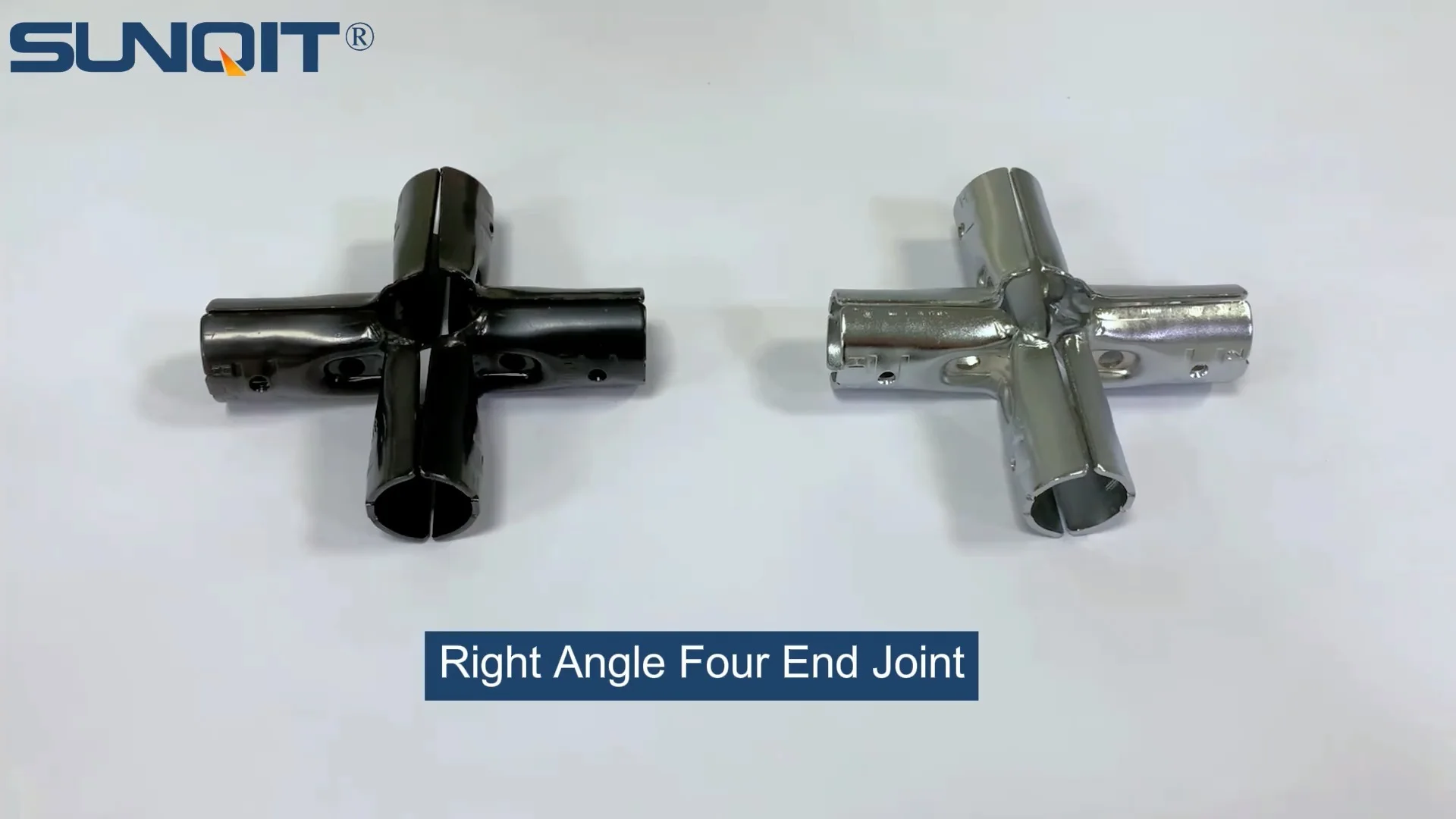
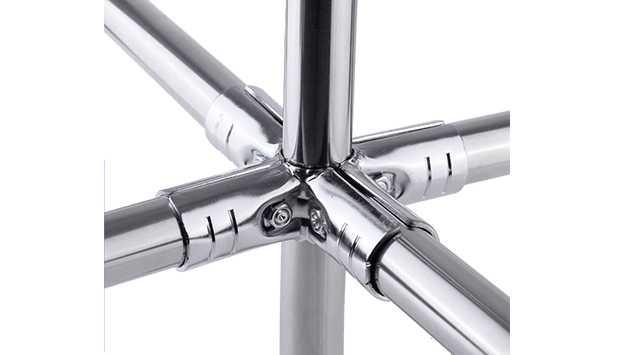
Five way straight lean pipe joint, for 5 pcs 28mm lean pipe connect in straight angle,which used widely in workbench, flow rack, hand trolley frame connection.
The Unsung Hero of Smooth Production Floors
Walk into any well-run manufacturing plant, and you'll notice something subtle but powerful: the material flows. Parts glide from storage to assembly lines without bottlenecks, tools are within arm's reach, and workers move with purpose rather than frustration. Behind this seamless dance is often a network of lean pipe structures—workbenches, flow racks, conveyors—held together by yet vital components. Among these, the Five Way Straight Lean Pipe Joint Chrome stands out as a quiet game-changer. It's not just a metal connector; it's the backbone of flexible, efficient lean systems that adapt to real-world demands.
In lean manufacturing, every second counts. When material gets stuck, when a workbench can't be reconfigured for a new product, or when a flow rack wobbles under heavy loads, productivity grinds to a halt. That's where this five-way joint comes in. Designed to connect multiple lean pipes at once, it transforms disjointed setups into integrated, agile systems. Let's dive into why this component matters, how it elevates material flow, and why it's become a must-have for teams serious about lean optimization.
Understanding Lean Material Flow: More Than Just Moving Parts
Before we unpack the five-way joint, let's clarify what "lean material flow" really means. It's not just about moving parts from Point A to Point B—it's about doing so with zero waste . Waste here includes time wasted searching for tools, space wasted on inefficient layouts, and effort wasted on lifting or carrying heavy items. A truly lean system ensures materials arrive exactly when needed , in the right quantity , and with the least physical strain on workers.
Imagine a scenario: In a small electronics plant, assemblers used to walk 50 feet to retrieve circuit boards from a distant shelf. By the time they returned, their workstation might have idled, or they'd rush and make errors. Then the plant installed a flow rack along the assembly line, using lean pipes and joints to create a gravity-fed track. Suddenly, boards rolled right to the workers, cutting walk time to zero. Errors dropped, and morale lifted. That's lean material flow in action—and it all starts with the right components.
The problem? Many traditional setups rely on basic two-way or three-way joints. These limit how you can arrange pipes, forcing compromises in design. A two-way joint connects two pipes; a three-way adds one more. But what if you need to build a flow rack with horizontal supports, vertical posts, and a diagonal brace—all meeting at one point? That's where the five-way joint shines. It's the Swiss Army knife of connectors, letting you link up to five pipes in a single, sturdy connection.
Five Way Straight Lean Pipe Joint Chrome: Design That Delivers
At first glance, the Five Way Straight Lean Pipe Joint Chrome looks simple: a central hub with five threaded ports, each angled to accept standard lean pipes. But its design is anything but basic. Let's break down its key features and why they matter for lean systems:
1. Chrome-Plated Durability
Lean environments are tough. Pipes get bumped, cleaning solutions splash, and humidity can creep in. The chrome plating isn't just for shine—it's a protective barrier. Chrome resists corrosion and scratches, ensuring the joint stays strong even in messy or damp conditions. Unlike uncoated steel joints that rust over time, a chrome finish means less maintenance and longer life. For plants running 24/7, this translates to fewer shutdowns for part replacements.
2. Five-Way Versatility
The "five-way" design is the star here. Most joints top out at three or four connections, but five gives designers unprecedented flexibility. Need to build a workbench with a main frame, a side shelf, and a tool holder arm—all meeting at the corner? The five-way joint handles it. Want a flow rack with vertical posts, horizontal rails, and a cross-brace for stability? No problem. This versatility means you can customize structures to fit your unique workflow, not the other way around.
3. Precision Engineering for a Tight Fit
A loose joint is a liability. It wobbles, creates noise, and can even fail under load. The Five Way Straight Lean Pipe Joint Chrome is machined to tight tolerances, ensuring a snug fit with standard lean pipes (typically 28mm or 30mm diameter). When you tighten the set screws, the joint grips the pipe firmly, eliminating play. This stability is critical for flow racks, where materials slide along roller tracks—any wobble could jam the flow or damage parts.
4. Easy Reconfiguration (Because Lean Never Stands Still)
Lean systems aren't static. A product line might change next month, or a new order might require a taller workbench. Traditional welded structures can't adapt—you'd have to cut and reweld, wasting time and money. The five-way joint, though, is tool-free (or requires just a hex key) to disassemble and reassemble. Need to shorten a flow rack? Loosen the screws, remove a pipe, and retighten. This agility lets you tweak layouts on the fly, keeping up with shifting demands without major overhauls.

From Chaos to Order: Real-World Impact on Material Flow
Numbers and specs tell part of the story, but real impact lies in how this joint transforms daily operations. Let's look at a hypothetical (but realistic) example: a automotive parts manufacturer struggling with material flow in their brake assembly line.
The Problem: The line used old wooden shelves and basic two-way joint lean pipes to hold brake calipers. Workers had to reach across the shelf, often knocking over other parts. The flow rack was too shallow, so calipers would get stuck, requiring someone to manually push them forward. The team estimated they spent 15% of their shift just managing material issues—retrieving fallen parts, unjamming the rack, or adjusting unstable pipe connections.
The Solution: The plant switched to a custom flow rack built with Five Way Straight Lean Pipe Joints Chrome. Here's how it helped:
- Multi-Directional Support: The five-way joints let them add vertical dividers, horizontal roller tracks, and a side-mounted tool holder—all connected at key points. No more reaching across; calipers sat in separate slots, and tools hung within arm's reach.
- Stable Roller Tracks: The joints secured the roller track (another key keyword!) firmly to the frame, eliminating wobble. Calipers now glided smoothly, thanks to the rigid structure.
- Quick Adjustments: When a new, larger caliper model arrived, the team simply loosened the joints, added an extra horizontal pipe, and widened the slots—done in 20 minutes, not days.
The Result: Material handling time dropped by 40%. Workers reported less frustration, and the line produced 12% more units per shift. The plant manager later joked, "We didn't just fix a rack—we gave our team their time back."
This isn't an isolated case. Across industries—electronics, pharmaceuticals, food packaging—teams using five-way chrome joints report similar wins: fewer bottlenecks, safer workspaces, and the ability to scale up or down without stress.
Comparing Joints: Why Five-Way Chrome Beats the Rest
Still not convinced? Let's put the Five Way Straight Lean Pipe Joint Chrome head-to-head with common alternatives. The table below compares it to standard two-way, three-way, and even four-way joints on key metrics for lean systems:
| Feature | Two-Way Joint | Three-Way Joint | Four-Way Joint | Five Way Straight Lean Pipe Joint Chrome |
|---|---|---|---|---|
| Max Pipe Connections | 2 | 3 | 4 | 5 |
| Design Flexibility | Low—limited to straight or L-shapes | Moderate—adds T-shapes | Good—adds X-shapes | Excellent—combines L, T, X, and diagonal in one joint |
| Stability | High (for simple setups) | Moderate (can wobble with multiple pipes) | Good (but may need extra bracing) | Very High (central hub distributes weight evenly) |
| Corrosion Resistance | Low (often uncoated steel) | Low to Moderate (some zinc-plated) | Moderate (zinc or basic plating) | High (chrome plating resists rust/chemicals) |
| Reconfiguration Time | Fast (2 pipes to adjust) | Moderate (3 pipes to adjust) | Moderate (4 pipes to adjust) | Fast (one joint adjusts multiple connections at once) |
| Best For | Simple straight rails | Basic workbenches | Medium-complex flow racks | High-complex systems: multi-tier flow racks, custom workbenches, conveyor junctions |
The takeaway? For basic setups, two or three-way joints work. But for lean systems that need to adapt, grow, and stay stable under pressure, the five-way chrome joint is in a league of its own. It's not just about adding more connections—it's about adding smart connections that turn a jumble of pipes into a cohesive, efficient tool.
Beyond the Joint: Integrating with Other Lean Components
A great joint is only as good as the system it's part of. The Five Way Straight Lean Pipe Joint Chrome plays well with other key lean components, amplifying their effectiveness:
1. Flow Racks and Roller Tracks
Flow racks rely on gravity to move materials, but they need a rigid frame to keep roller tracks aligned. The five-way joint secures the vertical posts, horizontal supports, and roller track (keyword alert!) mounts in one place. This alignment ensures materials don't jam—critical for high-volume lines where even a minute of downtime costs money.
2. Conveyors
Conveyors often need support frames or side guards to keep items centered. The five-way joint lets you build these frames with minimal parts, reducing clutter under the conveyor. For example, you can connect the main conveyor rail, a side guard, and a small shelf for tools—all at the same joint point.
3. ESD Workstations
Electrostatic discharge (ESD) workstations protect sensitive electronics from static damage. They require grounded pipes and stable surfaces. The five-way joint's tight fit ensures pipes stay grounded (no loose connections to break the circuit), and its durability stands up to the frequent cleaning ESD environments demand.
4. Turnover Trolleys
Trolleys need to be lightweight but strong. Using five-way joints reduces the number of connections needed, making the trolley lighter without sacrificing stability. A trolley built with these joints can carry heavier loads without flexing, keeping materials safe during transport.
Choosing the Right Supplier: Why Quality Matters
Not all five-way joints are created equal. A cheap, poorly made joint might save money upfront, but it'll cost you in downtime, repairs, and frustration later. When shopping for Five Way Straight Lean Pipe Joints Chrome, look for suppliers who prioritize:
- Precision Machining: Loose threads or misaligned ports lead to wobbly connections. Ask about tolerance levels—good suppliers will have specs (e.g., ±0.1mm) for port alignment.
- High-Quality Chrome Plating: Thin or uneven plating chips easily. Look for suppliers who use electroplating (not just painting) and specify plating thickness (at least 8 microns for durability).
- Material Strength: The joint itself should be made from hardened steel (e.g., Q235 or 45# steel) to handle heavy loads. Avoid aluminum joints for high-stress applications—they're lighter but less rigid.
- Testing: Reputable suppliers test joints for load capacity (e.g., 500kg per connection) and corrosion resistance (salt spray tests, for example).
Remember: A lean system is only as strong as its weakest component. Skimping on joints undermines the entire structure—literally and figuratively.
The Bottom Line: Lean Material Flow Starts with the Right Connections
Lean manufacturing isn't a buzzword—it's a commitment to respecting workers' time, optimizing resources, and eliminating waste. And while big-picture strategies like value stream mapping get the spotlight, the small components often make the biggest difference. The Five Way Straight Lean Pipe Joint Chrome is one such component. It's a quiet enabler, turning disjointed pipes into systems that adapt, endure, and empower teams to do their best work.
Whether you're building a new flow rack, upgrading a conveyor system, or reconfiguring an ESD workstation, this joint delivers: the flexibility to design without limits, the durability to withstand daily chaos, and the simplicity to keep up with lean's ever-changing demands. It's not just a connector—it's a bridge between the chaos of manufacturing and the order of true lean efficiency.
So the next time you walk through a smooth-running production floor, take a closer look at the pipes and joints holding it all together. Chances are, you'll spot the Five Way Straight Lean Pipe Joint Chrome—silent, strong, and critical to making lean material flow a reality.