- Company Articles
- Products and Technology
- Product knowledge
- Five Way Straight Lean Pipe Joint Chrome for Material Handling Carts: Design Tips

Five Way Straight Lean Pipe Joint Chrome for Material Handling Carts: Design Tips
Related Product
Five Way Straight Lean Pipe Joint Chrome
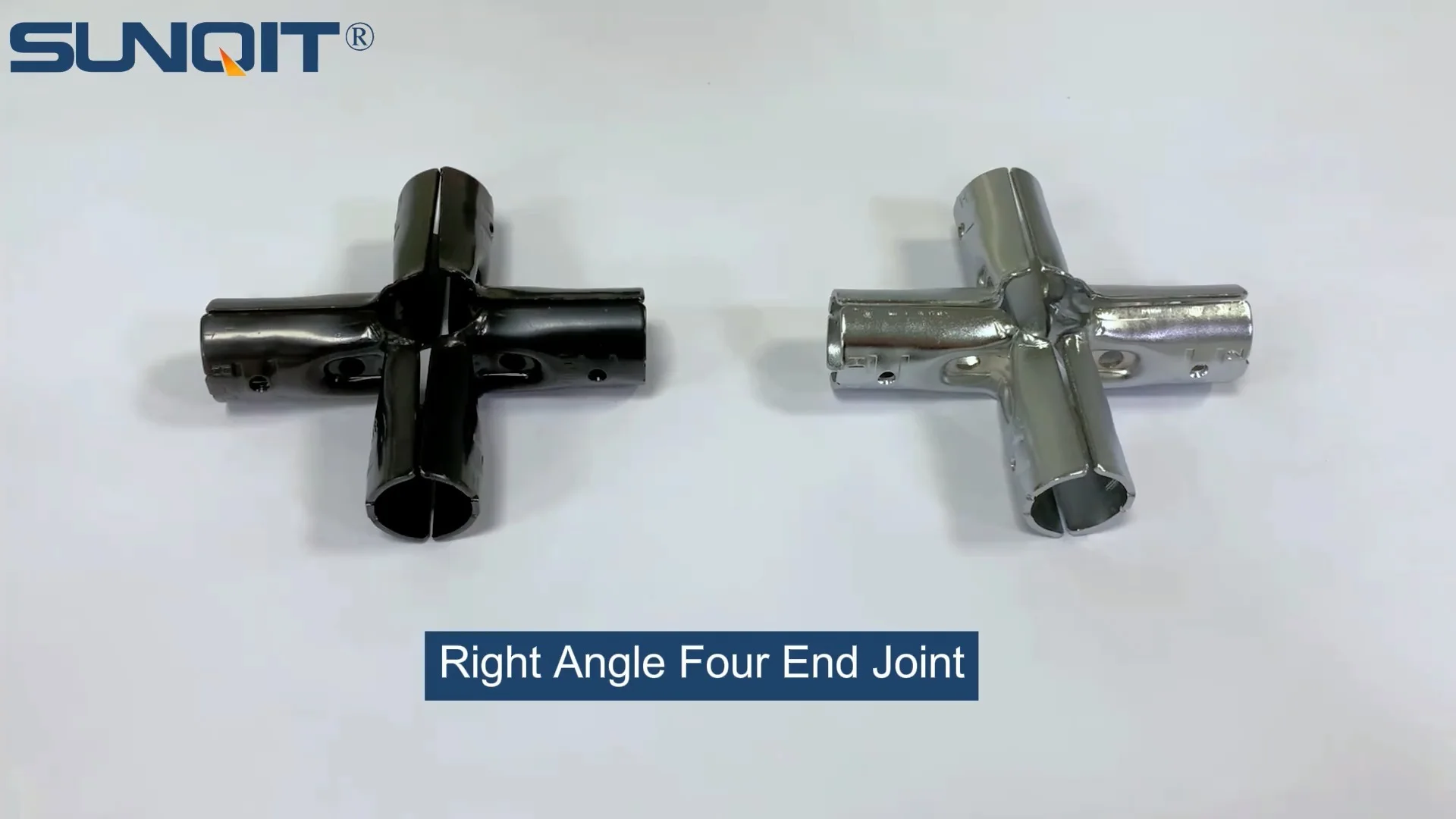
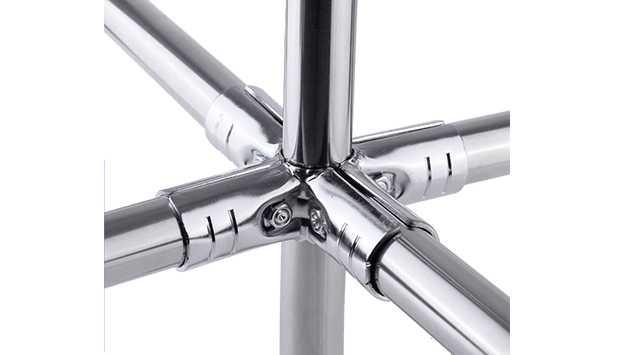
Five way straight lean pipe joint, for 5 pcs 28mm lean pipe connect in straight angle,which used widely in workbench, flow rack, hand trolley frame connection.
The Unsung Hero of Efficient Material Handling: Why Your Cart's Joints Matter
Walk into any busy warehouse, manufacturing plant, or distribution center, and you'll notice a quiet workhorse keeping operations moving: the material handling cart. These unassuming tools ferry everything from delicate electronics to heavy machinery parts, bridging gaps between assembly lines, storage racks, and shipping docks. But here's the thing: not all carts are created equal. A well-designed cart glides smoothly, carries loads safely, and adapts to changing needs. A poorly designed one? It wobbles, jams, and becomes a bottleneck—slowing down work, increasing frustration, and even risking workplace injuries.
So, what separates a "good" cart from a "great" one? It starts with the details—specifically, the components that hold it all together. Enter the lean pipe joint : the unsung hero of cart design. And among the various joint types, the five way straight lean pipe joint chrome stands out for its versatility, strength, and ability to transform a basic cart into a customized, high-performance tool. In this guide, we'll dive into why this joint matters, how to design with it effectively, and tips to ensure your material handling carts become assets, not obstacles.
Understanding the Five Way Straight Lean Pipe Joint Chrome: What It Is and Why It Works
Before we jump into design tips, let's get to know the star of the show: the five way straight lean pipe joint chrome. At first glance, it might look like a simple metal connector, but its design is surprisingly clever. As the name suggests, this joint features five ports—four in a straight line and one perpendicular—allowing you to connect lean pipes (or even aluminum profile, depending on your setup) in multiple directions. The "chrome" finish isn't just for looks, either: it adds a layer of corrosion resistance, making the joint durable in humid or dusty environments, and it's easy to clean, which is a boon for industries like food processing or pharmaceuticals where hygiene matters.
But what really makes this joint shine is its flexibility. Unlike fixed joints that limit your cart's structure, the five way design lets you build in multiple levels, shelves, or attachments. Need a cart with a lower shelf for bulk items and an upper tray for tools? The five way joint can handle that. Want to add side rails to prevent items from sliding off? Just connect a pipe to one of the perpendicular ports. It's like the Swiss Army knife of lean pipe accessories—adaptable to almost any need.
Another key advantage is its compatibility. Most five way straight lean pipe joints are designed to work with standard 28mm lean pipes (the industry standard), but many also pair well with aluminum profile or stainless steel pipes, giving you even more material options. This compatibility means you can mix and match components, upgrading old carts with new joints instead of replacing entire systems—a cost-saver for businesses watching their bottom line.
Design Tip #1: Start with Material Selection—Lean Pipe, Aluminum Profile, or Both?
The first step in designing a cart with five way straight lean pipe joints is choosing the right materials. The two most common options are traditional lean pipe (often PE-coated steel) and aluminum profile. Each has its pros and cons, and the five way joint plays nicely with both—but your choice depends on your cart's purpose.
Lean pipe is the classic choice. It's affordable, durable, and has a slight flexibility that absorbs shocks—handy if your cart will be moving over uneven floors. PE-coated lean pipe also offers a non-slip surface, which is great for holding items in place, and it's resistant to scratches, so your cart will look newer longer. For most general-purpose carts (think: moving boxes, tools, or small parts), lean pipe paired with five way chrome joints is a reliable, budget-friendly combo.
Aluminum profile , on the other hand, is lighter and sleeker. It's ideal for environments where weight matters—like clean rooms or facilities where workers need to push carts long distances. Aluminum also resists rust, making it a good fit for outdoor use or areas with high moisture (e.g., food processing plants). The downside? It's pricier than lean pipe, and its rigid structure doesn't absorb shocks as well. That said, if you need a cart that's easy to maneuver and has a modern, professional look, aluminum profile with five way joints is worth the investment.
Pro tip: Don't be afraid to mix materials! For example, use aluminum profile for the cart's frame (to keep it light) and lean pipe for shelves (to add grip). The five way joint's universal design makes this hybrid approach possible, letting you balance cost, weight, and functionality.

Design Tip #2: Strategic Joint Placement—Avoid the "Wobble Factor"
Even the strongest five way joint can't save a cart with poor structural design. The key here is balance . A cart's joints are like its bones—they need to be placed to distribute weight evenly, preventing stress points that lead to wobbling or collapse. Here's how to do it right:
Small carts (under 3 feet long): For compact carts (think: tool carts or parts carriers), start with a rectangular frame. Use five way joints at each corner to connect the vertical and horizontal pipes. Then, add a center cross-brace (using a five way joint in the middle of the frame) to prevent side-to-side sway. This "four corners + center" setup ensures the cart stays stable even when loaded unevenly.
Medium carts (3–5 feet long): Larger carts need more support. Add an extra five way joint along each long side (about 1/3 of the way from each end) to create additional vertical pipes. These act as "spine supports," reducing flex in the frame. If you're adding shelves, mount them to these extra vertical pipes using the joint's perpendicular ports—this way, the shelf weight is spread across multiple joints, not just the corners.
Large carts (over 5 feet long): For heavy-duty carts (e.g., those carrying pallets or machinery parts), spacing is critical. Place five way joints every 18–24 inches along the frame, and include diagonal cross-bracing (using 45° lean pipe joints, another handy lean pipe accessory) to add rigidity. The five way joint's multiple ports make it easy to attach these braces—simply connect a pipe from the joint's top port to the adjacent joint's bottom port, creating a triangle shape that resists twisting.
| Cart Size | Recommended Joint Placement | Key Benefit |
|---|---|---|
| Small (under 3ft) | 4 corners + 1 center cross-brace joint | Prevents wobbling during tight turns |
| Medium (3–5ft) | 4 corners + 2 mid-side vertical joints | Supports extra shelves without flexing |
| Large (over 5ft) | Joints every 18–24 inches + diagonal braces | Handles heavy loads (500+ lbs) safely |
Design Tip #3: Load Capacity—Don't Overestimate (or Underestimate) Your Joints
Here's a common mistake: assuming the five way joint can handle any load you throw at it. While chrome-plated lean pipe joints are strong (most have a load rating of 200–300 lbs per joint), their performance depends on how many joints are sharing the weight. A cart with four corners and no cross-bracing might only safely carry 400 lbs, even if each joint is rated for 200 lbs—because the weight isn't evenly distributed.
To avoid overloading, start by calculating your cart's total intended load. Let's say you need to carry 600 lbs of parts. If you're using six five way joints (a typical setup for a medium cart), each joint would need to support 100 lbs—well within most joints' limits. But if you skimp on joints (using only four), each joint now bears 150 lbs, which is riskier if the load shifts during movement.
Another factor is the caster wheel choice. Even the sturdiest joints can't compensate for weak casters. If your cart will carry heavy loads, pair five way joints with heavy-duty caster wheels (rated for at least 150 lbs each). Swivel casters with brakes are a smart add-on—they let you maneuver tight spaces and lock the cart in place when loading/unloading, preventing accidental movement that could stress the joints.
Pro tip: Test before full deployment! Build a prototype cart with your five way joints and caster wheels, then load it with 120% of your intended weight and push it around your facility. If the frame flexes excessively or the joints loosen, add more joints or upgrade to thicker lean pipe (e.g., 2.0mm PE-coated lean pipe instead of 1.5mm). It's better to tweak the design now than deal with a broken cart mid-shift.
Design Tip #4: Ergonomics—Make the Cart Work for Your Team, Not Against Them
A cart that's structurally sound but uncomfortable to use is a failure. Ergonomics should be top of mind, and the five way joint's flexibility makes it easy to tailor the cart to human needs. Here's how:
Height matters: The ideal cart height is waist-level for the average worker (about 36–40 inches). Use the five way joint to adjust the handle height—simply cut the vertical pipes to the desired length and connect them to the joint's top port. For teams with workers of varying heights, add a second handle at a lower height using the joint's middle port—no need for a one-size-fits-all approach.
Handle design: Avoid sharp edges! Use curved lean pipes (another lean pipe accessory) for handles, attaching them to the five way joint's perpendicular ports. This makes pushing/pulling more comfortable, reducing strain on wrists and shoulders. If the cart will be pushed long distances, add foam grips to the handles—small touches that make a big difference in worker satisfaction.
Shelf access: If your cart has multiple shelves, space them at least 18 inches apart. Use the five way joint to mount shelves at different heights—lower shelves for heavy items (easier to lift from the ground) and upper shelves for lighter, frequently used tools. The joint's ability to connect pipes in multiple directions also lets you add "lip" rails to shelves (using the perpendicular ports), preventing items from sliding off when the cart stops suddenly.
Design Tip #5: Customization—Adapt to Your Unique Workflow
One of the best things about five way straight lean pipe joints is their ability to turn a basic cart into a specialized tool. Your workflow is unique, so your cart should be too. Here are a few customization ideas to consider:
Tool storage: Add a vertical pipe to the five way joint's side port, then attach tool hooks (a simple lean pipe accessory) for hanging wrenches, tape measures, or power cords. For smaller tools, mount a pegboard to the vertical pipes using the joint's top ports—now your cart doubles as a mobile tool station.
Bin organization: Use the joint's perpendicular ports to add horizontal pipes, creating dividers for bins or totes. This is perfect for sorting small parts (e.g., screws, washers, or electronic components). The five way joint lets you adjust divider width by moving the pipes up or down the vertical frame—so if you switch to larger bins later, you can reconfigure without rebuilding the entire cart.
Mobile workbench: For assembly line workers, turn the cart into a portable work surface by adding a plywood or aluminum honeycomb panel to the top frame (using the joint's top ports to secure it). Add a power strip (mounted to a vertical pipe via the joint) for tools, and you've got a workstation that moves with the job—ideal for large projects that require on-site assembly.
Cleanroom compatibility: In environments where dust or contamination is a concern (like labs or semiconductor facilities), swap traditional lean pipe for stainless steel pipe series and use aluminum profile for the frame. The five way chrome joint's smooth finish is easy to sanitize, and aluminum profile resists corrosion—keeping your cart compliant with strict cleanliness standards.
Design Tip #6: Maintenance—Keep Your Joints (and Carts) in Top Shape
Even the best-designed cart will fail if neglected. The five way straight lean pipe joint chrome is low-maintenance, but a little care goes a long way in extending its life (and your cart's).
Regular tightening: Over time, the bolts holding the joint together can loosen from vibration. Once a month, grab a hex key and gently tighten each joint—don't over-tighten, as this can strip the threads. If a joint feels wobbly even after tightening, check the pipe for dents or damage (a bent pipe won't seat properly in the joint).
Clean the chrome finish: Wipe down joints with a soft, damp cloth to remove dust and grime. For stubborn stains, use a mild soap solution—avoid abrasive cleaners, which can scratch the chrome and expose the metal to rust. In humid areas, a light coat of silicone spray (applied sparingly to the joint's moving parts) prevents corrosion.
replace worn parts: Caster wheels and lean pipe accessories wear out faster than joints, but they can still affect joint performance. If a caster wheel squeaks or wobbles, replace it immediately—misaligned wheels put extra stress on the joints, leading to premature failure. Similarly, if a pipe becomes bent or the PE coating cracks, swap it out for a new one—damaged pipes don't distribute weight evenly, straining the joints.
Real-World Success: How One Manufacturer Upgraded Their Carts with Five Way Joints
To see these tips in action, let's look at a real example. A mid-sized automotive parts manufacturer was struggling with their old material handling carts. The carts were flimsy, hard to maneuver, and couldn't be customized for different parts (some were small bolts, others large engine components). Workers complained about back pain from bending to reach low shelves, and the carts often got stuck on uneven factory floors.
The solution? They switched to carts built with five way straight lean pipe joints chrome, paired with aluminum profile frames and heavy-duty caster wheels. Here's what changed:
- Ergonomic wins: By adjusting handle height and shelf spacing using the five way joint, they reduced worker bending by 40%. Reported back pain dropped significantly.
- Faster assembly: The joint's multiple ports let them add custom dividers and tool hooks, cutting the time to load/unload carts by 25%.
- Durability: After 18 months, the carts showed minimal wear—the chrome joints resisted rust, and the aluminum profile frames stayed dent-free, even in the busy factory environment.
The result? A 15% increase in overall productivity, and workers who actually looked forward to using the carts instead of dreading them. All because they paid attention to the details—specifically, the humble five way joint.
Final Thoughts: Invest in the Joints, Reap the Rewards
Material handling carts might not get the same attention as fancy machinery or high-tech software, but they're the backbone of efficient operations. And at the heart of a great cart is the five way straight lean pipe joint chrome—a small component that delivers big results in flexibility, strength, and customization. By choosing the right materials, placing joints strategically, prioritizing load capacity and ergonomics, and keeping up with maintenance, you can design carts that don't just carry items—they carry your team's productivity and morale.
So, the next time you're planning a cart upgrade, don't overlook the joints. The five way straight lean pipe joint chrome isn't just a connector—it's a tool for building a smoother, safer, and more efficient workplace. And in today's fast-paced world, that's an investment worth making.