- Company Articles
- Products and Technology
- Product knowledge
- Five Way Straight Lean Pipe Joint Chrome for Medical Device Production Lines

Five Way Straight Lean Pipe Joint Chrome for Medical Device Production Lines
Related Product
Five Way Straight Lean Pipe Joint Chrome
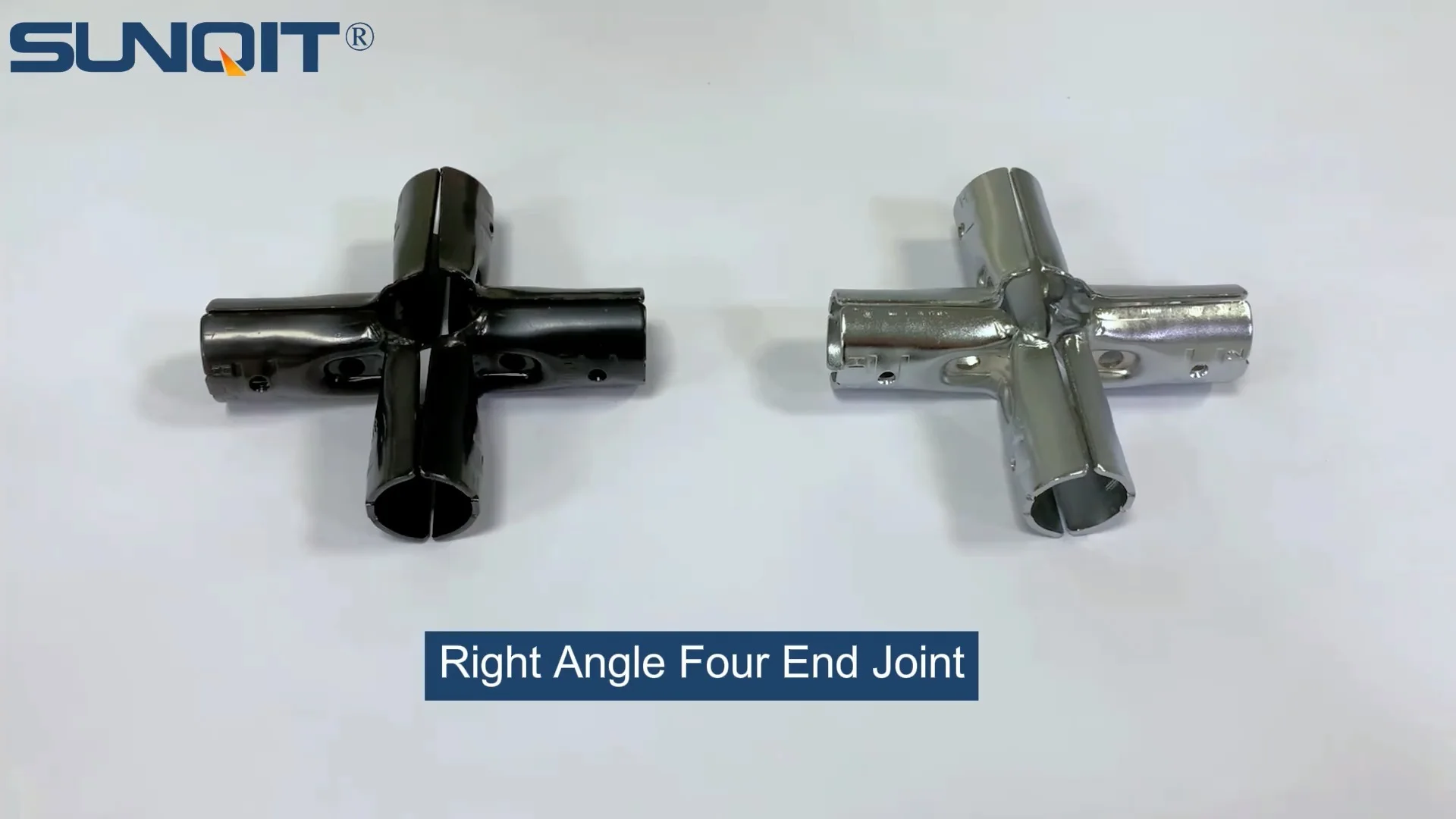
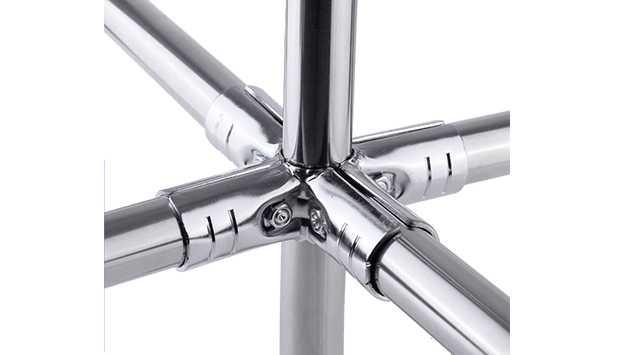
Five way straight lean pipe joint, for 5 pcs 28mm lean pipe connect in straight angle,which used widely in workbench, flow rack, hand trolley frame connection.
Introduction: Precision, Flexibility, and the Heart of Medical Manufacturing
In the world of medical device production, where a fraction of a millimeter can mean the difference between a life-saving tool and a costly error, every component of the production line matters. From the smallest syringe to complex pacemakers, the assembly process demands environments that are not only sterile and precise but also adaptable to evolving needs. This is where lean manufacturing systems step in—not just as a philosophy, but as a tangible set of tools that transform chaos into order, inefficiency into flow, and rigidity into flexibility. At the core of these systems lie yet powerful components: lean pipe joints. Today, we're diving deep into one such component that's quietly revolutionizing medical production lines: the five way straight lean pipe joint chrome.
Imagine a production floor where workbenches adjust to the height of each technician, where material racks reconfigure in hours (not days) to accommodate a new device model, and where every connection point is built to withstand the rigors of daily use while maintaining the cleanliness required for medical standards. This isn't just a vision—it's the reality made possible by modular lean systems, and the five way straight lean pipe joint chrome is the unsung hero holding it all together. In this article, we'll explore why this specific joint has become a cornerstone for medical manufacturers, how it integrates with critical components like workbenches, roller tracks, and aluminum profiles, and why its design is a game-changer for teams striving to balance compliance, efficiency, and innovation.
Imagine a production floor where workbenches adjust to the height of each technician, where material racks reconfigure in hours (not days) to accommodate a new device model, and where every connection point is built to withstand the rigors of daily use while maintaining the cleanliness required for medical standards. This isn't just a vision—it's the reality made possible by modular lean systems, and the five way straight lean pipe joint chrome is the unsung hero holding it all together. In this article, we'll explore why this specific joint has become a cornerstone for medical manufacturers, how it integrates with critical components like workbenches, roller tracks, and aluminum profiles, and why its design is a game-changer for teams striving to balance compliance, efficiency, and innovation.
The Backbone of Lean Systems: Lean Pipe Joints in Medical Manufacturing
Before we zoom in on the five way joint, let's take a step back to understand the role of lean pipe joints in general. Lean pipe systems—often called "flexible pipe systems"—are built on the idea that production lines shouldn't be fixed monoliths. Instead, they should be modular: easy to assemble, disassemble, and reconfigure as needs change. This is especially critical in medical manufacturing, where product lines evolve rapidly (think new implant designs or updated diagnostic tools) and compliance standards grow stricter by the year.
Lean pipe joints are the connectors that turn simple pipes into complex, functional structures. They're the reason a basic aluminum pipe can become a workbench one month and a material rack the next. But not all joints are created equal. In medical settings, joints must meet three non-negotiable criteria: they must be durable enough to support heavy equipment, corrosion-resistant to maintain sterility, and versatile enough to connect multiple components at once. Enter the five way straight lean pipe joint chrome—a component engineered to check all these boxes and more.
Chrome-plated for longevity, designed to connect five pipes in a straight configuration, and built with medical-grade precision, this joint isn't just a part of the system; it's the linchpin that allows manufacturers to build production lines that grow with them. Whether it's supporting a weighty ESD workstation where sensitive electronics are assembled or linking roller tracks that carry sterile components from one station to the next, the five way joint is where flexibility meets reliability.
Lean pipe joints are the connectors that turn simple pipes into complex, functional structures. They're the reason a basic aluminum pipe can become a workbench one month and a material rack the next. But not all joints are created equal. In medical settings, joints must meet three non-negotiable criteria: they must be durable enough to support heavy equipment, corrosion-resistant to maintain sterility, and versatile enough to connect multiple components at once. Enter the five way straight lean pipe joint chrome—a component engineered to check all these boxes and more.
Chrome-plated for longevity, designed to connect five pipes in a straight configuration, and built with medical-grade precision, this joint isn't just a part of the system; it's the linchpin that allows manufacturers to build production lines that grow with them. Whether it's supporting a weighty ESD workstation where sensitive electronics are assembled or linking roller tracks that carry sterile components from one station to the next, the five way joint is where flexibility meets reliability.
Unpacking the Five Way Straight Lean Pipe Joint Chrome: Features That Matter
Let's get up close with the five way straight lean pipe joint chrome. What makes it stand out in a market flooded with generic connectors? Let's break down its key features and why they matter in medical device production.
1. Chrome-Plated Durability: Beyond Shine, Into Sterility
First, the chrome plating. At first glance, it might seem like a cosmetic choice, but in medical manufacturing, chrome is a workhorse. Chrome plating creates a smooth, non-porous surface that resists corrosion—a must in environments where frequent cleaning with disinfectants is standard. Unlike painted or plastic joints, chrome doesn't chip or harbor bacteria, making it easier to maintain the strict cleanliness standards required by the FDA and ISO. For teams tasked with keeping production lines sterile, this translates to less time spent scrubbing crevices and more time focused on assembly.
2. Five-Way Connectivity: More Than Just a "Plus One" The "five way" design is where this joint truly shines. Traditional lean pipe joints typically offer two, three, or four connection points—useful for basic structures, but limiting when building complex setups. The five way straight joint, as the name suggests, allows for five pipes to connect at a single point (four in a straight line, with a fifth branching off perpendicularly). This might sound like a small upgrade, but in practice, it's transformative. Imagine building a workbench with integrated tool holders, a material shelf, and a side rack for finished products—all connected at one central joint. Or designing a material flow system where roller tracks feed into multiple assembly stations from a single source. The five-way design reduces the need for multiple joints, simplifying the structure, reducing potential weak points, and saving valuable space on the production floor.
3. Load Capacity: Strength Without the Bulk Medical device assembly often involves heavy equipment—think precision laser tools, automated dispensers, or stacks of sterile packaging. The five way straight lean pipe joint chrome is built to handle these loads. Most models boast a load capacity of up to 150 kg per connection point, depending on the pipe diameter and material. This strength comes from the joint's internal construction: a solid metal core (often steel) with reinforced threading that locks pipes securely in place. For technicians who rely on stable work surfaces to assemble delicate components, this means no worrying about wobbling racks or sagging shelves mid-production.
4. Compatibility: Speaking the Language of Modular Systems A joint is only as useful as the components it connects. The five way straight lean pipe joint chrome is designed to play well with others. It's compatible with standard lean pipes (both steel and aluminum), aluminum profiles (common in lightweight, high-strength structures), and even accessories like caster wheels for mobile workstations. This compatibility is key in medical settings, where production lines often mix and match components from different suppliers or repurpose existing systems. Whether you're using 28mm lean pipes for a heavy-duty rack or 20mm aluminum profiles for a lightweight workbench, this joint bridges the gap, ensuring a tight, secure fit every time.
5. ESD Readiness: Protecting Sensitive Electronics Many medical devices—from pacemakers to diagnostic sensors—contain sensitive electronic components that are vulnerable to electrostatic discharge (ESD). While chrome itself isn't inherently conductive, many manufacturers offer ESD-compliant versions of the five way joint, where the chrome plating is treated to dissipate static charges. This ensures that when the joint is part of an ESD workstation, static electricity is safely grounded, reducing the risk of damaging delicate circuits during assembly. For teams building devices with microelectronics, this isn't just a nice feature—it's a compliance requirement.
1. Chrome-Plated Durability: Beyond Shine, Into Sterility
First, the chrome plating. At first glance, it might seem like a cosmetic choice, but in medical manufacturing, chrome is a workhorse. Chrome plating creates a smooth, non-porous surface that resists corrosion—a must in environments where frequent cleaning with disinfectants is standard. Unlike painted or plastic joints, chrome doesn't chip or harbor bacteria, making it easier to maintain the strict cleanliness standards required by the FDA and ISO. For teams tasked with keeping production lines sterile, this translates to less time spent scrubbing crevices and more time focused on assembly.
2. Five-Way Connectivity: More Than Just a "Plus One" The "five way" design is where this joint truly shines. Traditional lean pipe joints typically offer two, three, or four connection points—useful for basic structures, but limiting when building complex setups. The five way straight joint, as the name suggests, allows for five pipes to connect at a single point (four in a straight line, with a fifth branching off perpendicularly). This might sound like a small upgrade, but in practice, it's transformative. Imagine building a workbench with integrated tool holders, a material shelf, and a side rack for finished products—all connected at one central joint. Or designing a material flow system where roller tracks feed into multiple assembly stations from a single source. The five-way design reduces the need for multiple joints, simplifying the structure, reducing potential weak points, and saving valuable space on the production floor.
3. Load Capacity: Strength Without the Bulk Medical device assembly often involves heavy equipment—think precision laser tools, automated dispensers, or stacks of sterile packaging. The five way straight lean pipe joint chrome is built to handle these loads. Most models boast a load capacity of up to 150 kg per connection point, depending on the pipe diameter and material. This strength comes from the joint's internal construction: a solid metal core (often steel) with reinforced threading that locks pipes securely in place. For technicians who rely on stable work surfaces to assemble delicate components, this means no worrying about wobbling racks or sagging shelves mid-production.
4. Compatibility: Speaking the Language of Modular Systems A joint is only as useful as the components it connects. The five way straight lean pipe joint chrome is designed to play well with others. It's compatible with standard lean pipes (both steel and aluminum), aluminum profiles (common in lightweight, high-strength structures), and even accessories like caster wheels for mobile workstations. This compatibility is key in medical settings, where production lines often mix and match components from different suppliers or repurpose existing systems. Whether you're using 28mm lean pipes for a heavy-duty rack or 20mm aluminum profiles for a lightweight workbench, this joint bridges the gap, ensuring a tight, secure fit every time.
5. ESD Readiness: Protecting Sensitive Electronics Many medical devices—from pacemakers to diagnostic sensors—contain sensitive electronic components that are vulnerable to electrostatic discharge (ESD). While chrome itself isn't inherently conductive, many manufacturers offer ESD-compliant versions of the five way joint, where the chrome plating is treated to dissipate static charges. This ensures that when the joint is part of an ESD workstation, static electricity is safely grounded, reducing the risk of damaging delicate circuits during assembly. For teams building devices with microelectronics, this isn't just a nice feature—it's a compliance requirement.

Integrating with Key Components: Building a Cohesive Production Line
A joint on its own is just a piece of metal. Its true value emerges when it's part of a larger system. Let's explore how the five way straight lean pipe joint chrome integrates with four critical components of medical device production lines: workbenches, roller tracks, aluminum profiles, and ESD workstations.
Workbench Integration: Crafting the Perfect Assembly Station Workbenches are the heart of any assembly line, and in medical manufacturing, they need to be more than just flat surfaces. They need to adapt to the task: lower for detailed hand assembly, higher for standing work with automated tools, or customized with built-in lighting, tool trays, and anti-fatigue mats. The five way straight lean pipe joint chrome makes this customization possible. For example, a surgical instrument assembly workbench might use the joint to connect the main frame (aluminum profiles), a side shelf for tools (lean pipes), and a overhead light bar (another perpendicular pipe). Because the joint allows for five connections, the workbench can include all these features without requiring multiple joints, keeping the structure clean and reducing clutter.
Take a real-world scenario: a team assembling insulin pens needs a workbench with a tilted surface to reduce neck strain, a lower shelf for packaging materials, and a small rack for holding pen components. Using five way joints, the team can adjust the height of the tilted surface by swapping out pipe lengths, add the lower shelf by connecting a perpendicular pipe, and attach the component rack to the same joint—all in a matter of hours. Compare this to traditional fixed workbenches, which would require custom fabrication and weeks of lead time. The difference in agility is staggering.
Roller Track Systems: Smoothing Material Flow, Reducing Errors Material flow is the lifeblood of any production line. In medical manufacturing, moving components—like sterile syringes or implant parts—from storage to assembly to packaging needs to be efficient, but never at the cost of safety. Roller tracks are the solution here, allowing materials to glide smoothly from one station to the next with minimal manual handling. The five way straight lean pipe joint chrome plays a critical role in building these tracks. By connecting roller track sections at multiple points, the joint ensures that the track remains level and stable, even when loaded with heavy bins. For example, a roller track feeding components to three assembly workstations can branch off from a single main line using five way joints, reducing the need for separate tracks and simplifying the overall layout.
One medical device manufacturer we spoke with (who produces catheters) shared how they used five way joints to solve a persistent bottleneck: their old material flow system required technicians to walk 20 feet to retrieve components, wasting 15-20 minutes per shift. By reconfiguring their roller tracks with five way joints, they created a "spoke and hub" system where components flow from a central storage area to three workstations via a single track, cutting walking time by 70%. The result? Fewer errors (from fatigued technicians) and a 12% increase in daily output.
Aluminum Profile Compatibility: Lightweight Strength for Dynamic Lines Aluminum profiles have become a favorite in medical manufacturing for their unique blend of lightweight design and high strength. They're easy to cut, drill, and assemble, making them ideal for custom structures. The five way straight lean pipe joint chrome pairs seamlessly with aluminum profiles, thanks to adapters that allow the joint to connect to T-slot profiles (a common type of aluminum extrusion). This combination is perfect for building structures that need to be both sturdy and mobile—like mobile workstations for batch assembly or temporary inspection stations during audits. For example, an aluminum profile frame with five way joints can support a heavy microscope for quality control while being light enough to roll across the floor (with the addition of caster wheels, another component the joint easily connects to).
ESD Workstation Requirements: Static Control Without Compromise For production lines handling electronic medical devices, ESD workstations are non-negotiable. These workstations must dissipate static electricity to prevent damage to components, and every part of the system—from the bench top to the tool holders—must contribute to this goal. The five way straight lean pipe joint chrome, when specified as ESD-compliant, fits into this ecosystem by ensuring that the entire structure is grounded. The chrome plating, treated for conductivity, creates a path for static charges to flow from the work surface to the floor, protecting sensitive components like pacemaker circuits or sensor chips. This isn't just about avoiding damage; it's about compliance with standards like ANSI/ESD S20.20, which requires manufacturers to control electrostatic discharge in electronics manufacturing. With an ESD-compliant five way joint, teams can rest easy knowing their setup meets these critical standards.
Workbench Integration: Crafting the Perfect Assembly Station Workbenches are the heart of any assembly line, and in medical manufacturing, they need to be more than just flat surfaces. They need to adapt to the task: lower for detailed hand assembly, higher for standing work with automated tools, or customized with built-in lighting, tool trays, and anti-fatigue mats. The five way straight lean pipe joint chrome makes this customization possible. For example, a surgical instrument assembly workbench might use the joint to connect the main frame (aluminum profiles), a side shelf for tools (lean pipes), and a overhead light bar (another perpendicular pipe). Because the joint allows for five connections, the workbench can include all these features without requiring multiple joints, keeping the structure clean and reducing clutter.
Take a real-world scenario: a team assembling insulin pens needs a workbench with a tilted surface to reduce neck strain, a lower shelf for packaging materials, and a small rack for holding pen components. Using five way joints, the team can adjust the height of the tilted surface by swapping out pipe lengths, add the lower shelf by connecting a perpendicular pipe, and attach the component rack to the same joint—all in a matter of hours. Compare this to traditional fixed workbenches, which would require custom fabrication and weeks of lead time. The difference in agility is staggering.
Roller Track Systems: Smoothing Material Flow, Reducing Errors Material flow is the lifeblood of any production line. In medical manufacturing, moving components—like sterile syringes or implant parts—from storage to assembly to packaging needs to be efficient, but never at the cost of safety. Roller tracks are the solution here, allowing materials to glide smoothly from one station to the next with minimal manual handling. The five way straight lean pipe joint chrome plays a critical role in building these tracks. By connecting roller track sections at multiple points, the joint ensures that the track remains level and stable, even when loaded with heavy bins. For example, a roller track feeding components to three assembly workstations can branch off from a single main line using five way joints, reducing the need for separate tracks and simplifying the overall layout.
One medical device manufacturer we spoke with (who produces catheters) shared how they used five way joints to solve a persistent bottleneck: their old material flow system required technicians to walk 20 feet to retrieve components, wasting 15-20 minutes per shift. By reconfiguring their roller tracks with five way joints, they created a "spoke and hub" system where components flow from a central storage area to three workstations via a single track, cutting walking time by 70%. The result? Fewer errors (from fatigued technicians) and a 12% increase in daily output.
Aluminum Profile Compatibility: Lightweight Strength for Dynamic Lines Aluminum profiles have become a favorite in medical manufacturing for their unique blend of lightweight design and high strength. They're easy to cut, drill, and assemble, making them ideal for custom structures. The five way straight lean pipe joint chrome pairs seamlessly with aluminum profiles, thanks to adapters that allow the joint to connect to T-slot profiles (a common type of aluminum extrusion). This combination is perfect for building structures that need to be both sturdy and mobile—like mobile workstations for batch assembly or temporary inspection stations during audits. For example, an aluminum profile frame with five way joints can support a heavy microscope for quality control while being light enough to roll across the floor (with the addition of caster wheels, another component the joint easily connects to).
ESD Workstation Requirements: Static Control Without Compromise For production lines handling electronic medical devices, ESD workstations are non-negotiable. These workstations must dissipate static electricity to prevent damage to components, and every part of the system—from the bench top to the tool holders—must contribute to this goal. The five way straight lean pipe joint chrome, when specified as ESD-compliant, fits into this ecosystem by ensuring that the entire structure is grounded. The chrome plating, treated for conductivity, creates a path for static charges to flow from the work surface to the floor, protecting sensitive components like pacemaker circuits or sensor chips. This isn't just about avoiding damage; it's about compliance with standards like ANSI/ESD S20.20, which requires manufacturers to control electrostatic discharge in electronics manufacturing. With an ESD-compliant five way joint, teams can rest easy knowing their setup meets these critical standards.
Comparing Joint Options: Why Chrome Five-Way Stands Out
To truly appreciate the five way straight lean pipe joint chrome, it helps to see how it stacks up against other common joint types. Below is a comparison table highlighting key factors like connectivity, durability, ESD compatibility, and ideal use cases.
| Joint Type | Connection Points | Material | Max Load Capacity (per connection) | ESD Compliant? | Ideal Use Case |
|---|---|---|---|---|---|
| Two-Way Straight Joint | 2 (straight line) | Plastic/Steel | 80-100 kg | Rarely | Simple linear structures (e.g., single-shelf racks) |
| Three-Way T-Joint | 3 (T-shape) | Plastic/Steel | 100-120 kg | Sometimes (steel only) | Basic workbenches with one shelf or tool rack |
| Four-Way Cross Joint | 4 (cross shape) | Steel/Aluminum | 120-140 kg | Yes (with ESD coating) | Medium-complex setups (e.g., workbench with two side shelves) |
| Five Way Straight Lean Pipe Joint Chrome | 5 (4 straight, 1 perpendicular) | Chrome-plated Steel | 140-150 kg | Yes (ESD-treated chrome) | Complex, space-efficient structures (e.g., multi-station workbenches, branching roller tracks) |
As the table shows, the five way straight lean pipe joint chrome offers the highest load capacity, most connection points, and reliable ESD compatibility—making it the clear choice for medical device production lines where complexity, durability, and compliance are non-negotiable.
Installation and Maintenance: Keeping Your Joints (and Line) in Top Shape
Even the best components need proper care to perform. Installing and maintaining five way straight lean pipe joint chrome is straightforward, but attention to detail ensures longevity—especially in medical environments where downtime is costly.
Installation Tips: Tight, Clean, and Precise Installing the five way joint starts with preparing the pipes. Ensure the ends of the lean pipes or aluminum profiles are clean and free of burrs (a quick pass with a deburring tool works wonders). Apply a small amount of thread locker to the pipe threads (avoid overdoing it—excess can seep into the joint and affect conductivity in ESD models). Hand-tighten the pipe into the joint, then use a wrench for a final quarter-turn—snug, but not so tight that you risk stripping the threads. For ESD-compliant joints, verify the connection with a multimeter to ensure conductivity between pipes (a reading below 10^9 ohms is standard for ESD systems).
Maintenance: Simple Steps for Longevity In medical settings, maintenance often comes down to two things: keeping it clean and checking for wear. Wipe the joint with a mild disinfectant (avoid abrasive cleaners that can scratch the chrome) during routine cleaning. Every month, inspect the joint for signs of looseness—gently tug on connected pipes to ensure they don't wiggle. If a connection feels loose, retighten it with a wrench. Over time, the chrome plating may show minor scratches—this is normal and doesn't affect performance, but deep scratches (exposing the underlying metal) should be addressed with a touch-up kit to prevent corrosion. Finally, if the joint is part of an ESD system, test conductivity quarterly to ensure the plating hasn't worn down.
Installation Tips: Tight, Clean, and Precise Installing the five way joint starts with preparing the pipes. Ensure the ends of the lean pipes or aluminum profiles are clean and free of burrs (a quick pass with a deburring tool works wonders). Apply a small amount of thread locker to the pipe threads (avoid overdoing it—excess can seep into the joint and affect conductivity in ESD models). Hand-tighten the pipe into the joint, then use a wrench for a final quarter-turn—snug, but not so tight that you risk stripping the threads. For ESD-compliant joints, verify the connection with a multimeter to ensure conductivity between pipes (a reading below 10^9 ohms is standard for ESD systems).
Maintenance: Simple Steps for Longevity In medical settings, maintenance often comes down to two things: keeping it clean and checking for wear. Wipe the joint with a mild disinfectant (avoid abrasive cleaners that can scratch the chrome) during routine cleaning. Every month, inspect the joint for signs of looseness—gently tug on connected pipes to ensure they don't wiggle. If a connection feels loose, retighten it with a wrench. Over time, the chrome plating may show minor scratches—this is normal and doesn't affect performance, but deep scratches (exposing the underlying metal) should be addressed with a touch-up kit to prevent corrosion. Finally, if the joint is part of an ESD system, test conductivity quarterly to ensure the plating hasn't worn down.
Future-Proofing Your Production Line: Scalability in an Evolving Industry
The medical device industry isn't standing still. New technologies, changing regulations, and shifting market demands mean production lines must evolve or risk obsolescence. The five way straight lean pipe joint chrome is built for this evolution. Its modular design allows for easy reconfiguration: need to add a new assembly station? Simply disconnect a pipe, add a five way joint, and branch off. Switching to a new device model with larger components? Swap out shorter pipes for longer ones without replacing the entire structure. This scalability is a lifeline for manufacturers facing tight budgets and shorter product cycles.
One example comes from a manufacturer of orthopedic implants. When they received FDA approval for a new hip implant design, their existing production line was too narrow to accommodate the larger packaging. Instead of building a new line from scratch (a six-week, $50,000 project), they used five way joints to widen their existing material racks and adjust their workbench layouts—completing the reconfiguration in three days at a fraction of the cost. This kind of agility isn't just about saving money; it's about seizing opportunities. In a market where being first to market can mean capturing 30% more market share, the five way joint isn't just a component—it's a competitive advantage.
One example comes from a manufacturer of orthopedic implants. When they received FDA approval for a new hip implant design, their existing production line was too narrow to accommodate the larger packaging. Instead of building a new line from scratch (a six-week, $50,000 project), they used five way joints to widen their existing material racks and adjust their workbench layouts—completing the reconfiguration in three days at a fraction of the cost. This kind of agility isn't just about saving money; it's about seizing opportunities. In a market where being first to market can mean capturing 30% more market share, the five way joint isn't just a component—it's a competitive advantage.
Conclusion: More Than a Joint—A Tool for Excellence
The five way straight lean pipe joint chrome may not be the most glamorous component on the production floor, but its impact is undeniable. It's the quiet force that turns pipes and profiles into precision workspaces, the connector that turns chaos into flow, and the adaptor that helps medical device manufacturers stay ahead in a rapidly changing industry. For technicians, it means workbenches that fit their needs, not the other way around. For engineers, it means production lines that can be reimagined in days, not months. For quality managers, it means structures that stay clean, stable, and compliant, even under pressure.
In the end, medical device production is about more than assembling parts—it's about assembling hope, one precise component at a time. The five way straight lean pipe joint chrome is a small but critical part of that mission, proving that even the simplest tools can have a profound impact when designed with purpose, precision, and the needs of the people who use them in mind. So the next time you walk through a medical production line, take a moment to look at the connections—you might just find the unsung hero holding it all together.
In the end, medical device production is about more than assembling parts—it's about assembling hope, one precise component at a time. The five way straight lean pipe joint chrome is a small but critical part of that mission, proving that even the simplest tools can have a profound impact when designed with purpose, precision, and the needs of the people who use them in mind. So the next time you walk through a medical production line, take a moment to look at the connections—you might just find the unsung hero holding it all together.