- Company Articles
- Products and Technology
- Product knowledge
- Five Way Straight Lean Pipe Joint Chrome for Mobile Workstations: Stability & Mobility

Five Way Straight Lean Pipe Joint Chrome for Mobile Workstations: Stability & Mobility
Related Product
Five Way Straight Lean Pipe Joint Chrome
Five way straight lean pipe joint, for 5 pcs 28mm lean pipe connect in straight angle,which used widely in workbench, flow rack, hand trolley frame connection.
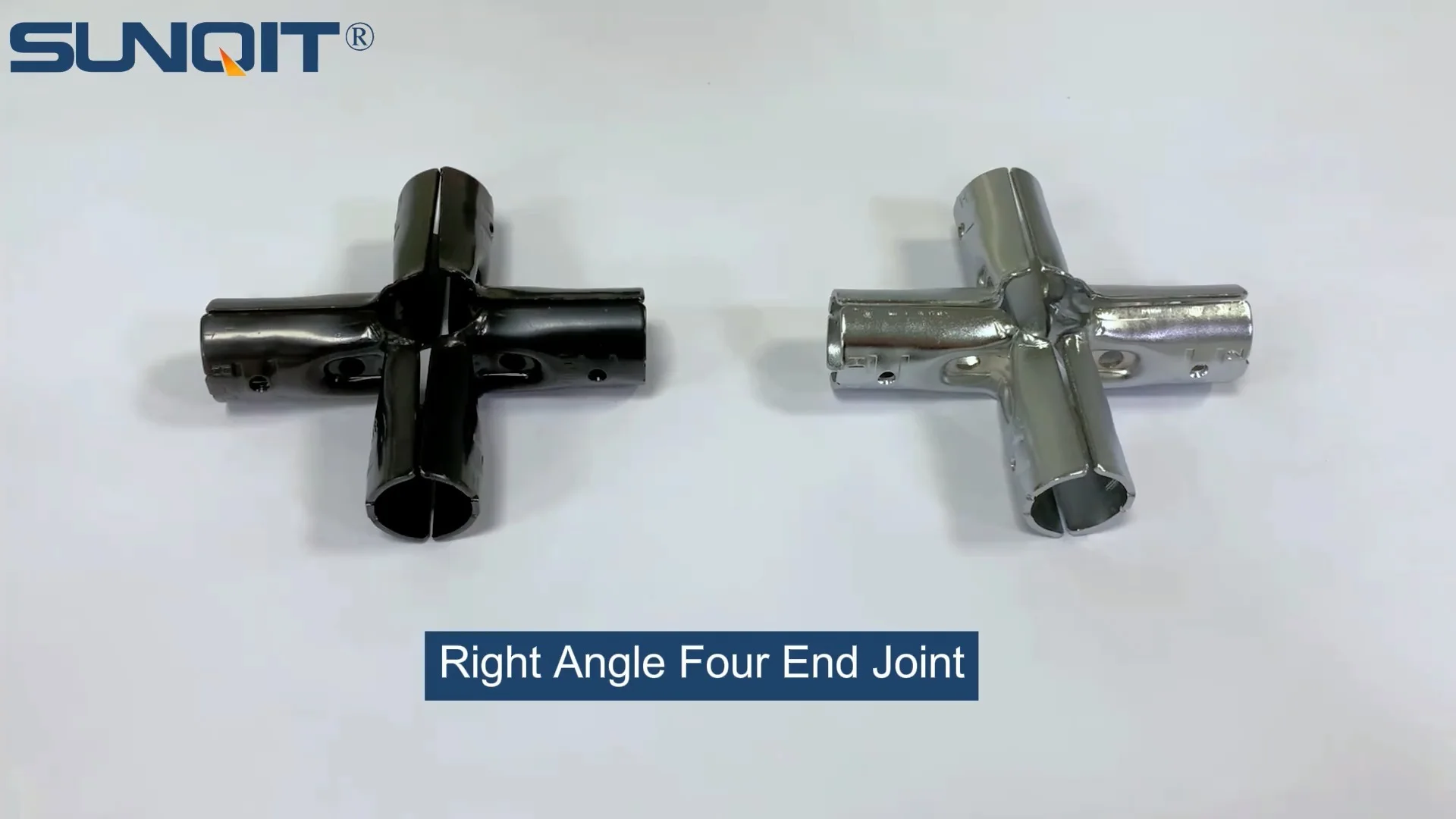
In the fast-paced world of manufacturing, warehousing, and logistics, efficiency isn't just a buzzword—it's the backbone of profitability. Every workflow, every workstation, and every tool must work in harmony to keep operations running smoothly. Among the most critical elements in this ecosystem are mobile workstations: flexible, adaptable setups that can be repositioned on demand to meet shifting production needs. Yet, for all their versatility, mobile workstations are only as reliable as their foundational components. Enter the five way straight lean pipe joint chrome—a small but mighty part that bridges the gap between stability and mobility, turning ordinary workstations into powerhouses of productivity.
What Is a Five Way Straight Lean Pipe Joint Chrome?
Before diving into its benefits, let's clarify what a five way straight lean pipe joint chrome actually is. At its core, it's a specialized connector designed to join lean pipes—hollow tubes commonly used in industrial workstations, racks, and carts—in multiple directions. Unlike simpler joints that might connect two or three pipes, the "five way" designation means it can anchor up to five lean pipes at a single point, allowing for the creation of complex, multi-functional structures. The "straight" aspect refers to its ability to align pipes along linear axes (horizontal, vertical, and diagonal), while "chrome" denotes its plating—a layer of chromium applied to the underlying steel for enhanced durability and corrosion resistance.
Lean pipes themselves are typically made of steel, aluminum, or composite materials, prized for their lightweight strength and modularity. But without a robust joint, even the sturdiest pipe becomes little more than a loose tube. The five way straight lean pipe joint chrome solves this by acting as a central hub, distributing weight evenly across connected pipes and ensuring structural integrity—even when the workstation is in motion.
Design & Materials: Built for the Demands of Mobile Work
The magic of the five way straight lean pipe joint chrome lies in its thoughtful design and high-quality materials. Let's break it down:
Chrome-Plated Steel Construction: The base material is usually high-grade steel, chosen for its tensile strength and rigidity. Steel can withstand heavy loads without bending, making it ideal for supporting tools, materials, and equipment on mobile workstations. The chrome plating adds a protective layer that resists rust, scratches, and chemical exposure—critical in environments where spills, moisture, or industrial cleaners are common. Unlike plastic joints, which can crack or warp under stress, chrome-plated steel joints maintain their shape and functionality even after years of use.
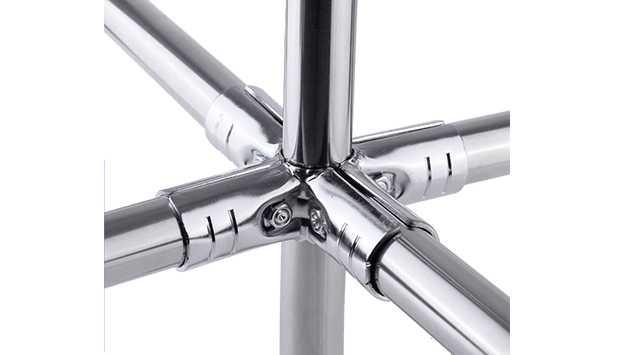
Multi-Directional Connectivity: The "five way" design isn't just about quantity; it's about flexibility. This joint features five threaded or slotted ports, each angled to allow pipes to extend in different directions. For example, one port might anchor a vertical support leg, another a horizontal shelf beam, and a third a diagonal brace to reinforce stability. This versatility means manufacturers can customize workstations with shelves, tool holders, bins, or even integrated roller tracks—all connected through a single, central joint.
Secure Locking Mechanism: Most five way straight lean pipe joints use set screws or clamping collars to secure pipes in place. When a pipe is inserted into a port, tightening the screw (often with a hex key) creates friction between the joint and the pipe, preventing slippage. Some advanced models even include nylon or rubber gaskets to enhance grip, ensuring the joint stays tight even when the workstation is moved over uneven floors or jostled during transport.
Stability: The Foundation of Safe, Efficient Workstations
Mobility is useless if a workstation wobbles, tips, or collapses under load. Stability is non-negotiable, especially in settings where workers rely on the workstation to hold heavy tools, delicate components, or hazardous materials. Here's how the five way straight lean pipe joint chrome delivers:
Even Weight Distribution: By connecting up to five pipes, the joint spreads the workstation's weight across multiple support points. For example, a mobile workbench with a five way joint at its center can have four legs (one at each corner) and a center shelf—all anchored to the joint. This distributes the load evenly, reducing stress on individual pipes and minimizing the risk of bending or buckling.
Resistance to Torsional Forces: When a workstation is moved, it's subject to twisting and shaking forces (torsion). The five way joint's rigid steel construction and multi-directional connections counteract this by creating a "cage-like" structure that resists warping. Unlike simpler joints that might allow pipes to pivot or shift, the chrome-plated steel design holds firm, keeping the workstation level and stable even during sudden movements.
Enhanced Load Capacity: Thanks to its robust materials and design, the five way straight lean pipe joint chrome can support significantly more weight than plastic or single-direction joints. This is especially important for mobile workstations used in heavy industries, such as automotive manufacturing or construction, where tools and parts can weigh hundreds of pounds. A well-designed joint ensures the workstation can handle these loads without compromising safety.

Mobility Integration: Rolling Smoothly with Caster Wheels and Roller Tracks
Stability alone isn't enough—mobile workstations need to move, and move well. The five way straight lean pipe joint chrome excels here, too, by integrating seamlessly with mobility-enhancing components like caster wheels and roller tracks.
Caster Wheel Compatibility: Most mobile workstations rely on caster wheels for movement, and the five way joint plays a key role in supporting these wheels. By anchoring the workstation's base frame (often made of lean pipes), the joint ensures the weight of the entire setup is transferred evenly to the casters. This prevents "tipping points" where uneven weight distribution could cause the workstation to lean or get stuck. For example, a workstation with a five way joint at its base can support dual caster wheels on each leg, distributing weight across eight contact points (instead of four), making it easier to roll over cracks or thresholds.
Roller Tracks for Material Flow: Beyond moving the workstation itself, the five way joint can also support roller tracks—parallel rails with rotating wheels that allow materials to slide smoothly on and off the workstation. By connecting roller track sections to the joint, manufacturers can create integrated material flow systems. Imagine an assembly line workstation: parts arrive via a roller track mounted to the joint, workers assemble components, and finished products slide onto another track for transport—all without the need for manual lifting. The joint's stability ensures the roller track stays aligned, preventing jams and keeping materials moving efficiently.
Applications: Where Five Way Straight Lean Pipe Joint Chrome Shines
The versatility of the five way straight lean pipe joint chrome makes it indispensable across a range of industries. Here are just a few scenarios where it proves its worth:
Automotive Assembly Lines: Car manufacturing involves countless moving parts—literally. Mobile workstations equipped with five way joints are used to hold tools, fasteners, and subassemblies, moving alongside the production line as vehicles take shape. The joint's stability ensures power tools stay secure, while its compatibility with roller tracks allows parts to be fed directly into the assembly process.
Warehouse Picking and Packing: In warehouses, order fulfillment demands speed and accuracy. Mobile picking carts with five way joints can be customized with multiple shelves, bins, and barcode scanners, all anchored to the joint. Caster wheels make it easy for workers to navigate aisles, and roller tracks on the cart allow bins to slide into place for quick sorting. The joint's durability ensures the cart can handle heavy loads of packages without wobbling.
Electronics Manufacturing: Sensitive electronics require static-safe environments, often using ESD (electrostatic discharge) workstations. The five way joint's chrome plating can be treated to dissipate static, while its stability ensures delicate components (like circuit boards) remain secure during assembly. Roller tracks with ESD-safe wheels (another keyword from the list: "40 steel roller track black esd wheel") can be integrated to move components without risk of static damage.
Lab and Medical Facilities: In labs, mobile workstations need to hold equipment, samples, and reagents while maintaining sterility. The five way joint's chrome plating is easy to sanitize, resisting chemicals and bacteria growth. Its stability is crucial for precision tools like microscopes or centrifuges, which can't afford to shift during use.
How Does It Compare to Other Lean Pipe Joints?
To truly appreciate the five way straight lean pipe joint chrome, it helps to compare it to other common lean pipe joints. The table below highlights key differences in stability, mobility, and use cases:
| Joint Type | Number of Connections | Material | Stability (1-5) | Mobility Integration (1-5) | Best Use Case |
|---|---|---|---|---|---|
| Five Way Straight Chrome | Up to 5 | Chrome-plated steel | 5 | 4 | Mobile workstations with multiple attachments (shelves, roller tracks, tool holders) |
| Three Way Joint | 3 | Steel or plastic | 3 | 3 | Simple racks or fixed shelving |
| Two Way Joint | 2 | Plastic | 2 | 2 | Straight conveyors or lightweight carts |
| 90° Crossing Joint | 4 (cross-shaped) | Steel | 4 | 2 | Fixed, vertical shelving units |
As the table shows, the five way straight chrome joint outperforms others in stability and mobility integration, making it the top choice for dynamic, multi-functional mobile workstations.
Installation Tips for Optimal Performance
Even the best joint won't perform well if installed incorrectly. Here are some tips to ensure your five way straight lean pipe joint chrome delivers maximum stability and mobility:
Measure Twice, Cut Once: Lean pipes must be cut to precise lengths to ensure a snug fit in the joint. Use a pipe cutter or saw with a fine-tooth blade to avoid jagged edges, which can damage the joint's ports or prevent a tight seal.
Deburr Pipes: After cutting, use a deburring tool to smooth the inside and outside edges of the pipe. Sharp edges can scratch the joint's chrome plating or cause the set screw to slip, weakening the connection.
Align Before Tightening: Assemble all pipes and joints loosely first, then adjust the workstation for levelness and alignment. Once everything is straight, tighten the set screws gradually—alternating between ports to avoid uneven pressure, which can warp the joint.
Use the Right Tools: Most five way joints require a hex key (Allen wrench) to tighten set screws. Using a tool that's too small can strip the screw head; too large, and you risk over-tightening and cracking the pipe.
Maintenance: Keeping Your Joints in Top Shape
Like any industrial component, the five way straight lean pipe joint chrome needs regular care to maintain its performance. Here's how to keep it in prime condition:
Clean Regularly: Wipe the joint with a soft, damp cloth to remove dust, grease, and debris. For tougher grime, use a mild detergent—avoid abrasive cleaners that can scratch the chrome plating.
Inspect for Loose Connections: Vibration from moving the workstation can loosen set screws over time. Check joints monthly (or more often in high-use areas) and retighten as needed.
Lubricate Moving Parts: If your joint has rotating components (e.g., swivel ports), apply a small amount of silicone-based lubricant to keep them moving smoothly. Avoid oil-based lubricants, which can attract dust and gunk.
replace Worn Joints: If a joint shows signs of damage—cracks, stripped threads, or rust that can't be cleaned—replace it immediately. A compromised joint puts the entire workstation at risk of failure.
Conclusion: The Unsung Hero of Mobile Workstations
In the grand scheme of industrial operations, the five way straight lean pipe joint chrome may seem. But its impact is undeniable. By combining robust chrome-plated steel construction, multi-directional connectivity, and seamless integration with mobility components like caster wheels and roller tracks, it transforms lean pipes into stable, flexible workstations that adapt to the needs of modern businesses.
Whether you're running an automotive plant, a warehouse, or a lab, investing in quality five way joints isn't just about durability—it's about efficiency, safety, and staying competitive. After all, in a world where every second counts, the right joint can make all the difference between a workstation that holds you back and one that propels you forward.
So, the next time you see a mobile workstation gliding across a factory floor, remember: the real star might just be the small, shiny joint holding it all together.