- Company Articles
- Products and Technology
- Product knowledge
- Five Way Straight Lean Pipe Joint Chrome: Ideal for High-Volume Production Environments

Five Way Straight Lean Pipe Joint Chrome: Ideal for High-Volume Production Environments
Related Product
Five Way Straight Lean Pipe Joint Chrome
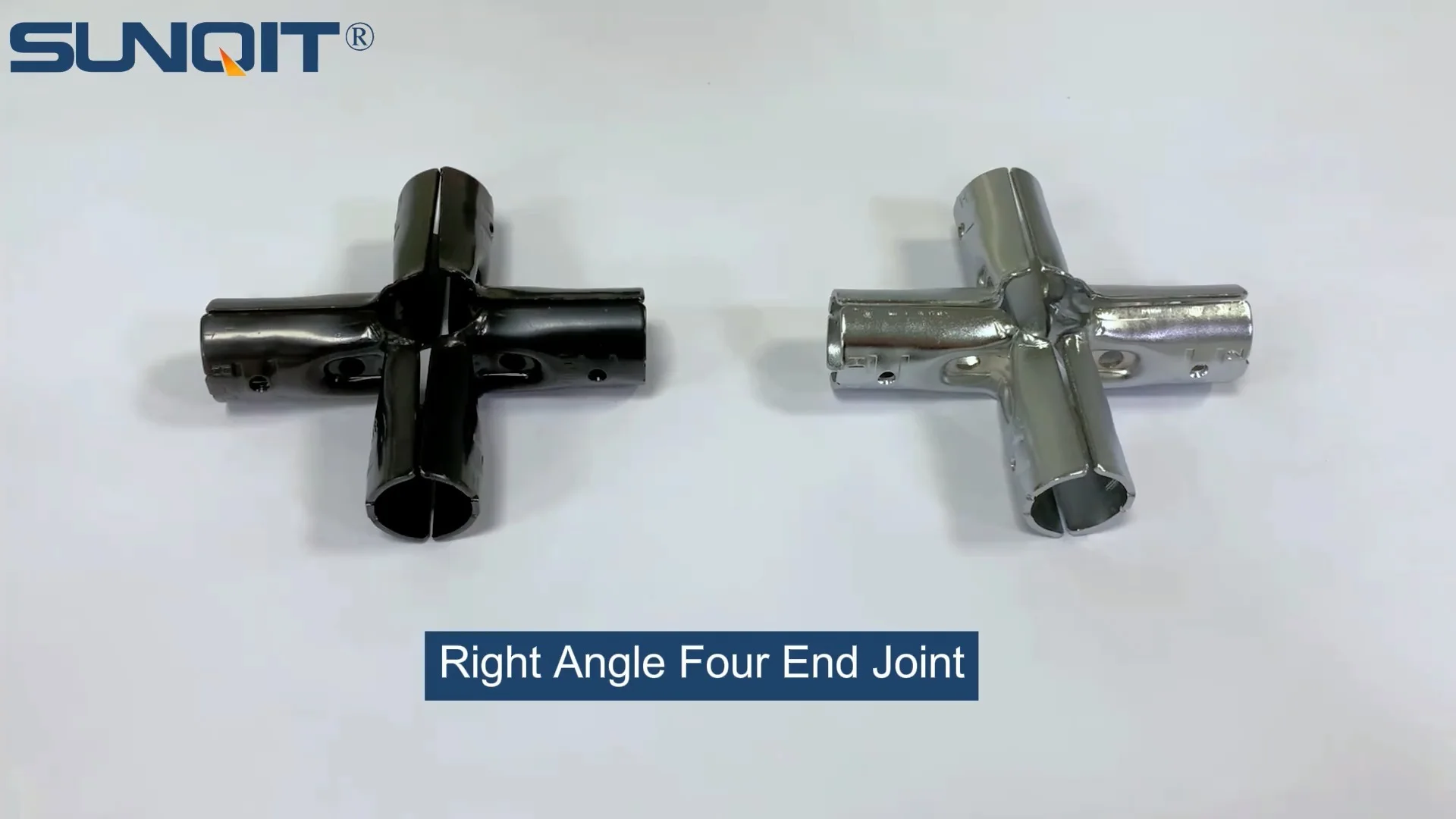
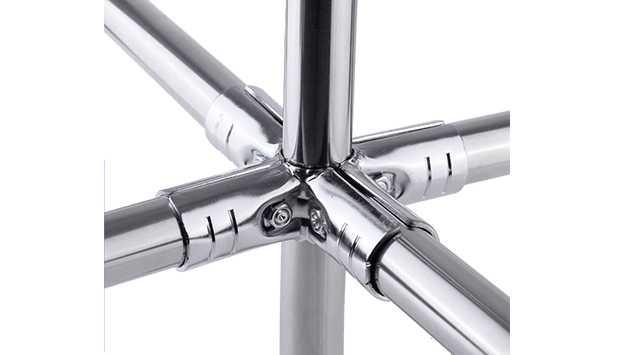
Five way straight lean pipe joint, for 5 pcs 28mm lean pipe connect in straight angle,which used widely in workbench, flow rack, hand trolley frame connection.
Walk into any high-volume production facility—whether it's an automotive assembly line, a electronics manufacturing plant, or a consumer goods warehouse—and you'll quickly notice the same challenge: keeping up with demand while maintaining efficiency. The heartbeat of these operations lies in their ability to adapt, flow, and evolve. But all too often, rigid, one-size-fits-all equipment becomes a bottleneck. Conveyor systems that can't be reconfigured for new products. Workbenches that limit worker movement. Material racks that waste precious floor space. These are the silent productivity killers that keep plant managers up at night.
Enter the Five Way Straight Lean Pipe Joint Chrome —a small but mighty component that's quietly revolutionizing how production lines are built and rebuilt. If lean manufacturing is about eliminating waste and embracing flexibility, this joint is the unsung hero that turns those principles into tangible, day-to-day results. It's not just a connector; it's a tool that empowers teams to design their workspace around their needs, not the other way around. In this article, we'll dive into why this unassuming joint has become a cornerstone of high-volume production, how it integrates with lean systems, and why it's a must-have for any facility looking to stay competitive in a fast-changing market.
What Exactly Is the Five Way Straight Lean Pipe Joint Chrome?
Let's start with the basics. At its core, the Five Way Straight Lean Pipe Joint Chrome is a modular connector designed to work with lean pipe systems—the backbone of modern lean manufacturing setups. Think of it as the "Lego brick" of production: a simple, durable piece that lets you build complex structures by snapping (or in this case, screwing) lean pipes together in multiple directions.
First, the "five way" part. Unlike standard two-way or three-way joints, which limit you to straight lines or right angles, this joint features five distinct connection points. Picture a central hub with openings pointing in five directions—typically four along a horizontal plane and one vertical, though configurations can vary. This means you can connect lean pipes upwards, downwards, left, right, and straight ahead, creating 3D structures that maximize space and functionality.
Then there's the "chrome" finish. This isn't just for aesthetics (though it does add a sleek, professional look to any setup). Chrome plating adds a layer of durability, protecting the joint from rust, corrosion, and the wear and tear of daily use in busy factories. In environments where oil, grease, or moisture are common, that chrome coating becomes a lifesaver, ensuring the joint holds up for years without degradation.
But what really sets this joint apart is its compatibility. It's designed to work seamlessly with standard lean pipe (often 28mm in diameter), as well as aluminum profiles, roller tracks, and a wide range of accessories. Whether you're building a workbench, a flow rack, or a custom conveyor, this joint acts as the glue that holds it all together—no welding, no specialized tools, no headaches.
Key Features That Make It Stand Out
To understand why this joint is a game-changer, let's break down its most important features. These aren't just specs on a datasheet; they're the reasons plant managers and production engineers are swapping out old, fixed equipment for lean pipe systems built with five-way chrome joints.
1. Five-Way Connectivity: Flexibility in Three Dimensions
In high-volume production, "one and done" designs rarely work. A line that assembles smartphones today might need to switch to tablets next month, or a warehouse fulfilling holiday orders might require a completely different storage layout come January. Traditional joints—like two-way straight connectors or three-way T-joints—lock you into flat, linear structures. Want to add a vertical shelf to a material rack? You'll need extra brackets. Need to route a conveyor around a corner and up a small incline? Good luck.
The five-way joint eliminates these limitations. With five connection points, you can build upwards, outwards, and sideways, creating everything from multi-tiered flow racks to ergonomic workbenches with integrated tool holders and overhead part bins. Imagine a workstation where parts flow in from the left, tools are stored above, and finished products slide out to the right—all connected by a single joint. That's the power of 3D flexibility.
2. Chrome Plating: Built to Last in Tough Environments
Production floors are harsh places. Oils, coolants, and cleaning agents eat away at unprotected metal. Heavy loads strain joints, and constant vibration loosens connections. A cheap, uncoated joint might last a few months before rust sets in or the threads wear down. The Five Way Straight Lean Pipe Joint Chrome, however, is built for the long haul.
Chrome plating isn't just a cosmetic upgrade. It forms a hard, corrosion-resistant barrier that stands up to moisture, chemicals, and daily abrasion. This means less time replacing rusted parts, fewer unexpected breakdowns, and a longer lifespan for your entire lean pipe system. For facilities running 24/7 operations, that durability translates directly to lower maintenance costs and higher uptime—two metrics that hit the bottom line hard.
3. Strength Without the Bulk
You might assume that a joint with five connection points would be bulky or weak, but that couldn't be further from the truth. Most five-way chrome joints are made from high-grade steel, precision-cast to distribute weight evenly across all connection points. This design ensures they can handle the heavy loads common in high-volume production—think stacks of circuit boards, automotive parts, or bulk packaging materials.
Take a typical application: a three-tier flow rack built with lean pipe and five-way joints. Each tier might hold 50+ kg of materials, and the joint at the corner needs to support the weight of the rack itself plus the materials above. Thanks to its robust construction, the five-way chrome joint doesn't buckle or bend, even under constant stress. This strength gives plant managers peace of mind, knowing their structures can keep up with the demands of a busy line.
4. Tool-Free Assembly (Mostly)
In production, time is money. The longer it takes to set up a new workbench or reconfigure a conveyor, the more downtime you're looking at—and downtime in a high-volume facility can cost thousands of dollars per hour. Traditional equipment often requires welding, drilling, or specialized tools, which means calling in maintenance crews or outside contractors.
The five-way chrome joint simplifies this process dramatically. Most models use set screws or clamping mechanisms that can be tightened with a standard hex key (Allen wrench) or even by hand. No welding, no cutting, no mess. A team of two workers can assemble a basic flow rack in under an hour, or reconfigure a workbench in 15 minutes flat. This speed is a game-changer for facilities that need to pivot quickly—like when a new product launch is moved up, or a sudden surge in demand requires adding a second assembly line.
5. Compatibility with Lean Ecosystems
A great component doesn't work in isolation—it plays well with others. The Five Way Straight Lean Pipe Joint Chrome is designed to integrate seamlessly with the broader world of lean manufacturing accessories. Need to add casters to make a workbench mobile? Screw them into the joint. Want to attach a roller track for gravity-fed material flow? The joint's connection points are sized to fit standard roller track brackets. Even aluminum profiles —a popular choice for lightweight, rigid structures—can be paired with this joint using simple adapters.
This compatibility means you're not locked into a single brand or system. You can mix and match components from different suppliers, repurpose old lean pipe materials, and build truly custom solutions without worrying about parts not fitting. For facilities that have already invested in lean infrastructure, this joint is a way to breathe new life into existing equipment, extending its value for years to come.
Why High-Volume Production Environments Need This Joint
High-volume production isn't just about making more products—it's about making them better , faster, and with fewer resources. Every square foot of floor space, every minute of worker time, and every dollar spent on equipment needs to deliver maximum value. The Five Way Straight Lean Pipe Joint Chrome addresses these needs head-on, solving four critical pain points for busy facilities.
Adapting to Changing Product Lines
In today's market, product lifecycles are shorter than ever. A consumer electronics manufacturer might release 10 new smartphone models in a year; an automotive supplier could shift from producing parts for sedans to electric SUVs overnight. Each new product brings new requirements: different part sizes, new assembly steps, unique packaging. Rigid equipment—like fixed conveyor belts or welded workbenches—can't keep up.
The five-way joint turns adaptability into a competitive advantage. Let's say a facility needs to reconfigure an assembly line for a new laptop model. With traditional equipment, this might involve replacing the entire conveyor system or building new workbenches from scratch. With lean pipe and five-way joints? Disassemble the old setup, reposition the pipes using the joints to create wider work surfaces or taller material racks, and add roller tracks to accommodate the new laptop's larger packaging. The entire process can be done over a weekend, ensuring production starts on time Monday morning.
Reducing Downtime (and Stress)
Downtime is the enemy of high-volume production. Even a single hour of halted lines can mean thousands of unproduced units and missed deadlines. Much of this downtime comes from equipment that's hard to repair or reconfigure. A welded joint that cracks? You'll need a welder on-site. A bolted conveyor frame that needs adjusting? Hours of loosening and retightening nuts.
The five-way chrome joint minimizes downtime in two ways. First, its modular design makes repairs a breeze. If a joint gets damaged (a rare occurrence, thanks to the chrome plating), you can simply unscrew it and replace it in minutes—no special skills required. Second, reconfigurations are so fast that many facilities do them during breaks or between shifts, avoiding production stoppages entirely. For example, a food packaging plant might adjust their flow racks during the lunch hour to switch from packaging cereal boxes to snack bars, all using the same five-way joints and lean pipes.
Maximizing Floor Space
Floor space in a high-volume facility is like real estate in a city—it's valuable, and you can't afford to waste it. Traditional material racks and storage systems often take up more space than necessary, with fixed heights and widths that don't account for the actual size of the parts being stored. A five-tier rack might have shelves spaced 18 inches apart, even though the parts only need 12 inches, leaving 6 inches of wasted vertical space per shelf.
The five-way joint lets you build vertically and horizontally, turning unused space into productive storage. For example, a facility storing small electronic components could use the joint to create a multi-tiered flow rack with adjustable shelf heights—some shelves 8 inches apart for tiny capacitors, others 16 inches for larger circuit boards. The joint's five-way connectivity also allows for "overhang" structures, where material racks extend over workbenches, keeping parts within arm's reach without cluttering the workspace below.
In one case study, a medical device manufacturer reported reclaiming 20% of their floor space after switching to lean pipe systems built with five-way joints. They replaced bulky, fixed steel racks with custom-designed lean pipe structures that hugged the walls and utilized vertical space, freeing up room for an additional assembly line. The result? A 15% increase in production capacity without expanding the facility.
Lowering Long-Term Costs
Investing in new equipment is never cheap, but the Five Way Straight Lean Pipe Joint Chrome offers a compelling return on investment. Let's break it down: Traditional welded steel structures cost more upfront, require professional installation, and are difficult to modify. If you need to change their design, you're often better off scrapping them and buying new ones. Lean pipe systems with five-way joints, on the other hand, are reusable. You can disassemble a workbench and rebuild it as a material rack, or reconfigure a conveyor into a turnover trolley—all without buying new parts.
Maintenance costs are lower too. The chrome finish resists corrosion, so you won't be replacing rusted joints every few years. The tool-free assembly means you don't need to hire contractors for reconfigurations. And because the system is modular, you can replace individual parts (like a worn caster or broken roller) instead of the entire structure. Over time, these savings add up—often paying for the initial investment in a matter of months.

Integrating with Lean Systems: A Perfect Partnership
Lean manufacturing isn't just a buzzword; it's a philosophy built around eliminating waste, empowering workers, and delivering value to customers. At its core are principles like "just-in-time" production, continuous improvement, and respect for people. The Five Way Straight Lean Pipe Joint Chrome isn't just a tool for building structures—it's a tool for living these principles.
Eliminating Waste (Muda)
Waste comes in many forms: overproduction, excess inventory, unnecessary motion, and defects, to name a few. The five-way joint helps tackle several of these. Take "unnecessary motion," for example. A worker who has to walk 10 feet to grab a part from a distant rack is wasting time and energy. With a five-way joint, you can build a material rack that's integrated directly into the workbench, putting parts within arm's reach. Similarly, "excess inventory" is reduced by building flow racks that hold only the parts needed for the next hour of production (a key part of just-in-time systems), thanks to the joint's ability to create compact, tiered storage.
Even "waiting" waste—when workers or machines sit idle—is minimized. If a conveyor breaks down, the joint allows for quick repairs or temporary workarounds (like rerouting materials through a secondary roller track). And because the system is so easy to reconfigure, teams can experiment with layouts to find the most efficient flow, reducing bottlenecks that cause waiting.
Empowering Workers Through Ownership
Lean isn't just top-down; it thrives when frontline workers have a say in how their workspace is designed. After all, who knows better than the person assembling products all day what would make their job easier? The Five Way Straight Lean Pipe Joint Chrome puts that power in their hands. A worker might suggest adding a second shelf to their workbench to separate tools from parts, or angling a roller track to reduce bending. With the joint, these changes can be made quickly, often in minutes, without waiting for approval from maintenance or engineering.
This sense of ownership leads to higher engagement and better ideas. When workers see that their input directly improves their workspace, they're more likely to contribute to continuous improvement efforts. It's a small change, but it transforms the culture from "this is how we've always done it" to "how can we make it better?"
Supporting Continuous Improvement (Kaizen)
Continuous improvement—kaizen—requires the ability to test, learn, and adapt. What works today might not work tomorrow, and that's okay. The five-way joint turns the workspace into a living lab. A team might try a new conveyor layout for a week, realize it's causing bottlenecks, and then reconfigure it using the same joints and pipes. There's no cost to experimenting, because the parts are reusable, and the setup time is minimal.
In one automotive plant, a team used five-way joints to test three different workbench layouts in a single month. They measured metrics like worker movement, assembly time, and error rates, then settled on the design that reduced errors by 12%. Without the joint's flexibility, testing even one new layout would have taken weeks and cost thousands in new equipment. With it, the team turned continuous improvement from a slogan into action.
Comparing Joints: Why Five-Way Chrome Stands Above the Rest
Not all lean pipe joints are created equal. To understand why the Five Way Straight Lean Pipe Joint Chrome is the top choice for high-volume production, let's compare it to other common joint types. The table below breaks down key factors like flexibility, load capacity, and best use cases.
| Joint Type | Number of Connections | Material | Max Load Capacity (Per Joint) | Best For | Limitations |
|---|---|---|---|---|---|
| Five Way Straight Lean Pipe Joint Chrome | 5 (3D: horizontal/vertical) | Chrome-plated steel | Up to 200 kg | Multi-tiered racks, complex workbenches, 3D structures | Slightly higher cost than basic joints |
| Three Way Lean Pipe Joint (Chrome) | 3 (T-shape or L-shape) | Chrome-plated steel | Up to 150 kg | Simple flow racks, straight-line conveyors | Limited to 2D structures; less flexibility |
| Two Way Straight Joint (Chrome) | 2 (straight line) | Chrome-plated steel | Up to 180 kg | Long conveyor sections, linear shelving | No branching; only for straight runs |
| Fixed Angle Joint (Unplated Steel) | 2 (fixed 90° angle) | Unplated steel | Up to 120 kg | Basic workbenches, static racks | No adjustability; prone to rust; limited use cases |
The table tells the story: while other joints have their place, the Five Way Straight Lean Pipe Joint Chrome offers unmatched flexibility, strength, and durability—especially for high-volume environments where adaptability is key. Its ability to handle 3D structures and heavy loads makes it the go-to choice for facilities that can't afford to be limited by 2D, one-directional designs.
Real-World Applications: Where This Joint Shines
Theory is great, but let's look at how the Five Way Straight Lean Pipe Joint Chrome performs in real production settings. From automotive to electronics, these are the applications where it's making the biggest impact.
Custom Workbenches for Assembly Lines
Assembly workbenches are the heart of any production line, and one size rarely fits all. A worker assembling small circuit boards needs a different setup than someone building large appliances. The five-way joint lets you build workbenches that are tailored to the task. For example, a workbench for electronics assembly might have integrated LED lighting (powered via a vertical pipe attached to the joint), a static-dissipative surface (to protect sensitive components), and a tiered shelf above for tools—all connected using five-way joints. Add casters to the base, and the workbench becomes mobile, allowing teams to reposition it as needed for different assembly steps.
Multi-Tiered Flow Racks for Just-In-Time Production
Just-in-time (JIT) production relies on having the right parts in the right place at the right time—no more, no less. Multi-tiered flow racks, built with five-way joints, are perfect for this. Imagine a rack with three levels: the top holds incoming parts (delivered by conveyor), the middle is where workers pick parts for assembly, and the bottom collects empty bins to be returned to the warehouse. The five-way joint makes it easy to angle each tier for gravity flow, ensuring parts glide smoothly to the pick point. And because the joint allows for adjustable shelf heights, the rack can be reconfigured if part sizes change.
Modular Conveyor Systems
Conveyors are the arteries of production, moving materials from one station to the next. But traditional belt conveyors are expensive and hard to reconfigure. Enter lean pipe conveyors built with five-way joints. By connecting roller tracks (using the joint's horizontal connection points) and adding a slight incline, you create gravity-fed conveyors that require no power. Need to split the conveyor into two lines? Use a five-way joint to branch off a secondary track. Want to lower the conveyor height at the end to meet a workbench? The vertical connection point lets you adjust the height seamlessly. These systems are cheaper, quieter, and infinitely more adaptable than traditional conveyors.
Mobile Turnover Trolleys
Moving materials between stations shouldn't require heavy machinery. Turnover trolleys—small, mobile carts—are a lean staple, and five-way joints make them even more useful. A trolley built with these joints can have fold-down sides (for easy loading), integrated dividers (to separate parts), and a handle that adjusts to the worker's height. When not in use, the trolley can be disassembled or nested to save space. One automotive supplier reported reducing material transport time by 30% after switching to custom trolleys built with five-way joints, simply because the trolleys fit better in tight spaces and could be loaded/unloaded more quickly.
Maintenance Tips to Keep Your Joints Performing
Like any piece of equipment, the Five Way Straight Lean Pipe Joint Chrome needs a little care to keep it working its best. Fortunately, maintenance is minimal—just a few simple steps to ensure years of reliable service.
- Inspect Regularly: Every month, walk through your lean pipe structures and check the joints for loose screws or signs of damage. Tighten any set screws that have come loose (a common issue in high-vibration environments). Look for cracks in the chrome plating or bent connection points—these are rare, but catching them early prevents failure.
- Clean the Chrome Finish: Wipe down the joints with a damp cloth to remove oil, grease, or dust buildup. For stubborn grime, use a mild detergent (avoid harsh chemicals that can damage the chrome). A clean finish not only looks better but also prevents corrosion from trapped moisture.
- Lubricate Moving Parts (If Applicable): Some five-way joints have rotating components (like swivel connection points). If yours do, apply a small amount of machine oil or silicone lubricant every 6 months to keep them moving smoothly.
- replace When Needed: Even the toughest joints wear out eventually. If a joint is cracked, heavily corroded, or no longer holds pipes securely, replace it immediately. Trying to "make do" with a damaged joint risks injury or equipment failure.
Conclusion: Building the Future of Production, One Joint at a Time
In the fast-paced world of high-volume production, success belongs to those who can adapt. Rigid systems, wasted space, and inflexible equipment are relics of the past. The future belongs to facilities that embrace modularity, empower their workers, and build for change. The Five Way Straight Lean Pipe Joint Chrome is more than a connector; it's a symbol of that future.
It's the joint that lets a small electronics plant scale from 1,000 to 10,000 units per day without rebuilding its entire line. It's the tool that helps a warehouse manager turn a chaotic storage area into a streamlined, just-in-time flow system. It's the component that puts power back into the hands of the people who know the work best—frontline workers who can now design their workspace to fit their needs, not the other way around.
So if you're running a high-volume production facility, ask yourself: Are your current systems holding you back? Is downtime eating into your profits? Are your workers struggling with inefficient layouts? If the answer is yes, it might be time to take a closer look at the small but mighty Five Way Straight Lean Pipe Joint Chrome. It's not just an upgrade—it's a transformation. And in production, transformation is the key to staying ahead.