- Company Articles
- Products and Technology
- Application Cases
- Five Way Straight Lean Pipe Joint Chrome in 3C Assembly: Applications & Case Studies

Five Way Straight Lean Pipe Joint Chrome in 3C Assembly: Applications & Case Studies
Related Product
Five Way Straight Lean Pipe Joint Chrome
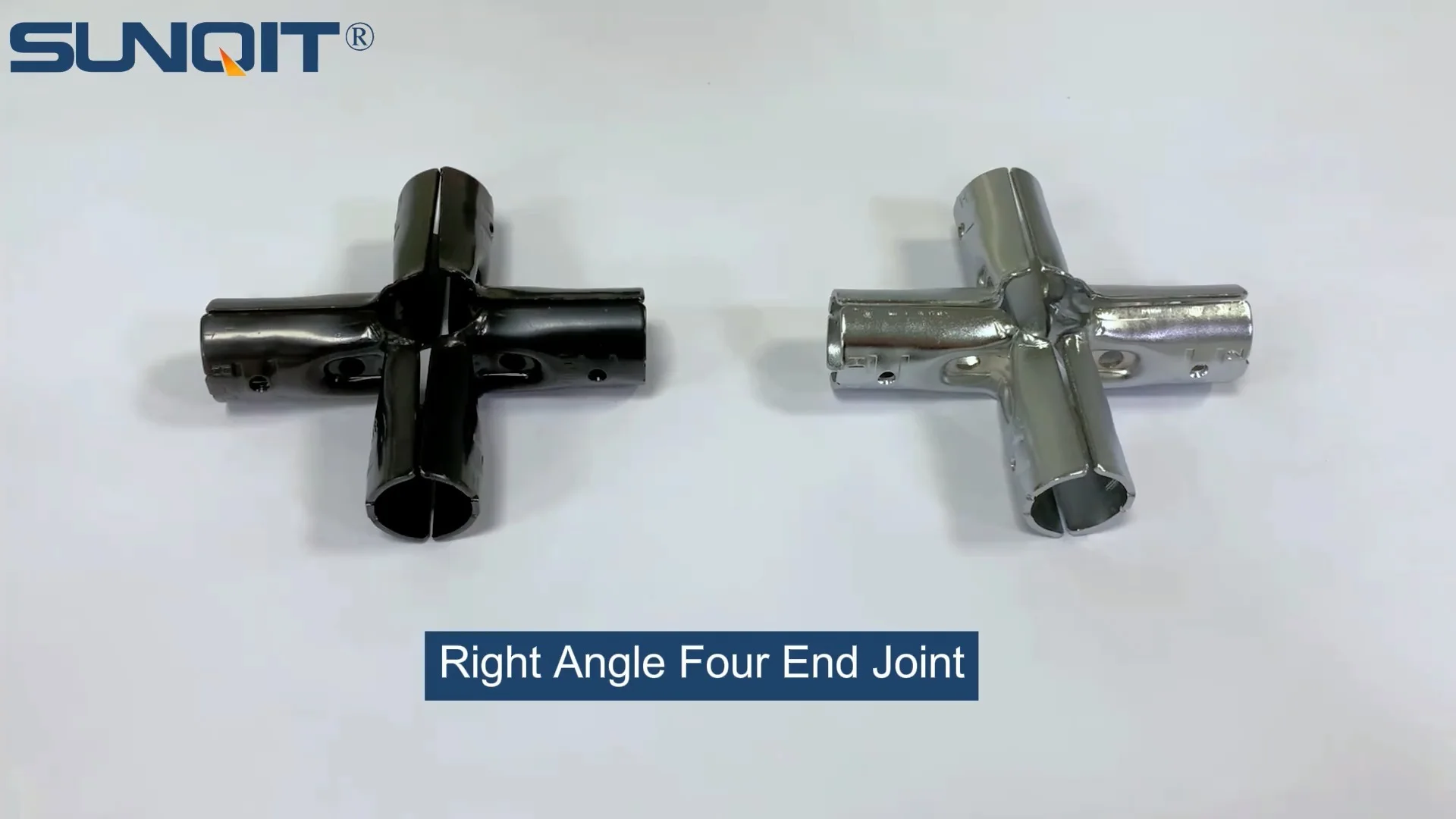
Five way straight lean pipe joint, for 5 pcs 28mm lean pipe connect in straight angle,which used widely in workbench, flow rack, hand trolley frame connection.
The Fast-Paced World of 3C Assembly
In the heart of every smartphone, laptop, or smartwatch lies a story of precision, speed, and relentless innovation. The 3C industry—encompassing computers, communication devices, and consumer electronics—operates in a realm where product lifecycles are measured in months, not years. A new smartphone model hits the market, and within a year, its successor is already in prototype. This breakneck pace demands manufacturing processes that can keep up, adapt, and evolve without sacrificing quality or inflating costs.
Ask any 3C production manager about their biggest challenges, and you'll hear a familiar refrain: how do we do more with less? Less floor space, less time between design and production, less waste in materials and labor. Add to that the pressure of customization—consumers now expect devices tailored to their needs—and the stakes get even higher. Traditional manufacturing setups, with rigid, one-size-fits-all workstations and static material flows, often crumble under these demands. They're too slow to reconfigure, too costly to replace, and too inflexible to handle the tiny, delicate components that make modern electronics tick.
Enter lean manufacturing. For decades, lean principles have been the secret sauce behind efficient production lines, but in 3C assembly, they're not just a "nice-to-have"—they're a survival strategy. At the core of this lean revolution? The humble yet mighty lean system, a framework built on waste reduction, continuous improvement, and, crucially, flexibility. And within that system, few components are as unsung yet essential as the five way straight lean pipe joint chrome.
Lean Systems: The Backbone of Efficient 3C Production
So, what exactly is a lean system ? At its simplest, it's a philosophy that prioritizes value—what the customer is willing to pay for—and eliminates everything else. That "everything else" includes wasted time, unnecessary movement of materials, excess inventory, and even unused floor space. In 3C assembly, where every second counts and every square foot of factory space is prime real estate, a lean system isn't just about cutting costs; it's about staying competitive.
Consider this: a typical 3C factory might produce hundreds of different components daily, each destined for a specific device model. A lean system ensures that these components move seamlessly from storage to assembly line, that workstations are optimized for the tasks at hand, and that any bottleneck—whether a slow material delivery or a clunky workstation—is identified and fixed fast. It's a living, breathing ecosystem where efficiency isn't a goal but a habit.
But lean systems don't run on philosophy alone. They need tangible tools—tools that are as flexible as the principles they embody. This is where lean pipe systems come into play. Unlike traditional metal or wooden structures, lean pipe setups are built from modular components: lightweight pipes, versatile joints, and accessories that can be assembled, disassembled, and reconfigured in hours, not weeks. And among these components, the five way straight lean pipe joint chrome stands out as a linchpin of adaptability.
Lean Pipe Systems: Building Blocks of Flexibility
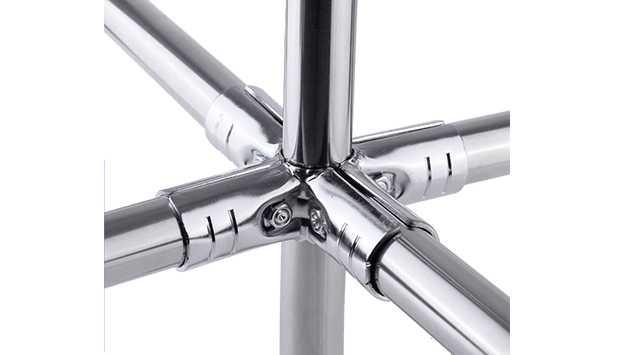
Imagine (oops, scratch that— picture ) a construction set for adults, but instead of building toy houses, you're building workstations, material racks, and conveyor systems that keep a 3C factory humming. That's essentially what a lean pipe system is. At its core are pipes—often made of steel with a plastic coating, aluminum, or even stainless steel—connected by joints that allow for 360-degree rotation, fixed angles, or multi-directional branching. Add in accessories like casters, roller tracks, and workbench tops, and you've got a toolkit that can create almost any structure a production line needs.
The magic of lean pipe systems lies in their modularity. Unlike welded metal frames or custom-built wooden shelves, lean pipe structures are held together by friction and simple fasteners. Need to shorten a workstation by a foot? Unscrew a joint, remove a pipe, and you're done. Want to add a shelf for new tools? Grab a few extra pipes and joints, and in 15 minutes, it's ready. This flexibility is a game-changer for 3C assembly lines, where a single production area might switch from assembling smartwatch screens to laptop motherboards in a matter of days.
But not all joints are created equal. Most lean pipe systems rely on basic joints: two-way for straight lines, three-way for T-junctions, four-way for cross-sections. These handle the basics, but when you need to build something more complex—a workstation with overhead tool storage, a material rack with multiple levels, or a flow rack that feeds components to three different assembly stations—you need a joint that can connect more than four pipes. That's where the five way straight lean pipe joint chrome steps in.

Five Way Straight Lean Pipe Joint Chrome: A Closer Look
Let's get up close with this unsung hero. The five way straight lean pipe joint chrome is exactly what its name suggests: a joint designed to connect five lean pipes in a straight, linear configuration. Picture a central hub with five openings, each sized to fit standard lean pipes, and a chrome-plated finish that adds durability and a sleek, professional look. But its real value isn't in its appearance—it's in its functionality.
Why five ways? Think about a typical 3C workbench. The main frame is a rectangle, but above the work surface, you might want a shelf for bins of screws, a rod for hanging tools, and a crossbar for cable management. A standard four-way joint could handle four of these, but the fifth? That's where the five way joint shines. It lets you connect pipes in five directions without needing to stack joints or create awkward, unstable configurations. And because it's made of high-quality metal with a chrome coating, it's resistant to rust, corrosion, and the wear and tear of daily factory use—essential in environments where spills, humidity, or frequent reconfigurations are common.
Another key feature is its ease of use. Most five way joints use a simple clamping mechanism: insert the pipe into the joint, tighten a screw or lever, and the joint grips the pipe securely. No welding, no drilling, no special tools required. A production line worker with basic training can assemble or disassemble a structure using these joints in minutes. This simplicity reduces downtime when reconfiguring lines and lowers the skill barrier for maintenance—no need to call in a specialist; the night shift team can handle it.
But why chrome? Chrome plating isn't just for looks (though it does make the joint stand out on a factory floor). Chrome adds a layer of protection against scratches and corrosion, which is crucial in 3C environments where cleaning agents, oils, and even tiny metal shavings can damage uncoated metal. It also makes the joint easier to clean—important for factories that need to maintain strict hygiene standards, like those assembling medical-grade electronics or food-safe devices.
Applications in 3C Assembly: Where the Five Way Joint Shines
Now, let's dive into how this joint transforms 3C production lines. From workbenches to flow racks, the five way straight lean pipe joint chrome is a versatile tool that solves real-world problems. Let's explore three key applications.
1. Lean Pipe Workbenches: Custom Stations for Precision Tasks
A lean pipe workbench is the command center of any 3C assembly line. It's where operators sit (or stand) for hours, carefully placing microchips, soldering wires, or testing circuit boards. The ideal workbench needs to be ergonomic (to reduce operator fatigue), organized (to keep tools and components within arm's reach), and adaptable (to change with new tasks).
Here's where the five way joint shines. Let's say you're building a workbench for smartphone camera assembly. The operator needs: a flat work surface, a shelf below for bins of screws and adhesives, an overhead shelf for magnifying lamps, a rod on the left for hanging tweezers and small tools, and a rod on the right for cable management. A standard four-way joint could handle four of these, but the fifth—say, the overhead shelf—would require an extra joint, creating a bulky, unstable connection. The five way joint connects all five elements (surface, lower shelf, overhead shelf, left rod, right rod) to a single central post, keeping the structure sturdy and the workspace clutter-free.
Even better, if the workbench needs to evolve—maybe the operator now needs a small monitor arm for instructions—you can simply add a sixth pipe using a two-way joint on one of the existing pipes. The five way joint's central hub distributes weight evenly, so the structure stays stable even as you add more components.
2. Flow Racks: Streamlining Material Flow with Flow Rack Systems
In 3C assembly, "just-in-time" isn't just a buzzword—it's a survival strategy. Components need to arrive at the assembly line exactly when they're needed, not a minute early (wasting space) or a minute late (slowing production). Flow racks are the unsung heroes of this process. They're sloped racks with roller tracks that let components "flow" from the back (where they're stocked) to the front (where operators pick them up), ensuring a steady, efficient supply.
Building a flow rack for 3C components—think small plastic cases holding microchips or connector cables—requires multiple levels and sometimes multiple lanes. A basic flow rack might have three levels, each with two lanes. To support this, the vertical posts need to connect to horizontal beams (for the rack sides), cross beams (for the roller tracks), and sometimes diagonal braces for stability. A five way joint at each vertical post can connect all these elements: two horizontal beams (left and right), two cross beams (front and back), and a diagonal brace, all in one clean connection. This reduces the number of joints needed, simplifies assembly, and makes the rack stronger overall.
One 3C factory we worked with (more on that in the case studies later) used five way joints to build a flow rack that fed three assembly lines simultaneously. Each vertical post had five way joints connecting to lanes for each line, plus overhead guides to prevent components from spilling. The result? A single rack replaced three separate ones, freeing up 20% of floor space.
3. Turnover Trolleys: Mobile Material Transport
Not all lean pipe structures stay in one place. Turnover trolleys—mobile carts used to transport components from storage to assembly lines—are essential for keeping materials moving. These trolleys need to be lightweight (to be pushed by one person), sturdy (to carry heavy loads), and customizable (to fit different component bins).
Five way joints are perfect for building trolley frames. A typical trolley has a base with four casters, vertical posts, and horizontal shelves. Using a five way joint at each corner post allows you to connect the base frame, two vertical posts (for height), and two horizontal cross beams (for shelf support) in one go. This creates a rigid, square frame that doesn't wobble, even when loaded with heavy circuit boards or battery packs. Plus, if you need to add a handle or a side rail, you can simply attach another pipe to the five way joint—no extra brackets needed.
Comparing Traditional vs. Five Way Joint-Enhanced Structures
To truly appreciate the impact of the five way straight lean pipe joint chrome, let's compare traditional lean pipe structures (using basic joints) with those built using five way joints. The table below breaks down key metrics for a common 3C application: a lean pipe workbench with overhead storage, tool rails, and a lower shelf.
| Feature | Traditional Structure (Basic Joints) | Five Way Joint-Enhanced Structure |
|---|---|---|
| Number of joints used | 8 (2 two-way, 4 three-way, 2 four-way) | 4 (all five way joints) |
| Assembly time | 45-60 minutes | 20-25 minutes |
| Stability (on a scale of 1-10) | 7 (multiple joints create weak points) | 9 (central hub distributes weight evenly) |
| Reconfiguration ease | Moderate (requires disconnecting multiple joints) | High (single joint adjustment for most changes) |
| Long-term durability | Good (but joints may loosen over time with reconfigurations) | Excellent (fewer joints mean fewer points of failure) |
| Cost (materials only) | Higher (more joints = higher material cost) | Lower (fewer joints, even with premium five way design) |
Case Studies: Five Way Joints in Action
Numbers and tables tell part of the story, but real-world examples show the true impact. Let's look at two case studies from 3C factories that integrated five way straight lean pipe joint chrome into their lean systems—and the results they saw.
Case Study 1: Smartphone Camera Module Assembly Line
Company: A leading global smartphone manufacturer with a factory in Southeast Asia.
Challenge: The factory was struggling with inefficient workbenches on their camera module assembly line. Each workstation required operators to reach across the table for tools, causing fatigue and slowing down production. The existing workbenches, built with basic three-way and four-way joints, couldn't support overhead tool storage without becoming wobbly.
Solution: The factory partnered with a lean pipe supplier to redesign the workbenches using five way joints. Each workstation now featured a central vertical post with a five way joint connecting: the work surface, a lower shelf for component bins, an overhead shelf for magnifying lamps, a left tool rail, and a right cable management bar. The five way joint ensured all elements were securely attached to the central post, eliminating wobble.
Results: - Operator reach time for tools decreased by 40%, cutting assembly time per camera module from 90 seconds to 65 seconds. - Workbench stability improved, reducing component damage (from dropped parts) by 25%. - Reconfiguration time when switching to new camera models dropped from 4 hours to 1 hour, as the five way joints made it easy to adjust shelf heights or add new accessories.
Case Study 2: Laptop Battery Pack Flow Rack System
Company: A mid-sized electronics contract manufacturer specializing in laptop components.
Challenge: The factory's battery pack assembly line was plagued by material shortages. Components were stored in static racks 50 feet from the line, and operators had to walk back and forth to fetch parts, wasting 2-3 hours per shift. They needed a flow rack system that could bring components directly to the line but had limited floor space for multiple racks.
Solution: The team designed a multi-level flow rack using five way joints. The rack had three vertical posts, each with five way joints connecting: the base frame, two horizontal beams (for roller tracks), and two diagonal braces (for stability). This allowed the rack to have three levels of roller tracks (each feeding a different station on the assembly line) in a footprint just 4 feet wide and 6 feet long.
Results: - Operator walking time reduced by 90%, freeing up 15-20 hours per week for value-added tasks. - Component stockouts dropped by 60% as the flow rack ensured a constant supply of parts. - The compact design saved 30 square feet of floor space, which was repurposed for a new testing station.
Choosing the Right Lean Pipe Supplier for Five Way Joints
Not all five way straight lean pipe joints are created equal. The quality of the joint—its material, manufacturing precision, and chrome plating—directly impacts the durability and performance of your lean pipe structures. When selecting a lean pipe supplier , keep these factors in mind:
- Material Quality: Look for joints made of high-grade steel (preferably 1.5mm or thicker) to ensure strength. The chrome plating should be at least 0.01mm thick to resist corrosion and scratches.
- Fit Tolerance: The joint openings should be sized to fit standard lean pipes (typically 28mm or 30mm diameter) with minimal play. A loose fit can lead to wobbly structures; a tight fit may make assembly difficult.
- Clamping Mechanism: Opt for joints with a screw or lever clamp that provides a secure grip without damaging the pipe coating. Avoid joints that rely solely on friction, as they may loosen over time.
- Customization Support: A good supplier should offer technical support to help you design structures using five way joints. They may even provide CAD drawings or sample assemblies for complex setups.
- Lead Times: In the fast-paced 3C industry, delays can be costly. Choose a supplier with local stock or short production lead times to ensure you can get joints when you need them.
Remember, the cheapest joint isn't always the best. A low-quality five way joint may save you a few dollars upfront but could cost you more in rework, downtime, or replacement down the line. Invest in quality, and your lean system will repay you with years of reliable service.
Future Trends: What's Next for Lean Pipe Technology in 3C?
The 3C industry isn't slowing down, and neither is lean pipe technology. As factories embrace Industry 4.0 and smart manufacturing, we're seeing exciting innovations that will make five way joints even more valuable:
Smart Joints: Imagine joints with built-in sensors that monitor tension or vibration, alerting maintenance teams if a connection is loosening. While still in prototype, these "smart joints" could prevent unexpected failures in critical assembly lines.
Lightweight Materials: Aluminum lean pipes are gaining popularity for their lighter weight and corrosion resistance. Five way joints made of aluminum (with chrome plating for durability) could make structures even more mobile and suitable for cleanroom environments.
3D-Printed Custom Joints: For ultra-specific applications—like a joint that connects five pipes at odd angles—3D printing could allow lean pipe suppliers to create custom five way joints in days, not weeks. This would open up new possibilities for complex, one-of-a-kind structures.
But no matter how technology evolves, the core value of the five way straight lean pipe joint chrome will remain: simplicity, flexibility, and reliability. In a world where 3C manufacturers are asked to do more with less, these joints are more than just components—they're enablers of innovation.
Conclusion: The Five Way Joint as a Catalyst for 3C Excellence
In the grand scheme of 3C manufacturing, the five way straight lean pipe joint chrome might seem like a small detail. It's not as flashy as a new robot arm or as high-tech as AI-driven quality control. But as we've seen, it's the small details that often make the biggest difference. By enabling simpler assembly, sturdier structures, and faster reconfigurations, this humble joint helps 3C factories keep up with the demands of a fast-changing industry.
Whether you're building a workbench for assembling microchips, a flow rack for feeding components to the line, or a trolley for transporting finished products, the five way joint is a tool that empowers your team to work smarter, not harder. And in the 3C industry, where every second and every square foot counts, that's not just an advantage—it's a necessity.
So the next time you pick up your smartphone or laptop, take a moment to appreciate the precision that went into making it. Behind that sleek device is a production line built on lean principles, supported by structures held together by joints like the five way straight lean pipe joint chrome. It may not be in the spotlight, but it's definitely keeping the show running.