- Company Articles
- Products and Technology
- Application Cases
- Five Way Straight Lean Pipe Joint Chrome in 3C Product Packaging Lines: Efficiency Boost

Five Way Straight Lean Pipe Joint Chrome in 3C Product Packaging Lines: Efficiency Boost
Related Product
Five Way Straight Lean Pipe Joint Chrome
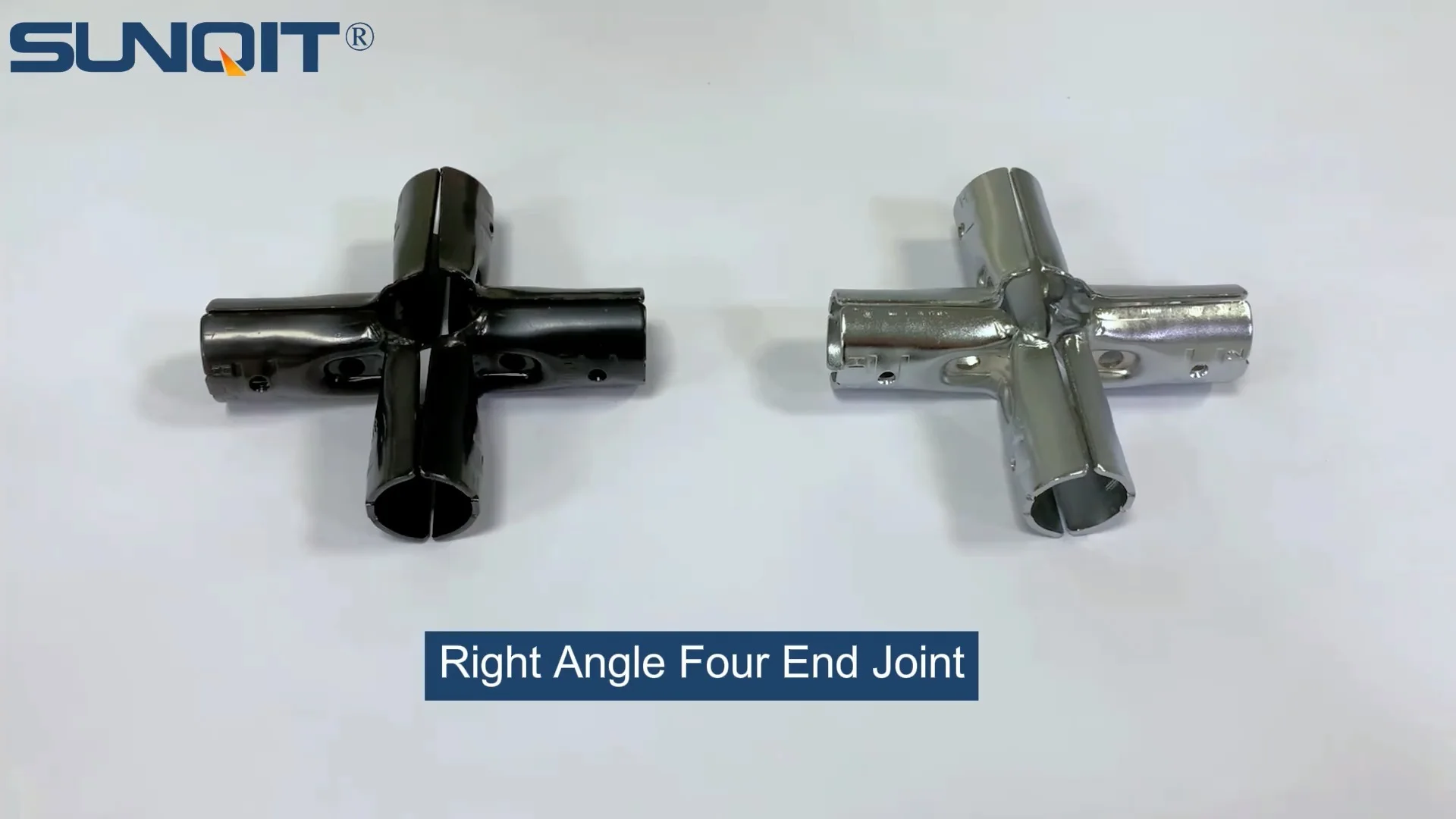
Five way straight lean pipe joint, for 5 pcs 28mm lean pipe connect in straight angle,which used widely in workbench, flow rack, hand trolley frame connection.
The Unsung Heroes of 3C Packaging: Why Flow Matters
Walk into any electronics store, and you'll be surrounded by 3C products—sleek smartphones that fit in your palm, lightweight laptops that power your work, tablets that keep kids entertained on long flights. What you might not see is the intricate dance of machinery, materials, and manpower that brings these devices from factory floors to store shelves. At the heart of this process lies the packaging line: a network of conveyors, workbenches, and flow racks that ensures every product is wrapped, protected, and ready for shipping. But here's the thing: in an industry where new models launch every few months and consumer demand shifts overnight, these packaging lines can't afford to be rigid. They need to adapt, evolve, and keep up with the chaos—and that's where lean systems step in.
3C packaging lines face unique challenges. Imagine a line tasked with packaging both a 6.7-inch smartphone and a 13-inch tablet—two products with wildly different dimensions, protective foam needs, and box sizes. A traditional, fixed-line setup would require a complete overhaul to switch between them, wasting hours (if not days) of production time. Add in the pressure to reduce waste—from excess packaging materials to inefficient worker movements—and it's clear: the old way of doing things just doesn't cut it anymore. This is where lean systems, built on modular components like lean pipe joints, become game-changers. And among these components, one stands out for its ability to transform chaos into order: the Five Way Straight Lean Pipe Joint Chrome.
Lean Systems 101: Building Flexibility into Every Line
Before we dive into the specifics of the five-way joint, let's talk about lean systems. At their core, lean systems are all about
elimination
: eliminating waste, eliminating inefficiency, and eliminating the "that's just how we've always done it" mindset. In 3C manufacturing, where product lifecycles are shorter than ever (some smartphones see updates within a year), lean systems aren't just a nice-to-have—they're a survival strategy.
Lean pipe systems, often called "flexible pipe systems," are the backbone of this flexibility. They're made up of simple components: metal pipes (usually steel or aluminum), joints, and accessories like casters or roller tracks. What makes them special is their modularity. Unlike welded metal structures, lean pipe systems can be assembled, disassembled, and reconfigured with basic tools—no welding torches, no heavy machinery, no waiting for maintenance crews. Need to add a shelf to a workbench? Swap out a joint. Need to extend a conveyor? Add a few pipes. It's like building with giant, industrial-grade Tinkertoys—and it's revolutionizing how 3C packaging lines operate.
But not all lean pipe joints are created equal. While three-way and four-way joints handle basic connections, some setups demand more. Enter the Five Way Straight Lean Pipe Joint Chrome—a connector designed to bring five lean pipes together in a straight configuration, acting as a central hub for material flow. In 3C packaging lines, where space is tight and every inch counts, this joint becomes a linchpin for efficiency.
Meet the Star: Five Way Straight Lean Pipe Joint Chrome
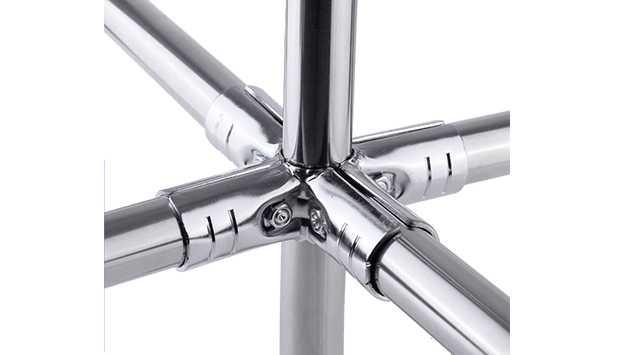
Let's get up close with this workhorse. The Five Way Straight Lean Pipe Joint Chrome is exactly what it sounds like: a chrome-plated steel connector that allows five lean pipes to meet at a single point, all aligned straight (think of a plus sign with an extra line, or a star with five arms). But its simplicity is deceptive. This joint is engineered to solve a specific problem in 3C packaging lines: how to create multi-directional material flow without sacrificing stability or wasting space.
First, let's talk about the "chrome" part. In packaging environments, where dust, occasional spills, and constant handling are par for the course, durability matters. Chrome plating adds a hard, smooth layer to the steel joint, making it resistant to corrosion, scratches, and rust. It also wipes clean easily—no more grimy, hard-to-clean joints collecting dust that could contaminate packaging materials. For 3C products, where even a tiny speck of dust can mar a product's finish, this attention to cleanliness is critical.
Then there's the design. The five-way joint is precision-crafted to fit standard lean pipes (typically 28mm in diameter, though sizes can vary). Each of its five ports has internal threads that grip the pipe tightly when a setscrew is tightened, creating a connection strong enough to support heavy loads—think stacks of cardboard boxes, rolls of protective film, or even small conveyor sections. And because it's a "straight" joint, all five pipes align along the same plane, preventing awkward angles that could disrupt material flow or create pinch points for workers.
"We used to have a problem with our flow racks tipping over when we loaded them with heavy phone boxes," says Maria, a packaging line supervisor at a major 3C manufacturer. "The old four-way joints just couldn't handle the weight when we added a third shelf. Switching to the five-way chrome joints? Game over. Now we can have three levels of boxes on one rack, all supported from the center, and it doesn't budge. Plus, the chrome finish means we don't have to worry about rust when we clean the line at the end of the day."

Why Five Ways? The Benefits in Action
You might be wondering: Why five pipes? Why not just use two three-way joints? The answer lies in efficiency and stability. A single five-way joint reduces the number of connection points in a structure, which means fewer weak spots and less time spent assembling. In a fast-paced 3C packaging line, where every minute of downtime costs money, that adds up. Let's break down the benefits:
1. Space Optimization: Up, Down, and All Around
3C factories are often packed to the brim. Floor space is a premium, so going vertical is the name of the game. The five-way joint excels here. By acting as a central hub, it lets you build upward and outward without creating a tangled mess of pipes. For example, a flow rack using five-way joints can have three horizontal levels for boxes and two vertical supports—all connected at a single joint. This means more storage in the same footprint, freeing up floor space for conveyors or workbenches.
2. Faster Changeovers: Adapt in Hours, Not Days
Remember that earlier example of switching between smartphone and tablet packaging? With a five-way joint, reconfiguring a flow rack or conveyor takes hours, not days. Let's say your line needs to switch from packaging small phone boxes (which stack 10 high) to larger tablet boxes (which stack 5 high). With a traditional welded rack, you'd need to cut and reweld shelves. With a lean system using five-way joints? Loosen the setscrews, adjust the pipe lengths, retighten, and you're done. No welding, no downtime, no lost production.
3. Improved Worker Ergonomics: Less Strain, More Productivity
Happy workers are productive workers, and nothing kills morale faster than a clunky, hard-to-use workspace. The five-way joint helps here by enabling custom workbench designs. Imagine a workbench where the five-way joint connects the main frame, a side shelf for tools, a lower bin for scrap packaging, and a overhead light bar—all at heights tailored to the workers using it. No more reaching, bending, or straining to grab materials. It's a small change, but it adds up to fewer injuries and higher throughput over time.
4. Durability That Lasts: Chrome for the Long Haul
3C packaging lines run around the clock, and components take a beating. The five-way joint's chrome plating isn't just for looks—it's a shield. Chrome resists the wear and tear of daily use, from workers bumping into racks to boxes sliding across surfaces. Unlike painted joints, which chip and fade, chrome stays bright and functional for years, reducing the need for replacements and lowering long-term costs.
Real-World Impact: Case Study in 3C Packaging
Let's put this into context with a real (anonymized) example. A mid-sized 3C manufacturer in Southeast Asia was struggling with its packaging line for wireless earbuds. The line used fixed, welded flow racks and conveyors, and every time a new earbud model launched (which happened quarterly), the entire line needed to be rebuilt. Changeover time averaged 48 hours, and the company was losing tens of thousands of dollars in missed production.
The solution? A lean system overhaul, centered on Five Way Straight Lean Pipe Joint Chrome. Here's how it played out:
Step 1: Flow Rack Reconfiguration
The old welded racks were replaced with lean pipe racks using five-way joints. Each rack now had three horizontal levels (for boxes of different sizes) and two vertical supports, all connected via five-way hubs. When a new earbud model came in, workers simply adjusted the pipe lengths to raise or lower shelves—no welding required. Changeover time for racks dropped from 8 hours to 1 hour.
Step 2: Conveyor Merging
The packaging line had two parallel conveyors feeding into a single boxing station. The old setup used bulky, fixed merge points that often jammed. By installing five-way joints at the merge, the team created a smoother, multi-directional flow: two incoming conveyors, one outgoing conveyor, and two side rails to guide boxes. Jams decreased by 70%, and the line could now handle 15% more boxes per hour.
Step 3: Custom Workbenches
The boxing station workbenches were rebuilt with five-way joints, adding side shelves for tape guns, label printers, and scissors. Workers reported less arm strain, and the time per box dropped from 30 seconds to 25 seconds—a 17% boost in productivity.
The result? Over six months, the manufacturer cut changeover time by 90%, reduced material waste by 22%, and increased overall packaging line throughput by 20%. And the five-way joint? It was the quiet hero holding it all together.
Technical Deep Dive: Specs That Matter
Not all five-way joints are created equal, so it's important to choose one that fits your line's needs. Here's a breakdown of key specs to look for (using a typical model as an example):
| Specification | Details | Why It Matters for 3C Packaging |
|---|---|---|
| Material | Chrome-plated carbon steel | Chrome resists corrosion from packaging adhesives or cleaning agents; steel provides strength for heavy loads. |
| Pipe Compatibility | 28mm OD lean pipes (standard size) | Works with most lean pipe systems, ensuring compatibility with existing components. |
| Load Capacity | 80kg per port (400kg total) | Supports stacks of 3C packaging boxes or heavy workbench accessories. |
| Installation Tool | Hex key (included with purchase) | No special tools needed—workers can assemble/reconfigure without training. |
| Operating Temperature | -10°C to 60°C | Withstands the temperature fluctuations of factory environments. |
| Finish | Mirror chrome plating (Ra ≤ 0.8μm) | Smooth surface prevents snags on packaging materials and wipes clean easily. |
When shopping for a five-way joint, look for suppliers that offer samples—test the fit with your existing pipes, check the smoothness of the chrome, and verify the load capacity. A cheap, poorly made joint might save money upfront, but it'll cost you in downtime and replacements later.
Beyond the Joint: Integrating with Flow Racks, Conveyors, and Workbenches
The five-way joint rarely works alone. Its true power shines when paired with other lean system components, creating holistic solutions for 3C packaging lines. Let's explore how it integrates with three key elements: flow racks, conveyors, and workbenches.
Flow Racks: Vertical Storage, Horizontal Efficiency
Flow racks are the workhorses of packaging lines, holding stacks of boxes, foam inserts, and other materials. The five-way joint turns a basic rack into a multi-tiered storage system. For example, a "material rack B (3 row and 3 floor)" (a common 3C packaging setup) can use five-way joints at each vertical column, connecting the three horizontal rows and the two vertical supports. This creates a rigid, stable structure that can be adjusted to hold taller or shorter boxes as needed. No more one-size-fits-all racks—now it's one rack, endless configurations.
Conveyors: Smooth Transitions, No Jams
Conveyors move products and packaging materials between stations, and merges/splits are often bottlenecks. The five-way joint helps here by creating clean, multi-directional junctions. For instance, a roller conveyor using "roller track placon mount for rail connection" accessories can use five-way joints to connect the main track, two side tracks, and a center support bracket. This ensures boxes transition smoothly from one track to another, reducing jams and keeping the line moving.
Workbenches: Custom Spaces for Every Task
Workbenches are where the magic happens—where workers pack, seal, and label products. The five-way joint enables workbenches tailored to specific tasks. Take the "workbench e (single deck-without caster)": a five-way joint can connect the main frame, a rear shelf for instructions, a side bin for trash, and a lower shelf for tools. Add "caster wheel" accessories, and the workbench becomes mobile, able to move to where it's needed most. It's flexibility at its finest.
The Future of 3C Packaging: Leaner, Smarter, More Connected
As 3C products get smaller, lighter, and more complex, packaging lines will need to keep pace. The Five Way Straight Lean Pipe Joint Chrome is just the beginning. Tomorrow's lines might integrate IoT sensors into lean pipe systems, using the five-way joint as a hub for data collection—tracking material flow, monitoring joint stress, or alerting maintenance when a component needs tightening. Imagine a joint that sends a notification to a supervisor's phone when it's loose, preventing a rack collapse before it happens. It's not science fiction—it's the next step in lean system evolution.
There's also a push toward sustainability. Lean systems already reduce waste by enabling reuse of components, but future joints might use recycled steel or lighter aluminum alloys, cutting carbon footprints without sacrificing strength. And as more 3C manufacturers adopt "dual foundation lean management" (combining lean principles with digital tools), the five-way joint will remain a physical anchor for these smart, connected lines.
Final Thoughts: Small Joint, Big Impact
In the grand scheme of 3C manufacturing, the Five Way Straight Lean Pipe Joint Chrome might seem like a small player. But as we've seen, it's a linchpin for efficiency, flexibility, and worker well-being in packaging lines. It's the kind of innovation that doesn't make headlines, but quietly transforms how things get done—one joint, one pipe, one reconfigured rack at a time.
So the next time you unbox a new smartphone or tablet, take a moment to appreciate the packaging. Behind that sleek box is a line full of hardworking people and clever components like the five-way joint, working together to get that product into your hands—faster, safer, and more efficiently than ever before. In the world of 3C packaging, sometimes the smallest parts make the biggest difference.