- Company Articles
- Products and Technology
- Product knowledge
- Five Way Straight Lean Pipe Joint Chrome in Aerospace Manufacturing: Precision Requirements

Five Way Straight Lean Pipe Joint Chrome in Aerospace Manufacturing: Precision Requirements
Related Product
Five Way Straight Lean Pipe Joint Chrome
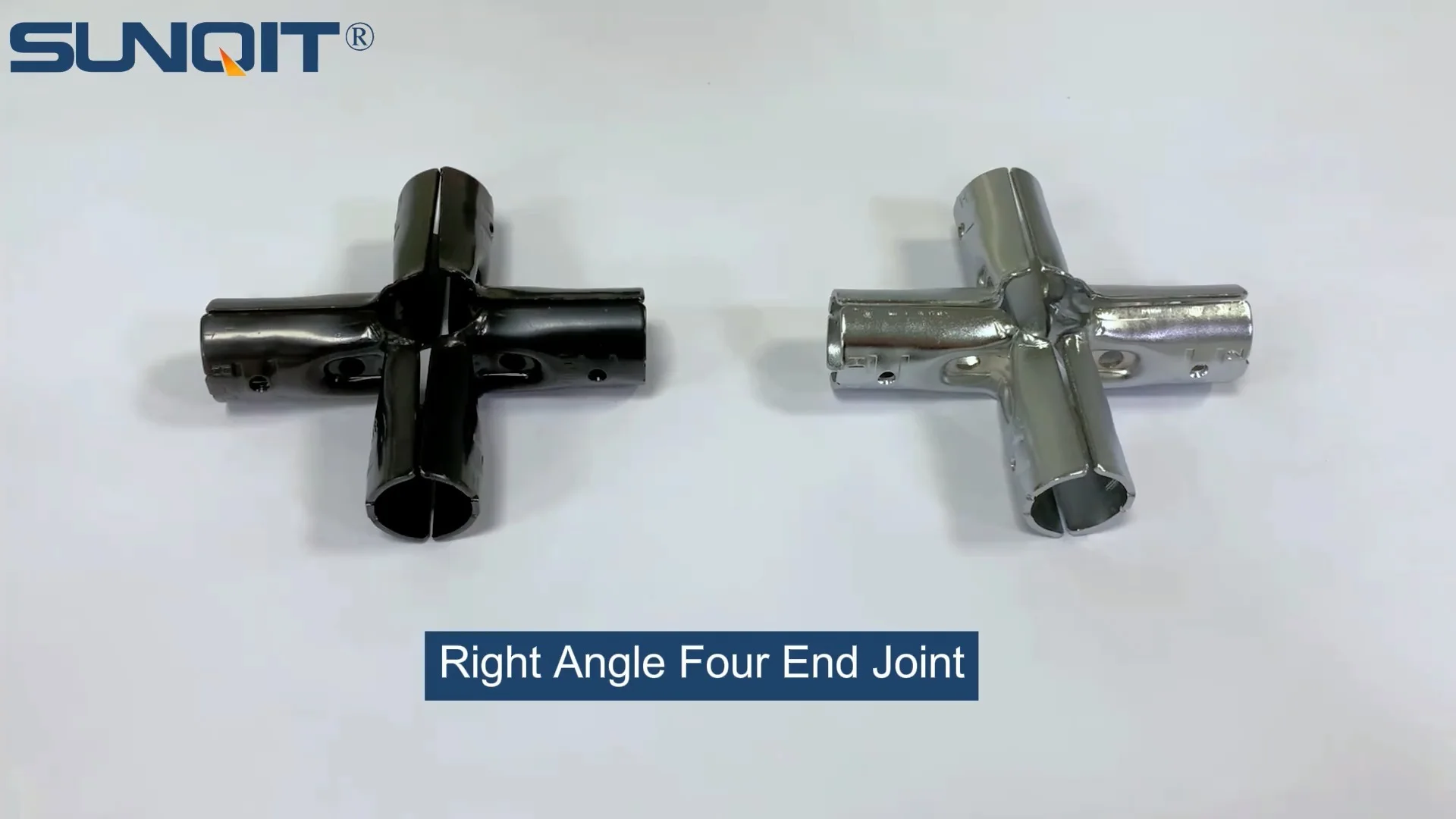
Five way straight lean pipe joint, for 5 pcs 28mm lean pipe connect in straight angle,which used widely in workbench, flow rack, hand trolley frame connection.
Aerospace manufacturing is a world where "close enough" simply doesn't exist. Imagine a facility where engineers measure tolerances in micrometers—about the width of a human hair—and where a single misaligned component could compromise the safety of a jetliner carrying hundreds of passengers. In this high-stakes environment, every tool, every workstation, and every piece of material handling equipment must work with surgical precision. That's why lean manufacturing principles have become the backbone of modern aerospace production, and at the heart of these lean systems lies a component so unassuming yet critical that its absence would bring even the most advanced assembly lines to a halt: the five way straight lean pipe joint chrome.
The Demands of Aerospace Manufacturing: Where Precision Meets Pressure
Aerospace manufacturing isn't just about building machines that fly—it's about building machines that fly reliably, efficiently, and safely, often under extreme conditions. Whether it's a commercial airliner, a military fighter jet, or a satellite bound for orbit, each product is a masterpiece of complexity, with thousands of parts that must fit together seamlessly. This complexity brings unique challenges: production runs are often low-volume but high-mix, requiring flexibility; materials range from lightweight aluminum alloys to heat-resistant titanium; and regulatory standards (like those set by the FAA or EASA) are among the strictest in any industry.
In such an environment, waste is the enemy. Wasted time searching for tools, wasted space storing excess parts, wasted effort reworking misassembled components—these inefficiencies don't just eat into profits; they risk delays in delivering critical aerospace systems. This is where lean manufacturing steps in. Lean systems are designed to eliminate waste, streamline workflows, and empower teams to work smarter, not harder. And in aerospace, where every second and every square inch counts, lean systems aren't just a luxury—they're a necessity.
Lean Systems in Aerospace: Building the Foundation for Efficiency
At its core, a lean system is about creating value for the customer while minimizing everything else. In aerospace, this translates to assembly lines that adapt to changing production needs, workstations that keep tools and parts within arm's reach, and material flow that ensures components arrive exactly when they're needed—no sooner, no later. To achieve this, aerospace manufacturers rely heavily on modular, customizable equipment that can be reconfigured as projects evolve. Enter lean pipe systems: lightweight, durable, and infinitely adaptable structures built from pipes, joints, and accessories that can be assembled and disassembled in minutes.
Lean pipe systems are the unsung heroes of aerospace lean manufacturing. They form the framework for workbenches where technicians assemble avionics, flow racks that guide engine components through production stages, and material trolleys that transport sensitive parts across the factory floor. But what makes these systems truly powerful is their modularity—and that modularity hinges on one key component: the lean pipe joint. Joints are the connectors that turn simple pipes into complex, functional structures, and not all joints are created equal. In aerospace, where precision and reliability are non-negotiable, the five way straight lean pipe joint chrome has emerged as a game-changer.
Lean Pipe Systems 101: From Pipes to Joints, the Building Blocks
Before diving into the specifics of the five way joint, let's take a step back to understand how lean pipe systems work. At their most basic, these systems consist of three main elements: pipes, joints, and accessories. Pipes are the "bones" of the structure—typically made from steel, aluminum (like aluminum lean pipe), or stainless steel, depending on the application. Accessories include casters for mobility, roller tracks for material flow, and workbench surfaces for assembly tasks. But it's the joints that hold everything together, allowing pipes to be connected at various angles and configurations.
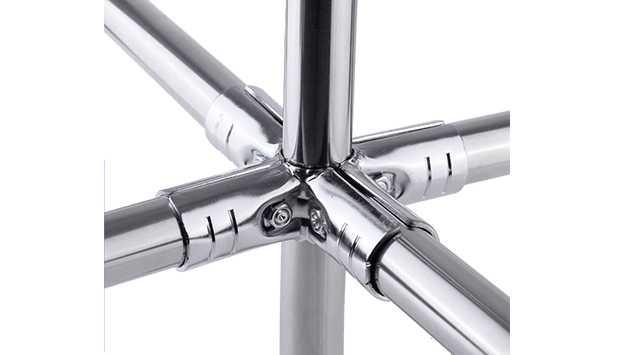
Joints come in countless designs: two way joints for straight lines, three way joints for T-shaped connections, four way joints for crosses, and so on. Each joint is engineered for a specific purpose, but as aerospace production lines have grown more complex, so too has the need for joints that can handle multiple connections without sacrificing stability. This is where the five way straight lean pipe joint chrome shines. With five connection points arranged in a straight line, this joint allows manufacturers to build multi-layered structures—think workbenches with integrated tool racks, flow racks with multiple lanes, or material trolleys with side extensions—all from a single, robust connector.

The Five Way Straight Lean Pipe Joint Chrome: A Closer Look at Its Design and Purpose
At first glance, the five way straight lean pipe joint chrome might look like little more than a metal cube with holes. But beneath its simple exterior lies a feat of engineering. Let's break down its design: the joint features five equally spaced, threaded ports aligned along a central axis, allowing five lean pipes to be connected in a straight line (four in a plane, plus one perpendicular, depending on the model). The chrome plating isn't just for aesthetics; it's a protective layer that resists corrosion, reduces friction during assembly, and adds durability—critical in aerospace facilities where exposure to coolants, lubricants, or humidity is common.
But what truly sets this joint apart is its precision. In aerospace, even a fraction of a millimeter of misalignment can throw off an entire workstation. For example, if a flow rack built with misaligned joints causes parts to jam as they roll from one station to the next, technicians may have to stop production to clear the blockage—costing valuable time. The five way joint is engineered to ensure that every connected pipe is perfectly aligned, with tolerances as tight as ±0.05mm for port spacing. This level of precision ensures that structures built with these joints are not only stable but also consistent, so that two identical workstations assembled in different parts of the factory will perform exactly the same way.
Why Chrome? The Material Science Behind the Plating
Chrome plating isn't a random choice for aerospace applications. Let's consider the alternatives: unplated steel joints might rust in humid environments, while plastic joints lack the strength to support heavy aerospace components. Chrome, however, offers a unique combination of benefits. First, it's highly corrosion-resistant, forming a barrier between the underlying steel (or aluminum) and the environment. This is crucial in aerospace facilities where parts may be exposed to fluids like hydraulic oil or cleaning agents. Second, chrome has a low coefficient of friction, making it easier to assemble and disassemble joints without damaging the threads—a must when reconfiguring workstations for new projects. Finally, chrome is hard-wearing, able to withstand the repeated stress of daily use, whether it's the vibration of a conveyor system or the weight of a 50kg tool chest resting on a workbench.
The plating process itself is a marvel of precision. Most five way joints are first machined from high-grade steel or aluminum alloy, then cleaned to remove impurities, and finally electroplated with a layer of chromium (typically 5-10 microns thick). This plating is applied evenly across the joint's surface, including the threaded ports, ensuring that every connection point is smooth and corrosion-resistant. Some manufacturers even add a passivation step to enhance the chrome's adhesion, ensuring the plating won't chip or flake off over time.
Precision in Action: How the Five Way Joint Supports Aerospace Workflows
To understand why the five way straight lean pipe joint chrome is indispensable in aerospace, let's walk through a real-world scenario: building a workstation for assembling aircraft engine components. An engine's turbine blade, for example, is a delicate part that requires precise handling. The workstation must hold the blade securely, provide easy access to specialized tools, and include a flow rack for delivering replacement parts. With a five way joint, this workstation can be built in hours, not days.
Here's how it works: the base of the workstation uses four five way joints to connect vertical pipes, creating a sturdy frame. Horizontal pipes are then attached to the joints' perpendicular ports, forming shelves for tools and a work surface. A flow rack, built using additional five way joints to connect roller tracks (another key component in lean systems), is mounted to one side, allowing new blades to roll into place as needed. The joints' precision ensures that the flow rack is perfectly level—no tilting, no jamming—and that the work surface is stable enough to support the blade without vibration. When the project ends, the workstation can be disassembled, and the joints reused to build a new structure for the next engine model. This flexibility is why lean pipe systems, and their five way joints, are the backbone of aerospace lean manufacturing.
Comparing Lean Pipe Joints: Why Five Way Chrome Stands Out
Not all lean pipe joints are created equal, and in aerospace, choosing the right joint can mean the difference between a smooth workflow and a costly delay. To illustrate this, let's compare the five way straight lean pipe joint chrome with two common alternatives: the three way joint and the four way joint. The table below breaks down their key features:
| Joint Type | Number of Connections | Max Load Capacity (kg per Joint) | Material Options | Typical Aerospace Applications | Precision Rating (1-5, 5=Highest) |
|---|---|---|---|---|---|
| Three Way Joint | 3 (1 straight, 2 perpendicular) | 200 | Steel, Plastic | Simple workbenches, Single-lane flow racks | 3 |
| Four Way Joint | 4 (2 straight, 2 perpendicular) | 250 | Steel, Aluminum | Cross-shaped material racks, Trolleys with two shelves | 4 |
| Five Way Straight Lean Pipe Joint Chrome | 5 (4 in-line, 1 perpendicular) | 350 | Chrome-plated Steel, Stainless Steel | Multi-layer workstations, Multi-lane flow racks, Heavy-duty trolleys | 5 |
As the table shows, the five way joint outperforms its counterparts in load capacity and precision, making it ideal for aerospace's heavy, delicate, or high-volume applications. Its chrome plating adds corrosion resistance, a must in facilities where cleaning agents or humidity are present, and its five connections reduce the need for multiple joints—simplifying assembly and reducing the risk of misalignment.
The Role of the Lean Pipe Supplier: Ensuring Quality in Every Joint
Even the best-designed joint is only as good as the supplier who manufactures it. In aerospace, where quality is non-negotiable, choosing a reputable lean pipe supplier is critical. A reliable supplier doesn't just sell joints—they partner with manufacturers to ensure every component meets the industry's strict standards. This means investing in advanced manufacturing processes, rigorous testing, and certifications that validate their commitment to quality.
For example, a top-tier lean pipe supplier will use CNC machining to produce five way joints, ensuring each port is threaded with pinpoint accuracy. They'll test samples for tensile strength, torque resistance, and corrosion resistance (often using salt spray tests to simulate years of wear). They'll also hold certifications like ISO 9001 (for quality management) and AS9100 (the aerospace-specific quality standard), proving their ability to meet regulatory requirements. Perhaps most importantly, they'll work with aerospace manufacturers to customize joints for unique applications—whether it's a five way joint with larger ports for aluminum lean pipe or a specialized coating for high-temperature environments.
Aluminum Lean Pipe and the Five Way Joint: A Match Made in Aerospace
While steel has long been the material of choice for lean pipes, aluminum lean pipe is gaining traction in aerospace—and for good reason. Aluminum is lighter than steel (by about 30%), making it ideal for mobile structures like material trolleys. It's also naturally corrosion-resistant, eliminating the need for heavy coatings, and its thermal conductivity helps dissipate heat, protecting sensitive components. But aluminum pipes require joints that can handle their unique properties, and the five way straight lean pipe joint chrome is the perfect match.
Chrome-plated steel joints and aluminum pipes work together without issue, thanks to the chrome's ability to prevent galvanic corrosion (a common problem when dissimilar metals touch). The joint's precision threading ensures a tight fit with aluminum pipes, and its high load capacity means even lightweight aluminum structures can support heavy aerospace parts. For example, a flow rack built with aluminum lean pipe and five way chrome joints is not only lighter and easier to move but also just as stable as a steel version—making it ideal for cleanroom environments where weight and corrosion are concerns.
Future Trends: Where Lean Pipe Joints Are Headed in Aerospace
As aerospace manufacturing evolves, so too will the tools that support it. The five way straight lean pipe joint chrome is no exception. Looking ahead, we can expect to see several innovations: smart joints embedded with sensors to monitor load and vibration, allowing technicians to predict failures before they occur; advanced coatings like PTFE (Teflon) to reduce friction and enhance durability; and 3D-printed joints customized for hyper-specific applications. Some lean pipe suppliers are even exploring modular joints that can be reconfigured on-site, eliminating the need for multiple joint types.
Another trend is the integration of lean pipe systems with Industry 4.0 technologies. Imagine a five way joint with a built-in RFID tag that tracks its location and usage, helping manufacturers manage inventory and reduce waste. Or a joint with a QR code that links to digital assembly instructions, ensuring technicians build structures correctly the first time. These innovations won't replace the five way joint's core function—connecting pipes—but they will make it smarter, more efficient, and even more indispensable in the aerospace factories of tomorrow.
Conclusion: The Unsung Hero of Aerospace Lean Manufacturing
In the grand scheme of aerospace manufacturing, the five way straight lean pipe joint chrome may seem small. It doesn't fly, it doesn't generate thrust, and it won't ever be the star of a press release. But without it, the lean systems that power modern aerospace production would grind to a halt. Its precision ensures stability, its design enables flexibility, and its durability ensures it can keep up with the demands of building the machines that connect our world.
As aerospace manufacturers continue to push the boundaries of what's possible—building faster, safer, more efficient aircraft—they'll rely on tools like the five way joint to turn their vision into reality. And behind every joint stands a lean pipe supplier committed to quality, innovation, and the belief that even the smallest components can make the biggest difference. So the next time you look up at a passing plane, remember: somewhere on the factory floor where that plane was built, a five way straight lean pipe joint chrome played a role in getting it off the ground.