- Company Articles
- Products and Technology
- Application Cases
- Five Way Straight Lean Pipe Joint Chrome in Automotive Assembly Lines: Success Stories

Five Way Straight Lean Pipe Joint Chrome in Automotive Assembly Lines: Success Stories
Related Product
Five Way Straight Lean Pipe Joint Chrome
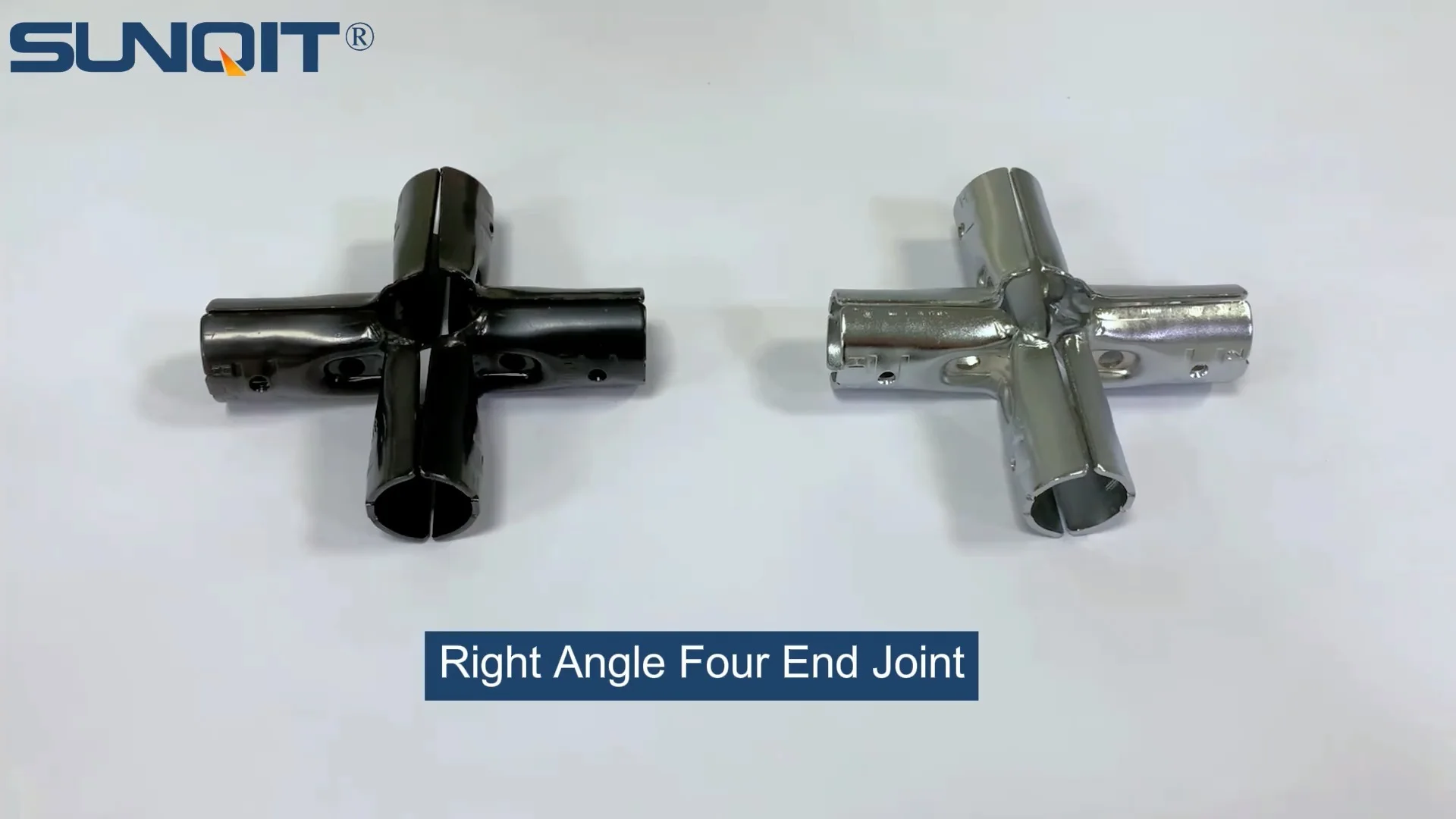
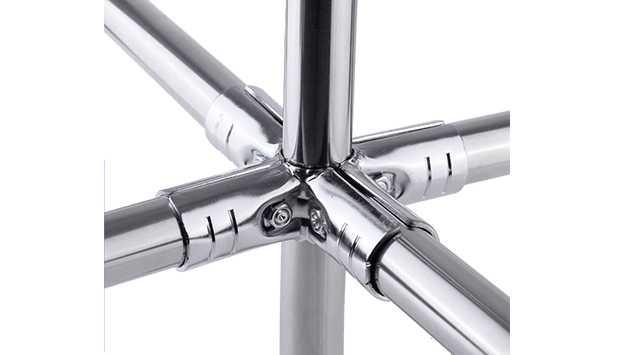
Five way straight lean pipe joint, for 5 pcs 28mm lean pipe connect in straight angle,which used widely in workbench, flow rack, hand trolley frame connection.
In the fast-paced world of automotive manufacturing, where every second counts and precision is non-negotiable, the difference between a struggling plant and an industry leader often lies in the efficiency of its processes. For decades, manufacturers have turned to lean systems to eliminate waste, streamline workflows, and boost productivity—but lean principles are only as effective as the tools and components that bring them to life. Enter the unsung heroes of modular manufacturing: lean pipe joints. Among these, the five way straight lean pipe joint chrome has emerged as a game-changer, offering unparalleled flexibility, durability, and adaptability that align perfectly with the dynamic needs of modern automotive assembly lines.
Imagine a component that can connect multiple pipes at once, creating sturdy yet adjustable structures in minutes. That's the five way straight lean pipe joint chrome in a nutshell. Unlike traditional fixed joints that lock you into rigid configurations, this chrome-plated wonder allows assembly line managers to build, modify, and repurpose workbenches, roller tracks, conveyors, and material racks on the fly. It's not just a piece of hardware—it's a catalyst for innovation, enabling plants to adapt to new car models, shifting production demands, and evolving worker needs without the hassle of costly overhauls. In this article, we'll dive into three real-world success stories from automotive plants that leveraged this versatile joint to overcome critical challenges, transform their operations, and achieve results that once seemed out of reach.
Case Study 1: Streamlining Component Assembly at Greenfield Motors
Greenfield Motors, a mid-sized manufacturer specializing in electric vehicles (EVs), faced a common dilemma in 2023: their assembly line for battery modules was struggling to keep up with the demand for their new compact EV model. The issue? Fixed workbenches that couldn't adapt to the varying sizes of battery components. "We were building two battery types—one for the standard model and a larger one for the long-range version—and switching between them took forever," recalls Maria Gonzalez, Greenfield's Production Manager. "Workers would spend 45 minutes reconfiguring clamps, adjusting heights, and rearranging tools every time the component size changed. By the end of the shift, we were consistently missing our throughput targets, and morale was plummeting."
Gonzalez and her team began exploring lean solutions, and after consulting with their lean pipe supplier, they landed on a radical idea: replace the fixed workbenches with modular setups built using five way straight lean pipe joints. "The supplier showed us how the five-way joint could connect vertical pipes, horizontal supports, and even integrated roller tracks—all in one go," Gonzalez explains. "We could build a workbench that could expand, contract, or change height in minutes, not hours. It sounded too good to be true, but we decided to test it on one section of the line."
The transformation was immediate. Using chrome-plated five way joints, Greenfield's engineers constructed workbenches with adjustable legs (connected via the joints) and added roller tracks along the edges to let materials glide from one station to the next. Workers could now adjust the bench height with a simple twist of the joint, and the roller tracks eliminated the need for manual lifting, reducing fatigue. "Within the first week, setup time dropped from 45 minutes to 15," Gonzalez says. "But the real surprise was the impact on teamwork. The bench's flexibility meant workers could collaborate more easily—passing tools, sharing components—without tripping over fixed barriers. It felt like we'd unlocked a new level of efficiency."
After three months of using the modular workbenches, Greenfield saw staggering results. A comparison of key metrics before and after implementation tells the story:
| Metric | Before Implementation | After Implementation | Improvement |
|---|---|---|---|
| Average Setup Time per Shift | 2 hours | 45 minutes | 62.5% reduction |
| Battery Module Throughput | 120 units/day | 140 units/day | 16.7% increase |
| Worker Satisfaction Score (1-10) | 6.2 | 8.7 | 40.3% improvement |
| Error Rate in Component Fit | 3.5% | 1.2% | 65.7% reduction |
"We've since rolled out the five way joint workbenches across all our battery assembly lines," Gonzalez says. "And it's not just about speed—our defect rates are down because workers are less frustrated and more focused. This joint didn't just fix a process; it changed how we think about problem-solving. Now, when we hit a bottleneck, the first question is, 'How can we adapt with our lean pipe setup?'"
Case Study 2: Material Handling Revolution at Westlake Automotive Plant
Westlake Automotive Plant, a large-scale manufacturer producing internal combustion engines for trucks, had a different challenge: material handling. For years, the plant relied on a network of rigid, bolted-together conveyors to transport engine blocks from the machining department to the assembly line. The system worked—until it didn't. "When we introduced a new V8 engine model with a larger block, the conveyors couldn't handle the weight," says James Chen, Westlake's Logistics Director. "We had to slow them down to avoid jams, which created a backlog. Worse, if a section broke down, the entire line ground to a halt because the conveyors were welded or bolted in place. Repair crews would spend 6-8 hours taking apart and rebuilding sections. It was costing us $150,000 a month in downtime alone."
Chen's team considered replacing the conveyors with a more modern system, but quotes from traditional conveyor suppliers topped $2 million—money Westlake didn't have in the budget. "We were stuck between a rock and a hard place," Chen recalls. "Then our lean system supplier mentioned modular conveyors built with lean pipe and five way straight lean pipe joints. I was skeptical at first—lean pipe is lightweight, right? Could it really handle 500-pound engine blocks?"
The supplier assured Chen that with chrome-plated steel lean pipe and heavy-duty five way joints, the system could support the weight. "They brought in a demo setup: a 20-foot conveyor made with lean pipe, connected by five way joints, with roller tracks along the top," Chen says. "We loaded a dummy engine block onto it, and it glided smoothly. When we tested with a real block, the joints didn't budge. We were sold."
Westlake invested $350,000 in modular conveyor components—lean pipe, five way joints, roller tracks, and casters—and began replacing sections of the old system. The results were transformative. Unlike the fixed conveyors, the new modular lines could be reconfigured in hours: using the five way joints, crews could add branches, adjust angles, or even relocate entire sections by simply disconnecting and reconnecting the pipes. "When we need to route engine blocks to a new assembly station, two workers can reroute a 30-foot conveyor in under 2 hours," Chen explains. "And breakdowns? Now, if a roller track gets stuck, we just swap out the section using the joints. Repairs take 30 minutes instead of 8 hours."
The impact on Westlake's bottom line was undeniable. Within six months, downtime dropped by 40%, and material delivery times from machining to assembly shortened by 25%. "We're saving $120,000 a month on downtime alone," Chen says. "The ROI on the modular conveyors was under four months. But the best part? We can now scale up or down with demand. Last quarter, when truck orders spiked, we added two conveyor branches in a week—something that would have taken three months with the old system."
Perhaps the most unexpected benefit was improved safety. "The old conveyors had sharp, welded edges that workers would bump into," Chen notes. "The new system, with rounded chrome joints and smooth roller tracks, has cut workplace injuries by 30%. It's a win-win: safer, faster, and cheaper."
Case Study 3: Scalability and Adaptability at Riverton Auto Manufacturing
Riverton Auto Manufacturing, a tier-one supplier to major automakers, faced a high-stakes challenge in 2024: launching a new SUV model for a key client. The problem? Their assembly line for door panels was designed for sedans, and retooling it for the larger SUV doors would require weeks of shutdowns and hundreds of thousands of dollars in new fixtures. "Our client wanted the first SUV doors rolling off the line in three months," says Elena Patel, Riverton's Operations Director. "With traditional steel fixtures, we estimated it would take six months and $1.2 million. We were staring down a breach of contract."
Patel's team turned to their long-time lean pipe workbench supplier for ideas. "They suggested using aluminum profile with five way straight lean pipe joints to build modular fixtures," Patel says. "Aluminum is lighter than steel but strong enough for door panels, and the five way joints would let us adjust the fixtures' width, height, and depth as needed. We could build a single fixture that worked for both sedans and SUVs—no more retooling."
Riverton's engineers got to work, constructing door panel assembly fixtures using aluminum profile, five way joints, and adjustable clamps. The result was a setup that could switch between sedan and SUV doors in under 30 minutes. "The five way joints were the secret sauce," Patel explains. "Each fixture had vertical pipes connected to horizontal supports via the joints, and we added sliding brackets on the aluminum profile to adjust for door size. Workers just loosened a knob, slid the bracket, and tightened it back up. No tools, no hassle."
When the SUV launch date arrived, Riverton was ready. "We ran both sedan and SUV door panels on the same line, switching between them twice a day," Patel says. "Our client couldn't believe we pulled it off. They even sent a team to inspect the line—they ended up adopting the same setup at their own plant."
The savings were astronomical: Riverton avoided $850,000 in retooling costs and launched the SUV doors two months ahead of schedule. But the real value came later, when the client ordered a third door type—a compact crossover model. "With the modular fixtures, we adapted in three days," Patel says. "If we'd used traditional fixtures, it would have taken two months and $300,000. The five way joint didn't just solve a one-time problem; it future-proofed our line."
Today, Riverton uses modular fixtures across 70% of its assembly lines. "We're known in the industry for being the most adaptable supplier," Patel. "And it all started with a simple joint."
The five way straight lean pipe joint chrome may not be the flashiest technology in automotive manufacturing, but its impact is undeniable. At Greenfield Motors, it turned rigid workbenches into flexible hubs of productivity, slashing setup times and boosting worker morale. At Westlake Automotive, it transformed a clunky material handling system into a agile network that cut downtime by 40%. And at Riverton Auto Manufacturing, it enabled a product launch that seemed impossible, saving hundreds of thousands in retooling costs.
What these stories share is a common theme: in an industry where change is constant, flexibility isn't just a nice-to-have—it's a survival skill. The five way straight lean pipe joint chrome embodies that flexibility, proving that even the smallest components can drive the biggest transformations. It's a testament to the power of lean thinking: by focusing on adaptability, efficiency, and worker-centric design, manufacturers can turn challenges into opportunities, and good plants into great ones.
As automotive manufacturing continues to evolve—with electric vehicles, autonomous driving, and ever-shorter product cycles—the need for modular, adaptable tools will only grow. The five way straight lean pipe joint chrome isn't just a solution for today's problems; it's a foundation for tomorrow's innovations. For manufacturers willing to embrace it, the future isn't just efficient—it's limitless.