- Company Articles
- Products and Technology
- Product knowledge
- Five Way Straight Lean Pipe Joint Chrome in Food Processing: Sanitary Design Features

Five Way Straight Lean Pipe Joint Chrome in Food Processing: Sanitary Design Features
Related Product
Five Way Straight Lean Pipe Joint Chrome
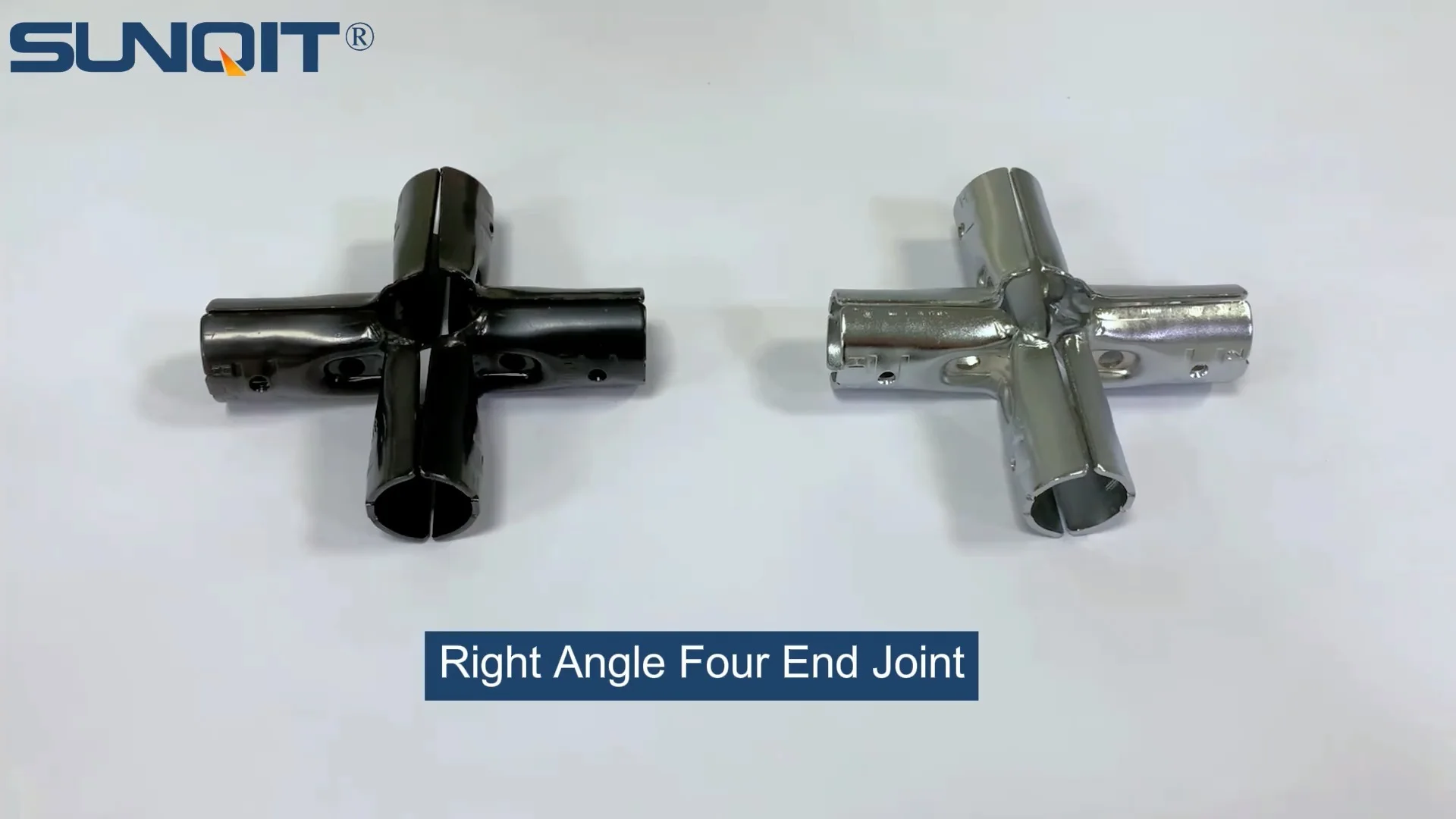
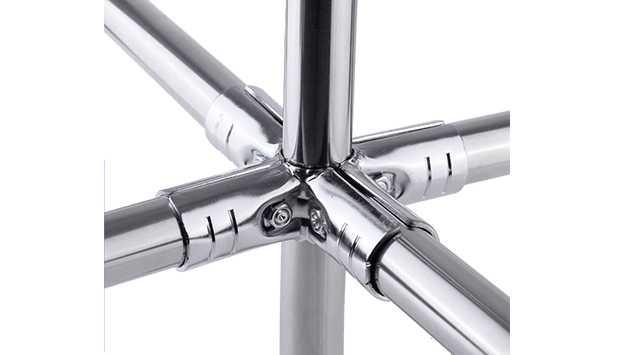
Five way straight lean pipe joint, for 5 pcs 28mm lean pipe connect in straight angle,which used widely in workbench, flow rack, hand trolley frame connection.
Walk into any food processing facility, and you'll quickly realize that cleanliness isn't just a box to check—it's the backbone of everything. From the moment raw ingredients arrive to the second packaged products leave the line, every surface, tool, and piece of equipment must stand up to relentless scrutiny. Bacteria, allergens, and cross-contamination are ever-present threats, and even the smallest oversight can lead to costly recalls, damaged reputations, or worse. That's why the tools and systems that keep these facilities running—like lean pipe structures—aren't just about efficiency. They're about building a foundation of hygiene that never wavers. And at the heart of many of these structures? The five way straight lean pipe joint chrome. It might sound like just another industrial part, but in the high-stakes world of food processing, it's a silent guardian of sanitation. Let's dive into why this unassuming component matters, and how its design features make it indispensable in keeping our food safe.
Lean Systems in Food Processing: More Than Just Efficiency
Lean manufacturing has long been celebrated for its ability to cut waste, streamline workflows, and boost productivity. But in food processing, "lean" takes on a deeper meaning. Here, waste isn't just about time or materials—it's about avoiding contamination, reducing downtime for cleaning, and ensuring compliance with strict regulations (think FDA, EU 10/2011, or HACCP standards). Lean systems in this context are built on modularity: structures like workbenches, material racks, conveyor lines, and turnover trolleys that can be customized, reconfigured, or expanded as production needs change. This flexibility is key, but it comes with a catch: every piece of the puzzle must be designed to meet the industry's uncompromising sanitary standards.
At the core of these modular systems are lean pipes and joints. Lean pipes—often made of steel, aluminum, or stainless steel—are the "bones" of the structure, while joints are the "connective tissue" that holds everything together. And when it comes to joints, the five way straight lean pipe joint chrome stands out. Unlike basic two-way or three-way joints, this component allows for connecting up to five pipes in different directions, making it ideal for building complex, multi-functional structures. But what really sets it apart is its chrome-plated design, which isn't just for looks. In food processing, chrome is a shield—a barrier against the harsh conditions that would otherwise turn ordinary metal into a breeding ground for bacteria.
Meet the Five Way Straight Lean Pipe Joint Chrome: A Closer Look
Let's start with the basics: what exactly is a five way straight lean pipe joint chrome? Picture a small, cylindrical component with five connection points, each designed to securely hold a lean pipe in place. The "straight" in its name refers to its ability to connect pipes along a linear axis, while the "five way" means it can branch out in multiple directions—up, down, left, right, and straight ahead. This versatility makes it perfect for building everything from multi-tiered material racks (like the material rack b, with 3 rows and 3 floors) to custom workbenches that need to support tools, conveyors, and storage all at once. But what truly makes it a staple in food processing is the "chrome" part of the equation. Chrome plating isn't just a cosmetic choice; it's a deliberate design feature that addresses the unique challenges of food environments.
Sanitary Design Features: Why Chrome Matters in Food Processing
In food processing, a component's design is measured by one critical question: How easy is it to clean? Bacteria love hiding in cracks, crevices, and porous surfaces. Moisture, food particles, and cleaning chemicals can wear down materials over time, creating even more hiding spots. The five way straight lean pipe joint chrome is engineered to eliminate these risks. Let's break down its key sanitary features:
1. Non-Porous, Smooth Chrome Plating
Chrome plating creates a hard, ultra-smooth surface that leaves no room for bacteria to take hold. Unlike painted or uncoated metal, which can chip, peel, or develop micro-scratches over time, chrome forms a dense, uniform barrier. When you wipe down a chrome joint with a sanitizing solution or blast it with high-pressure water (a common cleaning method in food plants), there are no tiny pores or rough patches where food residue can cling. This isn't just about convenience—it's about ensuring that after cleaning, the joint is truly sterile. In environments where even a single salmonella cell can cause an outbreak, that smooth surface is a lifesaver.
2. Corrosion Resistance: Standing Up to Chemicals and Moisture
Food processing facilities are harsh on equipment. Daily washdowns with caustic detergents, acidic sanitizers (like peracetic acid), and high-temperature water can corrode even tough metals over time. Uncoated steel joints might start to rust, while plastic joints can degrade or harbor odors. Chrome plating, however, is highly resistant to both corrosion and chemical attack. It acts as a sacrificial layer, protecting the underlying metal (often steel) from rust and deterioration. This means the five way straight lean pipe joint chrome can withstand years of daily cleaning without losing its structural integrity or sanitary properties. For plant managers, this translates to fewer replacements, less downtime, and consistent performance—even in wet, chemically intensive areas like meat processing or dairy plants.
3. Rounded Edges and Minimal Crevices: No Hiding Spots for Bacteria
One of the golden rules of sanitary design is "no dead legs"—areas where fluid or debris can pool and breed bacteria. Sharp corners, overlapping parts, or deep crevices are all dead legs waiting to happen. The five way straight lean pipe joint chrome is designed with this in mind. Its edges are rounded, and the connection points between the joint and pipes are tight, with minimal gaps. Unlike some cheaper joints that have visible seams or protruding parts, this chrome joint is engineered to be as "seamless" as possible. Even the internal channels where pipes insert are smooth, ensuring that when you run a cleaning cloth or brush over the joint, there's nowhere for food particles to hide. This attention to detail might seem small, but in a facility where auditors check for even the tiniest gaps, it's a game-changer.
4. Compatibility with Stainless Steel Pipe Series: A Sanitary Partnership
While the five way straight lean pipe joint chrome is impressive on its own, its true power lies in how well it works with other sanitary components—especially stainless steel pipe series. Stainless steel is the gold standard in food processing for its own corrosion resistance and ease of cleaning, and when paired with chrome joints, the result is a structure that's both strong and sterile. The joint's design ensures a tight, secure fit with stainless steel pipes, eliminating wobbly connections that could trap debris. Whether you're building a workbench for packaging line workers or a material rack b (3 rows and 3 floors) for storing ingredients, combining chrome joints with stainless steel pipes creates a system that's easy to clean, durable, and compliant with the strictest food safety standards. It's a partnership that makes sense: two materials, both designed to prioritize hygiene, working together to keep the line moving safely.
5. Easy Disassembly and Reassembly: Simplifying Deep Cleaning
Even the most hygienic structures need occasional deep cleaning—times when you take apart the workbench or rack to scrub every nook and cranny. The five way straight lean pipe joint chrome is designed with this in mind. Unlike welded joints (which are permanent and hard to clean thoroughly), these chrome joints are modular and tool-free (or require minimal tools) to disassemble. Loosen a clamp, slide out the pipes, and you can clean each component individually—no more struggling to reach hidden spots with a toothbrush. Once clean, the joints reassemble quickly, ensuring that the structure is back in place and production is up and running with minimal downtime. For facilities that perform weekly or monthly deep cleans, this ease of disassembly is a huge time-saver.

How Does It Compare? A Look at Sanitary Joint Options
To truly appreciate the five way straight lean pipe joint chrome, it helps to see how it stacks up against other common joint types in food processing. Let's compare:
| Joint Type | Material | Surface Finish | Corrosion Resistance | Key Sanitary Feature | Best For |
|---|---|---|---|---|---|
| Five Way Straight Lean Pipe Joint Chrome | Chrome-plated steel | Smooth, non-porous | High (resistant to chemicals/water) | Rounded edges, minimal crevices | Multi-directional structures (e.g., workbenches, 3-row material racks) |
| Standard Plastic Lean Pipe Joint | Polypropylene/nylon | Smooth but can degrade over time | Moderate (prone to chemical damage) | Lightweight, low cost | Dry, low-chemical environments (e.g., dry ingredient storage) |
| Uncoated Steel Joint | Mild steel | Rough, porous | Low (prone to rust) | None—high risk of bacterial growth | Non-food contact areas (e.g., warehouse storage away from production) |
| Stainless Steel Joint | 304/316 stainless steel | Smooth, non-porous | Very high | Heat-resistant, ideal for high-temperature areas | High-heat zones (e.g., baking, pasteurization lines) |
As the table shows, while stainless steel joints offer excellent corrosion resistance (especially in high-heat areas), they're often more expensive and less widely available in five-way configurations. Plastic joints are cheaper but can't stand up to the daily chemical exposure of most food lines. The five way straight lean pipe joint chrome, however, strikes a balance: it's cost-effective, widely available, and designed specifically to meet the unique sanitary demands of food processing. It's not just a compromise—it's a purpose-built solution.
Real-World Impact: A Day in the Life with Chrome Joints
Let's paint a picture: Imagine a mid-sized bakery that produces artisanal breads and pastries. Their production line includes a workbench where dough is shaped, a material rack b (3 rows, 3 floors) for storing flour and sugar, and a conveyor system that moves trays to the oven. A few years ago, they used standard steel joints on their workbench and racks. But after a routine health inspection flagged rust spots and hard-to-clean crevices on the joints, they switched to five way straight lean pipe joint chrome. The difference was immediate.
Today, when the night shift cleaning crew comes in, they blast the workbench and racks with high-pressure hot water and sanitizer. The chrome joints glisten under the spray—no rust, no trapped dough bits, no discoloration. The rounded edges mean the crew doesn't have to spend extra time scrubbing corners with a toothbrush, cutting cleaning time by 20%. During audits, inspectors praise the smooth, seamless design, noting that the bakery's sanitation scores have jumped from "satisfactory" to "exemplary." And because the joints resist corrosion, the bakery hasn't had to replace a single joint in three years, saving hundreds in maintenance costs. For the plant manager, it's simple: "Those chrome joints aren't just parts—they're peace of mind."
Choosing the Right Lean Pipe Supplier: Why Expertise Matters
Not all five way straight lean pipe joint chrome products are created equal. The market is flooded with low-quality, cheaply plated joints that might look the part but fail to deliver on corrosion resistance or smoothness. That's why choosing the right lean pipe supplier is just as important as choosing the joint itself. A reputable supplier will:
1. Prioritize Material Quality:
Look for suppliers who use high-grade steel and thick, uniform chrome plating (at least 0.0005 inches thick). This ensures the joint can withstand years of chemical exposure and wear.
2. Certify Sanitary Compliance: Ask for documentation that the joints meet food contact standards, like FDA 21 CFR 175.300 (for materials in contact with food) or EU 10/2011. A trustworthy supplier will have these certifications readily available.
3. Offer Technical Support: Food processing layouts are unique. A good supplier won't just sell you joints—they'll help you design structures that maximize both efficiency and sanitation. Need to build a custom workbench with integrated roller tracks? They should have the expertise to recommend the right joints, pipes, and accessories (like roller track placon mount connectors) for the job.
4. Stand Behind Their Products: Warranty matters. A supplier who offers a multi-year warranty on chrome joints is confident in their durability—a sign that you're getting a quality product.
2. Certify Sanitary Compliance: Ask for documentation that the joints meet food contact standards, like FDA 21 CFR 175.300 (for materials in contact with food) or EU 10/2011. A trustworthy supplier will have these certifications readily available.
3. Offer Technical Support: Food processing layouts are unique. A good supplier won't just sell you joints—they'll help you design structures that maximize both efficiency and sanitation. Need to build a custom workbench with integrated roller tracks? They should have the expertise to recommend the right joints, pipes, and accessories (like roller track placon mount connectors) for the job.
4. Stand Behind Their Products: Warranty matters. A supplier who offers a multi-year warranty on chrome joints is confident in their durability—a sign that you're getting a quality product.
Conclusion: The Unsung Hero of Food Safety
In the grand scheme of food processing, the five way straight lean pipe joint chrome might seem small. But in reality, it's a cornerstone of sanitary design—a component that quietly ensures structures stay clean, durable, and compliant, day in and day out. Its smooth chrome surface, corrosion resistance, and thoughtful design features (rounded edges, minimal crevices) make it more than just a connector; it's a partner in keeping our food safe. For plant managers, maintenance crews, and quality control teams, that's invaluable.
So the next time you bite into a fresh loaf of bread, a carton of yogurt, or a package of frozen vegetables, take a moment to appreciate the unseen work happening behind the scenes. The five way straight lean pipe joint chrome might not have a starring role in the story of your food, but it's certainly a hero—one that ensures what ends up on your plate is not just delicious, but safe.