- Company Articles
- Products and Technology
- Product knowledge
- Five Way Straight Lean Pipe Joint Chrome in Medical Warehousing: Hygiene & Durability

Five Way Straight Lean Pipe Joint Chrome in Medical Warehousing: Hygiene & Durability
Related Product
Five Way Straight Lean Pipe Joint Chrome
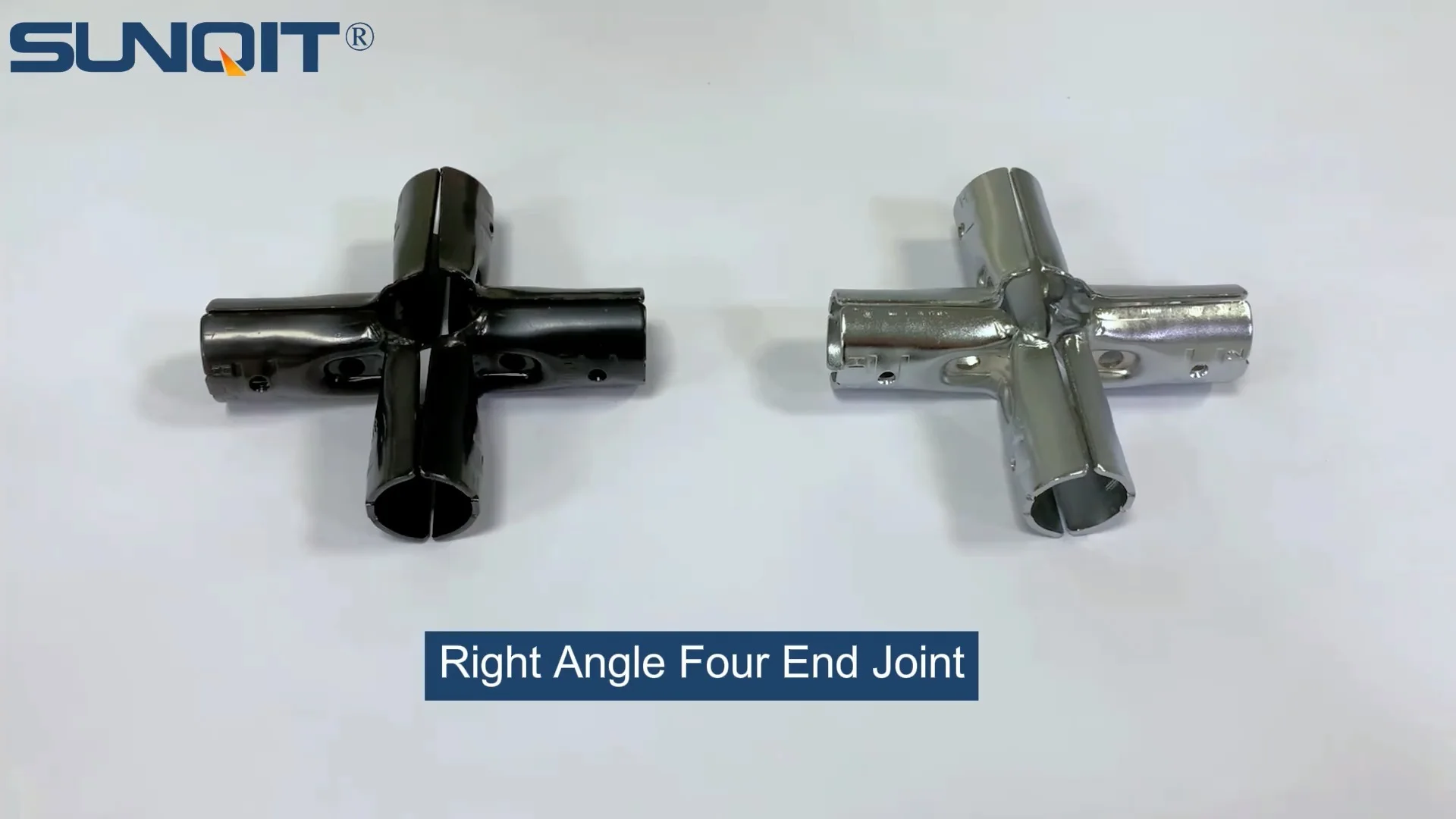
Five way straight lean pipe joint, for 5 pcs 28mm lean pipe connect in straight angle,which used widely in workbench, flow rack, hand trolley frame connection.
Walk into any medical warehouse, and you'll quickly realize it's not just a storage space—it's a critical hub where the line between order and chaos, safety and risk, is razor-thin. Every shelf holds surgical instruments that must remain sterile, medications that demand precise temperature control, and equipment that could mean the difference between a successful procedure and a costly delay. In this high-stakes environment, two factors reign supreme: hygiene and durability . Even the smallest oversight—a cracked shelf, a joint that traps bacteria, or a material that rusts under frequent cleaning—can compromise patient safety. This is where lean pipe systems step in, and at the heart of their reliability lies an unsung hero: the five way straight lean pipe joint chrome. Let's dive into why this unassuming component has become a cornerstone of modern medical warehousing.
The Unique Demands of Medical Warehousing
Medical warehouses operate under pressures unlike any other industry. Consider this: a single contaminated instrument could lead to a hospital-acquired infection (HAI), affecting patient recovery and costing healthcare facilities billions annually. Meanwhile, the constant movement of heavy loads—cases of IV fluids, bulk packages of personal protective equipment (PPE), and oversized medical devices—puts immense strain on storage structures. Add to that the need for flexibility (since inventory needs shift with seasonal demands, outbreaks, or new medical technologies), and you have a perfect storm of requirements. Traditional fixed shelving or rigid metal racks often fall short here: they're hard to clean, slow to reconfigure, and prone to wear and tear in high-traffic areas. Enter lean pipe systems—modular, adaptable, and built to meet the dual demands of hygiene and durability. But none of this works without reliable joints, and the five way straight lean pipe joint chrome is a standout performer.
What Are Lean Pipe Systems, and Why Do Joints Matter?
Lean pipe systems, often called "flexible pipe systems," are modular structures made by connecting pipes (typically steel, aluminum, or stainless steel) with specialized joints. They're used to build everything from workbenches and material racks to trolleys and conveyor systems. What makes them ideal for medical settings is their adaptability : if a hospital needs to expand a medication storage area or reconfigure a workbench for assembling surgical kits, lean systems can be disassembled and rebuilt in hours, not days. But here's the catch: the entire system's stability, hygiene, and longevity depend on the joints. Think of it like a puzzle—even the sturdiest pipes won't hold together if the connectors are weak or poorly designed. This is where the five way straight lean pipe joint chrome shines. Unlike simpler two-way or three-way joints, it allows for five pipes to connect at a single point, enabling more complex, space-efficient structures without sacrificing strength.
The Five Way Straight Lean Pipe Joint Chrome: Design & Material
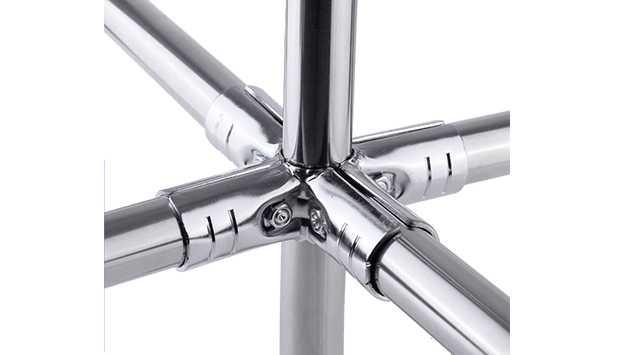
Let's start with the basics: what exactly is a five way straight lean pipe joint chrome? At first glance, it looks like a small, unassuming metal component—usually shaped like a central hub with five threaded or hollow ports where pipes can be inserted and secured. But its simplicity is deceptive. The "chrome" in its name refers to the chromium plating applied to its surface, a choice that's critical for medical environments. Underneath that chrome layer is often a steel core (sometimes part of the stainless steel pipe series for added corrosion resistance), making the joint strong enough to handle heavy loads. The "straight" design means the ports are aligned linearly, allowing pipes to extend in straight directions—perfect for building horizontal shelving, vertical supports, or multi-tiered racks where alignment is key.
But why five ports? In medical warehouses, space is often limited, and storage needs are diverse. A five way joint lets you build structures with multiple levels or branches without adding extra joints. For example, a material rack might need three horizontal shelves on one side and two vertical supports on the other—all connected at a single hub. This reduces the number of joints needed, minimizing potential weak points and simplifying cleaning (fewer crevices mean fewer places for bacteria to hide). It's a small design tweak that makes a big difference in efficiency and hygiene.

Hygiene First: Why Chrome Plating is a Game-Changer
In medical warehousing, hygiene isn't just a buzzword—it's a legal and ethical obligation. Surfaces must be easy to sanitize, resistant to harsh cleaning agents, and impervious to moisture. Chrome plating checks all these boxes. Here's how:
- Smooth, Non-Porous Surface: Chrome creates a mirror-like finish that's free of pores, cracks, or rough patches. Unlike painted or plastic joints, which can chip or harbor bacteria in tiny grooves, chrome leaves nowhere for contaminants to hide. A quick wipe with a disinfectant wipe or a spray of alcohol is usually enough to kill germs—critical for daily cleaning routines in busy warehouses.
- Resistance to Corrosion: Medical warehouses use aggressive cleaning agents—bleach, hydrogen peroxide, quaternary ammonium compounds—to kill pathogens. These chemicals can eat away at unprotected metal, leading to rust (which itself is a contamination risk). Chrome acts as a barrier, preventing moisture and chemicals from reaching the underlying steel. Even after years of daily cleaning, a chrome-plated joint retains its integrity.
- Compliance with Standards: Regulatory bodies like the FDA (Food and Drug Administration) and ISO (International Organization for Standardization) set strict guidelines for materials used in medical environments. Chrome plating meets these standards, ensuring that warehouses stay compliant and avoid costly penalties or, worse, product recalls.
To put this in perspective: imagine a plastic joint vs. a chrome-plated one. After six months of daily cleaning, the plastic joint might show signs of wear—fading, small cracks, or discoloration. The chrome joint? It still looks new, with no signs of degradation. That's the difference between a component that needs replacing and one that lasts for years.
Durability: Built to Withstand the Rigors of Medical Warehousing
Hygiene is only half the battle. Medical warehouses are busy places: forklifts zoom by, staff push heavy trolleys, and shelves are loaded and unloaded multiple times a day. A joint that bends or breaks under pressure isn't just an inconvenience—it's a safety hazard. The five way straight lean pipe joint chrome is engineered for durability, thanks to two key factors: material strength and design precision.
First, the steel core (often from the stainless steel pipe series) provides inherent strength. Stainless steel is known for its high tensile strength, meaning it can withstand heavy loads without deforming. When combined with chrome plating, which adds hardness, the joint becomes resistant to scratches, dents, and wear from constant pipe movement (a common issue in modular systems that are reconfigured regularly).
Second, the five-way design distributes weight evenly across all connected pipes. In a traditional two-way joint, stress is concentrated at a single connection point, increasing the risk of failure under heavy loads. With five ports, the weight of a fully loaded material rack or a workbench is spread out, reducing strain on any one pipe or joint. This even distribution is why five way joints are often used in high-capacity applications, like three-tiered material racks or workbenches that hold heavy equipment (think: autoclaves or diagnostic machines).
Consider a real-world example: a medical warehouse using five way chrome joints to build a material rack b (3 row and 3 floor) —a common setup for storing bulk medications. Each shelf holds 50kg of inventory, and the rack is loaded/unloaded 20 times a day. A low-quality joint might start to loosen after a few months, leading to wobbly shelves. A five way chrome joint? It stays tight, maintaining stability for years. That's durability in action.
Practical Applications in Medical Warehousing
Now that we understand the "why" behind the five way straight lean pipe joint chrome, let's look at the "how." How do medical warehouses actually use these joints? Here are a few key applications:
1. Workbenches for Surgical Kit Assembly
Many hospitals assemble custom surgical kits (e.g., orthopedic, neurosurgical) in-house. These workbenches need to be sturdy (to hold tools), easy to clean (to prevent cross-contamination), and flexible (to adapt to different kit sizes). Five way joints are used to build the bench frame, connecting vertical supports, horizontal shelves, and even accessory holders (like tool hooks or bin rails). The chrome surface ensures that after each assembly, the bench can be sanitized without damage.
2. Material Racks for Sterile Supplies
Sterile gauze, gloves, and surgical drapes must be stored in a way that's accessible but protected from dust and damage. A material rack b (3 row and 3 floor) —built with five way joints—offers multiple levels for categorizing supplies. The joints keep the rack stable even when fully loaded, and the chrome finish resists the moisture that can build up in sterile storage areas.
3. Roller Tracks for Efficient Material Flow
In busy warehouses, moving goods from storage to shipping areas quickly is key. Roller track systems—used to slide boxes or bins along a path—rely on joints to connect the roller rails to the supporting frame. Five way joints are ideal here because they allow for complex track configurations (e.g., merging two tracks into one) without compromising the smooth flow of materials. The chrome plating ensures that the joints don't rust, which could jam the rollers and slow down operations.
Comparing Joint Types: Why Five Way Chrome Stands Out
Not all joints are created equal. To understand why five way straight lean pipe joint chrome is preferred in medical settings, let's compare it to other common joint types:
| Joint Type | Number of Connections | Typical Applications | Max Load Capacity (per Joint) | Hygiene Features |
|---|---|---|---|---|
| Two Way Joint | 2 | Straight rails, simple shelving | 100-150kg | Basic; may have crevices if unplated |
| Three Way Joint | 3 | Corner shelves, T-shaped racks | 150-200kg | Better than two-way, but limited flexibility |
| Five Way Straight Lean Pipe Joint Chrome | 5 | Multi-tiered racks, complex workbenches, roller tracks | 250-300kg | Chrome-plated (smooth, corrosion-resistant), easy to sanitize |
The table speaks for itself: five way chrome joints offer higher load capacity, greater flexibility, and superior hygiene features—exactly what medical warehouses need.
Choosing the Right Supplier: Why Quality Matters
Not all five way straight lean pipe joint chrome products are the same. To ensure you're getting a joint that meets medical-grade standards, it's critical to partner with a reputable lean system supplier . Here's what to look for:
- Certifications: Look for suppliers whose products meet ISO 13485 (medical device quality management) or FDA standards. This ensures the joints are tested for hygiene and durability.
- Material Quality: Ask about the base material (stainless steel is best) and chrome plating thickness (at least 0.0005 inches for durability).
- Testing Reports: Reputable suppliers will provide load-testing data (e.g., how much weight the joint can handle before failing) and corrosion resistance tests (e.g., exposure to cleaning chemicals).
- Customer Support: Medical warehouses have unique needs—your supplier should offer technical support to help design custom structures using five way joints.
Cutting corners on a supplier might save money upfront, but it could cost far more in the long run—through failed joints, contamination risks, or regulatory fines.
Conclusion: The Unsung Hero of Medical Warehousing
In the fast-paced, high-stakes world of medical warehousing, success hinges on the smallest details. The five way straight lean pipe joint chrome may not be the most glamorous component, but it's a workhorse that ensures hygiene, durability, and efficiency. Its chrome plating keeps surfaces sterile and resistant to harsh chemicals; its five-way design enables flexible, space-saving structures; and its robust construction withstands the daily rigors of a busy warehouse. Whether it's holding up a workbench for surgical kits, stabilizing a multi-tiered material rack, or keeping roller track systems flowing smoothly, this joint plays a critical role in keeping medical supplies safe and accessible.
As healthcare continues to evolve—with new technologies, stricter regulations, and growing demands—modular lean systems will only become more important. And at the heart of those systems? The humble five way straight lean pipe joint chrome. It's not just a connector; it's a foundation for safer, more efficient medical care.