- Company Articles
- Products and Technology
- Product knowledge
- Five Way Straight Lean Pipe Joint Chrome in Warehousing: Racking & Storage Applications

Five Way Straight Lean Pipe Joint Chrome in Warehousing: Racking & Storage Applications
Related Product
Five Way Straight Lean Pipe Joint Chrome
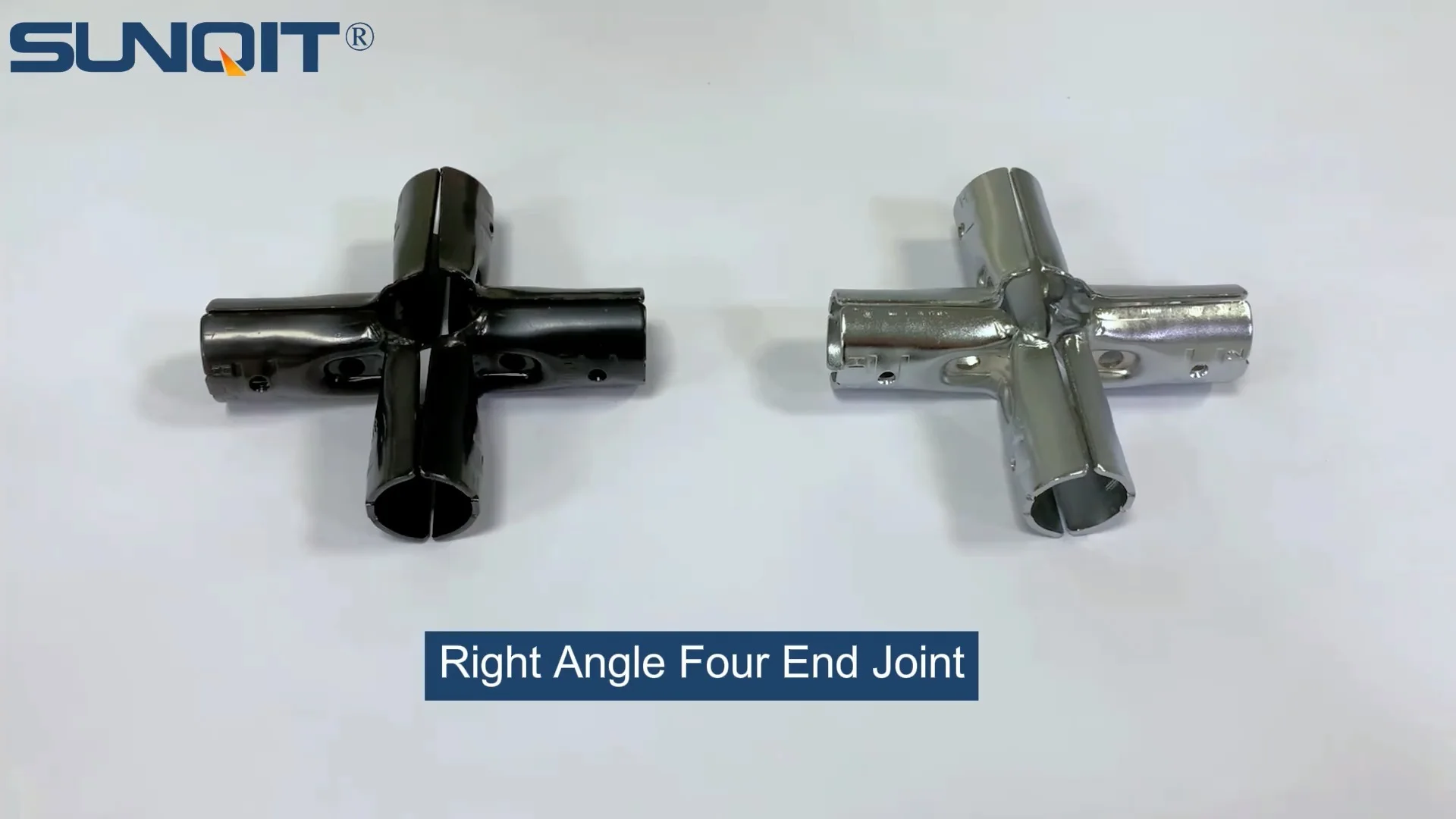
Five way straight lean pipe joint, for 5 pcs 28mm lean pipe connect in straight angle,which used widely in workbench, flow rack, hand trolley frame connection.
Walk into any modern warehouse, and you'll quickly realize it's more than just a big room with boxes. It's a symphony of movement, precision, and efficiency—where every square foot, every shelf, and every tool plays a role in keeping products flowing from production to customer. At the heart of this orchestration lies one often-overlooked hero: lean pipe systems. These modular, adaptable setups have revolutionized how warehouses handle racking, storage, and workflow, all while sticking to the core principles of lean manufacturing—eliminating waste, streamlining processes, and maximizing value. But what makes these systems truly flexible? The answer lies in their joints. And among the unsung stars of this component family is the five way straight lean pipe joint chrome —a small but mighty connector that unlocks a world of possibilities for custom racking and storage solutions.
In this article, we'll dive deep into what makes the five way straight lean pipe joint chrome indispensable in today's warehouses. We'll explore its design, features, and most importantly, how it transforms ordinary storage setups into dynamic, efficient workhorses. Whether you're managing a bustling distribution center, a small manufacturing facility, or a busy e-commerce fulfillment hub, understanding this joint's role could be the key to unlocking better space utilization, faster workflows, and a more adaptable operation. Let's start by breaking down the basics of lean pipe systems and why joints like this matter.
Lean Pipe Systems: The Backbone of Modern Warehousing
Lean pipe systems—also known as "lean tubes" or "kitchen pipe systems" (a nod to their early use in Japanese factories)—are built around lightweight, durable pipes and connectors. Unlike traditional fixed metal racks, which require welding, cutting, or specialized tools to assemble, lean pipe systems use simple joints to snap pipes together, allowing for quick setup and easy reconfiguration. This modularity is a game-changer in warehousing, where storage needs can shift overnight—whether due to seasonal demand spikes, new product lines, or changes in order volume.
At the core of these systems are the joints. Think of them as the "building blocks" that determine how pipes can be arranged. Most joints connect 2-3 pipes at fixed angles (like 90° or 45°), but some—like the five way straight lean pipe joint chrome—offer more versatility. As the name suggests, this joint lets you connect up to five pipes in a straight or multi-directional layout, making it ideal for creating complex, multi-tiered structures without sacrificing stability. And the "chrome" in its name? That's not just for show. Chrome plating adds a layer of corrosion resistance, making it suitable for busy warehouses where spills, humidity, or frequent cleaning are part of the daily grind.
Key Features of Five Way Straight Lean Pipe Joint Chrome
What sets the five way straight lean pipe joint chrome apart from other connectors? Let's break down its standout features:
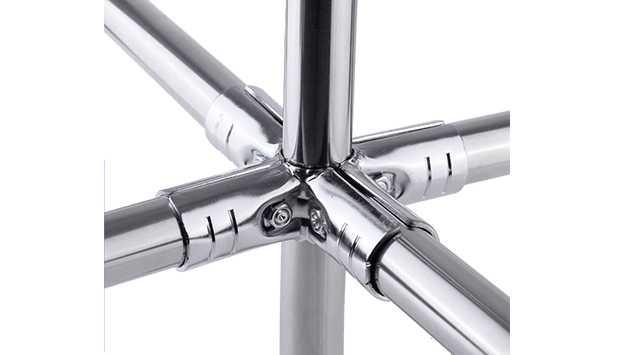
- Multi-Directional Connectivity: Unlike standard 2-way or 3-way joints, the five way joint can connect up to five pipes—four in a radial pattern (like spokes on a wheel) and one straight through the center. This makes it perfect for building T-shaped shelves, cross-braced frames, or multi-level racks where pipes need to branch out in multiple directions.
- Chrome-Plated Durability: Made from high-quality steel with a chrome finish, this joint resists rust, scratches, and wear. In busy warehouses, where racks are loaded/unloaded daily and trollies bump into structures, this durability ensures the joint won't weaken over time.
- Tool-Free Assembly: No welding, no bolts, no headaches. The five way joint uses a simple clamping mechanism—just slide the pipe into the joint, tighten the built-in screw (often with a hex key or even by hand), and you're done. This cuts assembly time from hours to minutes, even for complex setups.
- Load-Bearing Strength: Don't let its lightweight design fool you. A well-made five way joint can support hundreds of pounds, making it suitable for heavy-duty applications like stacking pallets, storing automotive parts, or holding bulk inventory.
- Compatibility: It works seamlessly with standard lean pipes (including pe coated lean pipe and stainless steel pipes), as well as accessories like roller tracks, casters, and workbench surfaces. This compatibility means you can expand or modify your system without replacing existing components.
Applications in Racking Systems: Building Smarter Storage
Racking is the backbone of any warehouse, and the five way straight lean pipe joint chrome shines brightest here. Let's look at how it transforms common racking setups:
1. Multi-Level Flow Racks for Fast-Pick Operations
Flow racks—where products "flow" from the back to the front via gravity—are a staple in order fulfillment centers. They reduce picking time by ensuring items are always at the front of the shelf, ready to be grabbed. But building a flow rack that's both tall enough to maximize vertical space and flexible enough to adjust shelf heights? That's where the five way joint comes in.
Imagine a material rack b (3 row and 3 floor) setup—a common configuration for storing small to medium-sized parts. With standard joints, building three rows and three floors would require dozens of 3-way connectors, leading to a cluttered, heavy frame. The five way joint simplifies this: one joint can anchor a vertical support pipe, while connecting horizontal pipes for the shelves above, below, and to the sides. This reduces the number of joints needed, lightens the overall structure, and makes it easier to adjust shelf heights later if needed.
Pair this with roller track —a series of small wheels that let products glide forward—and you've got a high-efficiency flow rack. The five way joint secures the roller track to the shelf frame, ensuring it stays aligned even under the weight of multiple boxes. For warehouses dealing with perishable goods or time-sensitive orders, this setup cuts down on "dead time" spent searching for items, keeping fulfillment on track.
2. Cross-Braced Pallet Racks for Heavy Loads
Pallet racks are built to handle heavy loads, but traditional designs often sacrifice flexibility for strength. The five way joint bridges this gap. By using the joint to connect diagonal cross-braces between vertical uprights, you can reinforce the rack without limiting its adaptability. For example, a warehouse storing large appliances might need a rack that's 10 feet tall and 4 feet deep. With five way joints, you can add cross-braces at the top, middle, and bottom of the uprights, distributing weight evenly and preventing sway—all while keeping the option to add extra shelves or widen the rack later.

Beyond Racking: Creative Storage Solutions
The five way straight lean pipe joint chrome isn't limited to racks. Its versatility makes it a favorite for building custom storage tools that solve unique warehouse challenges:
1. Mobile Workstations and Lean Pipe Workbench Setups
In assembly lines or packing stations, workers need tools, parts, and workspace within arm's reach. A lean pipe workbench built with five way joints can include shelves, tool hooks, and even integrated roller track to feed parts directly onto the work surface. For example, a single workbench might have a main tabletop, a lower shelf for bins, and a vertical rack above for hanging tools—all connected via five way joints. Add casters to the base, and the workstation becomes mobile, letting workers move it to where it's needed most (no more carrying heavy parts across the warehouse!).
2. Turnover Trolleys and Material Carts
Moving inventory from the receiving dock to storage (or from storage to shipping) often requires sturdy trolleys. The five way joint is ideal for building these carts, as it can connect vertical handles, horizontal shelves, and caster wheels into a stable frame. For instance, a turnover trolley might have three shelves (using five way joints to connect the vertical supports and horizontal rails) and a handlebar for pushing. The chrome finish ensures the trolley holds up to daily use, even in dusty or humid environments.
How Does It Stack Up? Comparing Joint Types
| Joint Type | Number of Connections | Best For | Limitations |
|---|---|---|---|
| 2-Way Straight Joint | 2 (straight line) | Long horizontal/vertical pipes (e.g., shelf rails) | No branching; limited to straight lines |
| 3-Way 90° Joint | 3 (90° angles) | Simple L-shaped shelves or corners | Can't connect more than 3 pipes; fixed angle |
| Five Way Straight Lean Pipe Joint Chrome | Up to 5 (multi-directional) | Complex racks, multi-level shelves, cross-braced frames | Slightly bulkier than smaller joints; higher cost (worth it for versatility) |
Why Warehouses Love It: The Benefits of Five Way Joints
At the end of the day, warehouse managers care about results—faster operations, lower costs, and less hassle. The five way straight lean pipe joint chrome delivers on all three:
- Flexibility to Adapt: Seasonal spikes, new product lines, or shifts in customer demand? With five way joints, you can reconfigure racks or workstations in hours, not days. No need to buy new equipment—just rearrange the pipes.
- Cost Savings: Traditional fixed racks require professional installation and can't be reused if your needs change. Lean pipe systems with five way joints are DIY-friendly, and components can be repurposed indefinitely, reducing long-term costs.
- Improved Workflow: By building custom racks and workstations that fit your team's needs, you cut down on wasted movement. For example, a flow rack with roller track and five way joints can reduce picking time by 30%—meaning more orders shipped per day.
- Safety First: Chrome-plated joints are less likely to rust or weaken, and the tool-free assembly reduces human error (no loose bolts or wobbly welds). Sturdy, stable racks mean fewer accidents and less downtime.
Case Study: A Small Electronics Warehouse's Transformation
Let's take a look at how one small electronics warehouse used five way straight lean pipe joint chrome to solve a common problem: limited space and growing inventory. Prior to switching to lean pipe systems, the warehouse relied on generic metal shelves that were too tall for easy access and too narrow to hold larger components. Workers spent hours each day climbing ladders or moving boxes to find parts, leading to delays and frustrated staff.
The solution? A custom lean pipe setup using five way joints. The team built:
- Multi-level flow racks with roller track for small parts (resistors, capacitors), using five way joints to create 3-row, 4-floor setups that fit perfectly along the warehouse walls.
- Mobile workbenches with integrated tool hooks and lower shelves, built with five way joints to keep tools and testing equipment within reach.
- Pallet racks for larger items (circuit boards, power supplies), reinforced with cross-braces connected via five way joints to handle heavier loads without taking up extra floor space.
The results? Picking time dropped by 40%, storage capacity increased by 25% (by using vertical space more efficiently), and staff morale improved—all for a fraction of the cost of new fixed racks. "We used to dread inventory days because we'd spend hours moving shelves around," said the warehouse manager. "Now, with the five way joints, we can adjust a rack in 15 minutes. It's been a game-changer."
Caring for Your Five Way Joints: Maintenance Tips
To keep your five way straight lean pipe joint chrome in top shape, follow these simple maintenance steps:
- Clean Regularly: Wipe down chrome surfaces with a damp cloth to remove dust, grease, or spills. Avoid abrasive cleaners, which can scratch the chrome.
- Check Tightness: Every few months, tighten the joint screws with a hex key. Over time, vibration from loading/unloading can loosen them, so a quick check prevents wobbly racks.
- replace Worn Parts: If a joint becomes bent, cracked, or the chrome starts to peel, replace it immediately. Damaged joints compromise the entire system's stability.
- Lubricate Moving Parts: If your setup includes roller track or casters, add a drop of lubricating oil to the joints where pipes connect to moving components (like roller axles) to keep them gliding smoothly.
Conclusion: The Five Way Joint—Small Part, Big Impact
In the fast-paced world of warehousing, every tool and component matters. The five way straight lean pipe joint chrome may seem like a small part, but its ability to connect, adapt, and endure makes it a cornerstone of modern, efficient storage systems. Whether you're building flow racks with roller track, mobile workbenches, or heavy-duty pallet racks, this joint gives you the flexibility to design a warehouse that works for you—not the other way around.
So, if you're tired of rigid, one-size-fits-all storage solutions, it might be time to give lean pipe systems a closer look. And when you do, don't overlook the five way joint—it could be the key to unlocking a more productive, adaptable, and successful warehouse.