- Company Articles
- Products and Technology
- Product knowledge
- Five Way Straight Lean Pipe Joint Chrome: Key to Agile Manufacturing Workflows

Five Way Straight Lean Pipe Joint Chrome: Key to Agile Manufacturing Workflows
Related Product
Five Way Straight Lean Pipe Joint Chrome
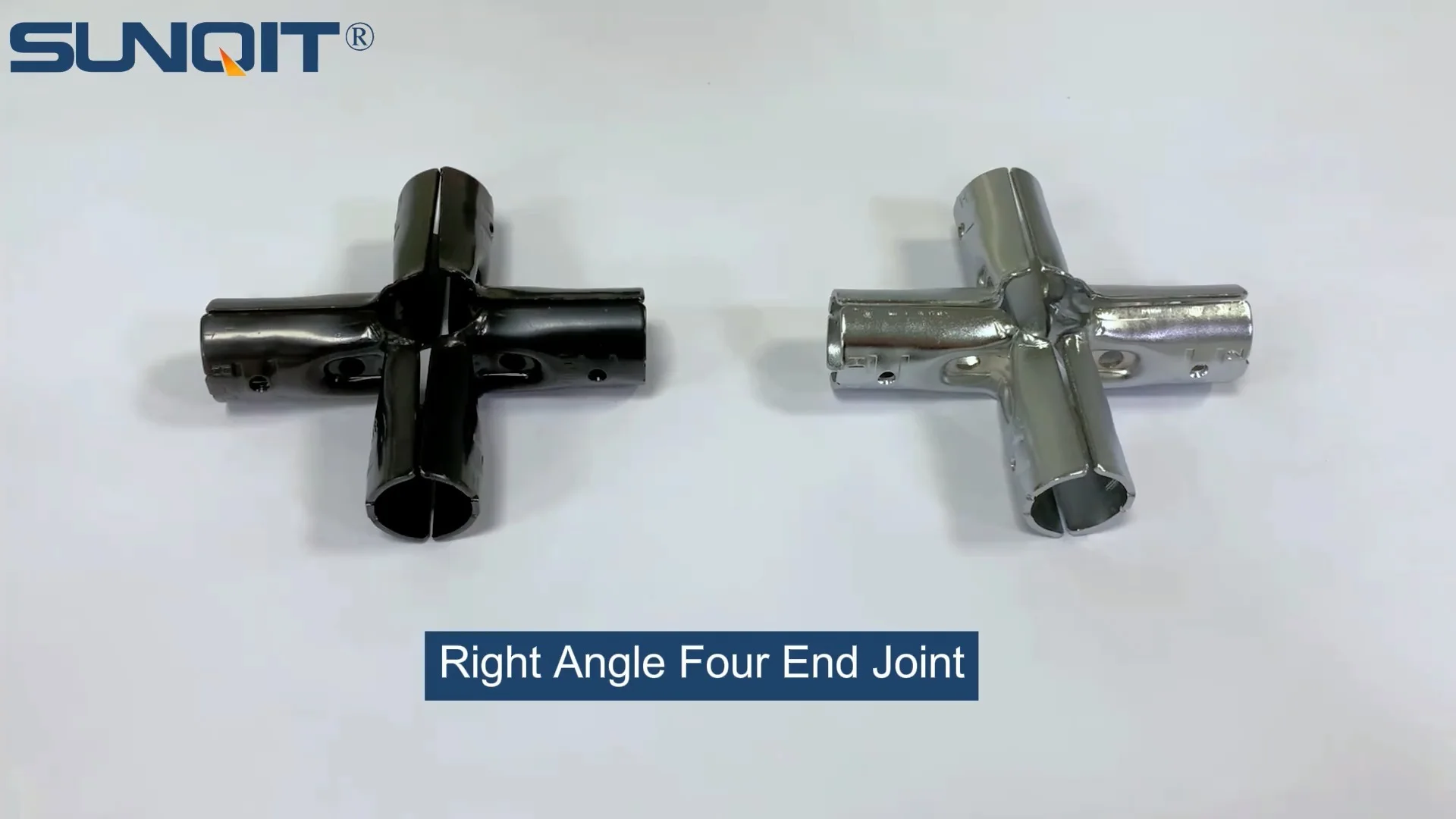
Five way straight lean pipe joint, for 5 pcs 28mm lean pipe connect in straight angle,which used widely in workbench, flow rack, hand trolley frame connection.
The Need for Agility in Modern Manufacturing
Walk into any manufacturing facility today, and you'll likely notice a shift: gone are the days of massive, static production lines churning out identical products for years on end. Today's manufacturers—whether they're building electronics, automotive parts, or medical devices—operate in a world of short runs, custom orders, and rapidly changing customer demands. A factory that can't pivot quickly risks falling behind, losing contracts, or wasting resources on rigid setups that no longer fit the job.
Consider a small electronics manufacturer I worked with last year. They specialized in custom circuit boards for startups, which meant their production needs changed weekly. One week, they'd be assembling 50 small boards for a smartwatch prototype; the next, 200 larger boards for a home automation system. Their biggest headache? Their workstations. Built with fixed metal frames and welded shelves, reconfiguring a single bench to fit a new board size took two technicians an entire day. By the time they finished, the client's deadline was already breathing down their neck. "We're spending more time moving tables than building products," their operations manager sighed. Sound familiar?
This is the reality for countless manufacturers: agility isn't just a buzzword—it's survival. The ability to retool workspaces, adjust material flows, and repurpose equipment on the fly can mean the difference between meeting a tight deadline and losing a client. And while there are many tools in the lean manufacturing toolkit—from 5S to kanban systems—one often-overlooked component plays a quiet but critical role in making this agility possible: the connectors that hold everything together. Enter the five way straight lean pipe joint chrome.
Meet the Unsung Hero: Five Way Straight Lean Pipe Joint Chrome
At first glance, it might seem unassuming: a small, chrome-plated metal component with five openings, designed to connect lengths of lean pipe. But don't let its size fool you. The five way straight lean pipe joint chrome is the Swiss Army knife of manufacturing workspaces—a connector that turns rigid, one-size-fits-all setups into flexible, adaptable ecosystems. Let's break down what makes it so special.
First, the basics: lean pipe (also called "flexible pipe" or "kitchen pipe") is a lightweight, durable tube—often made of steel with a plastic coating—used to build everything from workbenches and material racks to flow racks and assembly lines. What makes lean pipe systems revolutionary is their modularity: instead of welding or bolting components together, you use joints to connect pipes, allowing for quick assembly and disassembly. And among these joints, the five-way straight chrome model stands out for its versatility.
Why chrome? Chrome plating isn't just for looks (though it does give the joint a sleek, professional finish that holds up well in busy factories). Chrome adds a layer of corrosion resistance, critical in environments where spills, humidity, or chemicals are common. It also makes the joint easy to clean—no more grimy, rusted connectors that jam when you try to adjust them. For manufacturers who prioritize hygiene (like those in food processing or medical device production), this is a game-changer.
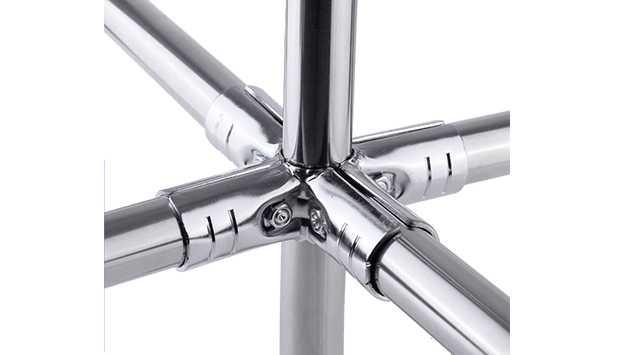
But the real magic is in the "five way" design. Unlike standard two-way or three-way joints, which limit you to connecting pipes in a straight line or simple L-shape, the five-way joint has five ports: one at each end (for straight runs) and three perpendicular ports (for branching off in different directions). Imagine building a lean pipe workbench: with a five-way joint, you can add a side shelf, a tool holder, and a material bin—all from a single connection point. No need for extra joints or complicated workarounds. It's like having a built-in adapter that lets you customize as you go.
How It Works: The Anatomy of Versatility
To understand why the five way straight lean pipe joint chrome is a game-changer, let's dive into its design. At its core, this joint is engineered for two things: strength and flexibility. Let's start with strength. Each port is precision-machined to fit standard lean pipe diameters (typically 28mm or 30mm), with internal threads or clamping mechanisms that grip the pipe tightly. When you twist a pipe into the joint, it locks in place—no wobbling, no slipping, even under the weight of heavy materials. I've seen these joints support everything from loaded flow racks (stacked with 50-pound boxes) to overhead tool hangers, and they hold steady.
Now, flexibility. While some joints are fixed at 90-degree angles, the five-way straight joint often features rotating ports (or at least adjustable clamping) that let you angle pipes slightly if needed. This is crucial for real-world manufacturing, where floors might be uneven or workstations need to fit into odd corners. For example, if you're building a material rack next to a wall, you can angle one pipe to avoid a protruding electrical outlet—no need to redesign the entire rack.
Compatibility is another key feature. The five way straight lean pipe joint chrome isn't picky: it works with standard steel lean pipes, aluminum lean pipes, and even aluminum profiles (another popular modular building material). This means you can mix and match components—using aluminum profiles for a lightweight workbench top and steel lean pipes for the frame, all connected with the same joint. For manufacturers transitioning from older steel systems to lighter aluminum ones, this compatibility saves time and money; you don't have to replace all your joints, just the pipes.
Let's visualize a common scenario: building a flow rack. Flow racks are used to feed materials to assembly lines, with gravity pulling bins or parts down roller tracks as they're needed. A basic flow rack might have three levels, each with a roller track. With a standard three-way joint, you'd need multiple connectors to attach the vertical supports, horizontal beams, and roller track brackets. With a five-way joint? One joint at each corner can connect the vertical support, two horizontal beams (front and back), and two roller track brackets—cutting the number of joints needed by nearly half. Fewer joints mean faster assembly, fewer points of failure, and a cleaner, more stable structure.

Building Blocks of Agile Workflows: From Lean Pipe Workbench to Flow Rack
Now, let's put this joint to work. How does it transform everyday manufacturing tools into agile powerhouses? Let's look at two common applications: lean pipe workbenches and flow racks.
Lean Pipe Workbench: Your Customizable Command Center
A lean pipe workbench is the heart of many assembly operations. It's where operators stand for hours, assembling parts, testing products, or packing orders. But one size doesn't fit all: a worker assembling small electronics needs a different setup than someone building heavy machinery. With the five way straight lean pipe joint chrome, you can tailor the workbench to the task—no welding, no special tools, no waiting for maintenance.
Imagine you're setting up a workbench for a team assembling smartphones. They need a flat surface for the assembly tray, a shelf for tools (screwdrivers, tweezers), a bin for spare parts, and a holder for a magnifying lamp. Using five-way joints at the corners of the bench frame, you can: attach the main work surface (using two parallel pipes), add a side shelf (via a perpendicular port), mount a tool rail (another port), and hang a parts bin (the fifth port). If tomorrow the team switches to tablets (which are larger), you can loosen the joints, adjust the shelf height, and reposition the lamp—all in 15 minutes. No more waiting for a carpenter to cut a new shelf or a welder to adjust the frame.
I visited a contract manufacturer last month that used this exact approach. They had 10 workbenches, each built with five-way joints, and they reconfigured them weekly based on incoming orders. "Last week, we were assembling fitness trackers—small parts, so we had extra shelves for bins," their production lead told me. "This week, we're doing laptop chargers, which are bulkier. We removed the shelves, widened the work surface, and added a roller track to feed chargers from the back. The team did it themselves during lunch. That's agility."
Flow Rack: Keeping Materials Moving, Without the Fuss
Flow racks are all about efficiency: they ensure materials are always within reach of assembly lines, reducing walking time and keeping production flowing. But traditional flow racks are often fixed in size—if you need to add a level or widen a lane, you're out of luck. The five way straight lean pipe joint chrome changes that.
Let's say you run a warehouse that ships e-commerce orders. Your flow rack has four lanes, each holding boxes of different products. During the holiday season, you need to add two more lanes to handle increased inventory. With a standard joint, you'd have to disassemble part of the rack, add new vertical supports, and reattach the horizontal beams. With five-way joints, you can simply add two new horizontal pipes to the existing vertical supports (using the extra ports on the five-way joints), then attach roller tracks to those pipes. The whole process takes an hour, not a day—and you don't have to empty the rack first (just move the boxes temporarily to neighboring lanes).
Another example: a car parts manufacturer using flow racks to feed brake components to an assembly line. The components come in two box sizes: small (for brake pads) and large (for calipers). With a five-way joint, they can adjust the roller track height for each lane—lower for small boxes (so operators don't have to bend) and higher for large boxes (to avoid straining their backs). No need for separate racks; one rack, customized with the same joint, does it all.
The Impact: Quantifying Agility Gains
Agility sounds great, but does it translate to real results? Let's talk numbers. A study by the Lean Manufacturing Institute found that manufacturers using modular lean pipe systems (with versatile joints like the five-way chrome model) reduced reconfiguration time by 70% compared to fixed systems. For a factory that reconfigures workstations 10 times a year, that's hours saved—time that can be spent building products instead of moving them.
Cost savings are another big win. Traditional workstations, built with welded steel, can cost $1,000 or more each—and if you need to change them, you often have to scrap them and build new ones. Modular lean pipe workbenches, using five-way joints, cost roughly half that (around $500), and when you reconfigure them, you reuse 90% of the components. A mid-sized manufacturer with 50 workstations could save $25,000 upfront and thousands more in reconfiguration costs over time.
Worker satisfaction is harder to quantify, but just as important. When operators can adjust their workstations to fit their needs—raising a shelf to avoid bending, adding a tool holder within arm's reach—they're happier and more productive. A survey by the Manufacturing Ergonomics Association found that workers with customizable workstations reported 30% fewer ergonomic injuries and 20% higher job satisfaction. And happy workers are more likely to stay, reducing turnover (which costs manufacturers an average of $40,000 per lost employee, according to industry reports).
Let's circle back to the electronics manufacturer I mentioned earlier. After switching to lean pipe workbenches with five-way joints, they reduced reconfiguration time from one day to two hours. Over six months, they saved 48 hours of technician time—time that went into building products instead of moving tables. They also reduced material handling errors by 15% (since tools and parts were always within reach) and won a new contract with a startup that needed weekly product changes. "We used to say 'no' to custom orders because they were too much hassle," the operations manager told me. "Now, we say 'yes'—and we're making more money because of it."
How Does It Compare? A Look at Joint Options
Not all lean pipe joints are created equal. To see why the five way straight lean pipe joint chrome stands out, let's compare it to other common joint types:
| Joint Type | Number of Connections | Flexibility | Best For | Limitations |
|---|---|---|---|---|
| Two-Way Straight Joint | 2 (straight line) | Low (fixed straight) | Simple frames, horizontal/vertical supports | Can't branch off; limited to linear structures |
| Three-Way L-Joint | 3 (2 perpendicular, 1 straight) | Moderate (90-degree angles) | Corners of workbenches, basic shelves | Only right angles; no extra branches |
| Four-Way Cross Joint | 4 (2 perpendicular pairs) | Moderate (cross-shaped) | Center supports for racks, multi-directional frames | No straight-through option; limited to cross patterns |
| Five Way Straight Lean Pipe Joint Chrome | 5 (1 straight-through, 4 perpendicular) | High (multi-axis, adjustable angles) | Complex workstations, flow racks, custom setups | Slightly higher cost than basic joints (but saves in labor/time) |
As the table shows, the five-way joint offers the most connections and flexibility, making it ideal for anything beyond the simplest structures. While it may cost a few dollars more than a basic two-way joint, the savings in time, labor, and reconfiguration costs more than make up for it.
Beyond the Joint: Building a Lean Ecosystem
The five way straight lean pipe joint chrome is powerful on its own, but it truly shines when paired with other lean manufacturing tools. Let's explore how it fits into a larger lean system.
First, lean tube accessories. These include everything from pipe end caps (to prevent sharp edges) to clamps (for attaching tools or bins) to caster wheels (for making workstations mobile). The five-way joint acts as a hub for these accessories: you can attach a caster wheel mount to one port, a tool clamp to another, and a bin hanger to a third—all in one spot. This integration turns a static workbench into a mobile, fully equipped workstation that can roll to where it's needed.
Aluminum profile accessories are another great pairing. Aluminum profiles are extruded aluminum bars with T-slots (grooves) that let you slide in brackets, shelves, or panels. They're lightweight and corrosion-resistant, making them perfect for cleanrooms or food-grade environments. Since the five-way joint works with aluminum lean pipes, you can connect an aluminum profile shelf to a steel lean pipe frame, creating a hybrid workstation that's both strong and lightweight.
Roller tracks are another key component. As we mentioned earlier, roller tracks are used in flow racks to move materials via gravity. The five-way joint makes it easy to attach roller track brackets to a rack frame, adjusting the angle of the track to control how fast materials flow. For example, if you're moving heavy bins, you can angle the track slightly steeper; for delicate parts, a gentler angle prevents jamming. The joint's multiple ports let you add side guides to keep bins from sliding off—no extra brackets needed.
Finally, don't overlook the importance of training. Even the most versatile joint won't help if your team doesn't know how to use it. Many lean system suppliers offer workshops on modular assembly, teaching workers how to build, reconfigure, and maintain lean pipe structures. Investing in this training ensures your team can make the most of the five-way joint—turning "we can't do that" into "we can do that by lunch."
Conclusion: The Future of Manufacturing is Modular
In a world where manufacturing demands change faster than ever, agility isn't optional—it's essential. The five way straight lean pipe joint chrome may be a small component, but it's a symbol of a larger shift: away from rigid, one-time-use equipment and toward modular, adaptable systems that grow with your business. It's the difference between a factory that struggles to keep up and one that thrives on change.
Whether you're building a lean pipe workbench, a flow rack, or an entire assembly line, this joint puts the power of customization in your hands. It reduces assembly time, cuts costs, and empowers your team to create workspaces that fit their needs—not the other way around. And in manufacturing, where every minute and every dollar counts, that's not just an advantage—it's a game-changer.
So the next time you walk through your factory, take a look at the joints holding your workstations together. Are they limiting you, or enabling you? If it's the former, maybe it's time to give the five way straight lean pipe joint chrome a try. Your team, your deadlines, and your bottom line will thank you.