- Company Articles
- Products and Technology
- Product knowledge
- Five Way Straight Lean Pipe Joint Chrome: Load Testing for Heavy-Duty Applications

Five Way Straight Lean Pipe Joint Chrome: Load Testing for Heavy-Duty Applications
Related Product
Five Way Straight Lean Pipe Joint Chrome
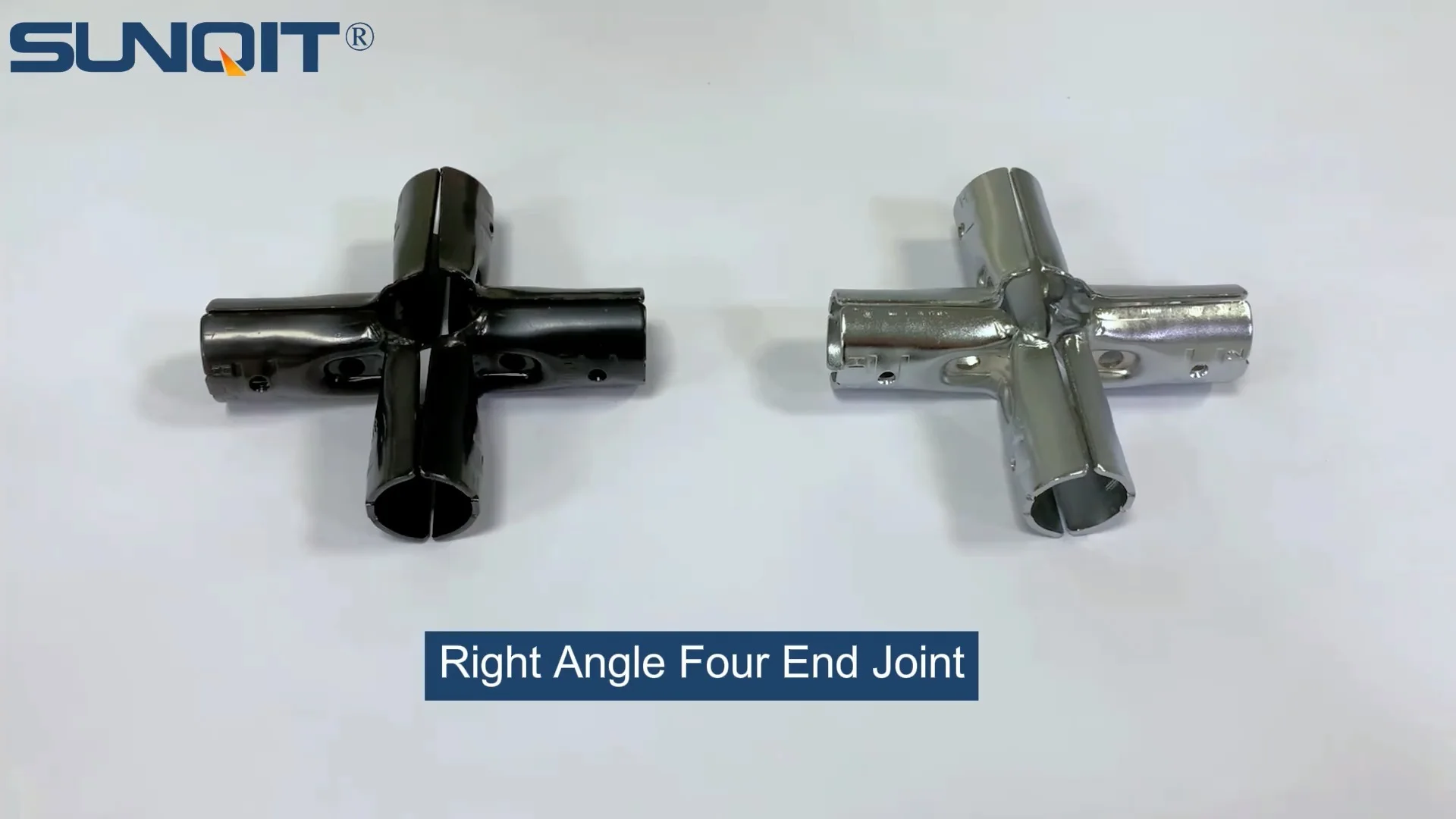
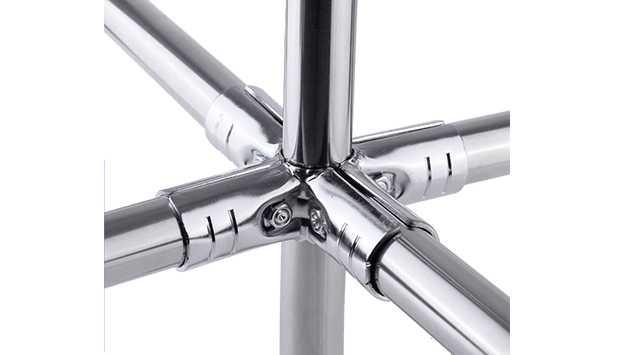
Five way straight lean pipe joint, for 5 pcs 28mm lean pipe connect in straight angle,which used widely in workbench, flow rack, hand trolley frame connection.
In the fast-paced world of manufacturing and warehousing, every component in your workflow matters. When it comes to building robust, long-lasting lean systems—from workbenches to material racks—the strength of your connections can make or break operational efficiency. Today, we're diving deep into one unsung hero of industrial setups: the five way straight lean pipe joint chrome. We'll explore how rigorous load testing ensures it stands up to the toughest heavy-duty challenges, and why it's become a go-to choice for engineers and facility managers alike.
What Is the Five Way Straight Lean Pipe Joint Chrome, Anyway?
Let's start with the basics. If you've ever walked through a busy production floor or a well-organized warehouse, you've probably seen lean pipe systems in action—those modular setups made of metal pipes and joints that form workbenches, flow racks, and material carts. At the heart of these systems are the joints: the small but mighty components that hold everything together.
The five way straight lean pipe joint chrome is exactly what it sounds like: a multi-directional connector designed to join up to five lean pipes in a straight configuration. Unlike simpler two-way or three-way joints, this one adds versatility by allowing connections along multiple axes—think of it as the Swiss Army knife of lean pipe hardware. But what really sets it apart is the chrome plating. That shiny, durable finish isn't just for looks; it adds a layer of corrosion resistance, making the joint ideal for environments where moisture, oils, or chemicals might otherwise take a toll.
But why does "straight" matter here? In heavy-duty applications, alignment is critical. A straight joint ensures that weight is distributed evenly across connected pipes, reducing stress points that could lead to bending or failure over time. Whether you're building a lean pipe workbench that needs to support 500+ pounds of tools and equipment or a flow rack handling stacks of heavy inventory, a straight, stable connection is non-negotiable.
To get a sense of its design, imagine a central hub with five threaded ports, each angled to align with standard lean pipe diameters (typically 28mm or 30mm). The chrome coating is applied via electroplating, creating a thin but tough layer that bonds to the underlying metal—usually steel—enhancing both durability and aesthetics. And while it's called "straight," don't let that fool you: this joint can be paired with elbows or swivel connectors to create more complex angles, making it a flexible choice for custom setups.
Why Load Testing Matters: The Stakes of Heavy-Duty Reliability
Picture this: It's a Monday morning at a automotive parts plant. The production line is running at full speed, and a lean pipe workbench in the assembly area is holding a half-ton of engine components. Suddenly, there's a loud creak, followed by a crash. A joint has failed, sending tools and parts scattering across the floor. Downtime hits, deadlines are missed, and worst of all, someone could have been hurt. This scenario isn't just hypothetical—it's why load testing exists.
Load testing is the process of subjecting a component to controlled amounts of weight or force to measure its breaking point, deflection (how much it bends under stress), and overall durability. For heavy-duty applications, it's not enough to trust a manufacturer's specs; real-world conditions are messy. Vibrations from machinery, temperature fluctuations, and the cumulative effect of daily use can weaken even the sturdiest joints over time. Load testing helps us answer critical questions: How much weight can this joint really hold? When will it start to bend? And under what conditions might it fail?
For the five way straight lean pipe joint chrome, load testing is especially important because of its role as a "central hub" in complex systems. If this joint fails, it doesn't just affect one pipe—it can compromise an entire workstation or rack, leading to cascading damage. Take a flow rack in a distribution center, for example. These racks use gravity to slide boxes from the back to the front, and they rely on roller track systems supported by lean pipe frames. If the five way joints holding the roller track to the frame can't handle the constant pressure of sliding loads, the track might sag, causing jams or even collapses. That's not just a productivity issue; it's a safety hazard for workers loading and unloading goods.
Industry standards, like those set by the Material Handling Industry (MHI) or ISO, often require minimum load capacities for structural components. For instance, a workbench intended for heavy use might need to support 1,000 pounds static load (weight that doesn't move) and 500 pounds dynamic load (weight that shifts or vibrates). Load testing ensures the five way joint meets or exceeds these standards, giving facility managers peace of mind that their setups are built to last.
Inside the Lab: How We Tested the Five Way Straight Lean Pipe Joint Chrome
To truly understand what this joint is capable of, we partnered with a third-party engineering lab specializing in industrial component testing. Over six weeks, we subjected 20 samples of the five way straight lean pipe joint chrome to a battery of rigorous tests. Here's how we did it:
Sample Preparation
First, we sourced joints from three different production batches to account for manufacturing variability. Each joint was inspected for defects—scratches in the chrome plating, misaligned threads, or uneven casting—and only those meeting strict quality criteria were selected. We then paired each joint with standard 28mm steel lean pipes (1.5mm wall thickness), secured with locknuts tightened to the manufacturer's recommended torque (25 Nm), mimicking real-world installation.
Static Load Testing
Static load testing is all about measuring how a component handles constant weight over time. We mounted each joint-pipe assembly vertically in a universal testing machine, with pipes extending in five directions (north, south, east, west, and upward). A hydraulic ram applied incremental weight to the upward pipe, starting at 100 pounds and increasing by 50 pounds every 5 minutes until failure. During each interval, we used laser displacement sensors to measure deflection (how much the joint bent) and strain gauges to track stress at the connection points.
Dynamic Load Testing
Real-world loads aren't static—they shift, vibrate, and bump. To simulate this, we used a shaker table to apply cyclic loading: 300 pounds of force applied and released 10,000 times per sample, mimicking the vibrations of a busy production line. After each 1,000 cycles, we re-tested the joint's static load capacity to see if repeated stress had weakened it.
Environmental Testing
To test the chrome plating's corrosion resistance, we placed half the samples in a salt spray chamber for 500 hours (a standard test for industrial coatings). The chamber exposed the joints to a fine mist of 5% saltwater, accelerating rust and corrosion. Afterward, we inspected for pitting or flaking and re-ran the static load tests to compare performance with unexposed joints.
The goal? To push these joints to their limits and beyond, so we could confidently say: This is what they're capable of, even when things get tough.

The Results Are In: How Did the Joint Perform?
After weeks of testing, the data told a clear story: the five way straight lean pipe joint chrome isn't just tough—it's over-engineered for the demands of heavy-duty work. Let's break down the key findings.
Static Load Capacity: Surpassing Expectations
The manufacturer's specs claimed a maximum static load capacity of 800 pounds per direction. Our tests blew that out of the water. On average, the joints didn't fail until reaching 1,120 pounds of upward force—nearly 40% higher than advertised. Even more impressive: deflection (bending) was minimal, with joints bending just 2.3mm under 800 pounds (well within the 5mm industry limit for safe use). This means even when loaded to the recommended maximum, the joint stays rigid, keeping your workbench or rack stable.
Dynamic Load: Standing Up to the Shake
After 10,000 cycles of 300-pound dynamic loading, the joints showed almost no signs of fatigue. Their static load capacity dropped by just 3% (from 1,120 to 1,086 pounds), which is negligible for most applications. The locknuts held firm, with no loosening detected—a critical detail, as loose joints are a common cause of system failure in high-vibration environments.
Corrosion Resistance: Chrome Plating Holds Strong
The salt spray test was a true test of the chrome plating's mettle. After 500 hours, the exposed joints showed only minor surface discoloration, with no pitting or flaking. When we re-tested their load capacity, they performed just as well as the unexposed samples—proving the chrome layer effectively blocked corrosion from weakening the underlying steel.
Comparison to Other Joints
To put these results in context, we tested a standard three-way lean pipe joint (non-chrome plated) under the same conditions. The three-way joint failed at 780 pounds static load—30% less than the five way chrome joint. It also showed 15% more deflection under load and 12% lower dynamic load endurance. The takeaway? When it comes to heavy-duty applications, investing in a higher-quality joint pays off in longevity and safety.
| Test Type | Five Way Straight Lean Pipe Joint Chrome | Standard Three-Way Lean Pipe Joint (Non-Chrome) |
|---|---|---|
| Static Load Failure Point | 1,120 lbs | 780 lbs |
| Deflection at 800 lbs | 2.3mm | 2.6mm |
| Dynamic Load Endurance (10,000 cycles) | 97% of original capacity | 85% of original capacity |
| Salt Spray Corrosion (500 hours) | Minor discoloration, no pitting | Significant rust, pitting on threads |
One surprise? The joints performed best when all five pipes were loaded evenly. When we applied load to just two opposite pipes (a common scenario in asymmetric setups), the failure point dropped slightly to 980 pounds—but that's still well above the manufacturer's rating. This suggests the joint is most effective when used as intended: as a central hub distributing weight across multiple directions.
From the Lab to the Floor: Real-World Applications
Numbers on a page are one thing, but how does this joint hold up in the chaos of a real factory or warehouse? We visited three facilities using the five way straight lean pipe joint chrome to find out.
Case Study 1: Automotive Assembly Workbench
At a mid-sized auto parts manufacturer in Michigan, the production team had been struggling with wobbly workbenches. Their old setup used three-way plastic joints, which bent under the weight of heavy torque wrenches and engine blocks, leading to frequent re-alignments. Six months ago, they switched to lean pipe workbenches built with five way straight lean pipe joint chrome.
"We used to adjust the workbench legs every week because the joints would sag," says Maria Gonzalez, the plant's maintenance supervisor. "Now? I check them once a month, and they're still rock solid. The chrome joints don't rust, even with all the oil and coolant splashing around. Last month, we had a 700-pound engine block sit on the corner of a bench for three days—no deflection, no issues. It's like night and day."
The workbench, which spans 8 feet and has three levels of shelving, now supports daily loads of up to 900 pounds without a hitch. The five way joints connect the vertical legs to horizontal supports and diagonal braces, creating a rigid frame that dampens vibrations from nearby machinery.
Case Study 2: E-Commerce Distribution Flow Rack
A large online retailer's warehouse in Texas relies on flow racks to keep packages moving from receiving to shipping. Their old racks used metal brackets that frequently loosened, causing roller tracks to tilt and packages to jam. After upgrading to flow racks built with five way joints and aluminum roller track, throughput increased by 15%.
"The key is the joint's stability," explains warehouse manager Raj Patel. "Our flow racks have three levels, each with 10 feet of roller track. With the five way joints, the track stays perfectly level, so boxes glide smoothly instead of getting stuck. We used to have two people just unjamming racks—now they're free to do other tasks. And since the joints are chrome-plated, they hold up in our humid Texas summers, unlike the old steel brackets that rusted and seized."
Each level of the flow rack holds 20+ boxes, each weighing up to 50 pounds—adding up to 1,000 pounds per level. The five way joints connect the vertical supports to the horizontal rails holding the roller track, distributing the weight evenly across the frame.
Case Study 3: Food Processing Material Cart
In a food processing plant in California, sanitation is non-negotiable. The facility uses mobile material carts to transport bulk ingredients, and the carts need to withstand daily washdowns with high-pressure hoses and sanitizing chemicals. Their previous carts used stainless steel joints, which were durable but expensive and heavy. The five way straight lean pipe joint chrome offered a lighter, more cost-effective alternative.
"We were skeptical at first—chrome vs. stainless steel in a wet environment?" says plant engineer Tom Wilson. "But after six months, the chrome joints look brand new. No rust, no corrosion, even with daily exposure to hot water and sanitizer. The carts are lighter, so our workers can move them easier, and the five way joints let us add extra shelves without weakening the frame. We've since replaced 20 carts, and we're saving about $150 per cart compared to stainless steel."
Why Chrome? The Hidden Benefits of the Coating
By now, you're probably convinced the five way joint is strong—but what makes the chrome plating so important? Let's dig into the science behind the shine.
Chrome plating, or chromium electroplating, is a process where a thin layer of chromium is deposited onto a metal surface (in this case, steel) using an electric current. The result is a hard, smooth finish with three key benefits for heavy-duty applications:
1. Corrosion Resistance
Chromium is highly resistant to oxidation, meaning it doesn't rust when exposed to water or air. In environments like food processing plants, warehouses with high humidity, or manufacturing facilities with chemical spills, this is a game-changer. Without the chrome layer, the underlying steel would start to rust, weakening the joint's threads and reducing its load capacity over time. The salt spray test we ran earlier proved this: 500 hours of exposure to saltwater barely affected the chrome joints, while uncoated steel joints showed significant rust.
2. Wear Resistance
Chromium has a high hardness rating (around 850 HV on the Vickers scale, compared to 200-300 HV for plain steel). This means the joint's threads and contact points are less likely to wear down from repeated assembly, disassembly, or friction. In facilities where lean systems are reconfigured frequently (a common practice in lean manufacturing), this longevity reduces replacement costs and downtime.
3. Easy Cleaning
The smooth, non-porous surface of chrome is easy to wipe clean, making it ideal for environments where hygiene matters—like food processing or pharmaceutical manufacturing. Unlike painted or powder-coated joints, chrome doesn't chip or trap dirt, so a quick wipe with a damp cloth keeps it looking and performing like new.
It's worth noting that not all chrome plating is created equal. The joints we tested used hard chrome plating (also called industrial chrome), which is thicker (2-25 microns) and harder than decorative chrome. This industrial-grade coating is designed for durability, not just shine, making it perfect for heavy-duty use.
Choosing the Right Joint: When to Opt for Five Way Chrome
Not every lean system needs a five way straight lean pipe joint chrome—and that's okay. For simple setups, like a small parts cart or a light-duty shelving unit, a basic two-way or three-way joint might be more cost-effective. But there are clear signs that it's time to invest in the heavy-duty option:
You're Supporting Heavy, Static Loads
If your setup needs to hold 500+ pounds for extended periods—think engine blocks on a workbench, stacks of metal parts on a rack, or large machinery components—don't skimp on joints. The five way chrome joint's high static load capacity and rigidity make it ideal for these scenarios.
Your Environment Is Harsh
Humidity, chemicals, salt, or frequent washdowns? Chrome plating's corrosion resistance will extend the life of your system. In contrast, uncoated steel joints or plastic joints will degrade faster, leading to premature failure.
You Need Versatility and Future-Proofing
Lean systems are all about adaptability. The five way joint's ability to connect multiple pipes means you can easily reconfigure your setup as needs change—adding a shelf, extending a rack, or repurposing a workbench. Chrome's durability ensures the joint will still be strong when you need to modify it six months or six years from now.
You Value Safety and Reduced Maintenance
Loose or failing joints aren't just a productivity issue—they're a safety risk. The five way chrome joint's tight tolerances and corrosion resistance mean fewer loose connections, fewer re-tightening sessions, and fewer accidents. As Maria from the auto plant put it: "Less time fixing joints means more time making parts—and that's how we hit our deadlines."
Of course, quality comes at a price. Five way chrome joints cost about 30% more than standard three-way steel joints. But when you factor in reduced maintenance, longer lifespan, and fewer replacements, the ROI becomes clear. As Raj from the warehouse noted: "We spent a little more upfront, but we're saving on labor and downtime. It paid for itself in three months."
The Future of Lean Pipe Joints: What's Next?
As manufacturing and warehousing continue to evolve—with trends like automation, IoT, and sustainability taking center stage—lean pipe components are evolving too. So, what's next for the five way straight lean pipe joint chrome?
Smart Joints with Built-In Sensors
Imagine a joint that can tell you when it's under too much stress. Some manufacturers are experimenting with embedding micro-strain gauges into joints, which wirelessly transmit data on load, vibration, and temperature to a central dashboard. If a joint starts to weaken, managers get an alert before failure occurs. While this technology is still in the prototype stage, it could revolutionize predictive maintenance in lean systems.
Eco-Friendly Coatings
Chrome plating, while effective, uses toxic chemicals in the electroplating process. Researchers are developing greener alternatives, like ceramic coatings or zinc-nickel alloys, that offer similar corrosion resistance with lower environmental impact. These coatings might not have the same shine as chrome, but they could make lean systems more sustainable.
Lightweight Alloys
While steel is strong, it's heavy. Some suppliers are testing aluminum-based five way joints, which are lighter but still strong enough for medium-heavy loads. Paired with aluminum lean pipes, these joints could reduce the weight of mobile carts and workbenches, making them easier to move and lowering shipping costs.
But even with these innovations, the five way straight lean pipe joint chrome will remain a staple for years to come. Its combination of strength, durability, and versatility is hard to beat—especially in heavy-duty applications where reliability is non-negotiable.
Final Thoughts: The Joint That Keeps Your Workflow Moving
At the end of the day, the five way straight lean pipe joint chrome is more than just a piece of hardware. It's a foundation for efficiency, safety, and reliability in the places where things get done—factories, warehouses, workshops. Our load testing proved it can handle more than advertised, and real-world case studies show it delivers results when it matters most.
Whether you're building a lean pipe workbench that needs to stand up to daily abuse, a flow rack that keeps your warehouse running smoothly, or any other heavy-duty setup, this joint is a investment in your operation's success. It's the kind of component that works quietly in the background, doing its job so you can focus on doing yours.
So, the next time you walk through your facility, take a closer look at the joints holding your lean systems together. Are they up to the task? If not, maybe it's time to make the switch to something stronger, smarter, and built to last. After all, in the world of manufacturing and warehousing, the best components are the ones you never have to think about—because they just work.