- Company Articles
- Products and Technology
- Product knowledge
- Five Way Straight Lean Pipe Joint Chrome: Structure, Design & Working Principle

Five Way Straight Lean Pipe Joint Chrome: Structure, Design & Working Principle
Related Product
Five Way Straight Lean Pipe Joint Chrome
Five way straight lean pipe joint, for 5 pcs 28mm lean pipe connect in straight angle,which used widely in workbench, flow rack, hand trolley frame connection.
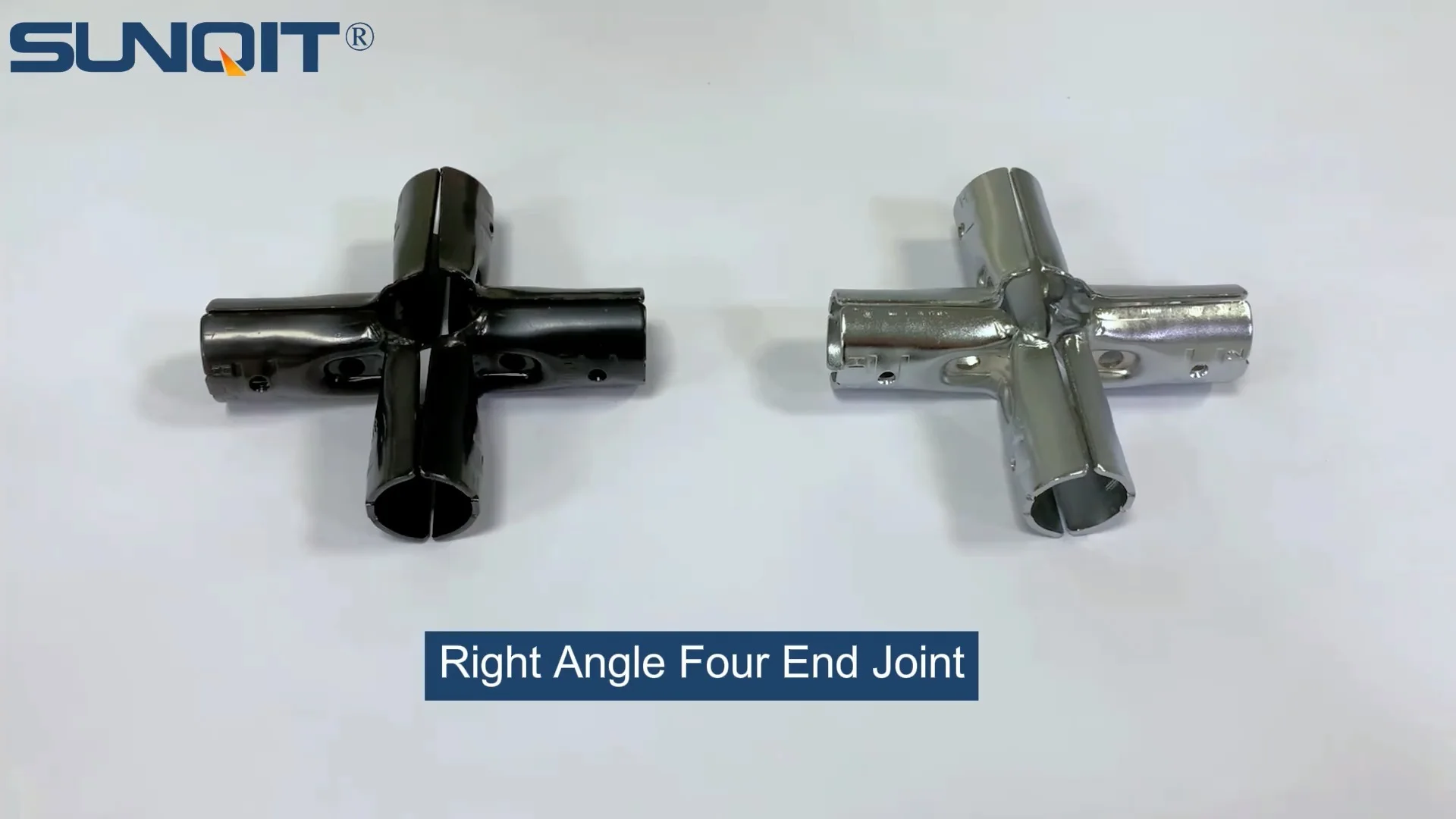
Walk into any busy manufacturing facility, and you'll likely hear the same frustrations: "This workstation is too rigid." "We need to rearrange the assembly line, but these fixed racks won't budge." "Why can't we just add a shelf here without rebuilding the whole thing?" For decades, production floors have been stuck with one-size-fits-all setups—until modular lean systems changed the game. At the heart of this revolution lies a small but mighty component: the five way straight lean pipe joint chrome. This unassuming connector isn't just a piece of hardware; it's the key to building flexible, adaptable workspaces that grow with your needs. Let's dive into what makes this joint a game-changer, from its intricate structure to its real-world impact on factory floors.
The Problem with Rigid Systems: Why Flexibility Matters
Before we explore the five way joint itself, let's talk about the problem it solves. Traditional manufacturing setups rely on welded metal frames or bolted wooden structures. They're sturdy, sure—but once built, they're stuck. If your team needs a taller workbench, a wider material rack, or a curved roller track to guide parts to the next station, you're looking at hours (or days) of dismantling, modifying, and rebuilding. This rigidity slows down production, increases downtime, and stifles innovation.
Enter lean manufacturing principles: the idea that efficiency comes from eliminating waste—including the waste of "inflexible space." Lean systems thrive on modularity, using components like lean pipes, joints, and accessories to create workspaces that can be reconfigured in minutes, not days. And among all these components, the five way straight lean pipe joint chrome stands out for its ability to connect multiple pipes in different directions, opening up endless design possibilities.
Structure: The Anatomy of a Five Way Straight Lean Pipe Joint Chrome
At first glance, the five way joint might look simple—a small, chrome-plated cube with holes in different directions. But its structure is carefully engineered to balance strength, flexibility, and ease of use. Let's break down its key components:
Core Materials: Strength Meets Durability
The joint starts with a high-quality steel core. Steel is chosen for its tensile strength—this joint needs to support heavy loads, whether it's holding up a workbench loaded with tools or a roller track carrying boxes of components. But steel alone is prone to rust, especially in factories where oil, moisture, or chemicals are present. That's where the chrome plating comes in. Chrome isn't just for shine; it's a protective layer that resists corrosion, scratches, and wear. Run your finger over a chrome-plated joint, and you'll feel its smooth, hard surface—this isn't just aesthetics; it ensures the joint won't degrade even after years of use in tough environments.
Design Geometry: Five Directions, Endless Configurations
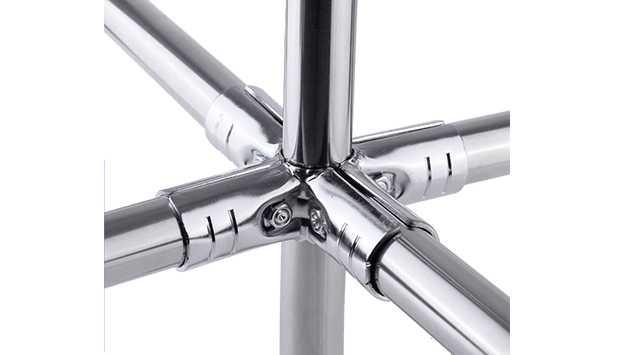
The "five way" in the name refers to the number of connection points. Picture a cube: most lean pipe joints have two or three ports (for straight or T-shaped connections), but this one adds two more, allowing pipes to extend in five directions—typically four along the horizontal plane (front, back, left, right) and one vertical (up or down). This geometry is what makes the joint so versatile. Need to build a workbench with a shelf above and a side rack for tools? The five way joint connects the vertical legs, the horizontal supports, and the side rails—all in one compact component.
Internal Mechanism: Grip Without Slippage
Inside the joint, you'll find a spring-loaded clamping mechanism (or in some models, a set screw). When you insert a lean pipe into one of the ports, the mechanism tightens around it, creating a secure hold. What's clever here is the balance between grip and adjustability: the joint holds the pipe firmly enough to support heavy weights (we're talking up to 150 kg per connection, depending on the model), but loosen the screw, and you can rotate the pipe or reposition it in seconds. This is crucial for lean systems—no more wrestling with bolts or welding torches when you need to tweak a design.
Fun Fact: The chrome plating process involves electroplating a thin layer of chromium onto the steel core. This layer is just 0.0005 to 0.002 inches thick, but it increases the joint's lifespan by up to 300% compared to unplated steel. That's why many lean system suppliers prioritize chrome-plated joints for high-traffic areas.
Design: Built for Humans, Not Just Machines
Great engineering isn't just about function—it's about usability. The five way straight lean pipe joint chrome is designed with the people who use it every day in mind. Let's explore its user-centric features:
Ergonomic Size: Easy to Handle, Even with Gloves
Factory workers often wear gloves to protect their hands, so the joint's size matters. Most five way joints are around 60mm in length (about the size of a small box), with rounded edges to prevent snags. The adjustment screws are large enough to grip with gloved hands, and the ports are chamfered (slightly beveled) to guide pipes into place—no fumbling with misaligned connections.
Compatibility: Works with Standard Lean Pipe and Accessories
A joint is only as good as its ability to play well with others. The five way joint is designed to fit standard lean pipes (typically 28mm in diameter, though some models work with 30mm or aluminum pipes). This means it's compatible with the entire ecosystem of lean pipe and accessories—from caster wheels for mobile workbenches to roller track for material flow. No need to buy proprietary parts; mix and match with what you already have.
Aesthetic Considerations: Clean Lines for Organized Spaces
Let's not overlook the visual appeal. Chrome plating gives the joint a sleek, professional look that fits into modern factory environments. Unlike rusted steel or mismatched plastic joints, chrome-plated components create a cohesive, organized appearance—important for maintaining a clean, efficient workspace (and let's be honest, it looks better in client tours too).

Working Principle: How It All Comes Together
So, how does this joint actually work in practice? Let's walk through a real-world example: building a modular workbench with a side roller track for parts delivery. Here's how the five way joint plays a role:
Step 1: Building the Workbench Frame
Start with four vertical lean pipes for the legs. At the top of each leg, attach a five way joint: two horizontal ports for the front and back rails, one vertical port for the tabletop supports, and two side ports for the roller track. Slide the horizontal pipes into the front/back ports, tighten the screws, and suddenly you have a stable frame—no welding required.
Step 2: Adding the Roller Track
Now, for the roller track: insert short pipes into the side ports of the five way joints, then attach roller track brackets to those pipes. The track itself (usually a series of small wheels mounted on a rail) sits on these brackets, creating a smooth path for parts to slide from the storage area to the workbench. If you need the track to angle downward slightly for gravity flow? Loosen the joint's screws, tilt the pipe, and retighten—done.
Step 3: Adjusting for Ergonomics
A week later, your tallest worker complains the workbench is too low. No problem: loosen the vertical ports on the five way joints, raise the tabletop supports by 10cm, retighten, and the bench is now ergonomic for everyone. The roller track? It moves up with the bench, since it's connected to the same joints. No disassembly, no new parts—just a few minutes of adjustment.
The key here is the joint's ability to distribute weight evenly across all connected pipes. Each port is reinforced to handle both vertical and horizontal loads, so even with the workbench loaded with tools and the roller track carrying boxes, the structure remains stable. It's like a spider's web—each connection reinforces the others, creating strength through flexibility.
Applications: Where the Five Way Joint Shines
The five way straight lean pipe joint chrome isn't a one-trick pony. Its versatility makes it indispensable in a variety of settings. Here are just a few places you'll find it hard at work:
Workbenches: Customizable for Every Task
From electronics assembly to heavy machinery repair, workbenches need to adapt. A five way joint lets you add shelves, tool holders, or even overhead lighting mounts—all on the same frame. Need a bench with a built-in drawer unit on one side and a parts bin on the other? The joint connects the main frame to both accessories without compromising stability.
Roller Tracks: Guiding Materials with Precision
Roller tracks are the backbone of material flow in lean systems, moving parts from storage to assembly lines. The five way joint is perfect for building multi-directional tracks—think of a "T-junction" where parts split to two different workstations. By connecting three roller tracks at once, the joint eliminates the need for complicated custom brackets.
Material Racks: Maximizing Vertical Space
Warehouses and factories are always short on space. Five way joints let you build tall, multi-tiered material racks: vertical pipes for height, horizontal pipes for shelves, and diagonal pipes for bracing (using the joint's angled ports). This way, you're using airspace instead of floor space—all without permanent structures.
| Application | How Five Way Joint Adds Value | Example Load Capacity |
|---|---|---|
| Workbench Frames | Connects legs, tabletop, and side accessories (e.g., tool racks) | Up to 200 kg per joint |
| Roller Tracks | Creates multi-directional paths for material flow | Up to 100 kg per linear meter of track |
| Material Racks | Builds vertical, horizontal, and diagonal supports | Up to 150 kg per shelf |
| Mobile Trolleys | Connects frame to caster wheels and handle | Up to 180 kg total trolley weight |
Why Chrome? The Benefits of Chrome-Plated Lean Pipe Joints
You might be wondering: "Why chrome? Can't I use a plastic or unplated steel joint?" While plastic joints are cheaper and unplated steel is strong, chrome-plated joints offer unique advantages that make them worth the investment:
- Corrosion Resistance: Factories are messy places—oils, coolants, and humidity can eat away at unprotected steel. Chrome plating acts as a barrier, preventing rust and extending the joint's life.
- Easy to Clean: Chrome's smooth surface doesn't trap dirt or grime. A quick wipe with a damp cloth is all it takes to keep joints looking (and working) like new—important for maintaining a hygienic workspace, especially in industries like food processing or pharmaceuticals.
- Reduced Friction: When adjusting pipes, the chrome surface allows for smoother rotation than rough steel. This makes reconfiguring workspaces faster and easier on your team.
- Professional Appearance: Let's face it—first impressions matter. Chrome-plated joints give your lean system a polished, industrial look that reflects well on your operation, whether you're hosting clients or trying to boost team morale.
Choosing a Lean System Supplier: What to Look For
Not all five way straight lean pipe joints are created equal. To get the most out of your investment, you need a reliable lean system supplier—one that prioritizes quality, compatibility, and customer support. Here's what to ask when evaluating suppliers:
1. Material Quality
Ask about the steel grade (look for Q235 or higher for strength) and chrome plating thickness. A reputable supplier will provide specs—if they can't, that's a red flag.
2. Compatibility with Your Existing System
If you already have lean pipes and accessories, make sure the supplier's joints fit your pipe diameter (most are 28mm, but double-check). Some suppliers offer adapters for mixed systems, which can save you from replacing everything at once.
3. Load Capacity Testing
A good supplier will have tested their joints under various loads and can provide data (e.g., "This joint supports 150 kg per port"). Avoid suppliers who make vague claims like "strong enough for most applications."
4. Lead Times and Inventory
When you need to reconfigure a workstation ASAP, you don't want to wait weeks for joints to arrive. Look for suppliers with local warehouses or short lead times (ideally 3–5 business days).
Installation & Maintenance: Keeping Your Joints in Top Shape
Even the best lean pipe joint won't perform well if installed or maintained poorly. Here are some tips to ensure longevity:
Installation Tips
- Don't Over-Tighten: The clamping mechanism needs to grip the pipe, but cranking the screw too hard can strip the threads or damage the pipe. Tighten until the pipe doesn't rotate—then stop.
- Align Pipes First: Before tightening, make sure all pipes are straight and at the right angle. Misalignment can put stress on the joint, leading to premature wear.
- Use Pipe End Caps: Sharp pipe ends can damage the joint's internal mechanism. Always cap the ends of lean pipes before inserting them into ports.
Maintenance Habits
- Clean Regularly: Wipe joints with a dry cloth weekly to remove dust and debris. For oil or grease buildup, use a mild detergent (avoid harsh chemicals that can damage chrome).
- Check Tightness Monthly: Vibrations from machinery can loosen screws over time. A quick once-over with a wrench ensures joints stay secure.
- replace Worn Parts: If a joint's clamping mechanism starts to slip, or the chrome plating chips off, replace it. A single faulty joint can compromise the entire structure.
The Future of Lean Manufacturing: Where Five Way Joints Fit In
As manufacturing continues to evolve—with trends like small-batch production, customization, and rapid prototyping—flexibility will only become more critical. The five way straight lean pipe joint chrome isn't just a tool for today; it's a foundation for tomorrow's factories. Imagine a facility where workstations reconfigure overnight for a new product launch, where material flows adapt to shifting demand, and where workers feel empowered to adjust their spaces to fit their needs. That's the future lean systems are building—and it all starts with components like this unassuming joint.
So, the next time you walk through a factory and see a seamless, adaptable workspace, take a closer look. Chances are, there's a five way joint holding it all together—quietly revolutionizing how we build, work, and innovate.
Final Thoughts: More Than a Joint—A Catalyst for Change
The five way straight lean pipe joint chrome is easy to overlook. It's small, it's simple, and it doesn't make noise or flash lights. But in the world of lean manufacturing, it's a hero. It turns rigid spaces into flexible ecosystems, reduces downtime, and puts the power of design back into the hands of the people who use the space every day. Whether you're building a workbench, a roller track, or a multi-tiered material rack, this joint is the connective tissue that makes it all possible.
So, if you're still stuck with rigid, unchanging workspaces, ask yourself: What could my team accomplish with a little more flexibility? With the right lean pipe and accessories—and a few five way joints—you might be surprised at how quickly "impossible" becomes "let's try it."