- Company Articles
- Products and Technology
- Product knowledge
- Five Way Straight Lean Pipe Joint Chrome vs. Stainless Steel: Which Is Better?

Five Way Straight Lean Pipe Joint Chrome vs. Stainless Steel: Which Is Better?
Related Product
Five Way Straight Lean Pipe Joint Chrome
Five way straight lean pipe joint, for 5 pcs 28mm lean pipe connect in straight angle,which used widely in workbench, flow rack, hand trolley frame connection.
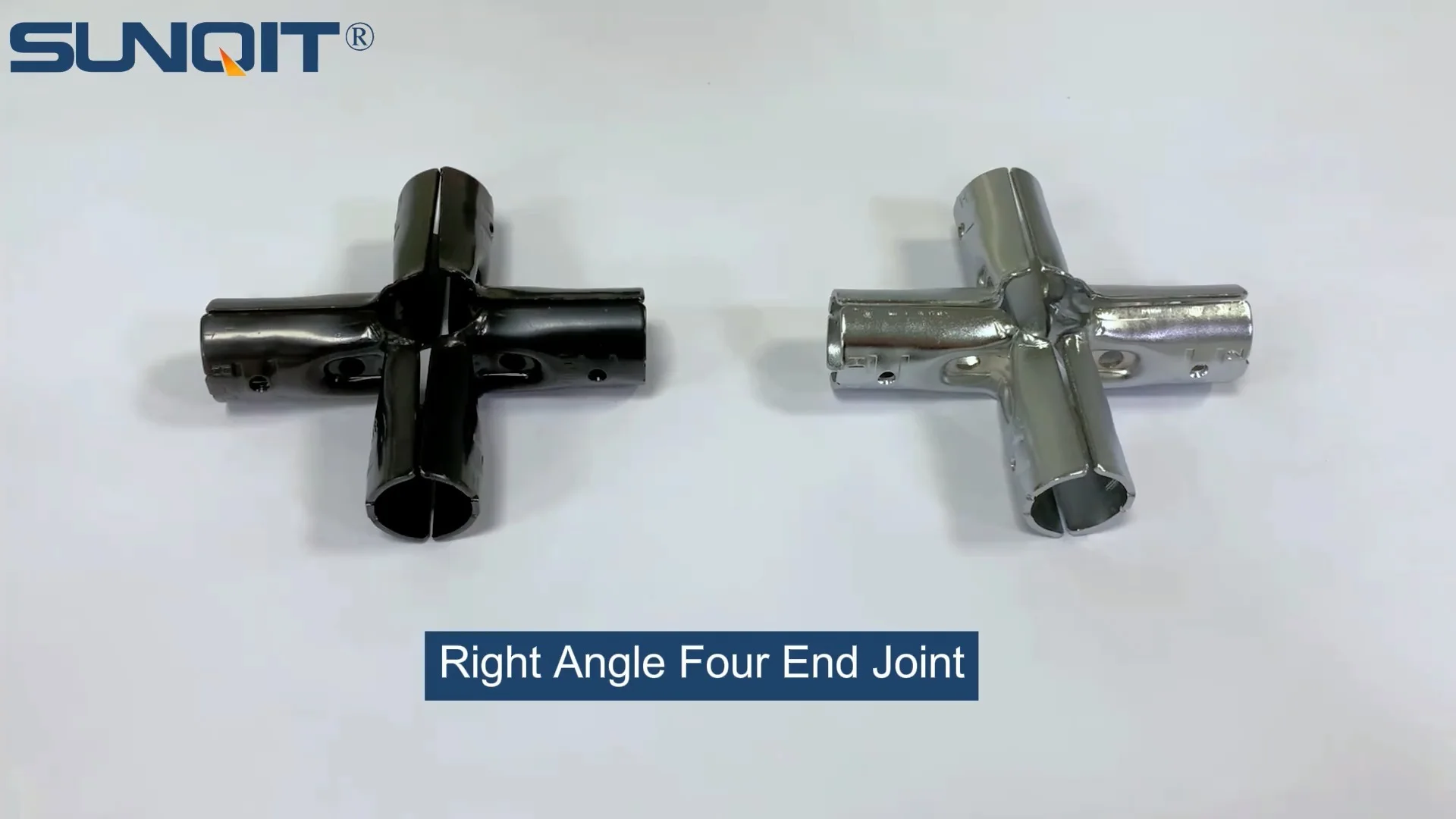
In the world of lean manufacturing, every component matters. From the largest workbench to the smallest joint, the choices we make shape efficiency, durability, and ultimately, the success of production lines. Lean systems are built on the idea that waste—whether time, materials, or effort—has no place in a well-optimized workflow. And at the heart of these systems, holding everything together, are the unsung heroes: lean pipe joints. Today, we're zooming in on a critical player in this ecosystem: the five-way straight lean pipe joint. But not just any joint—we're pitting two heavyweights against each other: chrome-plated and stainless steel. Which one deserves a spot in your next lean project? Let's dive in.
The Backbone of Lean Systems: Why Lean Pipe Joints Matter
Before we get into the nitty-gritty of chrome vs. stainless steel, let's take a step back. Lean systems—whether they're powering assembly lines, material racks, or turnover trolleys—rely on modularity. The ability to build, adapt, and reconfigure structures quickly is what makes lean manufacturing so powerful. And that modularity hinges on one thing: lean pipe joints. These small but mighty connectors are the "glue" that turns simple aluminum lean pipes, stainless steel tubes, or plastic-coated pipes into functional workbenches, flow racks, and material transport systems.
Among the many types of lean pipe joints, the five-way straight joint stands out for its versatility. As the name suggests, it connects up to five pipes in straight or perpendicular directions, making it ideal for building complex structures like multi-tiered material racks or branching assembly line workstations. Think of it as the Swiss Army knife of lean components—one joint that can replace multiple simpler connectors, reducing both cost and assembly time.
Consider this: A small electronics manufacturer needs a material rack to hold components for their production line. They opt for a five-way straight joint to connect vertical supports, horizontal shelves, and side rails—all in one go. Without this joint, they'd need a maze of T-joints, L-joints, and cross-joints, increasing both the number of parts and the risk of instability. The five-way joint simplifies the build, cuts down on assembly hours, and ensures the rack can be reconfigured later if their needs change. That's the power of a well-chosen lean pipe joint.
What Exactly Is a Five-Way Straight Lean Pipe Joint?
Let's get technical—just enough to understand why this joint is so valuable. A five-way straight lean pipe joint is a metal connector designed with five ports (or "arms") that allow pipes to be inserted and secured. Most are cylindrical or hexagonal in shape, with threaded holes or clamping mechanisms to lock pipes in place. The "straight" in the name refers to the alignment of some ports—typically, three ports in a straight line (left, right, center) and two perpendicular (top and bottom), though designs can vary by manufacturer.
These joints are the building blocks of modularity. Unlike welded or fixed connections, they let you disassemble and rebuild structures without cutting or welding, which is a game-changer for lean environments where flexibility is key. Whether you're constructing a workbench E (single deck, without casters) for manual assembly or a material rack B (3 rows, 3 floors) for storing heavy components, the five-way joint ensures your structure is both sturdy and adaptable.
But here's the catch: not all five-way joints are created equal. The material they're made from—chrome-plated steel vs. stainless steel—can drastically affect their performance, lifespan, and suitability for your workspace. Let's break down each option.
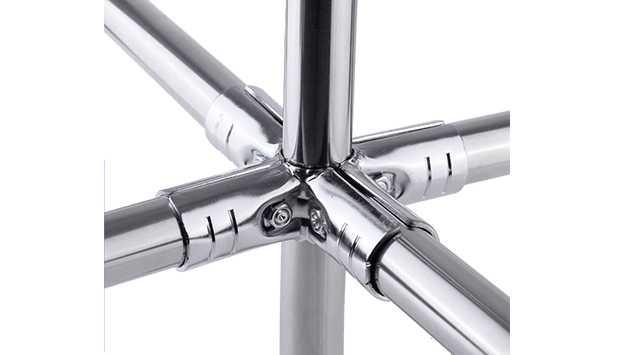
Chrome-Plated Five-Way Lean Pipe Joints: Shine and Affordability
Chrome-plated lean pipe joints are a common sight in many workshops—and for good reason. They start with a base of mild steel (or sometimes low-carbon steel), which is then coated with a thin layer of chromium via electroplating. The result? A shiny, silver finish that adds a professional look to any lean structure. But there's more to chrome plating than aesthetics.
How Chrome Plating Works
Electroplating is a process where a metal (in this case, chromium) is deposited onto a base metal (steel) using an electric current. The steel joint is submerged in a solution containing chromium ions, and when electricity is applied, the ions bond to the steel surface, forming a thin, protective layer. This layer is what gives chrome joints their signature shine and some level of corrosion resistance.
The Pros of Chrome-Plated Joints
Cost-Effective: Steel is cheaper than stainless steel, and chrome plating adds minimal cost compared to the price of stainless steel itself. For small businesses or workshops on a tight budget, chrome joints offer a reliable solution without breaking the bank.
Aesthetic Appeal: That mirror-like shine isn't just for show. In customer-facing areas or clean, organized workshops, chrome joints can make a structure look more polished and professional. They're a popular choice for workbenches in retail settings or trade show displays where appearance matters.
Decent Wear Resistance: Chrome plating is harder than bare steel, so it holds up well to regular use—think sliding pipes into place during assembly or light impacts from tools. In dry, indoor environments (like a furniture assembly line or a warehouse with controlled humidity), chrome joints can last for years with minimal wear.
The Cons of Chrome-Plated Joints
Limited Corrosion Resistance: Here's the catch: chrome plating is just a thin layer. If it chips, scratches, or wears off (which can happen over time with heavy use), the underlying steel is exposed. Steel is prone to rust when it comes into contact with moisture, so even a small scratch in a humid workshop can lead to unsightly rust spots—and eventually, weakened joints.
Not Ideal for Harsh Environments: If your workshop deals with liquids (like a car wash or a food processing plant), or if you're using the joint outdoors, chrome plating won't cut it. The moisture will seep through any cracks in the plating, causing the steel to corrode from the inside out.
Maintenance Needs: To keep chrome joints looking good and functioning well, you'll need to clean them regularly. Fingerprints, oil, and dust can dull the finish, and any signs of chipping or rust require immediate attention (like touch-up paint or sealant) to prevent further damage.

Stainless Steel Five-Way Joints: Durability Meets Longevity
Now, let's turn to stainless steel. Unlike chrome-plated joints, stainless steel five-way joints are made from an alloy of steel, chromium, and often nickel or molybdenum. This alloy is what gives stainless steel its legendary corrosion resistance and strength. There's no plating to chip or wear off—its protective properties are built right into the material.
What Makes Stainless Steel "Stainless"?
The magic ingredient is chromium. When stainless steel is exposed to oxygen, the chromium forms a thin, invisible layer of chromium oxide on the surface. This layer is self-healing: if it's scratched, more chromium reacts with oxygen to repair the barrier, preventing rust and corrosion. Add nickel (as in 304 stainless steel) or molybdenum (as in 316 stainless steel), and you get even better resistance to acids, saltwater, and harsh chemicals.
The Pros of Stainless Steel Joints
Superior Corrosion Resistance: This is where stainless steel truly shines. Whether you're working in a damp warehouse, a pharmaceutical cleanroom, or a food processing plant, stainless steel joints won't rust or corrode—even with daily exposure to water, cleaning chemicals, or salt air. For businesses that need to meet strict hygiene standards (like FDA regulations), stainless steel is often the only choice.
Long-Term Durability: Stainless steel is stronger and more scratch-resistant than chrome-plated steel. It can withstand heavy impacts, frequent assembly/disassembly, and rough handling without losing structural integrity. In fact, many stainless steel joints outlast the structures they're part of, making them a smart investment for long-term use.
Low Maintenance: Unlike chrome, stainless steel requires minimal upkeep. A quick wipe with a damp cloth is usually enough to keep it clean, and there's no need for touch-up paint or sealant if it gets scratched. This saves time and money on maintenance, especially in busy industrial settings.
Versatility: Stainless steel works in almost any environment—indoor, outdoor, wet, dry, clean, or gritty. It's equally at home in a automotive factory's oily assembly line as it is in a hospital's sterile equipment storage room.
The Cons of Stainless Steel Joints
Higher Upfront Cost: There's no getting around it: stainless steel is more expensive than chrome-plated steel. The alloy itself costs more, and manufacturing stainless steel joints requires specialized tools (since it's harder to machine than regular steel). For small businesses or one-off projects with tight budgets, this can be a dealbreaker.
Heavier Weight: Stainless steel is denser than regular steel, so stainless steel joints are slightly heavier. This might not matter for large, stationary structures, but for portable turnover trolleys or lightweight workbenches, the extra weight could add up over time.
Less Shiny Finish: While stainless steel has a clean, modern look, it doesn't have the mirror-like shine of chrome. For some businesses, this is a minor issue—but if aesthetics are a top priority (like in a showroom), chrome might still be preferred.
Chrome vs. Stainless Steel: A Side-by-Side Comparison
To help you decide which joint is right for your project, let's put chrome-plated and stainless steel five-way straight lean pipe joints head-to-head. The table below breaks down their key features, so you can weigh the pros and cons based on your specific needs.
| Feature | Chrome-Plated Five-Way Joint | Stainless Steel Five-Way Joint |
|---|---|---|
| Material Base | Mild steel with electroplated chromium layer (0.0005–0.002 inches thick) | Alloy steel with 10–30% chromium, plus nickel/molybdenum (e.g., 304 or 316 stainless) |
| Corrosion Resistance | Low to moderate (only if plating is intact; vulnerable to moisture if scratched) | High to excellent (self-healing chromium oxide layer; resistant to water, chemicals, salt) |
| Durability | Moderate (plating can chip; steel prone to bending under heavy loads) | High (strong, scratch-resistant; withstands heavy impacts and frequent use) |
| Cost | Budget-friendly (30–50% cheaper than stainless steel) | Premium (higher upfront cost, but lower long-term maintenance) |
| Best For | Dry indoor environments (e.g., assembly lines, offices, retail displays) | Wet/humid environments, cleanrooms, food/pharmaceutical settings, outdoor use |
| Maintenance Needs | High (regular cleaning, touch-ups for chipping/rust) | Low (occasional wiping; no plating to maintain) |
| Aesthetic Appeal | Shiny, reflective finish (good for visible structures) | Matte or satin finish (clean, modern look; less reflective) |
Real-World Applications: When to Choose Chrome vs. Stainless Steel
The best way to understand the difference is to look at real-world scenarios. Let's explore two businesses and see which joint would serve them better.
Scenario 1: A Small Furniture Assembly Workshop
A family-owned furniture company has a dry, climate-controlled workshop. They build custom tables and chairs, using lean pipe workbenches and material racks to organize tools and components. Their budget is tight, and they rarely need to reconfigure their setup. For them, chrome-plated five-way joints make sense. They're affordable, look nice in the workshop, and with proper care (regular cleaning, avoiding heavy impacts), they'll last for years. The dry environment means corrosion isn't a big risk, and the lower cost frees up money for other tools or materials.
Scenario 2: A Large Food Processing Plant
A commercial bakery produces bread and pastries for grocery stores. Their production line includes material racks for flour and sugar, conveyor systems for dough, and workbenches for packaging. The environment is humid (from dough preparation), and surfaces are cleaned daily with water and sanitizing chemicals. For this plant, stainless steel five-way joints are non-negotiable. Chrome-plated joints would rust within months of exposure to moisture and cleaning agents, leading to unstable racks and potential contamination risks. Stainless steel's corrosion resistance ensures the structures stay safe and compliant with food safety regulations—even with daily exposure to water and chemicals.
The Verdict: Which Joint Is Right for You?
At the end of the day, the choice between chrome-plated and stainless steel five-way straight lean pipe joints comes down to three factors: environment, budget, and longevity.
Choose chrome-plated if: You work in a dry, indoor environment, have a tight budget, and don't need the joint to last more than 5–7 years. It's a great option for small businesses, temporary setups, or projects where aesthetics matter more than long-term durability.
Choose stainless steel if: You work in a wet, humid, or harsh environment (like a food plant or cleanroom), need the joint to last 10+ years, or can't afford frequent replacements. Yes, it costs more upfront, but the lower maintenance and longer lifespan make it a smarter investment in the long run.
And remember: whichever you choose, always source your lean pipe joints from a reputable lean pipe supplier. Cheap, low-quality joints (whether chrome or stainless steel) can compromise the safety and efficiency of your entire lean system. Look for suppliers who offer warranties, material certifications, and clear specifications—your team's productivity (and peace of mind) depends on it.
Final Thoughts: Beyond the Joint—Building a Lean System That Lasts
The five-way straight lean pipe joint might seem like a small part of your overall lean system, but as we've seen, it plays a big role in determining your setup's success. Whether you opt for the affordability of chrome or the durability of stainless steel, the key is to align your choice with your workshop's unique needs. After all, lean manufacturing is about more than just cutting waste—it's about building systems that work for your team, not against them.
So, take the time to assess your environment, budget, and long-term goals. Talk to your team—ask them what challenges they face with current structures (wobbly racks? rusted joints?). And when in doubt, reach out to a lean pipe supplier for guidance. They can help you test different joints, compare samples, and find the perfect fit for your workspace.
At the end of the day, the best joint is the one that lets your team work smarter, safer, and more efficiently. And isn't that what lean manufacturing is all about?