- Company Articles
- Products and Technology
- Product knowledge
- Five Way Straight Lean Pipe Joint Compatibility with Standard Lean Pipes

Five Way Straight Lean Pipe Joint Compatibility with Standard Lean Pipes
Related Product
Five Way Straight Lean Pipe Joint
Five way straight lean pipe joint, for 5 pcs 28mm lean pipe connect in straight angle,which used widely in workbench, flow rack, hand trolley frame connection.
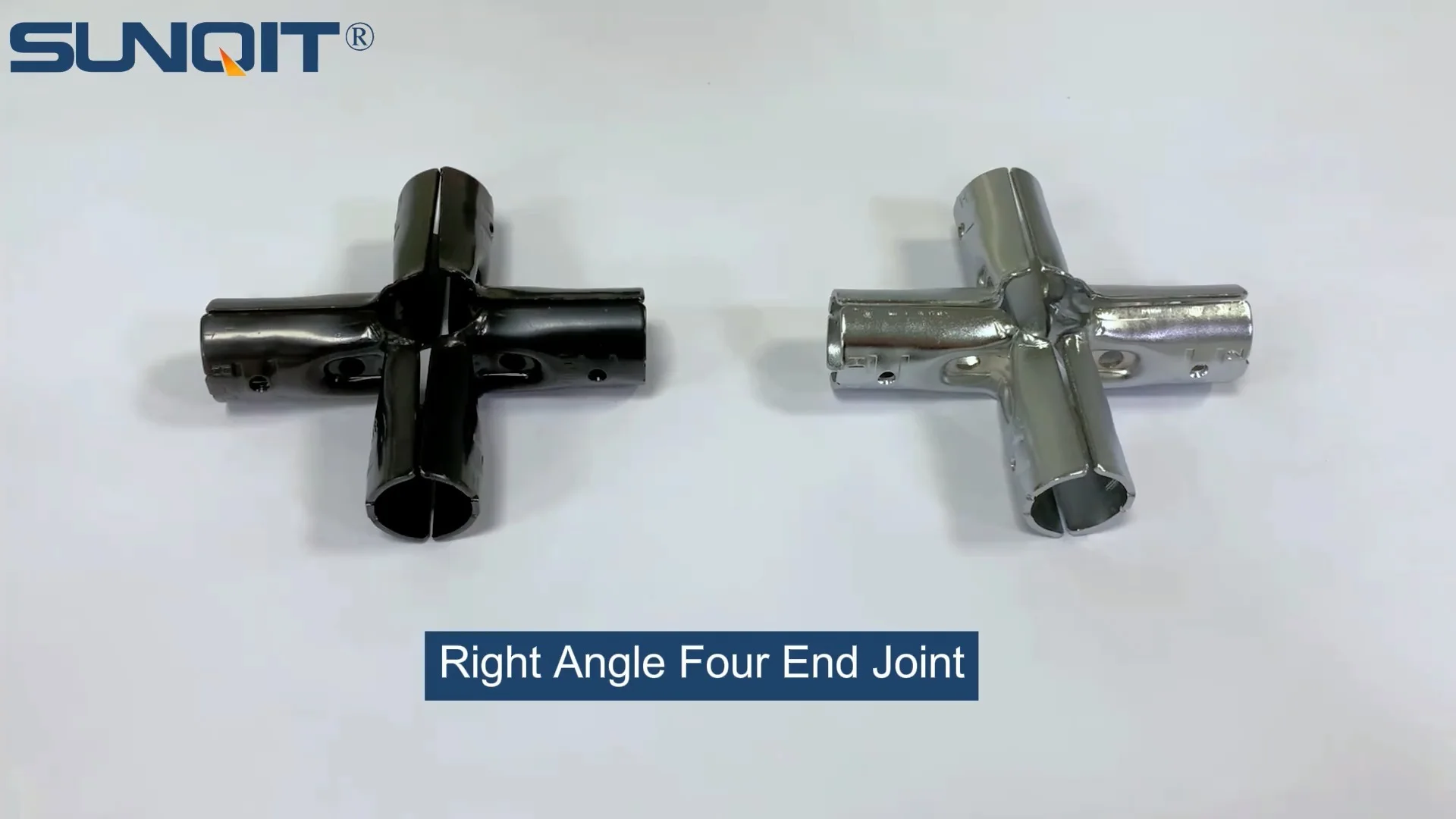
Exploring the unsung hero of flexible, efficient manufacturing setups
The Backbone of Lean Systems: Why Joints Matter More Than You Think
Walk into any modern manufacturing facility, and you'll notice a quiet rhythm—a symphony of moving parts, workers collaborating seamlessly, and materials flowing from one station to the next without bottlenecks. This isn't just luck; it's the result of a well-orchestrated lean system —a philosophy turned practice that prioritizes efficiency, waste reduction, and adaptability. At the heart of these systems lie structures like workbenches, flow racks, and turnover trolleys, all built to keep operations lean and responsive. But what holds these structures together? What makes them sturdy yet flexible enough to evolve with changing production needs? The answer often comes down to a small but mighty component: the lean pipe joint .
Lean pipes—those unassuming tubes made of steel, aluminum, or stainless steel—are the building blocks of these systems. They're lightweight, durable, and easy to cut or extend, making them ideal for custom setups. But without the right joints, even the best lean pipes are just pieces of metal. Joints are the connectors that transform individual pipes into functional structures, whether it's a height-adjustable workbench for assembly line workers or a gravity-fed flow rack for material storage. Among the many types of joints available, one stands out for its versatility: the five way straight lean pipe joint. As the name suggests, this joint allows for connections in five directions, opening up a world of design possibilities. But here's the question that keeps plant managers and facility engineers up at night: Does this joint play well with standard lean pipes? After all, compatibility isn't just about fitting together—it's about ensuring safety, durability, and long-term performance.
In this article, we'll dive deep into the five way straight lean pipe joint, exploring how it interacts with different types of standard lean pipes, why that compatibility matters for your operations, and how to make the most of this component in your lean system. Whether you're setting up a new production line or upgrading an existing one, understanding this connection could be the key to unlocking smoother workflows, lower costs, and a more agile manufacturing process.
Anatomy of a Workhorse: What is a Five Way Straight Lean Pipe Joint?
Before we talk compatibility, let's get to know the star of the show: the five way straight lean pipe joint. At first glance, it might look like any other metal connector, but a closer inspection reveals its clever design. Picture a central hub with five threaded holes—four aligned in a straight line (two on each end) and one perpendicular to that line, pointing either up or down. This configuration lets you connect up to five lean pipes at once: two along the horizontal axis, two more extending from the same axis (for longer spans), and one vertical pipe for adding height, shelves, or additional support.
Most five way straight joints are made of die-cast aluminum or zinc alloy, coated with a layer of chrome or nickel to resist corrosion. This material choice strikes a balance between strength and weight—strong enough to hold heavy loads (think stacks of raw materials or fully loaded workbenches) but light enough to keep structures easy to reconfigure. The threads inside the joint are precision-cut to grip pipe ends securely, and many models come with a setscrew or Allen key slot to tighten the connection further, preventing slippage even under constant use.
What sets this joint apart from simpler two-way or three-way connectors is its flexibility. Imagine needing a flow rack that not only has horizontal shelves but also vertical dividers to separate different part sizes, plus a side arm for tools. A five way joint makes that possible without requiring multiple connectors or complicated adapters. It's like a Swiss Army knife for lean system builders—one tool that solves multiple design challenges.
But here's the catch: For all its versatility, the five way joint is only as good as its connection to the lean pipes. If the fit is loose, the structure wobbles. If the materials clash (e.g., a joint that corrodes when paired with a certain pipe type), the system fails prematurely. That's why compatibility isn't just a technical detail—it's the foundation of a reliable lean setup.

Compatibility 101: Matching the Five Way Joint with Standard Lean Pipes
Standard lean pipes come in a variety of materials, thicknesses, and coatings, each designed for specific environments. Let's break down the most common types and how they pair with the five way straight lean pipe joint.
1. PE Coated Lean Pipes: The Industry Standard
PE coated lean pipes are the workhorses of most manufacturing facilities. Made of cold-rolled steel with a polyethylene (PE) coating, they're affordable, corrosion-resistant, and easy to handle. They come in thicknesses ranging from 0.8mm to 2.0mm, with 1.5mm being the most popular for general use. The PE coating—usually white, black, or yellow—adds a layer of protection against scratches and minor impacts, making these pipes ideal for workbenches, assembly lines, and light-duty material racks.
When it comes to compatibility with five way joints, PE coated pipes are a match made in heaven. The steel core provides a rigid surface for the joint's threads to grip, while the thin PE layer (typically 0.3mm thick) doesn't interfere with the connection. Most five way joints are designed to fit standard 28mm diameter pipes, which is the size of most PE coated lean pipes. To ensure a tight fit, simply insert the pipe end into the joint, align it with the threads, and tighten the setscrew. The result? A connection that can support up to 50kg per joint (depending on pipe thickness) without slipping or bending.
2. Stainless Steel Pipes: For Harsh Environments
In settings where hygiene or corrosion resistance is critical—think food processing plants, pharmaceutical labs, or outdoor warehouses—stainless steel lean pipes take center stage. These pipes are made of 304 or 316 stainless steel, which resists rust, chemicals, and high temperatures. They're slightly heavier than PE coated pipes but offer unmatched durability in tough conditions.
Stainless steel pipes typically have the same 28mm diameter as standard PE coated pipes, so they fit into five way joints without issues. However, there's a caveat: stainless steel is harder than regular steel, so the joint's threads need to be sharp and well-made to bite into the pipe. Low-quality joints may strip or fail to grip stainless steel properly, leading to loose connections. That's why it's crucial to source both pipes and joints from a reputable lean pipe supplier —one that tests compatibility across materials.
3. Aluminum Lean Pipes: Lightweight and Modern
Aluminum lean pipes are gaining popularity in industries where weight matters, such as aerospace or electronics manufacturing. They're 30-40% lighter than steel pipes, making structures easier to move or reconfigure. Aluminum also has natural corrosion resistance, thanks to its oxide layer, and often comes in anodized finishes for a sleek, professional look.
Aluminum pipes can be trickier to pair with five way joints, but not impossible. The key is to check the pipe's wall thickness. Most aluminum lean pipes have a thinner wall (around 1.0-1.2mm) compared to steel, so the joint's setscrew needs to exert enough pressure without crushing the pipe. Some manufacturers offer specialized aluminum-compatible joints with softer setscrews or rubber gaskets to distribute pressure evenly. If you're using aluminum, look for joints labeled "aluminum-friendly" to avoid damaging the pipes.
| Lean Pipe Type | Material | Standard Diameter | Compatibility with Five Way Joint | Best For |
|---|---|---|---|---|
| PE Coated Lean Pipe | Steel core + PE coating | 28mm | Excellent – tight grip, no coating interference | General manufacturing, assembly lines, workbenches |
| Stainless Steel Pipe | 304/316 Stainless Steel | 28mm | Good – requires high-quality, sharp-threaded joints | Food processing, cleanrooms, outdoor use |
| Aluminum Lean Pipe | Aluminum alloy | 28mm (sometimes 30mm) | Fair – needs aluminum-specific joints to prevent crushing | Lightweight structures, electronics assembly |
4. A Note on Custom Pipes: When "Standard" Isn't Standard
While most lean pipes adhere to the 28mm diameter standard, some suppliers offer custom sizes (e.g., 30mm or 25mm) for specialized applications. If you're using non-standard pipes, always check the joint's specifications. A five way joint designed for 28mm pipes won't fit a 30mm pipe, and forcing it could damage both components. When in doubt, ask your supplier for a compatibility chart or sample test fit before placing a large order.

From Blueprint to Build: Real-World Applications of the Five Way Joint
Compatibility is more than just a technical checkbox—it directly impacts how useful the five way joint is in real manufacturing scenarios. Let's look at three common applications where this joint shines, thanks to its ability to work with standard lean pipes.
1. Multi-Tiered Flow Racks: Maximizing Vertical Space
Flow racks are the backbone of material handling in lean systems. They use gravity to move parts from the loading end to the picking end, reducing the need for manual transport. A basic flow rack might have two or three levels, but what if you need more storage without expanding horizontally? Enter the five way joint.
By connecting vertical lean pipe s to horizontal beams via five way joints, you can add extra shelves or dividers. For example, a three-level flow rack can become a five-level rack by adding vertical pipes at the corners, each anchored with a five way joint to the main horizontal supports. The joint's fifth connection point lets you attach side rails to prevent parts from falling off, creating a secure, organized storage solution. Since standard PE coated pipes are affordable, this upgrade costs a fraction of buying a new rack, and it can be done in hours, not days.
2. Ergonomic Workbenches: Customization for Every Worker
Assembly line workbenches need to be adjustable—after all, workers come in different heights, and tasks require varying setups (e.g., standing vs. sitting). A five way joint makes it easy to add accessories like tool holders, monitor mounts, or parts bins to a basic workbench frame.
Imagine a workbench built with PE coated pipes. Using five way joints, you can attach a vertical pipe on either side of the bench, then add horizontal pipes at 45cm, 60cm, and 75cm heights to hold tools, bins, or a laptop shelf. The fifth connection point on each joint can support a small shelf for manuals or personal items. Since the joint works with standard pipes, you can adjust these heights later if a new worker takes over the station—no need to rebuild the entire bench.
3. Mobile Turnover Trolleys: Sturdy Yet Maneuverable
Turnover trolleys are essential for moving materials between departments, but they need to be both strong (to carry heavy loads) and light (to push around easily). Five way joints help here by reinforcing the trolley's frame without adding excess weight.
A typical trolley has a rectangular base with casters, vertical pipes at the corners, and horizontal rails for sides. By using five way joints at the corners, you can add diagonal braces (connecting the top of one vertical pipe to the bottom of the opposite pipe) for extra stability. The fifth joint connection can hold a crossbar to prevent materials from shifting during transport. Since the joints work with standard steel pipes, the trolley remains lightweight, but the reinforced frame can carry up to 200kg without bending—a critical feature for automotive or heavy machinery parts.
Pro Tip: Test Load Capacity Before Full Deployment
Even if your pipes and joints are compatible, always test the structure with a mock load before putting it into service. Stack boxes or weights equivalent to your typical materials and let the structure sit for 24 hours. Check for sagging pipes, loose joints, or misalignment—these are signs that the joint-pipe connection isn't handling the load as expected. Better to catch issues in testing than during a busy production shift!

Avoiding Headaches: Common Compatibility Mistakes and How to Fix Them
Even with compatible components, things can go wrong. Let's troubleshoot three common issues and how to resolve them.
Mistake #1: Over-Tightening the Joint
It's tempting to crank down on the setscrew to ensure a tight connection, but this can backfire. Over-tightening can strip the joint's threads, damage the pipe's coating (on PE pipes), or even crush aluminum pipes. The result? A loose connection that fails when you need it most.
Solution: Use a torque wrench set to 15-20 Nm (check your joint's specs—this varies by material). If you don't have a torque wrench, tighten the setscrew until it's snug, then give it a quarter-turn more. You should feel resistance, but the pipe shouldn't bend or deform.
Mistake #2: Mixing Pipe Materials Without Adjusting Joints
Using a steel pipe with a stainless steel pipe in the same structure is fine—both are strong and compatible with most joints. But using a steel joint with an aluminum pipe? That's a recipe for galvanic corrosion. When two dissimilar metals touch in the presence of moisture, they create a battery-like effect that eats away at the weaker metal (aluminum, in this case).
Solution: If mixing metals, use plastic or rubber washers between the joint and the aluminum pipe to insulate them. Alternatively, switch to aluminum joints when working with aluminum pipes—they're designed to prevent corrosion.
Mistake #3: Ignoring Environmental Factors
A joint that works in a dry warehouse might fail in a humid factory or a cold storage facility. Moisture can rust steel joints, while extreme cold can make plastic components brittle. Even dust and debris can get into threads, preventing a tight grip.
Solution: Choose joints with protective coatings (e.g., chrome for rust resistance) in humid environments. In cold storage, opt for zinc-plated joints, which are more temperature-stable than plastic-coated ones. Regularly clean threads with a wire brush to remove dust before assembly—this simple step can extend joint life by years.
The Supplier Difference: Why Quality Matters for Compatibility
You could have the best design in the world, but if your pipes and joints are low-quality, compatibility goes out the window. That's why choosing the right lean pipe supplier is just as important as understanding technical specs.
Reputable suppliers don't just sell parts—they test them. They'll have data on how their five way joints perform with different pipe materials, load capacities, and environmental conditions. They'll also offer samples, so you can test compatibility before committing to a large order. Avoid suppliers who can't provide specs or warranty information—these are red flags for poor quality.
Another benefit of working with a trusted supplier is access to complementary accessories. For example, if you're building a flow rack with five way joints, you'll also need roller tracks, end stops, and casters. A good supplier will ensure these accessories are compatible with both your pipes and joints, saving you the hassle of hunting down parts from multiple vendors.
Finally, look for suppliers who offer technical support. Even experienced engineers run into compatibility questions, and having an expert to call can save hours of trial and error. Whether you're unsure if a stainless steel joint will work with aluminum pipes or need help calculating load limits, a responsive support team can make all the difference.
The Bottom Line: Compatibility Drives Lean Success
The five way straight lean pipe joint might be small, but its impact on your lean system is huge. By working seamlessly with standard lean pipes—PE coated, stainless steel, or aluminum—it unlocks endless design possibilities, from custom flow racks to ergonomic workbenches. But compatibility isn't automatic; it requires attention to detail, quality components, and a willingness to test before deploying.
At the end of the day, a lean system is only as good as its weakest link. Invest in high-quality joints and pipes, source from a reliable supplier, and take the time to ensure every connection is tight, secure, and built to last. Your workers will thank you for the stable, efficient environment, and your bottom line will thank you for the reduced waste and increased productivity.
So the next time you walk through your facility, take a closer look at those unassuming joints. They're not just holding pipes together—they're holding your lean system together. And in the world of manufacturing, that's worth its weight in gold.