- Company Articles
- Products and Technology
- Product knowledge
- Five Way Straight Lean Pipe Joint Cost-Effectiveness in Lean Manufacturing

Five Way Straight Lean Pipe Joint Cost-Effectiveness in Lean Manufacturing
Related Product
Five Way Straight Lean Pipe Joint
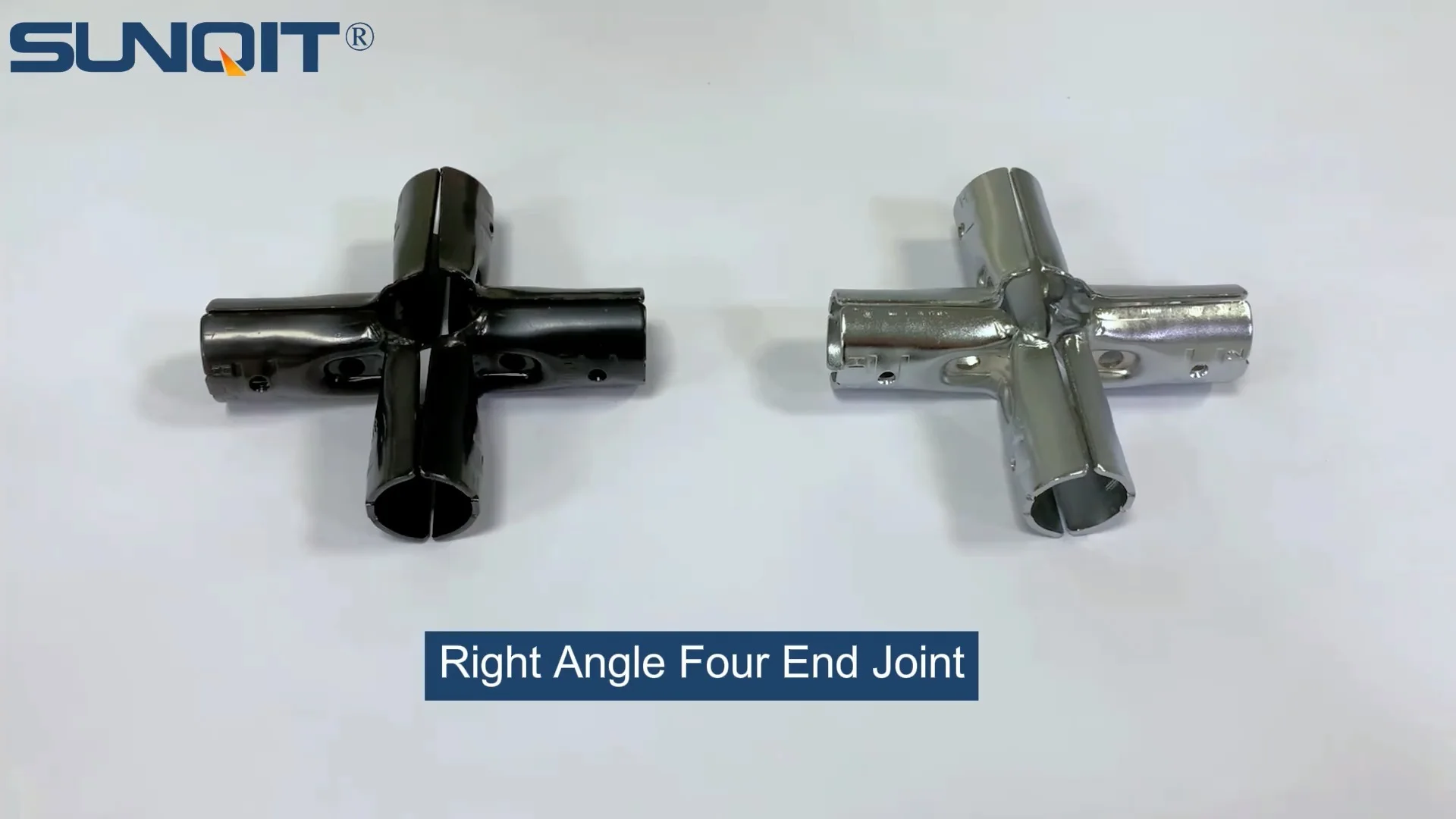
Five way straight lean pipe joint, for 5 pcs 28mm lean pipe connect in straight angle,which used widely in workbench, flow rack, hand trolley frame connection.
In the fast-paced world of manufacturing, where every second and every dollar counts, lean manufacturing isn't just a buzzword—it's a lifeline. At its core, lean is about stripping away waste, streamlining processes, and creating systems that adapt as quickly as market demands change. But here's the thing: lean principles don't just happen on paper. They're built into the very tools and structures that power your production floor. And if there's one component that quietly drives this efficiency, it's the humble yet mighty lean pipe joint . Specifically, the five way straight lean pipe joint—a small but transformative piece that turns ordinary lean pipe into a dynamic, cost-saving powerhouse.
Walk into any successful manufacturing facility today, and you'll see the evidence: workbenches that adjust in minutes, flow racks that adapt to new product lines overnight, and turnover trolleys that glide seamlessly through workflows. These aren't just random setups—they're carefully engineered lean systems built on modular components. And at the heart of these systems? Joints that connect pipes, support weight, and enable the flexibility that lean manufacturing demands. Among these, the five way straight lean pipe joint stands out as a champion of cost-effectiveness, proving that sometimes, the smallest parts make the biggest impact.
What Makes the Five Way Straight Lean Pipe Joint So Special?
Let's start with the basics. A five way straight lean pipe joint is exactly what it sounds like: a connector designed to join up to five lean pipes in a straight or multi-directional configuration. Unlike simpler two-way or three-way joints, this hardworking component allows for complex, multi-branched structures without the need for welding, drilling, or specialized tools. Imagine building a material rack with three rows and three floors (like Material Rack B, a common setup in warehouses) or a workbench with integrated tool holders and supply shelves—all with a single type of joint. That's the versatility we're talking about.
But what really sets it apart is its construction. Most five way joints are made from high-grade aluminum or steel, chosen for their strength-to-weight ratio. Aluminum variants, for example, are lightweight yet durable, resisting corrosion and standing up to the daily wear and tear of busy production floors. Steel joints, on the other hand, shine in heavy-duty applications, supporting heavier loads without bending or breaking. And when paired with aluminum profile pipes—another staple of modern lean systems—they create a setup that's both sturdy and surprisingly easy to reconfigure.
Think about it: traditional manufacturing setups often rely on fixed, welded structures. Need to adjust a workbench height? You'd need a welder. Want to add a shelf to a flow rack? That means cutting new metal and securing it with bolts. These processes take time, money, and skilled labor—all of which eat into your bottom line. The five way joint eliminates this hassle. With a simple twist or clamp, you can add a pipe, reposition a shelf, or even disassemble an entire structure to build something new. It's like building with industrial Legos, but for grown-ups who care about ROI.
Cost-Effectiveness: More Than Just a Low Price Tag
When we talk about cost-effectiveness in manufacturing, we're not just talking about upfront savings. It's about the total cost of ownership—the initial investment, maintenance, adaptability, and lifespan of a component. On all these fronts, the five way straight lean pipe joint delivers, often outperforming traditional fixed joints or custom-fabricated parts.
1. Lower Initial Costs (Yes, Really)
At first glance, you might think: "A five way joint must cost more than a basic two-way joint." And you'd be right— initially . But here's the kicker: one five way joint can replace multiple simpler joints. For example, building a workbench with integrated tool hooks, a supply shelf, and a lower storage rack might require two three-way joints, a two-way joint, and a corner bracket if you're using basic connectors. With a five way joint, you can do it all with one component. Fewer parts mean lower overall material costs, less time spent ordering and inventorying components, and fewer trips to the hardware store. It's a classic case of "spend a little more now, save a lot later."
2. Reusability = Reduced Waste (and Reduced Costs)
Lean manufacturing thrives on eliminating waste, and one of the biggest wastes in traditional setups is inflexibility . When your production line switches to a new product, or your workflow changes to meet demand, fixed structures become liabilities. A welded workbench that's too short for the new product? It either sits unused (wasting space and money) or gets scrapped (wasting materials). The five way joint turns this problem into a solution. Because it's modular, you can disassemble that old workbench and reuse the pipes and joints to build a new flow rack or turnover trolley. No waste, no new purchases—just repurposed components. In fact, studies show that modular lean systems with reusable joints can reduce equipment costs by up to 30% over five years compared to fixed structures.
3. Faster Assembly = Less Downtime
Time is money, especially in manufacturing. Every minute your production line is down for reconfiguration is a minute you're not making products. Traditional setups with welded or bolted joints can take hours (or even days) to assemble or modify. The five way joint? It cuts that time down to minutes. Most models feature a simple clamp-on or twist-lock design that requires no special training—your existing maintenance team can handle it. Need to add a new shelf to your material rack before the morning shift? With a five way joint, you can have it done in 15 minutes flat. That's less downtime, more productivity, and a workforce that stays focused on what matters: making quality products.
4. Durability = Long-Term Savings
Let's talk about longevity. A cheap, flimsy joint might save you a few dollars today, but if it cracks under heavy loads or rusts after a year, you'll end up replacing it repeatedly. The five way straight lean pipe joint is built to last. Made from materials like aluminum or stainless steel, it resists corrosion, withstands heavy weights (some models support up to 500 lbs per connection), and holds tight even after years of adjustments. This durability means fewer replacements, lower maintenance costs, and a system that keeps working for you, year after year. When you factor in the cost of replacing cheap joints every few months, the five way joint becomes a no-brainer.
| Joint Type | Initial Cost (per unit) | Assembly Time (per structure) | Reusability | Typical Lifespan | Best For |
|---|---|---|---|---|---|
| Two-Way Joint | $5–$8 | 2–3 hours (for complex structures) | Medium (limited configurations) | 2–3 years | Simple, fixed setups (e.g., single-shelf racks) |
| Three-Way Joint | $8–$12 | 1.5–2 hours | Medium-High (some reconfiguration possible) | 3–5 years | Basic workbenches, small flow racks |
| Five Way Straight Joint | $15–$20 | 30–60 minutes | High (fully modular, infinite configurations) | 7–10 years | Complex systems, adaptable workbenches, multi-tier racks |
| Welded Connections | $20–$30 (labor + materials) | 4–6 hours (requires skilled labor) | Low (permanent, cannot be reconfigured) | 5–7 years (but fixed design limits utility) | Heavy-duty, never-changing setups |

Real-World Impact: How One Joint Transformed a Factory's Bottom Line
Numbers and tables are great, but let's get concrete. Take the example of a mid-sized electronics manufacturer in Ohio that specialized in circuit board assembly. A few years back, their production line was struggling with inefficiencies: workbenches were too rigid for new product sizes, material racks couldn't keep up with increased demand, and reconfiguring setups took entire weekends—costing them lost production time and overtime pay.
Their solution? A switch to modular lean systems built around aluminum lean pipe and five way straight joints. The results were staggering. Let's break it down:
- Assembly Time Cut by 70%: Building a new workbench (like Workbench E, single deck without casters) used to take 4 hours with traditional three-way joints and bolts. With five way joints, the same workbench took just 45 minutes—no welding, no drilling, just snapping pipes into place.
- Material Costs Reduced by 25%: By reusing joints and pipes from old setups, the factory saved $12,000 in new equipment costs in the first year alone. When they launched a new product line, they repurposed 80% of their existing flow racks and trolleys using five way joints, avoiding the need to buy new ones.
- Downtime Eliminated: Previously, reconfiguring the production line for a new order meant shutting down for 16 hours (overnight + weekend). With five way joints, the team could adjust setups during breaks or between shifts, cutting downtime to zero. This alone added 120 production hours per year—translating to 5,000 more units produced annually.
- Worker Satisfaction Improved: Employees reported less frustration with awkward workbench heights and disorganized supply racks. The adjustable, modular setups reduced physical strain and made workflows smoother—leading to a 15% drop in absenteeism and a 10% increase in productivity.
This isn't an isolated case. Across industries—from automotive to pharmaceuticals—manufacturers are discovering that the five way straight lean pipe joint isn't just a connector; it's a catalyst for lean transformation. It turns "this is how we've always done it" into "what can we build next?" And in today's competitive market, that adaptability is priceless.

Beyond the Joint: Building a Complete Lean Ecosystem
Of course, the five way joint doesn't work in isolation. It's part of a larger ecosystem of lean components that together create a seamless, cost-effective system. Let's take a closer look at how it pairs with other key elements:
Aluminum Profile: The Perfect Partner
While five way joints work with traditional steel lean pipes, they truly shine when paired with aluminum profile . Aluminum is lightweight yet strong, making structures easier to move and reconfigure. It's also corrosion-resistant, which is a game-changer for factories with strict cleanliness standards (like food processing or electronics). Aluminum profiles come in various sizes (2020, 3030, 4040) and feature T-slots that allow for quick attachment of accessories—think tool hooks, shelves, or even LED lights. When you combine aluminum profile with five way joints, you get a system that's as strong as steel, as flexible as plastic, and as cost-effective as anything on the market.
Roller Tracks and Casters: Mobility Meets Efficiency
What good is a modular structure if it can't move? That's where roller tracks and casters come in. Five way joints make it easy to add roller tracks to flow racks, creating gravity-fed systems that move materials from one workstation to the next without manual lifting. Pair that with swivel casters (like the 360° swivel expanding stem casters with brakes) on a turnover trolley, and you've got a mobile, adaptable setup that follows your workflow—whether you're assembling products or restocking supplies. The five way joint ensures these components integrate smoothly, so you're not stuck with mismatched parts or wobbly structures.
Workbenches: The Heart of the Operation
Workbenches are where the magic happens, and the five way joint transforms them from static tables into dynamic workstations. Take Workbench E (single deck, without casters)—a common setup in assembly lines. With five way joints, you can add side shelves for tools, a lower rack for supplies, and even a overhead light bar—all in minutes. Need to raise the height by 6 inches for taller workers? Just swap out the leg pipes for longer ones. No new workbench, no downtime—just a quick adjustment. It's customization without the custom price tag.

Addressing the Skeptics: Common Myths About Five Way Joints
We get it—change can be scary. If you've been using traditional joints or welded structures for years, you might have doubts about switching to five way joints. Let's debunk some common myths:
Myth #1: "They're not strong enough for heavy loads."
False. High-quality five way joints (especially those made from aluminum or steel) are designed to support heavy weights. Most can handle 300–500 lbs per connection, which is more than enough for typical manufacturing loads (e.g., circuit boards, small parts, tools). For heavier applications (like automotive components), look for reinforced joints with steel cores—they'll support up to 800 lbs without breaking a sweat.
Myth #2: "They'll loosen over time."
Not with modern designs. Today's five way joints feature locking mechanisms (like threaded clamps or friction-fit sleeves) that stay tight even with vibration and daily use. Many also come with rubber gaskets or O-rings to prevent slipping. Just make sure to choose a reputable supplier—cheap knockoffs might loosen, but quality joints from trusted brands will hold firm for years.
Myth #3: "They're only for small factories."
Absolutely not. Five way joints scale up as easily as they scale down. Large manufacturers like Toyota and Boeing use modular lean systems with multi-way joints to build everything from assembly lines to aircraft maintenance platforms. The key is choosing the right materials (steel for heavy loads, aluminum for portability) and working with a supplier who understands your specific needs.
Final Thoughts: Investing in Flexibility, Investing in the Future
In the end, lean manufacturing isn't just about cutting costs—it's about building resilience. It's about creating a production environment that can pivot when markets shift, innovate when customers demand more, and thrive when competitors struggle. The five way straight lean pipe joint is more than a tool; it's a building block for that resilience.
Think of it this way: Every dollar you spend on a five way joint is an investment in your ability to adapt. It's an investment in faster production, happier workers, and a bottom line that stays strong even when times are tough. In a world where change is the only constant, that's not just cost-effective—that's essential.
So, whether you're building a new lean system from scratch or upgrading an existing one, don't overlook the power of the five way straight lean pipe joint. It might be small, but its impact is enormous. After all, in lean manufacturing, the best solutions are often the ones that work quietly behind the scenes—making everything else run a little smoother, a little faster, and a lot more cost-effective.
Your lean journey starts with a single joint. Make it count.