- Company Articles
- Products and Technology
- Product knowledge
- Five Way Straight Lean Pipe Joint: Essential Component of Lean Management Accessories

Five Way Straight Lean Pipe Joint: Essential Component of Lean Management Accessories
Related Product
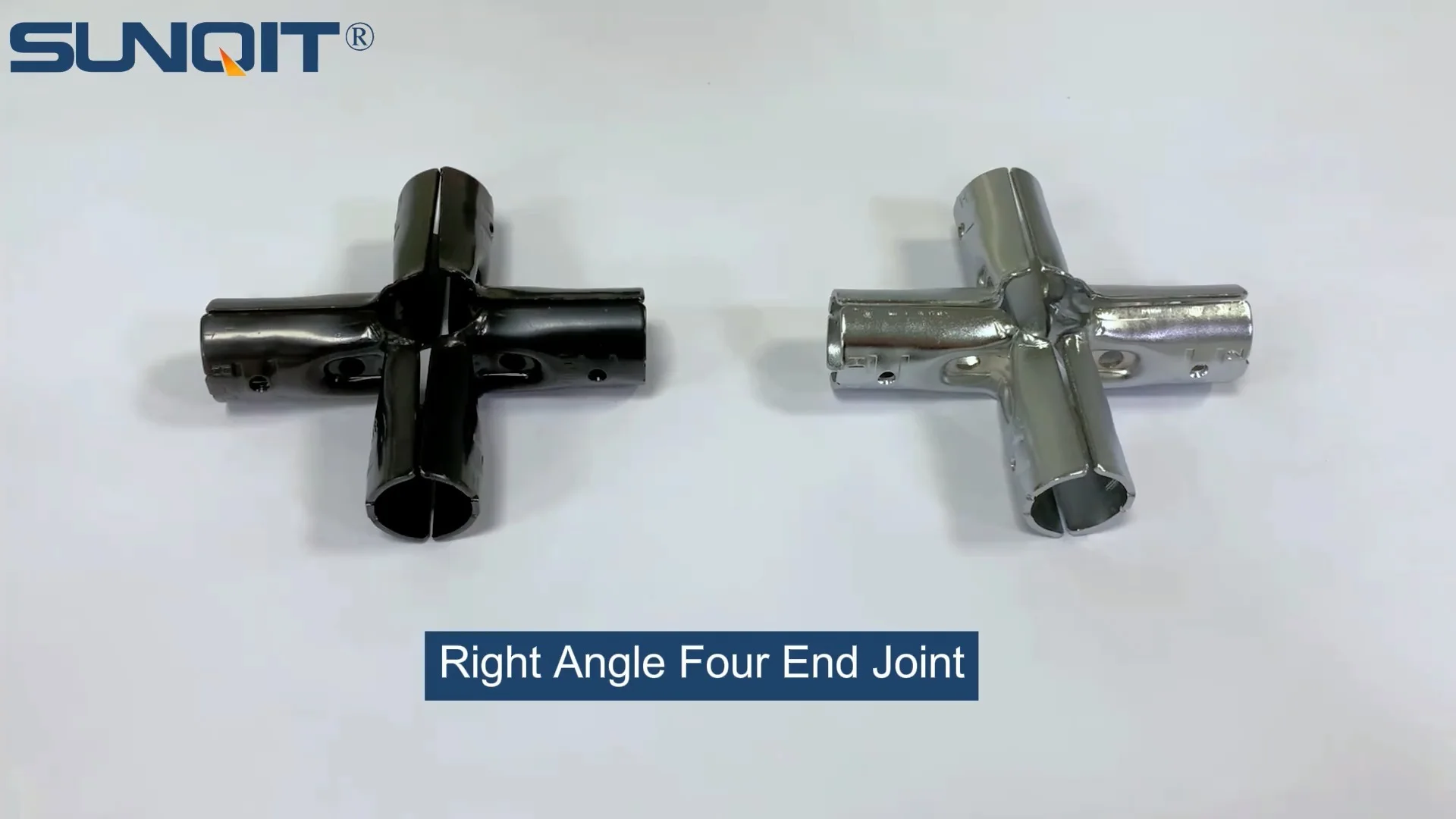
Five Way Straight Lean Pipe Joint
Five way straight lean pipe joint, for 5 pcs 28mm lean pipe connect in straight angle,which used widely in workbench, flow rack, hand trolley frame connection.
The Backbone of Lean Management: Beyond Buzzwords to Tangible Solutions
In the fast-paced world of manufacturing, warehousing, and logistics, the term "lean management" is often thrown around as a catchall for "efficiency." But lean isn't just a philosophy—it's a way of life for operations teams striving to eliminate waste, streamline workflows, and keep up with ever-changing customer demands. At its core, lean management is about creating systems that adapt, evolve, and empower teams to do more with less. And while software tools and process maps play a role, the physical infrastructure of a workspace is where lean principles truly come to life. This is where lean pipe systems step in, and at the heart of these systems lies a humble yet powerful component: the five way straight lean pipe joint.
Lean pipe systems, often referred to simply as "lean systems," are modular frameworks built from pipes, joints, and accessories that can be configured into workbenches, flow racks, conveyor systems, and turnover trolleys. What makes them indispensable is their flexibility—unlike fixed metal or wooden structures, lean systems can be disassembled, reconfigured, and repurposed in hours, not weeks. This adaptability is a cornerstone of lean thinking, as it allows businesses to respond quickly to shifts in production needs, seasonal demand, or new product lines without investing in entirely new infrastructure.
But a lean system is only as strong as its weakest link, and that link is often the joints that hold the pipes together. Joints are the unsung heroes of modular design, dictating how pipes connect, how much weight a structure can bear, and how easily it can be modified. Among the dozens of joint types available—from two-way straight connectors to 90-degree crossings—the five way straight lean pipe joint stands out for its unique ability to enable complex, multi-directional structures. It's not just a connector; it's a catalyst for creativity in workspace design, allowing teams to build everything from multi-tiered material racks to custom assembly stations that align perfectly with their workflows.
Understanding Lean Pipe Systems: The Building Blocks of Flexibility
Before diving into the specifics of the five way straight lean pipe joint, it's important to understand the basics of lean pipe systems. At their most fundamental level, these systems are composed of three key elements: pipes, joints, and accessories. Let's break them down:
- Pipes: The "bones" of the system. Most lean pipes are made of steel with a polyethylene (PE) coating for durability and corrosion resistance, though aluminum lean pipe and stainless steel pipe series are also popular for specialized environments (e.g., cleanrooms or ESD-sensitive areas). Pipes come in standard diameters (often 28mm or 30mm) and lengths, making them easy to source and cut to size.
- Joints: The "muscles" that connect pipes. Joints are designed to fit snugly over the ends of pipes, securing them with set screws, bolts, or clamping mechanisms. They come in various configurations to enable different angles and connections—think T-joints for branching, elbow joints for corners, and the focus of our discussion: five way straight joints for multi-directional builds.
- Accessories: The "organs" that add functionality. This includes everything from caster wheels for mobile trolleys to roller tracks for material flow, workbench surfaces, and ESD-safe components for electronics manufacturing. Accessories turn basic pipe-and-joint frames into fully functional workspaces.
The magic of lean systems lies in their modularity. A single set of pipes and joints can be transformed from a simple workbench into a flow rack, then into a turnover trolley, and back again. This reusability drastically reduces waste—both in terms of materials and cost. For example, a small manufacturer that needs to ramp up production for the holiday season can repurpose their off-season storage racks into additional assembly workbenches using the same pipes and joints, avoiding the expense of buying new furniture.
But none of this would be possible without reliable, versatile joints. A poorly designed joint can loosen over time, compromise the structure's stability, or make reconfiguration a frustrating chore. This is why choosing the right joint for the job is critical—and why the five way straight lean pipe joint has become a staple in lean environments worldwide.

Five Way Straight Lean Pipe Joint: Design, Function, and Why It Matters
At first glance, the five way straight lean pipe joint might look like a simple metal cube with holes. But its design is the result of careful engineering to balance strength, ease of use, and flexibility. Let's take a closer look at what makes this joint special.
Design Basics: As the name suggests, a five way straight joint features five connection points (ports) where pipes can be inserted. Typically, four ports are aligned along a single axis (front, back, left, right), and the fifth is centered on the top or bottom for vertical connections. This allows for straight-line extensions in four directions plus a perpendicular (vertical or horizontal) branch, making it ideal for building structures with multiple levels, shelves, or lanes.
Materials: Most five way straight joints are made of die-cast aluminum or zinc alloy, chosen for their strength-to-weight ratio and resistance to wear. Some models also feature a powder-coated finish to prevent rust and improve grip. For specialized environments, like those requiring ESD protection or cleanroom compliance, stainless steel joint options are available, though they tend to be heavier and more expensive.
Installation: One of the key advantages of lean pipe joints is their tool-free (or minimal-tool) installation. Five way joints typically use set screws or cam levers to secure pipes. A simple hex key is all that's needed to tighten the screws, which bite into the pipe's PE coating (or aluminum surface) to create a secure hold. This means workers with minimal training can assemble or reconfigure structures, reducing downtime and reliance on specialized maintenance teams.
Load Capacity: While load capacity varies by material and manufacturer, a standard aluminum five way joint can typically support 50-100kg per connection point, depending on the pipe thickness and overall structure design. This makes it suitable for most light to medium-duty applications, from holding tools on a workbench to supporting boxes on a flow rack.
But why five ports? Why not just use multiple three-way or two-way joints? The answer lies in efficiency. Using a single five way joint to connect five pipes eliminates the need for multiple smaller joints, reducing the number of components, assembly time, and potential weak points in the structure. For example, building a three-tier flow rack with two vertical supports and three horizontal shelves would require far fewer joints (and less time) with five way connectors than with basic T-joints. Fewer joints also mean a cleaner, more streamlined look—important for maintaining an organized workspace, which is another pillar of lean management.

Real-World Applications: How Five Way Joints Transform Workspaces
To truly appreciate the value of the five way straight lean pipe joint, let's explore some common applications where it shines. These examples demonstrate how this single component can turn a basic lean system into a tailored solution that addresses specific operational challenges.
1. Multi-Tiered Flow Racks for Material Handling
Flow racks are a staple in lean warehouses, designed to enable "first-in, first-out" (FIFO) material flow and reduce picking time. A typical flow rack has sloped lanes where boxes or bins slide forward as items are removed. But what if you need more lanes or additional storage above or below the main rack? This is where five way joints excel.
Imagine a distribution center handling small electronic components. They need to store resistors, capacitors, and diodes in separate lanes but also want to add a top shelf for bulk storage of rarely used items. Using five way joints at the corners of the rack, they can connect the vertical support pipes, horizontal lane pipes, and top shelf pipes in one go. The result is a compact, multi-level flow rack that maximizes vertical space without sacrificing accessibility. Workers can pick from the lower lanes while the top shelf holds overflow stock—all built with minimal joints and tools.
2. Custom Workbenches with Integrated Tool Storage
Workbenches are the heart of any assembly line, and one-size-fits-all models rarely meet the needs of specialized tasks. A five way joint allows teams to build workbenches with custom add-ons: side shelves for tools, overhead racks for documentation, or even integrated roller tracks for moving parts across the bench.
Take an automotive repair shop, for example. Mechanics need quick access to wrenches, screwdrivers, and diagnostic tools while working on engines. Using a five way joint at the back corner of the workbench, they can attach a vertical pipe that supports a horizontal tool rack (left/right connections) and a small overhead shelf (top connection). This keeps tools within arm's reach, reducing the time spent walking to toolboxes—a classic example of eliminating motion waste, a key lean principle.
3. Mobile Turnover Trolleys with Expandable Shelves
Turnover trolleys are used to transport materials between workstations, and their design directly impacts how efficiently teams can move goods. A fixed-shelf trolley might work for some items, but when dealing with varying box sizes or quantities, adjustability is key. Five way joints make it easy to add or remove shelves on the fly.
A bakery that delivers fresh pastries to cafes is a great example. Their trolleys need to hold different-sized boxes (muffins, croissants, cakes) and sometimes extra trays during peak hours. By using five way joints at the trolley's corners, they can insert vertical pipes with adjustable shelf heights. If a large cake box needs to be transported, they simply remove a shelf (by loosening the five way joint's set screws) to make space—no need for a separate trolley.

Comparing Joint Types: Why Five Way Straight Stands Out
To better understand the unique value of the five way straight lean pipe joint, let's compare it to other common joint types. The table below highlights key differences in design, applications, and advantages:
| Joint Type | Number of Connections | Primary Material | Common Applications | Key Advantage |
|---|---|---|---|---|
| Five Way Straight | 5 (4 in-line + 1 perpendicular) | Aluminum, Zinc Alloy | Multi-tier flow racks, custom workbenches, expandable trolleys | Reduces component count; enables complex, compact structures |
| Three Way (T-Joint) | 3 (1 straight + 1 perpendicular) | Aluminum, Steel | Basic shelves, corner connections | Simple design; low cost; widely available |
| Two Way Straight | 2 (in-line) | Aluminum, Steel | Extending pipe lengths, straight rails | Minimal profile; ideal for long, straight structures |
| 90° Crossing Joint | 4 (2 perpendicular axes) | Zinc Alloy, Stainless Steel | Overhead racks, intersecting rails | Enables crossing pipes without blocking flow |
As the table shows, while other joints have their place, the five way straight joint's ability to consolidate multiple connections into a single component is its biggest strength. This not only saves time during assembly but also reduces the number of potential failure points in a structure. For example, building a four-shelf rack with three-way joints would require 12 joints (4 shelves x 3 connections each), whereas a five way joint setup might use only 4-6 joints—fewer parts, less cost, and a cleaner look.
The Business Case for Five Way Straight Lean Pipe Joints: ROI Beyond the Purchase Price
At this point, you might be thinking, "Sure, five way joints are versatile, but are they worth the extra cost compared to basic joints?" The short answer is yes—especially when viewed through a lean lens, where long-term flexibility and waste reduction drive ROI.
Reduced Downtime: Reconfiguring a workspace with five way joints takes hours, not days. For a manufacturing line that operates 24/7, even a 4-hour shutdown to reconfigure a flow rack can cost thousands in lost production. Five way joints minimize this downtime by simplifying assembly.
Lower Storage Costs: Instead of storing multiple fixed structures (e.g., a small workbench, a large workbench, a shelf unit), businesses can store a few sets of pipes and joints. This frees up warehouse space for revenue-generating inventory.
Adaptability to Growth: As a business expands, its workspace needs change. A startup with 10 employees might need simple workbenches; two years later, with 50 employees, they might need assembly lines and material handling systems. Five way joints allow the initial investment in lean pipes to grow with the business, rather than being scrapped for new infrastructure.
Employee Empowerment: When teams can design and build their own workspaces, they take ownership of their efficiency. A study by the Lean Enterprise Institute found that workplaces with modular, employee-configurable tools report 15-20% higher productivity, as workers eliminate friction points in real time.
Consider a mid-sized electronics manufacturer that invested in lean pipe systems with five way joints. In their first year, they reconfigured their assembly line three times to accommodate new product launches. Each reconfiguration took less than a day and cost under $500 in labor and new accessories. By contrast, their previous fixed conveyor system required a $20,000 contractor visit and a week of downtime for each change. Over three years, the ROI on their five way joints and lean system paid for itself many times over.
Choosing the Right Supplier: What to Look For
Not all five way straight lean pipe joints are created equal. To ensure you're getting a product that delivers on durability and performance, here are key factors to consider when choosing a supplier:
- Material Quality: Look for joints made of high-grade aluminum (e.g., 6061-T6 alloy) or zinc alloy with a corrosion-resistant finish. Avoid cheap plastic joints, which lack the strength for industrial use.
- Compatibility: Ensure the joint fits your existing lean pipes (check diameter: 28mm, 30mm, etc.). Most suppliers follow standard sizes, but it's always best to confirm.
- Warranty: A reputable supplier will offer a warranty (typically 1-3 years) on joints, covering defects in materials or workmanship.
- Accessory Range: Choose a supplier that offers a full line of lean pipe accessories (casters, roller tracks, workbench surfaces) to avoid compatibility issues down the line.
- Technical Support: Look for suppliers with knowledgeable staff who can help design structures and troubleshoot issues. Many suppliers offer free CAD templates for common builds.
Popular suppliers in the lean pipe space include names like FlexQube, Modular Devices, and Kaizen Assembly, but regional suppliers often offer better pricing and faster shipping. It's worth requesting samples to test joint strength and ease of use before placing a large order.
Future Trends: Where Lean Pipe Systems and Five Way Joints Are Headed
As industries embrace Industry 4.0 and smart manufacturing, lean pipe systems are evolving to integrate with new technologies. Here's what to watch for in the coming years:
Smart Joints: Some manufacturers are experimenting with joints embedded with RFID tags or sensors that track usage, load, and maintenance needs. This data can help predict when a joint might loosen or fail, preventing downtime.
Lightweight Materials: Advances in aluminum alloys and composite materials are making joints lighter without sacrificing strength. This is especially useful for mobile applications like turnover trolleys, where weight impacts maneuverability.
3D-Printed Custom Joints: For highly specialized applications, 3D printing may enable on-demand production of custom joint designs, though this is still cost-prohibitive for most mass-market uses.
ESG Compliance: With sustainability becoming a priority, suppliers are developing joints made from recycled aluminum and biodegradable coatings, aligning with corporate carbon neutrality goals.
Even as technology advances, the core value of the five way straight lean pipe joint—enabling flexible, human-centered workspaces—will remain unchanged. In a world where change is the only constant, tools that adapt are the ones that endure.
Conclusion: Small Component, Big Impact
The five way straight lean pipe joint may not be the most glamorous piece of industrial equipment, but its impact on lean management is undeniable. It's a testament to the idea that lean isn't just about grand process overhauls—it's about the small, thoughtful components that make daily operations smoother, more efficient, and more adaptable. By enabling complex, multi-directional structures with minimal parts, five way joints reduce waste, save time, and empower teams to take control of their workspaces.
Whether you're building a simple workbench or a full-scale assembly line, the next time you look at a lean pipe structure, take a moment to appreciate the joints holding it all together. Chances are, there's a five way straight joint in there, quietly doing the work that makes lean management a reality—not just a buzzword.
In the end, lean management is about people, processes, and tools working in harmony. The five way straight lean pipe joint is more than a tool—it's a bridge between the philosophy of lean and the practical, everyday work of making things better. And in that bridge lies the power to transform not just workspaces, but entire businesses.