- Company Articles
- Products and Technology
- Product knowledge
- Five Way Straight Lean Pipe Joint for Flow Rack Construction in Warehouses

Five Way Straight Lean Pipe Joint for Flow Rack Construction in Warehouses
Related Product
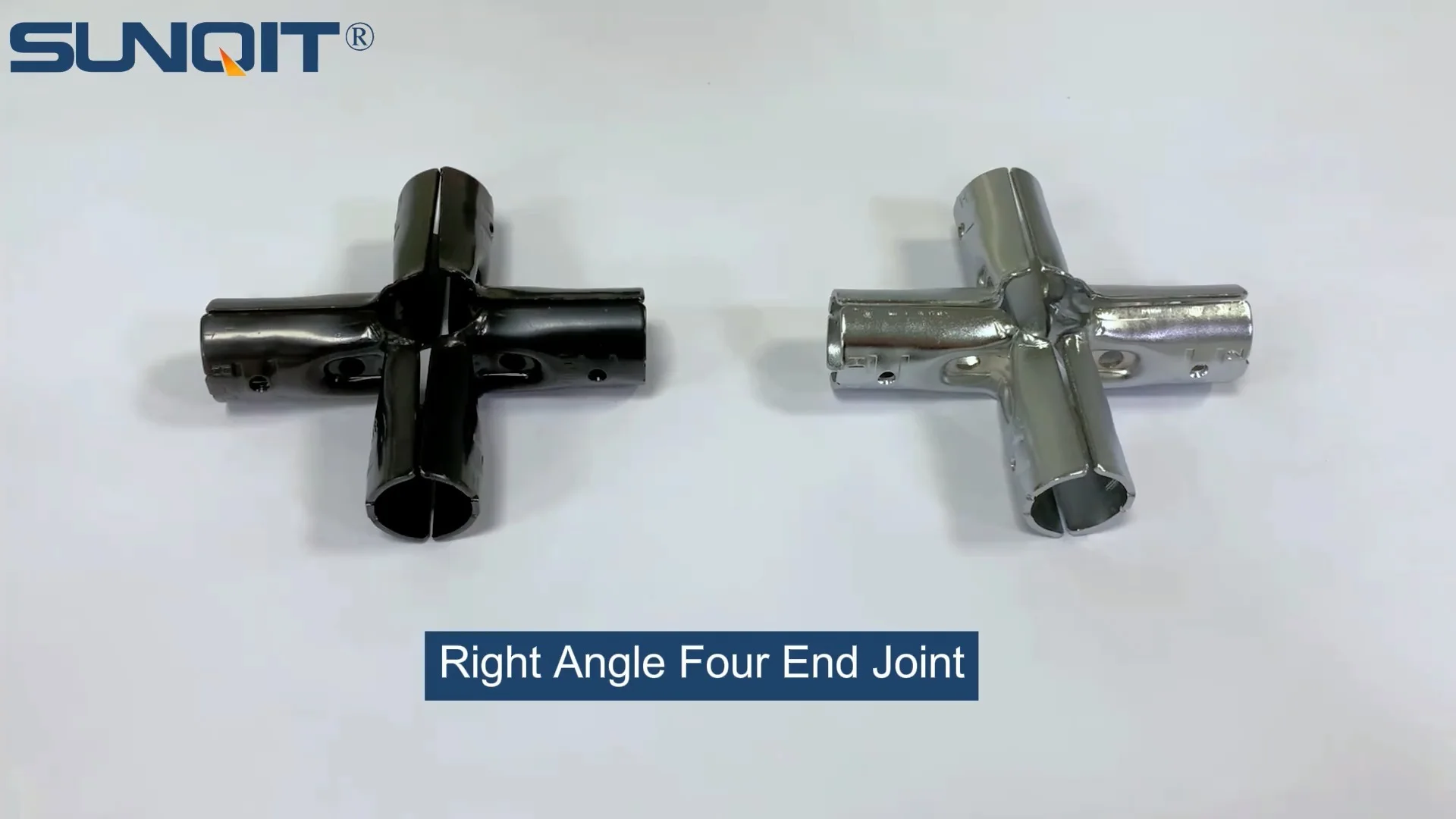
Five Way Straight Lean Pipe Joint
Five way straight lean pipe joint, for 5 pcs 28mm lean pipe connect in straight angle,which used widely in workbench, flow rack, hand trolley frame connection.
Walk into any modern warehouse, and you'll likely be struck by the organized chaos: pallets zipping on forklifts, workers scanning packages, and shelves towering like silent sentinels holding mountains of goods. Behind this efficiency lies a hidden network of systems designed to make every square foot count and every second matter. Among these, flow racks stand out as unsung heroes—they keep inventory moving, reduce picking errors, and turn static storage into a dynamic, first-in-first-out (FIFO) operation. But what holds these flow racks together? What allows them to be sturdy yet flexible, simple yet adaptable? The answer often lies in the smallest components, and today, we're shining a spotlight on one that deserves more recognition: the five way straight lean pipe joint.
In this article, we'll explore how this unassuming connector plays a pivotal role in building robust, efficient flow racks. We'll dive into its design, benefits, and real-world applications, and explain why choosing the right lean pipe supplier and components can transform your warehouse operations. Whether you're a warehouse manager looking to optimize your space or a business owner curious about the backbone of modern logistics, let's unpack the story of the five way straight lean pipe joint.
What Is a Flow Rack, and Why Does It Matter?
Before we get to the joints, let's start with the bigger picture: flow racks. Imagine a storage system where products glide forward automatically, ready for picking without the need to reach deep into shelves or move heavy pallets. That's a flow rack. Typically inclined slightly, flow racks use gravity to move items from the loading end to the picking end, ensuring that the oldest inventory (first in) is the first to be used (first out). This isn't just a convenience—it's a game-changer for efficiency.
In e-commerce warehouses, where orders pour in 24/7, flow racks cut down on the time workers spend searching for items. In manufacturing facilities, they streamline the movement of raw materials to assembly lines, reducing delays. Even in retail backrooms, they maximize limited space by keeping fast-moving products within arm's reach. The magic of flow racks lies in their simplicity, but their effectiveness hinges on the quality of their construction—and that's where lean pipe systems and their components come into play.
The Backbone of Flow Racks: Lean Pipe Systems
Lean pipe systems, also known as modular pipe systems, are the building blocks of modern flow racks. Unlike rigid, welded metal structures, lean pipe systems are made up of lightweight yet durable pipes (often steel, aluminum, or stainless steel) and a variety of connectors, joints, and accessories. This modularity is their superpower: they can be assembled, disassembled, and reconfigured in endless ways to fit changing needs.
Think of lean pipe systems as the "Lego sets" of warehouse design. A lean pipe supplier might offer pipes in different diameters, materials (like 2.0mm pe coated lean pipe for corrosion resistance or aluminum lean pipe for lightweight applications), and a dizzying array of accessories—from roller track and caster wheels to workbench tops and material racks. This flexibility makes them ideal for flow racks, which need to be tailored to specific product sizes, weights, and throughput rates.
But even the best pipes are useless without the right joints. Joints are the glue that holds the system together, ensuring stability while allowing for adjustments. And among the many joint types available, the five way straight lean pipe joint is a standout for its ability to create complex, multi-directional structures with minimal effort.

Spotlight on the Five Way Straight Lean Pipe Joint
Let's get up close with the star of the show: the five way straight lean pipe joint. At first glance, it might look like a simple metal connector, but its design is deceptively clever. As the name suggests, this joint is engineered to connect up to five lean pipes at once, typically in straight or perpendicular directions. Picture a central hub with five openings, each designed to grip a pipe securely. Most are made from high-strength steel with a chrome-plated finish, which adds corrosion resistance—a must in warehouses where moisture or chemicals might be present.
What makes this joint special? Unlike basic two-way or three-way joints, which limit you to linear or L-shaped structures, the five way joint unlocks three-dimensional designs. Need to build a flow rack with vertical supports, horizontal beams, and diagonal braces all meeting at a single point? The five way joint handles that. Want to add side extensions to a material rack B (3 row and 3 floor) for extra storage? This joint makes it possible without extra brackets or welding.
The secret to its functionality is in the grip. Most five way joints use a set screw or clamping mechanism that tightens around the lean pipe, creating a secure hold that won't loosen under heavy loads. Some even feature internal threads or locking pins for added stability. This means you can assemble a flow rack in hours, not days, and disassemble it just as quickly if your needs change—no power tools or specialized labor required.

Key Benefits of Using Five Way Straight Lean Pipe Joints
Now that we know what it is, let's break down why the five way straight lean pipe joint is a favorite among warehouse designers and lean system suppliers. Here are the top benefits that make it indispensable for flow rack construction:
1. Unmatched Flexibility in Design
Warehouses aren't one-size-fits-all, and neither are flow racks. A five way joint lets you customize every inch of your structure. Need a flow rack with multiple levels, side rails, or integrated workbenches? This joint adapts to your blueprint, not the other way around. For example, if you're storing small parts, you can use the joint to add narrow roller track sections; for larger boxes, you can widen the spacing by adjusting the pipe angles. This flexibility is a lifesaver for businesses that handle diverse inventory.
2. Strength Without Sacrificing Speed
Don't let its modularity fool you—this joint is tough. Chrome-plated steel construction means it can support hundreds of pounds, whether you're stacking heavy tools or bulk packages. In fact, many lean pipe suppliers test their joints to ensure they meet industry standards for load capacity. And because it connects pipes directly, there's less wobble or sag compared to structures held together with multiple smaller joints. The result? A flow rack that's both sturdy and quick to build.
3. Cost and Time Savings
Traditional welded racks require skilled labor, specialized equipment, and days of setup. With five way joints, a small team can assemble a flow rack in a fraction of the time. No welding, no cutting—just slide the pipes into the joint, tighten the screws, and you're done. This not only reduces labor costs but also minimizes downtime, which is critical for warehouses operating on tight schedules. Plus, if you need to reconfigure the rack later, you won't waste money on new materials—just loosen the joints and rearrange the pipes.
4. Compatibility with Other Components
A flow rack isn't just pipes and joints—it's a system. The five way joint plays well with other lean pipe and accessories, from roller track guide rails (like plastic roller track guide rail yellow or grey) to caster wheels for mobile racks. This compatibility means you can build a fully integrated solution: a flow rack with built-in workbench E (single deck-without caster) for packing, or a turnover trolley that connects directly to the rack for easy material transport. A good lean pipe supplier will offer all these components, ensuring everything works together seamlessly.
5. Reusability and Sustainability
In today's eco-conscious world, sustainability matters. Unlike fixed metal racks, which often end up in landfills when they're no longer needed, lean pipe systems with five way joints are reusable. If you relocate your warehouse or change your inventory, you can disassemble the flow rack, pack up the pipes and joints, and rebuild elsewhere. This reduces waste and lowers long-term costs—a win-win for your budget and the planet.

Comparing Joint Types: Why Five Way Stands Out
To truly appreciate the five way joint, it helps to see how it stacks up against other common joint types. Let's compare it to two-way and three-way joints, which are also widely used in lean pipe systems:
| Joint Type | Number of Connections | Best For | Load Capacity (Avg.) | Installation Time | Design Flexibility |
|---|---|---|---|---|---|
| Two-Way Straight | 2 (linear) | Simple shelves, straight beams | Medium (up to 200 lbs per joint) | Fast (1-2 mins per joint) | Low (only straight lines) |
| Three-Way (L or T-shape) | 3 (90° or T-junction) | Corner supports, basic flow racks | Medium-High (up to 300 lbs per joint) | Moderate (2-3 mins per joint) | Medium (L or T structures) |
| Five Way Straight | 5 (multi-directional) | Complex flow racks, multi-level systems, custom designs | High (up to 500 lbs per joint) | Moderate (3-4 mins per joint) | High (3D structures, side extensions, diagonal braces) |
As the table shows, the five way joint excels in scenarios where complexity and strength are needed. For a basic two-shelf flow rack, a three-way joint might suffice. But for a multi-level material rack with side rails, integrated roller track, and vertical supports—like the material rack B (3 row and 3 floor) we mentioned earlier—the five way joint is irreplaceable. It reduces the number of joints needed, which cuts down on assembly time and weak points in the structure.
Practical Applications: Building a Flow Rack with Five Way Joints
Let's walk through a real-world example of how the five way straight lean pipe joint brings a flow rack to life. Suppose you're a lean system supplier tasked with building a flow rack for a small electronics manufacturer that needs to store circuit boards and small components. Here's how you might use the five way joint:
Step 1: Plan the Layout
The manufacturer needs a 3-level flow rack with 3 rows per level (sound familiar? That's the material rack B we've referenced!). Each level should have roller track to let components slide forward. The rack must be 6 feet tall, 4 feet wide, and 2 feet deep.
Step 2: Assemble the Frame
Start with vertical supports using 2.0mm pe coated lean pipe. At each corner and midpoint, use five way joints to connect the vertical pipes to horizontal beams (for width) and cross-braces (for stability). The five way joints here will anchor the vertical pipes, horizontal beams, and diagonal braces all at once, creating a rigid frame.
Step 3: Add Levels with Roller Track
For each of the 3 levels, attach horizontal rails using the five way joints. Then, mount plastic roller track guide rail grey onto these rails—this is where the components will slide. The joint's extra connections let you add side guards (using aluminum side guard) to prevent items from falling off, all without extra brackets.
Step 4: Test and Adjust
Once assembled, load test the rack with dummy components to ensure the joints hold and the roller track glides smoothly. If adjustments are needed—say, the angle is too steep—loosen the five way joint's set screws, reposition the pipes, and retighten. Done!
This entire process takes a fraction of the time it would with welded steel, and if the manufacturer expands, they can add more levels or widen the rack by simply adding more pipes and five way joints.
Real-World Success: How One Warehouse Boosted Efficiency with Five Way Joints
Let's look at a hypothetical but realistic case study. A mid-sized e-commerce company was struggling with slow order fulfillment in their 10,000 sq ft warehouse. Their old static shelves required workers to walk back and forth, often doubling back for missed items. They decided to invest in flow racks using lean pipe systems, with a focus on five way straight lean pipe joints for maximum flexibility.
Working with a reputable lean pipe supplier, they installed 12 custom flow racks, each using five way joints to integrate vertical supports, horizontal rails, and roller track. Within a month, picking time per order dropped by 35%, and errors decreased by 20%. The warehouse manager noted, "The five way joints let us build racks that fit our exact product mix—small electronics on one level, larger boxes on another—without wasting space. And when we added a new product line, we just reconfigured the racks in a day instead of building new ones."
Tips for Choosing the Right Lean Pipe Supplier
The five way joint is only as good as the supplier behind it. Here's what to look for when selecting a lean pipe supplier for your flow rack project:
- Quality Materials: Ensure joints are made from high-strength steel with durable finishes (like chrome) to resist rust and wear. Ask for load capacity specs and material certifications.
- Full Product Line: Choose a supplier that offers not just joints, but the full ecosystem—lean pipe, roller track, casters, and accessories. This ensures compatibility and simplifies ordering.
- Technical Support: Look for suppliers that provide design assistance or assembly guides. A good supplier will help you optimize your flow rack layout for your specific needs.
- Customization Options: If you need specialized joints (like stainless steel for food-grade warehouses) or custom lengths, make sure the supplier can accommodate that.
- Reputation: Read reviews or ask for references. A supplier with a track record of reliability will save you headaches down the line.
Conclusion: The Five Way Joint—Small Part, Big Impact
In the world of warehouse efficiency, it's easy to focus on flashy tech like automated robots or AI inventory systems. But the unsung heroes—the components that hold it all together—deserve just as much credit. The five way straight lean pipe joint is one such hero. It turns ordinary lean pipes into extraordinary flow racks, offering the flexibility, strength, and speed that modern warehouses demand.
Whether you're building a simple material rack or a complex multi-level flow system, this joint empowers you to design for your unique needs. And when paired with a trusted lean pipe supplier that offers quality components and support, it becomes a cornerstone of lean management—helping you reduce waste, save time, and adapt to whatever the future brings.
So the next time you walk through a warehouse and see those smooth-flowing racks, take a moment to appreciate the five way straight lean pipe joint. It may be small, but its impact on efficiency? That's huge.