- Company Articles
- Products and Technology
- Product knowledge
- Five Way Straight Lean Pipe Joint for High-Volume Production Environments

Five Way Straight Lean Pipe Joint for High-Volume Production Environments
Related Product
Five Way Straight Lean Pipe Joint
Five way straight lean pipe joint, for 5 pcs 28mm lean pipe connect in straight angle,which used widely in workbench, flow rack, hand trolley frame connection.
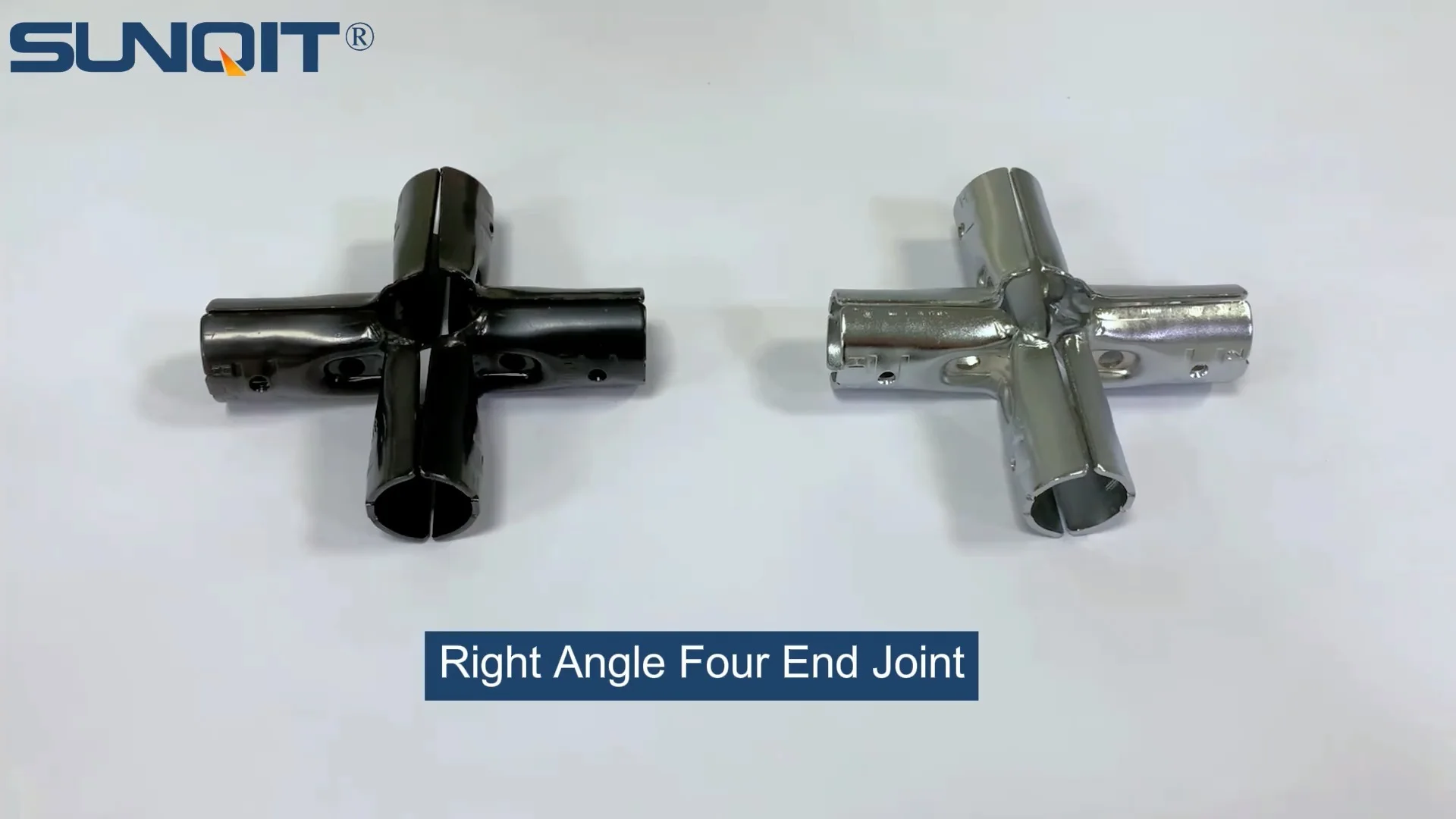
Walk into any high-volume manufacturing facility, and you'll immediately sense the pressure: conveyor belts humming, workers moving in synchronized efficiency, and the constant tick of timers measuring cycle times. In these environments, where thousands of units roll off the line daily, even the smallest inefficiency can snowball into missed deadlines, increased costs, and frustrated teams. The backbone of overcoming these challenges? Lean systems—methodologies designed to eliminate waste, streamline workflows, and keep production agile. And at the heart of many lean systems lies a humble yet powerful component: the five way straight lean pipe joint. This unassuming piece of hardware might not grab headlines, but for production managers and facility engineers, it's a game-changer that transforms chaos into cohesion.
The Hidden Challenges of High-Volume Production
High-volume manufacturing—think automotive assembly, electronics production, or consumer goods—operates on razor-thin margins. Every second of downtime, every misplaced component, and every rigid workflow that can't adapt to sudden changes eats into profitability. Consider a typical scenario: a factory producing smartphone components. The line runs 24/7, with materials needing to flow seamlessly from storage to assembly stations, then to quality control, and finally to packaging. If a material rack clogs up because it can't adjust to a new component size, or a workbench takes hours to reconfigure for a product update, the entire operation stalls. These are the daily battles manufacturers face: balancing speed, flexibility, and reliability.
Traditional production setups often rely on fixed, welded structures or generic shelving that's built for one specific task. When a product design changes or demand spikes, these structures become liabilities. Workers waste time disassembling and rebuilding them, or worse, the facility with suboptimal layouts, leading to bottlenecks. This rigidity is the antithesis of lean manufacturing, which prioritizes "just-in-time" material flow and adaptable workspaces. The solution? Modular systems that can evolve with production needs—and that's where lean pipe systems, and their critical joints, come into play.
Lean Systems: More Than a Buzzword—A Lifeline for Production
Lean manufacturing isn't just about cutting costs; it's about creating value for both the customer and the business. At its core, it's a philosophy that asks: "How can we make this process smoother, faster, and more responsive?" Central to this is the concept of modularity—building production lines from interchangeable parts that can be reconfigured in minutes, not days. Lean pipe systems embody this idea perfectly. Made from lightweight yet durable materials like aluminum or steel, these systems use pipes and joints to create everything from flow racks and workbenches to turnover trolleys and conveyor supports. They're the Swiss Army knife of manufacturing: versatile, cost-effective, and endlessly adaptable.
But a lean pipe system is only as strong as its weakest link—the joints that hold the pipes together. Traditional joints, like two-way or three-way connectors, have their place, but they limit how a structure can be built. If you need to connect pipes in multiple directions—say, adding a side arm to a flow rack for extra storage or branching a workbench to accommodate more workers—you'd need multiple joints, increasing complexity and assembly time. This is where the five way straight lean pipe joint steps in. It's designed to connect up to five pipes in a single, sturdy connection, opening up a world of possibilities for modular design.

Meet the Workhorse: Five Way Straight Lean Pipe Joint
At first glance, the five way straight lean pipe joint looks like a simple metal or plastic connector with multiple ports. But its design is deceptively clever. Picture a central hub with five evenly spaced openings, each engineered to grip a lean pipe securely. Unlike some joints that require welding or complex tools, this joint typically uses a clamping mechanism—often a setscrew or lever—that tightens around the pipe, creating a strong, vibration-resistant connection. This means no special training is needed to assemble or disassemble it; a basic wrench or even a hand-tightened lever is enough. For production teams, this translates to less downtime and more time focused on actual manufacturing.
The "straight" in its name refers to its ability to connect pipes along a linear axis, but don't let that fool you. While it excels at creating straight runs, its five ports can also be oriented at different angles (depending on the model) to create T-junctions, cross-sections, or multi-level structures. For example, a flow rack used to transport circuit boards might need a main horizontal rail, vertical supports, and diagonal braces for stability—all connected through a single five way joint. This reduces the number of parts needed, simplifies assembly, and makes the structure more rigid overall. When every component in a production line is fighting for space, this kind of efficiency is invaluable.
Materials matter too. Many five way straight lean pipe joints are made from aluminum or zinc-plated steel, chosen for their strength-to-weight ratio and resistance to corrosion. In environments where cleanliness is critical—like medical device manufacturing—stainless steel versions are available to meet strict hygiene standards. This versatility ensures the joint can perform in any industrial setting, from dusty warehouses to sterile cleanrooms.

Design Deep Dive: What Makes the Five Way Joint Stand Out?
To truly appreciate the five way straight lean pipe joint, let's break down its design features and why they matter in high-volume production:
1. Multi-Directional Connectivity
Most traditional joints handle two or three pipes at a time. The five way joint, as the name suggests, can connect up to five pipes in a single hub. This is a game-changer for building complex structures without overcomplicating the design. Imagine a workbench for assembling small appliances: you need a flat surface (supported by vertical pipes), a side rack for tools (connected horizontally), and a lower shelf for spare parts (diagonal supports for stability). With a five way joint, all these connections can meet at one point, eliminating the need for multiple overlapping joints that add bulk and weak points.
2. Tool-Free (or Minimal-Tool) Assembly
In a busy factory, time is money. Welding or drilling to assemble a rack isn't just slow—it's dangerous and requires skilled labor. Five way joints use a friction-based clamping system or quick-release levers that allow workers to assemble or reconfigure structures in minutes. For example, if a production line needs to switch from assembling 10-inch to 12-inch widgets, a supervisor can grab a wrench, loosen the joints on the flow rack, adjust the pipe lengths, and retighten—all in under 30 minutes. No more waiting for maintenance crews or outsourcing modifications.
3. Load-Bearing Reliability
A joint is useless if it can't support the weight of materials. Five way straight lean pipe joints are engineered to handle industrial-grade loads, often up to 500 pounds or more, depending on the material and pipe diameter. This makes them ideal for heavy-duty applications like automotive part storage, where metal components can be surprisingly dense. The secret lies in their clamping mechanism: when tightened, the joint grips the pipe uniformly, distributing weight evenly across the connection to prevent slipping or bending.
4. Compatibility with Lean Pipe Ecosystems
A good lean pipe joint doesn't exist in a vacuum. It needs to work seamlessly with other components like rollers, casters, and workbench tops. Reputable lean pipe suppliers design their five way joints to fit standard pipe diameters (often 28mm or 40mm) and accessories, ensuring compatibility across the entire system. This means you can mix and match parts from the same supplier—adding roller tracks to a flow rack, or casters to a turnover trolley—without worrying about mismatched sizes or unstable connections.

From Design to Deployment: Real-World Applications
The five way straight lean pipe joint might seem simple, but its impact is felt across entire production lines. Let's explore how it's used in key areas of manufacturing:
Flow Racks: Keeping Materials Moving
Flow racks are the arteries of lean production, using gravity or rollers to feed materials directly to assembly stations. They need to be sturdy enough to hold heavy bins yet flexible enough to adjust bin sizes or add new lanes when product lines change. The five way joint is instrumental here. For example, a three-row, three-floor material rack (like "Material Rack B" in many lean system catalogs) relies on vertical supports connected to horizontal rails at each level. The joints at the corners? Often five way, connecting the vertical pipe, two horizontal rails (front and back), and diagonal braces for stability. This design ensures the rack can bear the weight of stacked materials while remaining easy to reconfigure if a new product requires taller bins or extra lanes.
Workbenches: Adapting to the Task at Hand
Assembly workbenches are where the magic happens, and they need to be as flexible as the workers using them. A five way joint allows for quick additions: a tool holder arm, a monitor mount for digital work instructions, or a parts bin shelf. When a new product model is introduced, the bench can be reconfigured in minutes—no need to build a brand-new workstation. For example, "Workbench E (Single Deck-Without Caster)" from lean system suppliers often uses five way joints at the corners, letting users add casters later if mobility is needed, or extend the bench length by connecting additional pipe sections.
Turnover Trolleys: Moving Materials Safely
Trolleys transport materials between stations, and they take a beating—bumping into walls, navigating tight corners, and carrying heavy loads. The five way joint ensures the trolley's frame is rigid yet lightweight. Vertical pipes connect to horizontal rails via the joint, with casters (another critical accessory) attached at the base. If a trolley needs to carry taller loads, workers can add an extra pipe section using the joint, raising the side rails in minutes. This adaptability reduces the need for multiple specialized trolleys, saving storage space and costs.
Traditional Joints vs. Five Way Straight Lean Pipe Joint: A Comparison
| Feature | Traditional 3-Way Joint | Five Way Straight Lean Pipe Joint |
|---|---|---|
| Max Pipes Connected | 3 | 5 |
| Assembly Time (per connection) | 5–8 minutes (requires multiple joints for complex structures) | 2–3 minutes (single joint for multi-directional connections) |
| Flexibility | Limited to simple T-junctions or straight runs | Supports complex, multi-level structures (e.g., 3-row flow racks) |
| Load Capacity (per joint) | Up to 300 lbs (depending on material) | Up to 500 lbs (aluminum/steel variants) |
| Reconfiguration Ease | Requires disassembling multiple joints | Single joint adjustment for multiple connections |
| Cost Efficiency (long-term) | Higher (more joints needed for complex builds) | Lower (fewer joints, reduced labor time) |
The table tells a clear story: the five way straight lean pipe joint outperforms traditional options in flexibility, assembly time, and long-term cost. For high-volume production, where every minute and dollar counts, this difference is transformative.
Why Manufacturers Can't Afford to Overlook This Joint
The benefits of the five way straight lean pipe joint extend far beyond "just" flexibility. Let's break down how it impacts the bottom line and daily operations:
Reduced Downtime, Increased Output
In high-volume production, downtime is measured in lost units. A line that's down for 30 minutes might mean 500 fewer products shipped that day. The five way joint cuts reconfiguration time from hours to minutes. For example, if a food packaging plant needs to switch from 12-ounce to 16-ounce cans, the flow rack feeding the filler can be adjusted in 20 minutes using five way joints, keeping the line running near capacity.
Lower Labor Costs
Skilled welders or fabricators command premium wages, and building traditional fixed structures requires their expertise. With five way joints, any worker can assemble or modify lean systems with basic training. This reduces reliance on specialized labor and frees up skilled workers for more critical tasks, like equipment maintenance or quality control.
Space Optimization
Factories pay by the square foot, so wasted space is wasted money. The five way joint's compact design means lean systems take up less room than bulky traditional structures. For example, a flow rack built with five way joints can fit more lanes in the same footprint, increasing storage capacity without expanding the facility.
Scalability for Growth
As demand grows, production lines need to scale—fast. Lean pipe systems with five way joints grow with you. Adding a new assembly station or expanding a flow rack is as simple as adding more pipes and joints, no major construction required. This scalability is why forward-thinking manufacturers choose modular systems: they're investments that adapt to the business, not just the current product line.
Choosing the Right Lean Pipe Supplier: It's About More Than Parts
Not all five way straight lean pipe joints are created equal. The difference between a reliable joint and a cheap knockoff is the difference between a system that lasts years and one that fails after months. That's why partnering with a trusted lean pipe supplier is critical. Here's what to look for:
Material Quality
Aluminum joints should be anodized to resist corrosion; steel joints should have a durable zinc or powder coating. Ask suppliers about material thickness and load-testing results—reputable ones will happily provide certifications.
Range of Accessories
A good lean pipe supplier offers more than just joints. They should carry compatible pipes, rollers, casters, workbench tops, and other accessories. This ensures system integrity—mixing parts from different suppliers can lead to compatibility issues or weak connections.
Technical Support
Even the best products need backup. Look for suppliers that offer design assistance, assembly guides, or on-site support if needed. A supplier that takes the time to understand your specific production challenges (e.g., "We need a flow rack that handles 100-lb bins and fits through a 36-inch door") will help you build a system that works for your facility.
Lead Times
In high-volume manufacturing, waiting weeks for parts isn't an option. Choose a supplier with local inventory or fast shipping capabilities to keep your projects on track.
Case Study: How One Electronics Plant Boosted Output by 15%
Let's put this into context with a real-world example (details anonymized to protect client privacy). A mid-sized electronics manufacturer producing circuit boards was struggling with bottlenecks in their assembly line. Their existing material racks were fixed wooden shelves, and reconfiguring them for new board sizes took 4–6 hours, causing weekly downtime. They also had a surplus of specialized trolleys—one for each board type—cluttering the facility.
The solution? A lean system upgrade centered on five way straight lean pipe joints. The plant worked with a lean pipe supplier to design modular flow racks and convertible workbenches. The flow racks, using five way joints, could adjust bin heights and add/remove lanes in 30 minutes. The workbenches, with joint-connected tool rails, adapted to different assembly steps with minimal effort. The trolleys were replaced with two modular designs that could be reconfigured for any board size using the joints.
The results? Downtime for reconfigurations dropped from 6 hours to 20 minutes. Trolley storage needs decreased by 70%. Most importantly, the line's output increased by 15% in the first quarter, as materials flowed more smoothly and workers spent less time navigating around clunky equipment. The five way joint wasn't the only change, but it was the linchpin that made the entire system adaptable.
Looking Ahead: The Future of Lean Pipe Systems
As manufacturing evolves—with trends like Industry 4.0, automation, and sustainability—lean pipe systems are evolving too. The five way straight lean pipe joint is no exception. Future iterations may integrate smart features, like RFID tags to track component usage, or sensors that alert maintenance when joints need tightening. Materials will also advance: recycled aluminum or carbon fiber composites could make joints lighter and stronger, reducing environmental impact.
But even with these advancements, the core value of the five way joint will remain: simplicity that enables complexity. In a world where production lines need to pivot faster than ever, this joint will continue to be the silent hero, holding it all together—literally and figuratively.
Final Thoughts: Small Joint, Big Impact
In the grand scheme of manufacturing, the five way straight lean pipe joint is easy to overlook. It's not as flashy as a robotic arm or as high-tech as a 3D printer. But for anyone on the factory floor—for the production manager staring at a bottleneck, the worker struggling with a rigid workbench, or the business owner trying to squeeze every ounce of efficiency from their operation—this joint is indispensable. It's a reminder that lean manufacturing isn't about grand gestures; it's about the small, smart choices that add up to big results.
So the next time you walk through a high-volume production facility and marvel at the seamless flow of materials, take a closer look. Chances are, holding it all together is a five way straight lean pipe joint—quietly doing its job, making the impossible possible, one connection at a time.