- Company Articles
- Products and Technology
- Product knowledge
- Five Way Straight Lean Pipe Joint for Reusable Lean Systems: Sustainable Manufacturing

Five Way Straight Lean Pipe Joint for Reusable Lean Systems: Sustainable Manufacturing
Related Product
Five Way Straight Lean Pipe Joint
Five way straight lean pipe joint, for 5 pcs 28mm lean pipe connect in straight angle,which used widely in workbench, flow rack, hand trolley frame connection.
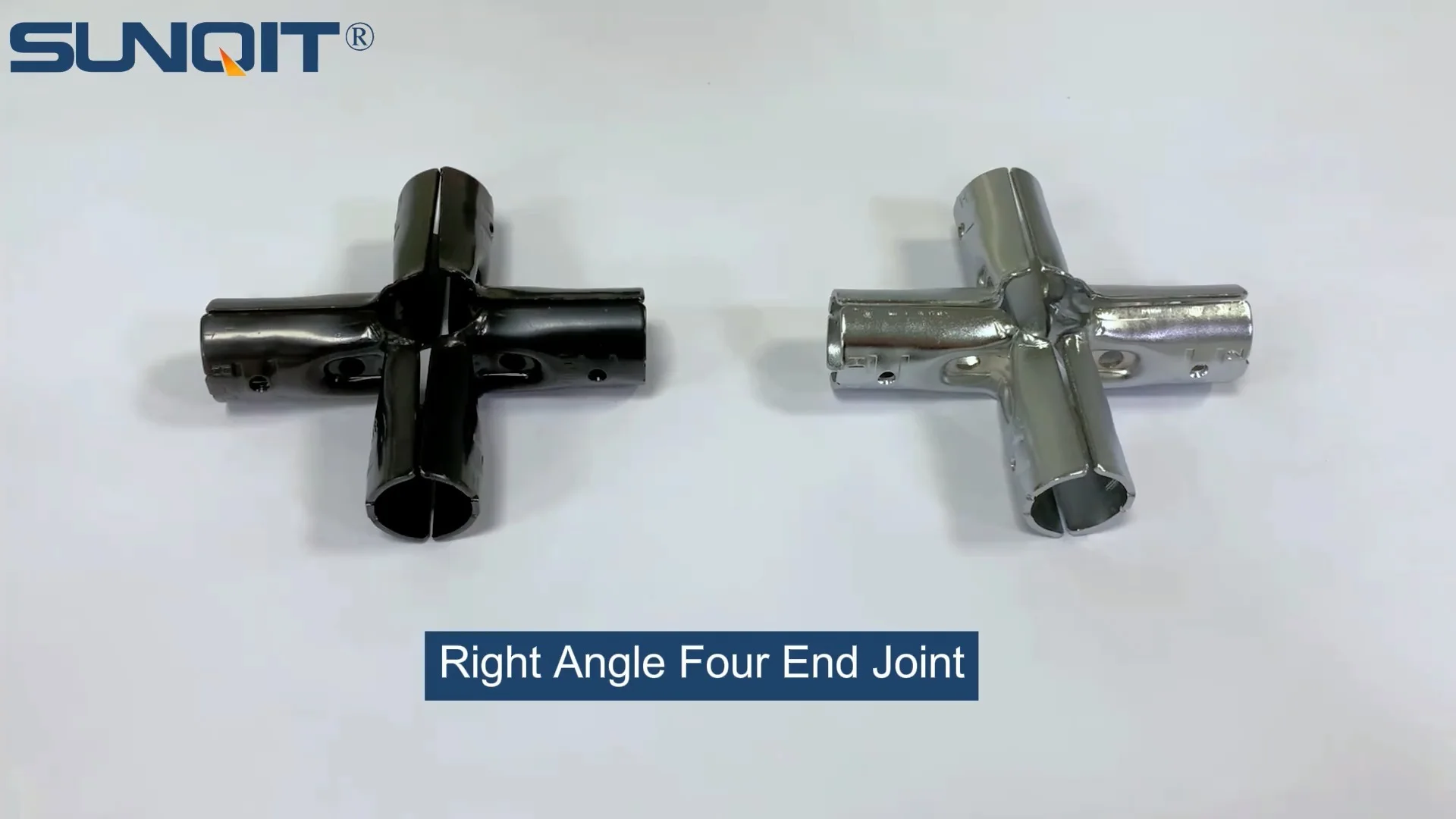
In the fast-paced world of manufacturing, where efficiency and sustainability are no longer just buzzwords but critical business imperatives, the tools and components that power production lines have never been more important. Enter the lean system —a philosophy turned practical framework that emphasizes minimizing waste, maximizing value, and adapting quickly to change. At the heart of this system lies a seemingly small but mighty component: the five way straight lean pipe joint. Often overlooked, this unassuming piece of hardware is a linchpin in building reusable, flexible, and eco-friendly manufacturing setups. Today, we're diving deep into how the five way straight lean pipe joint (and its chrome-plated variant, in particular) is revolutionizing sustainable manufacturing, why it matters for your operations, and how partnering with the right lean pipe supplier can turn your production floor into a model of efficiency and environmental responsibility.
The Evolution of Lean: From Philosophy to Practical Tools
Lean manufacturing isn't new. Born from the Toyota Production System in the mid-20th century, it started as a way to eliminate "muda" (waste) in every step of the production process—whether that waste was time, materials, or energy. But as industries evolved, so did lean. Today, it's not just about cutting costs; it's about building resilience. In an era where consumer demands shift overnight and supply chains face constant disruption, manufacturers need setups that can pivot without overhauling entire systems. That's where reusable components come in.
Traditional manufacturing setups often rely on fixed, custom-built structures: rigid workbenches bolted to the floor, static material racks, and conveyor systems that can't be reconfigured without extensive (and expensive) modifications. When a product line changes or demand spikes, these setups become liabilities. They generate waste—scrapped materials, idle labor, excess energy—and they slow down innovation. Reusable lean systems, by contrast, are built on modularity. Think of them as industrial Lego sets: components that can be assembled, disassembled, and reassembled in endless configurations to meet evolving needs. And at the center of this modularity? Joints. Specifically, joints that connect pipes, profiles, and panels to form everything from workbenches to flow racks to assembly lines.
Meet the Hero: The Five Way Straight Lean Pipe Joint
If reusable lean systems are the "what," then the five way straight lean pipe joint is the "how." This unassuming component is designed to connect up to five pipes in a straight line, creating sturdy, customizable structures with minimal effort. Unlike traditional welded joints or one-off brackets, it's engineered for flexibility: twist it, lock it, unlock it, and repurpose it—all without specialized tools or permanent damage. Let's break down why this matters.
Imagine a electronics manufacturer that needs to shift from assembling smartphones to tablets overnight. With a fixed production line, this might take weeks of retooling, downtime, and wasted materials. But with a lean system built using five way straight lean pipe joints? The team can disassemble the existing workbench, reconfigure the aluminum profile frames, and have a new setup ready in hours. No welding, no cutting, no scrap—just adaptability. That's the power of modular design, and it all starts with the right joint.
But not all joints are created equal. The chrome-plated variant of the five way straight lean pipe joint, in particular, stands out for its durability and versatility. The chrome finish isn't just for aesthetics; it adds a layer of corrosion resistance, making it ideal for environments where moisture or chemicals are present—think food processing, automotive, or pharmaceutical plants. It also reduces friction, making assembly and disassembly smoother, which cuts down on labor time. For manufacturers operating in high-wear settings, this translates to longer-lasting components and fewer replacements, which is a win for both the bottom line and the planet.

Under the Hood: What Makes This Joint Tick?
To truly appreciate the five way straight lean pipe joint, let's get into the details. Below is a breakdown of its key specifications and how they contribute to its performance in real-world manufacturing scenarios:
| Feature | Specification | Why It Matters |
|---|---|---|
| Material | High-grade steel core with chrome plating | Steel ensures strength (supports up to 200kg per joint), while chrome resists rust and wear—critical for long-term reuse. |
| Compatibility | Fits standard 28mm lean pipes, aluminum profile (30x30mm, 40x40mm), and plastic-coated tubes | Works with existing lean system components, so you don't have to replace your entire setup to upgrade. |
| Locking Mechanism | Spring-loaded cam lock with ergonomic handle | No tools needed—just twist the handle to lock/unlock. Reduces assembly time by 50% compared to bolted joints. |
| Rotation Range | 360° swivel on all five ports | Allows for angled connections, not just straight lines—perfect for building curved workbenches or sloped flow racks. |
| Weight Capacity | Up to 150kg per joint (when properly installed) | Sturdy enough for heavy-duty applications like automotive part assembly or bulk material storage. |
These specs might seem technical, but they translate to real-world benefits. For example, the spring-loaded cam lock means a line worker can reconfigure a workbench during a shift change without hunting for a wrench. The 360° rotation lets engineers design more ergonomic setups—say, a workbench with a sloped material rack that reduces bending and strain. And the compatibility with aluminum profile means you can mix and match materials: use lightweight aluminum for upper shelves and steel pipes for lower, weight-bearing sections. It's this flexibility that makes the five way straight lean pipe joint a favorite among plant managers and sustainability officers alike.

Sustainability: More Than Just a Bonus
In 2025, "sustainable manufacturing" is no longer an optional goal—it's a business necessity. Customers demand it, regulators enforce it, and investors reward it. So how does a humble pipe joint contribute to this? Let's count the ways.
First, reusability. Traditional manufacturing setups are often "use once and discard." When a product line ends, the custom-built workbench or material rack gets scrapped, ending up in a landfill. The five way straight lean pipe joint changes that. Because it's modular and durable, it can be reused dozens of times across different setups. A joint that builds a smartphone assembly line today might build a medical device workbench tomorrow, then a packaging conveyor next year. Each reuse reduces the need for new materials, cutting down on raw resource extraction and manufacturing emissions.
Second, reduced waste. According to the Environmental Protection Agency (EPA), manufacturing accounts for over 10% of global waste. Much of this comes from overproduction, defects, and unused materials from rigid setups. With a lean system built on reusable joints, you produce only what you need, when you need it. No more over-ordering custom brackets or cutting pipes to length (and throwing away the scraps). The five way joint's compatibility with standard pipe sizes means you can buy in bulk and cut pipes to fit on-site, minimizing waste. Even better, when a component does wear out (after years of use), the joint itself is recyclable—chrome-plated steel is highly recyclable, further closing the loop on sustainability.
Third, energy efficiency. Fixed setups often require heavy machinery to move or modify—forklifts, cranes, welding equipment—all of which guzzle energy. Reusable lean systems, by contrast, are lightweight. A team of two can disassemble a workbench and carry it across the factory floor by hand. No heavy equipment, no carbon emissions, just human power. Over time, this adds up to significant energy savings, especially for facilities with frequent reconfigurations.
Take the example of a mid-sized automotive parts supplier in Michigan. After switching to a lean system using five way straight lean pipe joints and aluminum profile workbenches, they reported a 30% reduction in waste sent to landfills and a 15% drop in energy costs within the first year. Their production line changeovers, which used to take 8 hours, now take 90 minutes. And because the joints are reusable, they've avoided purchasing over $50,000 in new equipment. For a business operating on thin margins, these numbers aren't just good for the planet—they're good for survival.

Where Does It Fit? Real-World Applications
The five way straight lean pipe joint isn't a one-trick pony. Its versatility makes it indispensable across industries and applications. Let's explore a few scenarios where it shines:
1. Workbenches: The Backbone of Production
Every factory has them, but not all workbenches are created equal. A standard wooden or metal workbench is fixed—if your workers need more storage, or a different height, you're out of luck. A lean workbench built with five way joints? It's fully customizable. Add a shelf here, a tool rail there, or adjust the height by swapping out pipe lengths. For example, a workbench E (single deck-without caster) can be transformed into a mobile workstation by adding casters and extra shelves—all using the same joints. In electronics manufacturing, where component sizes vary daily, this adaptability is a game-changer. Workers can reconfigure their benches to hold smaller circuit boards one day and larger displays the next, without missing a beat.
2. Flow Racks: Keeping Materials Moving
In lean manufacturing, "flow" is everything. Materials should move smoothly from storage to assembly to shipping, with no bottlenecks. Flow racks—tilted racks with roller tracks—are designed to do just that, but their effectiveness depends on how they're built. The five way joint excels here because it allows for precise angle adjustments. Want a steeper slope for heavier parts? Adjust the joint. Need to add a third row of bins? Connect another pipe. And because the joints are compatible with roller track accessories, you can easily integrate wheels or guides to control material flow. A food packaging plant in California, for instance, uses flow racks built with five way joints to move plastic containers from the warehouse to the filling line. When they introduced a new, taller container, they simply adjusted the rack's angle using the joints—no new rack needed.
3. Turnover Trolleys: Mobility Without Compromise
Turnover trolleys are the workhorses of the factory floor, shuttling materials between stations. But traditional trolleys are often heavy, rigid, and prone to damage. A lean turnover trolley, built with five way joints and lightweight aluminum pipe, is different. It's sturdy enough to carry 200kg of parts but light enough for a single worker to push. The joints allow for custom designs—add a fold-down shelf for tools, or a mesh panel to secure small items. And when the trolley isn't needed, disassemble it and store the pipes and joints—no more wasting space on idle equipment.
Why the Right Lean Pipe Supplier Matters
So, you're sold on the five way straight lean pipe joint. Now what? The next step is finding a lean pipe supplier you can trust. Not all suppliers are created equal, and choosing the wrong one can turn your sustainability goals into a headache. Here's what to look for:
Quality First: A joint that bends or breaks after a few uses isn't just frustrating—it's dangerous. Look for suppliers who use high-grade steel and rigorous testing (like load-bearing and corrosion resistance tests). Ask for certifications: ISO 9001 for quality management, or ISO 14001 for environmental standards. A reputable supplier will happily share these.
Range of Products: The five way joint is great, but you'll need other components too—pipes, aluminum profile, casters, roller tracks. Choosing a supplier that offers a full suite of lean system products ensures compatibility. No more guessing if a joint will fit a pipe from another brand. Plus, buying from one supplier simplifies logistics and reduces your carbon footprint from shipping.
Technical Support: Even the best components are useless if you don't know how to use them. Look for suppliers with a dedicated technical team that can help design your setup, troubleshoot issues, and train your staff. Some suppliers even offer on-site consultations to optimize your layout for efficiency and sustainability.
Sustainability Practices: If sustainability is a priority for your business, it should be for your supplier too. Ask about their manufacturing processes: Do they use renewable energy? Recycle waste? Source materials locally? A supplier that walks the walk on sustainability will help you meet your own ESG goals.
Take the example of a medical device manufacturer in Texas. They initially bought cheap, off-brand lean pipe joints from an overseas supplier to save money. Within six months, the joints began to rust, and the locking mechanisms failed, leading to workbench collapses and production delays. They switched to a local lean pipe supplier with ISO 14001 certification, paying slightly more upfront—but the new joints lasted five years, and the supplier's technical team helped redesign their flow racks, cutting material waste by 40%. The lesson? Skimping on the supplier costs more in the long run.
The Future of Manufacturing: Lean, Reusable, and Ready for Anything
As we look ahead, the manufacturing landscape will only grow more dynamic. Consumer demands for customization, global supply chain uncertainties, and stricter environmental regulations will push businesses to be more agile and sustainable than ever. In this context, the five way straight lean pipe joint isn't just a tool—it's a strategic asset. It's the difference between being stuck in the past and thriving in the future.
Imagine a world where factories are no longer filled with fixed, single-purpose machines, but with modular, ever-evolving systems that adapt to new products, new technologies, and new challenges. A world where waste is the exception, not the rule. A world where sustainability and profitability go hand in hand. This isn't a utopian dream—it's possible today, and it starts with components like the five way straight lean pipe joint.
So, whether you're a small job shop or a global manufacturing giant, it's time to rethink your production setup. Ditch the rigid, wasteful systems of the past and embrace the flexibility of reusable lean systems. Start small: swap out a few fixed workbenches for ones built with five way joints and aluminum profile. See how quickly your team adapts, how much waste you reduce, and how much more resilient your operations become. Before long, you'll wonder how you ever worked without it.
Final Thoughts: Small Joint, Big Impact
The five way straight lean pipe joint may be small in size, but its impact on manufacturing efficiency and sustainability is enormous. It's a testament to the power of thoughtful design—proving that even the tiniest components can drive meaningful change. By choosing reusable, modular tools like this joint, manufacturers aren't just improving their bottom line; they're building a more resilient, eco-friendly future for the industry.
So, the next time you walk through your factory floor, take a closer look at the structures around you. Are they holding you back, or propelling you forward? If it's the former, maybe it's time to make a change. After all, in manufacturing, as in life, the strongest systems are built on the right foundations—and sometimes, those foundations are as simple as a well-designed joint.