- Company Articles
- Products and Technology
- Product knowledge
- Five Way Straight Lean Pipe Joint for Trolley Construction in Lean Systems

Five Way Straight Lean Pipe Joint for Trolley Construction in Lean Systems
Related Product
Five Way Straight Lean Pipe Joint
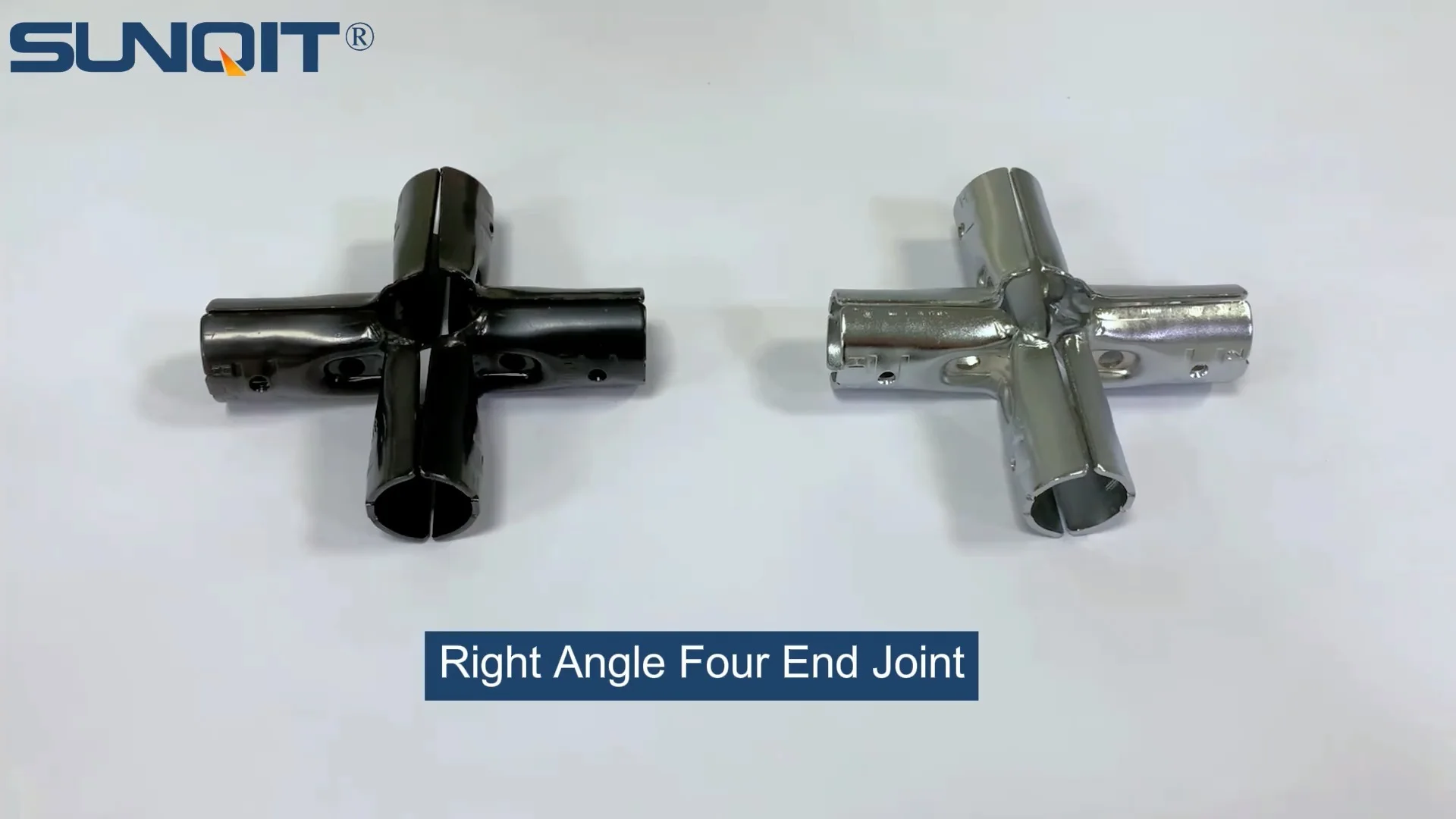
Five way straight lean pipe joint, for 5 pcs 28mm lean pipe connect in straight angle,which used widely in workbench, flow rack, hand trolley frame connection.
The Unsung Hero of Efficient Material Handling
Lean Systems: Where Every Component Counts
Walk into any well-run manufacturing facility today, and you'll notice something special: a rhythm. Parts glide smoothly from one workstation to the next, tools are within arm's reach, and teams move with purpose—no wasted steps, no bottlenecks, just the steady hum of productivity. This isn't magic; it's the power of a lean system in action. At its core, lean manufacturing is about stripping away inefficiency, but here's the truth: you can't build a lean system with clunky, rigid tools. That's where components like the five way straight lean pipe joint come into play—small in size, but massive in impact, especially when it comes to building turnover trolleys and racks, the workhorses of material transport.
Turnover trolleys and racks are everywhere in lean environments, and for good reason. They carry raw materials to assembly lines, move partially finished products between stations, and deliver packaging supplies to shipping areas. But not all trolleys are created equal. A poorly designed trolley wobbles under load, jams when turning, or takes hours to assemble. A well-designed one? It feels like an extension of the team—durable, flexible, and easy to adapt when production needs change. And the secret to that adaptability often starts with the joints that hold the trolley together. Today, we're diving deep into one such joint: the five way straight lean pipe joint. What is it? How does it work? And why has it become a go-to choice for manufacturers aiming to build truly lean material handling systems?
Why Turnover Trolleys Matter in Lean Systems
Before we get into the nitty-gritty of the five way joint, let's take a step back and appreciate why turnover trolley and rack systems are so critical in lean operations. In traditional manufacturing setups, materials often sit idle—stacked in corners, waiting for a forklift, or tied up in overly complex transport processes. This "waiting time" is one of the biggest wastes in lean terminology (known as "muda"), and it's a silent productivity killer. Turnover trolleys eliminate this waste by keeping materials in constant motion, right where they're needed, when they're needed.
But here's the catch: to keep up with the dynamic needs of modern production, these trolleys can't be one-size-fits-all. A electronics manufacturer might need a trolley with ESD-safe surfaces to protect sensitive components, while an automotive plant might require a heavy-duty trolley to carry metal parts. Some days, you might need a trolley with three shelves; other days, you might need to reconfigure it to hold larger items. This flexibility is non-negotiable—and that's where lean pipe systems, built with modular joints, shine.
Lean pipes (often made of steel, aluminum, or stainless steel) are lightweight yet strong, and they pair with a variety of joints to create custom structures. From workbenches to flow racks, these systems let teams build exactly what they need, when they need it—without welding, drilling, or specialized tools. And among all the joints available, the five way straight lean pipe joint stands out for its ability to add complexity without compromising simplicity. Let's break it down.

The Five Way Straight Lean Pipe Joint: A Closer Look
At first glance, a five way straight lean pipe joint might look like a simple metal connector—and in many ways, that's the beauty of it. But don't let its simplicity fool you. This small, often chrome-plated component is engineered to do something remarkable: connect up to five lean pipes in a straight line or at precise angles, all while maintaining structural integrity. Think of it as the "hub" of a trolley's frame, where vertical supports, horizontal rails, and cross-braces all come together.
Most five way joints are designed with multiple threaded holes or sockets, each sized to fit standard lean pipe diameters (typically 28mm for steel pipes or 30mm for aluminum). To assemble, you simply slide the pipe into the joint, tighten a setscrew or bolt, and you're done—no adhesives, no welding, no hassle. This "tool-less" assembly is a game-changer for teams that need to reconfigure their trolleys on the fly. For example, if a production line switches from assembling small widgets to larger assemblies, workers can quickly disassemble the trolley, add extra pipes using the five way joint, and have a taller, sturdier structure ready in minutes.
But what really sets the five way joint apart is its versatility. Unlike two-way or three-way joints, which limit you to a fixed number of connections, the five way joint gives you options. Need to add a side rail to your trolley for extra stability? Use two of the joint's sockets. Want to create a multi-level shelf system? Use three or four. And because the joints are standardized, you can mix and match them with other joint types (like 90-degree elbows or swivel joints) to create almost any configuration imaginable.
Key Features of the Five Way Straight Lean Pipe Joint
- Multi-directional Connectivity: Connects up to five lean pipes in straight or angled configurations, depending on the model.
- Tool-Less Assembly: Uses setscrews or bolts for quick tightening/loosening—no welding or drilling required.
- Durable Construction: Typically made of zinc-plated steel or chrome, resistant to corrosion and wear in industrial environments.
- Compatibility: Works with standard lean pipe sizes (28mm, 30mm) and other joint types for endless customization.
- Load-Bearing Capacity: Designed to support heavy loads (often up to 50kg per joint, depending on pipe thickness and configuration).

How Does It Compare to Other Lean Pipe Joints?
To truly understand the value of the five way straight lean pipe joint, it helps to see how it stacks up against other common joint types. Let's compare it to three popular alternatives: the two-way joint, three-way joint, and 90-degree crossing joint.
| Joint Type | Max Connections | Best For | Limitations | Ideal For Trolley Construction? |
|---|---|---|---|---|
| Two-Way Joint | 2 | Straight lines, simple frames | Limited flexibility; can't create complex structures. | Only for basic, single-level trolleys. |
| Three-Way Joint | 3 | L-shaped frames, small shelves | Still limited for multi-level or multi-directional designs. | Good for small trolleys, but not for heavy customization. |
| 90-Degree Crossing Joint | 4 (in cross shape) | Cross-braces, horizontal/vertical intersections | Fixed 90-degree angle; no straight-line connections. | Useful for bracing, but not as a main hub. |
| Five Way Straight Joint | 5 | Multi-level trolleys, complex frames, custom shelves | Slightly bulkier than smaller joints; overkill for very simple structures. | Yes—ideal for versatile, heavy-duty trolleys. |
As the table shows, the five way joint isn't the only option—but it's the most versatile for building turnover trolleys that need to adapt. For example, a three-level turnover trolley might use five way joints at each corner to connect vertical posts, horizontal rails, and diagonal braces, creating a stable structure that can hold hundreds of kilograms of materials. Try doing that with a two-way joint, and you'd end up with a wobbly, inefficient mess.

Building a Turnover Trolley with Five Way Joints: A Step-by-Step Guide
Let's put theory into practice. Imagine you're tasked with building a three-level turnover trolley for a warehouse that needs to transport small parts between picking stations. Here's how the five way straight lean pipe joint would come into play:
- Gather Materials: You'll need lean pipes (steel or aluminum), five way straight joints, four-way joints (for corners), caster wheels (with brakes for stability), and plywood or metal shelves.
- Build the Base Frame: Use four-way joints to create a rectangular base (e.g., 120cm x 60cm). Attach caster wheels to the bottom corners—this is where the trolley gets its mobility.
- Add Vertical Supports: At each corner of the base frame, attach vertical pipes using five way joints. These joints will serve as the connection points for the shelves.
- Install Shelf Rails: Using the five way joints, connect horizontal pipes between the vertical supports at three heights (e.g., 40cm, 80cm, and 120cm from the base). These will hold the shelves.
- Add Cross-Braces (Optional): For extra stability, use diagonal pipes and three-way joints to brace the frame—especially if the trolley will carry heavy loads.
- Attach Shelves: Place plywood or metal shelves on the horizontal rails. Some systems use clips or brackets to secure shelves, but with lean pipes, you can often just rest them on the rails for quick removal.
- Test and Adjust: Roll the trolley around to check for wobbling. If needed, tighten the setscrews on the five way joints or add extra braces.
The entire process, from start to finish, takes about an hour with a team of two—no special training required. And if next month you need a taller trolley? Simply loosen the five way joints, add longer vertical pipes, and reposition the shelves. That's the beauty of modularity.
Real-World Impact: How the Five Way Joint Improves Daily Operations
It's one thing to talk about features and specs, but it's another to see how the five way straight lean pipe joint makes a difference on the factory floor. Let's look at a real example: a mid-sized electronics manufacturer that was struggling with material handling in their assembly department.
Before switching to lean pipe trolleys with five way joints, the team used wooden shelves on wheels. These shelves were heavy, hard to clean, and impossible to reconfigure. When they launched a new product line with larger components, they had to buy entirely new shelves—costing time and money. Worse, the old shelves often got stuck in narrow aisles, slowing down material delivery to the assembly line.
After switching to lean pipe trolleys built with five way joints, here's what changed:
- Faster Reconfiguration: When the new product line launched, the team reconfigured their existing trolleys in 30 minutes instead of buying new ones—saving $5,000 in equipment costs.
- Reduced Downtime: The lighter, more maneuverable trolleys stopped getting stuck in aisles, cutting material delivery time by 25%.
- Safer Work Environment: The sturdy, braced frames (thanks to five way joints) reduced the risk of shelves collapsing—no more near-misses with falling parts.
- Happier Teams: Workers no longer had to struggle with heavy wooden shelves. One operator noted, "It's like night and day—now I can move materials by myself without asking for help."
This isn't an isolated case. Across industries—automotive, pharmaceuticals, food and beverage—lean pipe systems with five way joints are becoming the standard for material handling. They're affordable, adaptable, and they put the power of customization in the hands of the people who use the equipment every day.
Why the Five Way Straight Lean Pipe Joint Deserves a Spot in Your Lean Toolkit
In the world of lean manufacturing, it's often the smallest components that make the biggest difference. The five way straight lean pipe joint might not grab headlines, but it's a workhorse that enables the flexibility, efficiency, and adaptability that modern production demands. Whether you're building turnover trolleys, flow racks, or custom workbenches, this joint simplifies complexity—letting you create sturdy, custom structures without the hassle of traditional construction methods.
So, if you're looking to take your lean system to the next level, don't overlook the power of a well-designed lean pipe joint . It's not just a connector—it's a bridge between rigid processes and the agile, responsive workflows that drive success in today's fast-paced manufacturing world. And when paired with quality lean pipes, caster wheels, and accessories, it's the foundation of a material handling system that grows with your business.
After all, in lean manufacturing, the goal isn't just to work harder—it's to work smarter. And the five way straight lean pipe joint? It's one smart tool in the toolkit.