- Company Articles
- Products and Technology
- Product knowledge
- Five Way Straight Lean Pipe Joint Longevity: Industrial Lifespan Analysis

Five Way Straight Lean Pipe Joint Longevity: Industrial Lifespan Analysis
Related Product
Five Way Straight Lean Pipe Joint
Five way straight lean pipe joint, for 5 pcs 28mm lean pipe connect in straight angle,which used widely in workbench, flow rack, hand trolley frame connection.
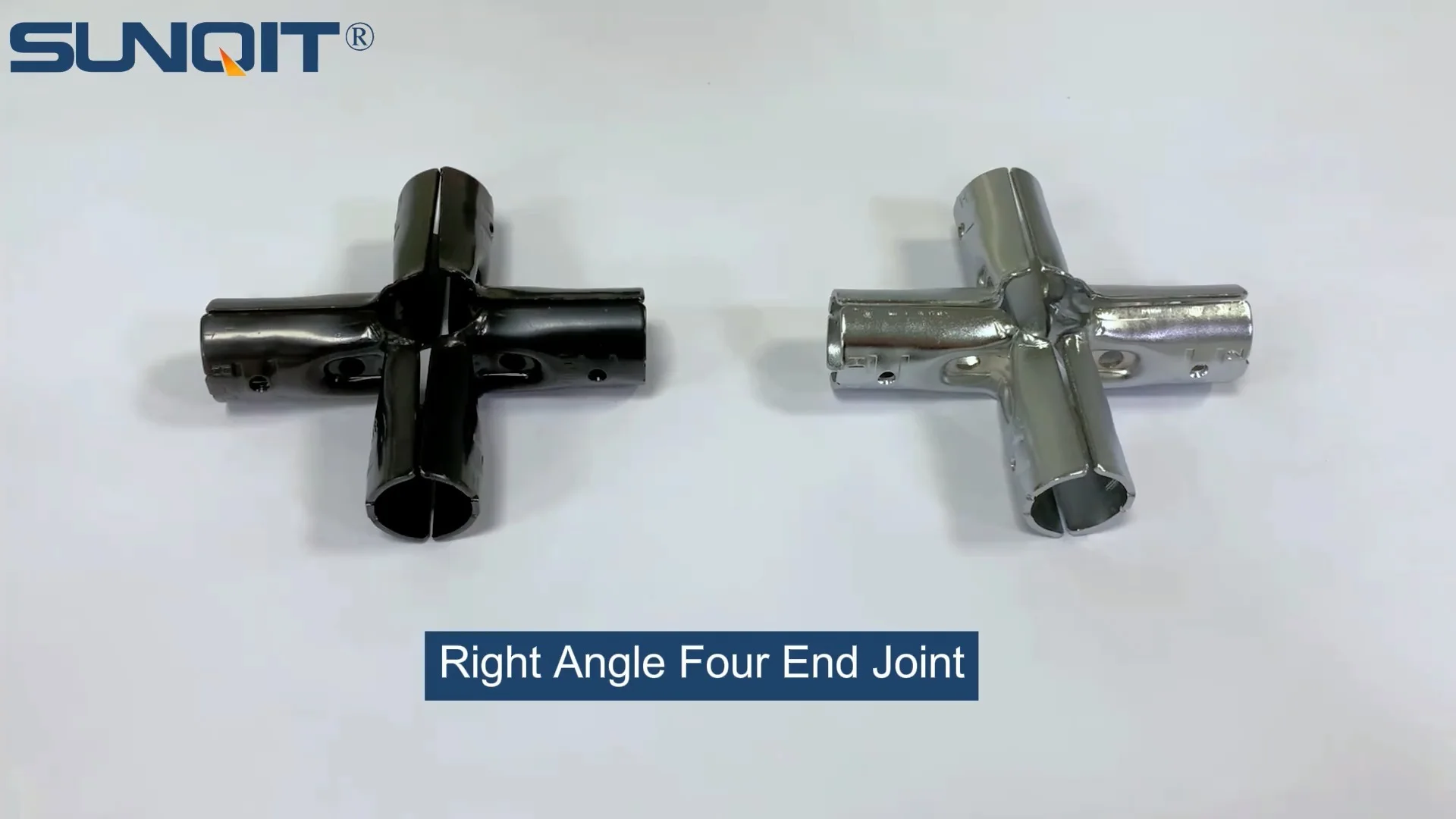
In the bustling heart of modern manufacturing facilities, where assembly lines hum and productivity reigns supreme, there's an unsung hero working quietly behind the scenes: the lean pipe system. These versatile, modular setups form the backbone of workbenches, material racks, conveyor systems, and turnover trolleys, adapting to the ever-changing needs of factories worldwide. Yet, for all their flexibility, the true durability of a lean pipe system hinges on one critical component: the joints. Among these, the five way straight lean pipe joint stands out as a workhorse, connecting multiple pipes at once to create complex, stable structures. But how long can this small but mighty component really last? In this in-depth analysis, we'll explore the factors that influence the longevity of the five way straight lean pipe joint, from material selection to maintenance practices, and why it matters for your bottom line.
Understanding the Five Way Straight Lean Pipe Joint: A Backbone of Modular Systems
Before diving into lifespan, let's clarify what a five way straight lean pipe joint is and why it's indispensable. In the world of lean manufacturing, modularity is key—systems need to be reconfigurable, scalable, and easy to assemble without welding or specialized tools. Enter the lean pipe joint: a connector that joins pipes (often steel, aluminum, or stainless steel) to form structures like workbenches, flow racks, or production lines. The five way straight lean pipe joint, as its name suggests, is designed to connect up to five pipes in a straight or parallel arrangement, making it ideal for building multi-tiered racks, T-shaped workstations, or complex material handling setups.
Imagine a busy automotive parts plant: their assembly line workbench might use a five way joint to support a main horizontal pipe, with two vertical pipes for height, and two additional horizontal pipes for tool holders and material bins. Without this joint, the structure would require multiple smaller connectors, increasing complexity and weakening stability. The five way joint simplifies this, reducing the number of connection points and distributing weight evenly across the system. But with great versatility comes great responsibility—this joint must withstand constant use, varying loads, and harsh industrial environments. So, what determines how long it can keep up?
Materials Matter: The Foundation of Longevity
The first factor shaping the lifespan of a five way straight lean pipe joint is the material it's made from. Manufacturers typically offer joints in three primary materials: steel, aluminum, and stainless steel, each with its own trade-offs in strength, corrosion resistance, and cost. Let's break them down:
Steel Joints: Often coated in zinc or plastic (like the 1.5mm PE coated lean pipe), steel joints are prized for their affordability and raw strength. They're a common choice for heavy-duty applications, such as supporting loaded material racks or industrial workbenches. However, uncoated steel is prone to rust in humid or damp environments, which can weaken the joint over time. A high-quality PE coating or chrome finish (like the 180° fixed lean pipe joint chrome) can mitigate this, adding a layer of protection against moisture and chemicals. In dry, indoor settings, a well-coated steel five way joint can last 5–7 years with proper care.
Aluminum Joints: Lightweight and naturally corrosion-resistant, aluminum joints (often paired with aluminum profile or aluminum lean pipe) are a favorite in industries where weight matters—think turnover trolleys or mobile workstations. Aluminum's resistance to rust makes it ideal for food processing, pharmaceutical, or cleanroom environments, where hygiene and moisture control are critical. While aluminum is not as strong as steel, modern alloys and precision manufacturing (like internal rotatary aluminum joints) have boosted its load-bearing capacity. An aluminum five way joint, when used within its weight limits, can outlast steel in wet conditions, averaging 7–10 years of service.
Stainless Steel Joints: For the harshest environments—chemical plants, outdoor storage yards, or marine manufacturing facilities—stainless steel pipe series joints are the gold standard. Stainless steel contains chromium, which forms a passive oxide layer that resists corrosion, even when exposed to salt, acids, or high humidity. While more expensive than steel or aluminum, stainless steel five way joints offer unmatched durability. In industrial settings with regular maintenance, they can last 10–15 years or more, making them a long-term investment for facilities with aggressive operating conditions.
It's worth noting that material quality varies widely between suppliers. A cheap steel joint might use thin, low-grade metal with a subpar coating, failing in 2–3 years, while a premium stainless steel joint from a reputable lean pipe supplier could exceed 15 years. This is why choosing a trusted supplier—one that prioritizes material testing and quality control—is just as important as the material itself.

Key Factors Influencing Lifespan: Beyond the Material
While material sets the baseline, several external factors determine whether a five way straight lean pipe joint lives out its full potential or fails prematurely. Let's explore the most critical ones:
1. Load Capacity: The Weight of Expectations
Every lean pipe joint has a maximum load rating, specified by the manufacturer. This rating indicates the maximum weight the joint can support without deforming or failing. For the five way straight joint, this is particularly important because it's often used in multi-directional load scenarios—e.g., a vertical pipe supporting a heavy workbench top, while horizontal pipes hold bins of parts. Overloading the joint is the single biggest enemy of longevity.
Consider a scenario: A factory uses a five way joint rated for 200kg to support a material rack holding 300kg of metal components. Over time, the joint's internal threads or clamping mechanism will stretch, weaken, or crack. What starts as a slight wobble in the rack can escalate to a full collapse if left unchecked. Conversely, staying within the load rating allows the joint to distribute weight evenly, minimizing stress and wear. Always check the supplier's specs—most reputable lean pipe suppliers provide detailed load charts for their joints, including dynamic loads (for moving parts like conveyor systems) and static loads (for stationary workbenches).
2. Environmental Conditions: Battling the Elements
Industrial environments are rarely gentle. From the humidity of a food packaging plant to the chemical fumes of a electronics assembly line, the five way joint faces a daily onslaught of environmental stressors. Here's how different conditions impact lifespan:
- Moisture and Humidity: Uncoated steel joints will rust, while even coated steel can corrode if the coating is scratched. Aluminum and stainless steel joints fare better, but aluminum can still suffer from galvanic corrosion if paired with dissimilar metals (e.g., steel pipes with aluminum joints) without proper insulation.
- Chemicals and Oils: Factories using coolants, lubricants, or cleaning agents expose joints to harsh substances. Oil can degrade plastic coatings, while acids can eat away at metal surfaces. Stainless steel is the most resistant here, followed by anodized aluminum.
- Temperature Fluctuations: Extreme heat (e.g., near ovens or welding stations) can weaken plastic components or coatings, while cold temperatures can make metal brittle. Look for joints rated for your facility's temperature range—some suppliers offer high-temperature stainless steel options for specialized environments.
3. Installation Quality: The Devil in the Details
Even the best joint will fail prematurely if installed incorrectly. Common installation mistakes include under-tightening (leading to loose connections and vibration wear), over-tightening (stripping threads or cracking the joint), and misalignment (creating uneven stress on the joint). For the five way straight joint, which connects multiple pipes, alignment is critical—if one pipe is slightly off-angle, the joint will bear extra stress on one side,.
Proper installation requires following the supplier's guidelines: using the correct tools (e.g., torque wrenches for threaded joints), ensuring pipes are cut straight, and checking for level and plumb after assembly. Many lean pipe suppliers offer installation guides or training, which is well worth the investment. A study by the Lean Manufacturing Association found that facilities with trained installers reported 40% fewer joint failures than those without.
4. Maintenance: Prolonging the Lifespan
Like any industrial component, the five way straight lean pipe joint needs regular maintenance to reach its maximum lifespan. Fortunately, maintenance is simple and low-cost, involving just a few key steps:
- Regular Inspections: Check joints monthly for signs of wear: rust, cracks, loose threads, or deformation. Pay extra attention to high-stress areas, like joints supporting heavy loads or near moving parts.
- Tightening: Vibrations from machinery or material movement can loosen joints over time. Use a torque wrench to re-tighten connections quarterly (or monthly for high-vibration areas).
- Cleaning: Wipe down joints with a mild detergent to remove oil, dust, or chemicals. For stainless steel joints, a quick polish with a stainless steel cleaner can prevent staining and corrosion.
- Replacement of Wear Parts: If a joint shows signs of damage (e.g., stripped threads, cracked housing), replace it immediately. Delaying replacement risks damaging adjacent pipes or causing system failure.

Comparative Lifespan: How Does the Five Way Joint Stack Up?
To put the five way straight lean pipe joint's longevity in perspective, let's compare it to other common lean pipe joints, using material type as a variable. The table below summarizes typical lifespans based on industry data and supplier reports:
| Joint Type | Material | Typical Lifespan (Years)* | Max Load Capacity (Static, kg) | Best For | Maintenance Frequency |
|---|---|---|---|---|---|
| Five Way Straight Lean Pipe Joint | Steel (PE Coated) | 5–7 | 150–250 | Multi-tier racks, complex workbenches | Monthly inspections, quarterly tightening |
| Five Way Straight Lean Pipe Joint | Aluminum | 7–10 | 100–200 | Light-to-medium duty workstations, cleanrooms | Monthly inspections, quarterly tightening |
| Five Way Straight Lean Pipe Joint | Stainless Steel | 10–15+ | 200–300 | Food processing, chemical plants, outdoor use | Quarterly inspections, bi-annual tightening |
| Three Way Lean Pipe Joint | Steel (PE Coated) | 6–8 | 200–300 | T-shaped structures, simple racks | Monthly inspections, quarterly tightening |
| Two Way Lean Pipe Joint | Aluminum | 8–12 | 150–250 | Straight conveyor rails, linear structures | Quarterly inspections, bi-annual tightening |
*Lifespan assumes proper installation, load adherence, and maintenance in a standard industrial environment (65–75°F, 40–60% humidity).
As the table shows, the five way straight lean pipe joint holds its own against other joint types, with stainless steel variants offering the longest lifespan. Its slightly lower lifespan compared to two way or three way joints is due to its higher complexity—with more connection points, there are more areas prone to wear. However, its versatility makes this trade-off worthwhile for many applications.

Real-World Case Studies: Lessons in Longevity
To ground our analysis in real experience, let's look at two case studies from manufacturing facilities that relied heavily on five way straight lean pipe joints.
Case Study 1: Automotive Parts Plant – The Cost of Neglect
A mid-sized automotive parts manufacturer in Michigan installed a series of material racks using steel five way straight lean pipe joints (PE coated) in 2018. The racks were used to store heavy metal components, with each joint supporting approximately 220kg—just under the 250kg rating. However, the plant rarely performed maintenance, citing "lack of time." By 2021, several joints showed signs of rust (due to high humidity in the facility), and the racks began to wobble. In early 2022, a rack collapsed, damaging $10,000 worth of parts and causing a 4-hour production delay. An inspection revealed that 70% of the joints had corroded threads or cracked housings—well short of the expected 5–7 year lifespan.
After the incident, the plant implemented a monthly maintenance schedule, replaced all steel joints with stainless steel versions, and trained staff to check load limits. As of 2025, the new joints show minimal wear, and the racks remain stable.
Case Study 2: Electronics Assembly Facility – The Power of Proper Care
A California-based electronics manufacturer installed aluminum five way straight lean pipe joints in their assembly line workbenches in 2015. The facility prioritized maintenance: monthly inspections, quarterly tightening, and immediate replacement of any damaged joints. They also kept loads well below the 200kg rating, using the joints to support light circuit boards and tools. As of 2025—10 years later—the original joints are still in use, with only 5% requiring replacement due to normal wear. The plant estimates that the extended lifespan saved them over $30,000 in replacement costs compared to their previous 5-year replacement cycle with steel joints.
These cases highlight a clear message: maintenance and material selection directly impact lifespan. The California plant's proactive approach doubled the expected lifespan of their aluminum joints, while the Michigan plant's neglect cut their steel joints' life short by nearly half.
Future Trends: Innovations Extending Joint Lifespan
As manufacturing evolves, so too do the materials and designs of lean pipe components. Several emerging trends are poised to extend the lifespan of five way straight lean pipe joints:
- Advanced Coatings: New ceramic or polymer coatings for steel joints offer better corrosion resistance than traditional PE coatings, potentially adding 2–3 years to lifespan.
- Composite Materials: Some suppliers are testing carbon fiber-reinforced plastic joints, which are lightweight, corrosion-proof, and strong—ideal for high-stress, chemical-heavy environments.
- Smart Joints: Embedded sensors in joints can monitor load, vibration, and temperature, sending alerts when maintenance is needed. This predictive maintenance could prevent failures and extend lifespan by 15–20%.
- Precision Manufacturing: CNC machining and 3D printing allow for tighter tolerances in joint design, reducing stress points and improving load distribution.
Conclusion: Investing in Longevity Pays Off
The five way straight lean pipe joint may be small, but its impact on your facility's efficiency and safety is enormous. With a typical lifespan of 5–15 years (depending on material and care), it's a component that rewards attention to detail—from choosing the right material for your environment to sticking to a maintenance schedule. By understanding the factors that influence longevity, you can ensure your lean pipe system remains sturdy, safe, and cost-effective for years to come.
Remember: a joint that lasts longer means fewer replacements, less downtime, and lower costs over time. Whether you opt for stainless steel for a chemical plant, aluminum for a cleanroom, or coated steel for a dry warehouse, pair your material choice with regular inspections and proper loading. Your assembly line, your staff, and your bottom line will thank you.