- Company Articles
- Products and Technology
- Product knowledge
- Five Way Straight Lean Pipe Joint Material Science: Aluminum vs. Steel

Five Way Straight Lean Pipe Joint Material Science: Aluminum vs. Steel
Related Product
Five Way Straight Lean Pipe Joint
Five way straight lean pipe joint, for 5 pcs 28mm lean pipe connect in straight angle,which used widely in workbench, flow rack, hand trolley frame connection.
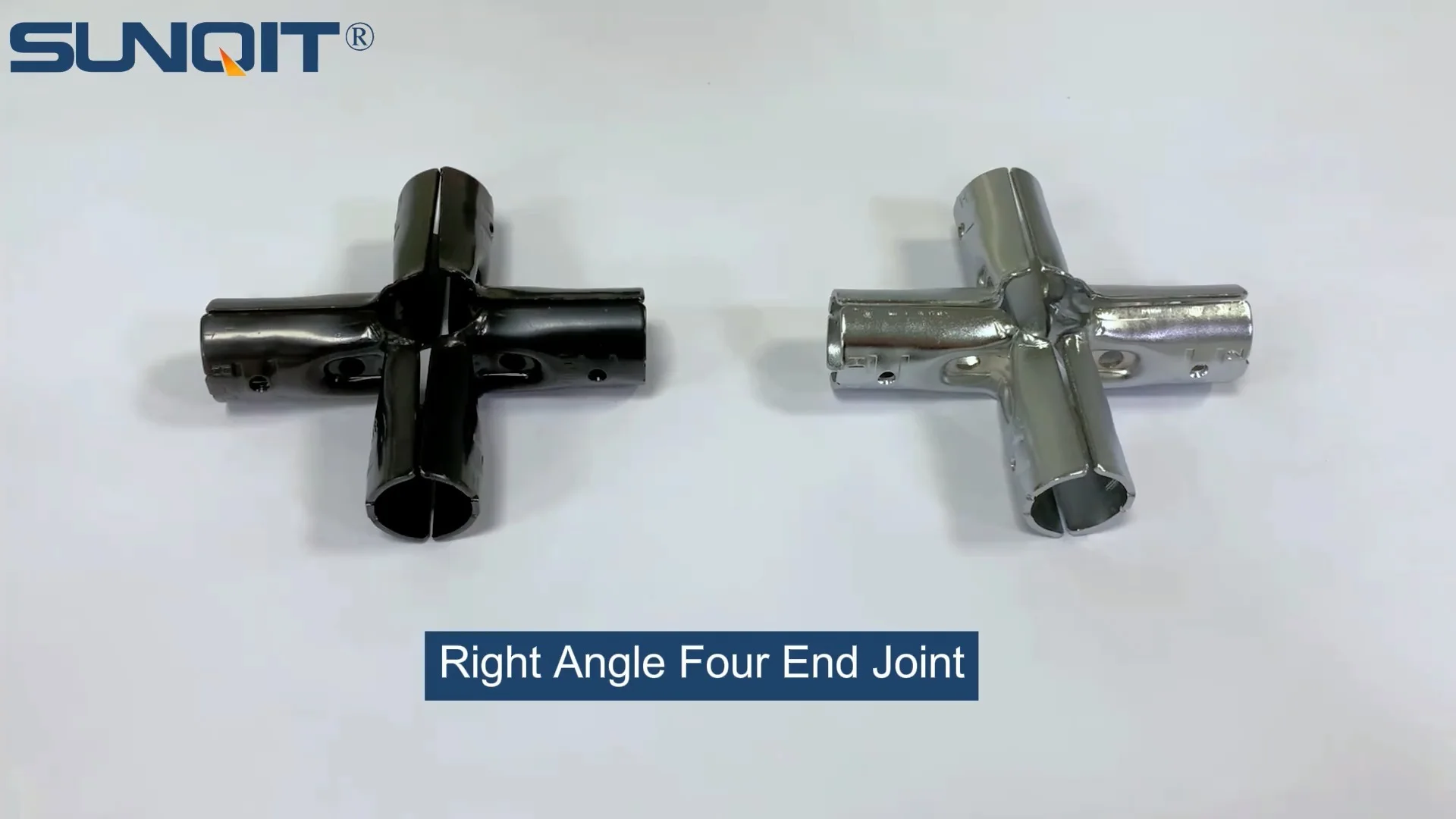
Walk into any bustling manufacturing plant, and you'll quickly spot the unsung architects of efficiency: lean pipe systems. From the workbenches where technicians assemble circuit boards to the flow racks that shuttle components across the factory floor, these modular setups rely on one critical component to stay flexible and functional: the lean pipe joint. Among the most versatile of these joints is the five way straight lean pipe joint—a unassuming yet powerful connector that links up to five pipes in different directions, enabling the creation of everything from multi-tiered material racks to intricate conveyor systems. But here's the catch: not all five way joints are created equal. The material they're made from—aluminum or steel—can make or break a system's durability, cost-effectiveness, and adaptability. In this deep dive, we'll explore the material science behind aluminum and steel five way straight lean pipe joints, helping you decide which one belongs in your next lean system upgrade.
What Makes the Five Way Straight Lean Pipe Joint So Critical?
Before we jump into materials, let's take a moment to appreciate why the five way straight lean pipe joint is a cornerstone of modern manufacturing. Unlike simpler two-way or three-way joints, this component is designed to connect pipes along multiple axes—think of it as the "hub" of a modular system. Need to build a workbench with a side shelf, a overhead tool rack, and a lower storage tier? A five way joint can anchor all those elements together. Want to create a flow rack with vertical dividers and horizontal roller tracks? Again, the five way joint steps in, ensuring stability while keeping the design modular. This flexibility is why lean system suppliers often highlight five way joints as a key selling point: they let facilities adapt on the fly, reconfiguring workstations or material handling setups without tearing everything down and starting over.
But with great versatility comes great responsibility—especially when it comes to material choice. A five way joint must withstand constant stress: the weight of heavy components, the vibration of conveyor systems, and the wear and tear of daily use. Choose the wrong material, and you could end up with joints that bend under load, corrode in humid environments, or add unnecessary bulk that slows down workflows. That's where aluminum and steel enter the ring. Let's break down how each material stacks up.
Aluminum Five Way Straight Lean Pipe Joints: Lightweight Powerhouses
Aluminum has long been a favorite in industries where weight and adaptability matter—and for good reason. Most aluminum lean pipe joints are crafted from alloys like 6061 or 6063, which blend aluminum with small amounts of magnesium and silicon to boost strength without sacrificing the material's natural advantages. Let's start with the basics: aluminum has a density of just 2.7 g/cm³, roughly a third of steel's 7.8 g/cm³. That translates to joints that are significantly lighter, making them easier to handle during assembly, less strenuous for workers to maneuver, and simpler to reconfigure when production needs change.
The Science Behind Aluminum's Strength
Don't let aluminum's lightness fool you—modern alloys are surprisingly strong. 6061 aluminum, for example, boasts a tensile strength of around 310 MPa (megapascals) and a yield strength of 276 MPa, meaning it can handle moderate loads without permanent deformation. For context, that's more than enough to support the average weight of components on a typical ESD workstation or a single-deck workbench (like the Workbench E, a popular model among lean system suppliers). What's more, aluminum's strength-to-weight ratio is off the charts. Pound for pound, it can often outperform steel in applications where weight is a constraint, such as mobile turnover trolleys or overhead racks where structural stress is minimized.
Corrosion Resistance: A Silent Advantage
Walk into a facility with high humidity—say, a food processing plant or a coastal manufacturing site—and you'll quickly see why corrosion resistance matters. Aluminum naturally forms a thin, protective oxide layer when exposed to air, acting as a barrier against rust and degradation. Unlike steel, which requires additional coatings (like zinc plating or paint) to fend off moisture, aluminum joints can stand up to damp environments with minimal maintenance. This is a game-changer for facilities that can't afford downtime for rust removal or joint replacements. For example, a material rack storing refrigerated components in a pharmaceutical warehouse would benefit greatly from aluminum's natural corrosion resistance, ensuring the rack stays sturdy for years without rust weakening the joints.
Thermal and Electrical Conductivity: More Than Just Bonus Features
Aluminum's high thermal conductivity (about 205 W/m·K) might not seem relevant at first glance, but in specialized settings, it's a lifesaver. Take electronics manufacturing, where ESD workstations are critical to preventing static damage. Aluminum joints can help dissipate heat generated by machinery, keeping workbench surfaces cooler and reducing the risk of overheating sensitive components. Similarly, aluminum's electrical conductivity makes it easier to ground, an essential feature for ESD-safe environments. Steel, by contrast, has lower thermal conductivity (around 45 W/m·K for carbon steel) and can trap heat, potentially creating hotspots on work surfaces.
The Drawbacks of Aluminum
Of course, aluminum isn't perfect. Its biggest downside is raw strength—while its strength-to-weight ratio is impressive, it can't match the absolute load capacity of steel. A five way aluminum joint might struggle to support the heaviest material racks (like the Material Rack B with 3 rows and 3 floors, a common heavy-duty model) when fully loaded with metal components. Additionally, aluminum is more prone to denting under impact. drop a heavy tool on an aluminum joint, and you might end up with a permanent bend, whereas a steel joint would likely shrug it off. Cost is another factor: aluminum alloys are generally more expensive per unit than carbon steel, though this can be offset by lower shipping costs (thanks to lighter weight) and reduced maintenance over time.

Steel Five Way Straight Lean Pipe Joints: The Heavy-Duty Champions
If aluminum is the sprinter of lean pipe materials, steel is the weightlifter. Steel five way joints are typically made from carbon steel or stainless steel (part of the stainless steel pipe series), each with its own strengths. Carbon steel, the most common variant, is an alloy of iron and carbon, with small amounts of manganese and silicon to enhance durability. Stainless steel, on the other hand, adds chromium (at least 10.5%) and often nickel to resist corrosion, making it ideal for harsh environments.
Steel's Unmatched Strength
When it comes to raw power, steel dominates. Carbon steel has a tensile strength ranging from 400–550 MPa, and stainless steel (like 304) can hit 505 MPa—far exceeding aluminum's capabilities. This makes steel joints the go-to choice for heavy-duty applications. Imagine a three-row, three-floor Material Rack B loaded with cast iron parts: a steel five way joint at the base will stand firm, while an aluminum joint might bow or crack under the strain. Steel's high yield strength (the point at which it starts to deform) also means it can handle sudden shocks, like a pallet slamming into a flow rack, without failing. For manufacturing plants that deal with large, heavy components—think automotive or aerospace—steel joints are non-negotiable.
Stainless Steel: Corrosion Resistance with a Steel Core
While carbon steel is strong, it's prone to rust if not coated. That's where stainless steel comes in. The chromium in stainless steel reacts with oxygen to form a passive oxide layer, similar to aluminum, but thicker and more durable. This makes stainless steel five way joints perfect for environments where hygiene or corrosion resistance is critical. Food processing plants, for example, use stainless steel to avoid rust contamination in food contact areas. Pharmaceutical facilities, too, rely on stainless steel for its easy-to-clean surface and resistance to harsh sanitizing chemicals. Even in outdoor settings—like loading docks exposed to rain and snow—stainless steel joints outlast their carbon steel counterparts.
The Tradeoffs of Steel
Steel's biggest drawback is its weight. A steel five way joint can weigh three times as much as an aluminum one, making assembly and reconfiguration labor-intensive. Workers may struggle to lift heavy steel-framed workbenches or trolleys, increasing the risk of injury and slowing down workflow changes. Cost is another consideration: while carbon steel is cheaper than aluminum upfront, stainless steel often costs more than aluminum alloys, especially for high-grade variants like 316 (which adds molybdenum for extra corrosion resistance). Additionally, steel conducts heat and electricity less efficiently than aluminum, which can be a problem in applications where thermal management or grounding is key—like ESD workstations where static buildup must be avoided.

Aluminum vs. Steel: A Head-to-Head Comparison
To help you visualize the differences, let's break down how aluminum and steel five way straight lean pipe joints compare across key metrics:
| Metric | Aluminum (6061 Alloy) | Steel (Carbon Steel) | Steel (Stainless Steel 304) |
|---|---|---|---|
| Density (g/cm³) | 2.7 | 7.8 | 7.9 |
| Tensile Strength (MPa) | 310 | 400–550 | 505 |
| Yield Strength (MPa) | 276 | 250–350 | 215 |
| Corrosion Resistance | High (natural oxide layer) | Low (requires coating) | Very High (chromium oxide layer) |
| Weight (Relative) | Light (1x) | Heavy (3x) | Heavy (3x) |
| Cost (Relative) | Moderate | Low | High |
| Thermal Conductivity (W/m·K) | 205 | 45 | 16 |
| Best For | Lightweight systems, ESD workstations, mobile setups | Heavy load applications, budget-friendly setups | Corrosive environments, hygiene-critical areas |

Real-World Applications: When to Choose Aluminum or Steel
The best material for your five way straight lean pipe joint depends on your specific needs. Let's explore three common scenarios where the choice between aluminum and steel becomes clear:
Scenario 1: Electronics Assembly Line (ESD Workstations)
An electronics manufacturer needs to build a modular assembly line with ESD workstations, where workers assemble circuit boards. The line must be reconfigurable every few months to accommodate new product designs, and static buildup must be minimized to protect sensitive components. Here, aluminum five way joints shine. Their lightweight nature makes reconfiguration easy, and aluminum's electrical conductivity helps ground static charges, aligning with ESD requirements. Additionally, aluminum's corrosion resistance ensures the workstations stay looking clean and professional in a climate-controlled factory environment.
Scenario 2: Automotive Parts Warehouse (Heavy Material Racks)
A warehouse stores heavy automotive parts—think engine blocks and transmissions—on multi-tiered material racks (like Material Rack B with 3 rows and 3 floors). Each shelf must support up to 500 kg of weight, and the racks are rarely reconfigured. Carbon steel five way joints are the obvious choice here. Their high tensile strength and low cost make them ideal for heavy, static loads. While the racks are heavy, the infrequent need for reconfiguration means the weight penalty is minimal, and the lower upfront cost keeps the project budget-friendly.
Scenario 3: Food Processing Plant (Sanitary Flow Racks)
A food processing plant needs flow racks to transport packaged goods from the production line to the packaging area. The environment is humid, and racks must be washed down daily with harsh sanitizers to meet FDA standards. Stainless steel five way joints are the only option here. Their corrosion resistance stands up to daily washdowns, and their non-porous surface prevents bacterial growth, ensuring food safety. While more expensive than aluminum or carbon steel, stainless steel's durability and compliance with food safety regulations make it worth the investment.
Choosing the Right Material: Key Questions to Ask
Still on the fence? Here are five questions to guide your decision:
1. What's the maximum load the joint will bear? If you're supporting heavy items (over 200 kg per shelf), steel is likely necessary. For lighter loads, aluminum works well.
2. How often will the system be reconfigured? Frequent changes call for lightweight aluminum; static setups can handle steel's weight.
3. What's the environment like? Humid, corrosive, or hygiene-critical environments demand stainless steel or aluminum. Dry, indoor settings may allow carbon steel.
4. What's your budget? Carbon steel is cheapest upfront, but aluminum or stainless steel may save money long-term via lower maintenance or shipping costs.
5. Are there special requirements (ESD, grounding, etc.)? ESD workstations or applications needing thermal management benefit from aluminum's conductivity.
Conclusion: The Right Material for Your Lean Journey
At the end of the day, there's no "better" material—only the right material for your needs. Aluminum five way straight lean pipe joints excel in lightweight, reconfigurable, and ESD-sensitive applications, while steel (carbon or stainless) dominates in heavy-load, high-durability, or corrosive environments. The key is to assess your facility's unique demands: load requirements, environment, budget, and workflow flexibility. And when in doubt, partner with a reputable lean system supplier who can help you test different materials and configurations. After all, the goal of lean manufacturing is to eliminate waste—and choosing the wrong joint material is a waste of time, money, and productivity. So whether you opt for aluminum's agility or steel's strength, make sure your five way joints are built to support your team's success for years to come.