- Company Articles
- Products and Technology
- Product knowledge
- Five Way Straight Lean Pipe Joint Structural Integrity in Heavy-Duty Racks

Five Way Straight Lean Pipe Joint Structural Integrity in Heavy-Duty Racks
Related Product
Five Way Straight Lean Pipe Joint
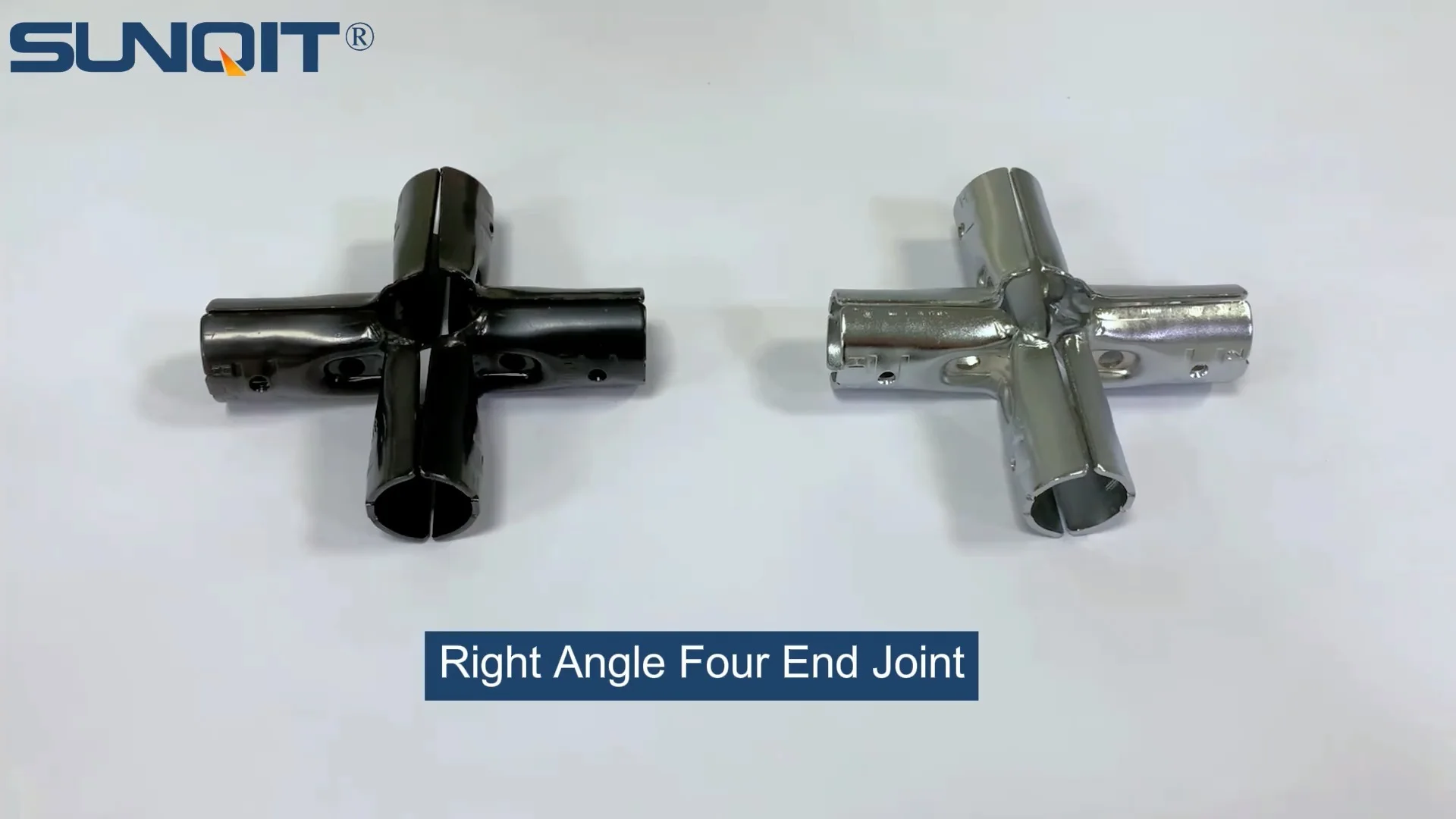
Five way straight lean pipe joint, for 5 pcs 28mm lean pipe connect in straight angle,which used widely in workbench, flow rack, hand trolley frame connection.
Walk into any busy manufacturing plant, warehouse, or production facility, and you'll likely spot rows of heavy-duty racks standing tall, loaded with materials, tools, or finished products. These racks aren't just metal structures—they're the silent workhorses that keep operations running smoothly, ensuring materials are accessible, workflows are efficient, and safety standards are met. But what keeps these racks from wobbling, bending, or collapsing under the weight of daily use? The answer lies in the often-overlooked "connective tissue" of lean systems: the joints. And among these, the five way straight lean pipe joint stands out as a unsung hero, offering unparalleled structural integrity for heavy-duty applications.
Understanding Lean Systems and the Need for Heavy-Duty Racks
Lean systems have revolutionized modern manufacturing by prioritizing efficiency, waste reduction, and adaptability. At the heart of these systems are modular structures—like workbenches, flow racks, and material racks—that can be customized, reconfigured, and scaled to meet evolving production needs. Heavy-duty racks, in particular, are critical for storing bulk materials, heavy components, or large batches of products. Whether it's automotive parts, industrial machinery components, or raw materials like steel sheets, these racks must withstand constant loading, unloading, and sometimes even the vibrations of nearby equipment.
But here's the thing: a rack is only as strong as its weakest link. While the pipes and profiles provide the "bones" of the structure, the joints are the "joints" that hold everything together. A poorly designed or low-quality joint can turn a sturdy rack into a safety hazard, leading to collapsed structures, damaged inventory, and even workplace accidents. This is where the five way straight lean pipe joint comes into play—engineered to distribute weight evenly, resist stress, and maintain stability even under the heaviest loads.
The Role of Joints: More Than Just "Connectors"
If lean pipe systems were the human body, pipes would be the bones, and joints would be the ligaments and tendons—flexible yet strong, ensuring movement (or in this case, adaptability) without sacrificing stability. Joints connect pipes at various angles, allowing racks to be built in configurations that maximize space and functionality. But not all joints are created equal. A simple two-way joint might work for lightweight shelving, but when you're dealing with heavy-duty racks holding hundreds of kilograms, you need a joint that can handle multidirectional stress.
Imagine a scenario: a warehouse uses basic three-way joints to build a rack for storing 50kg metal castings. Over time, as the rack is loaded and unloaded, the joints start to loosen. The pipes shift, the rack leans, and eventually, a shelf gives way. This isn't just a problem of "cheap parts"—it's a problem of using the wrong joint for the job. Heavy-duty applications demand joints that can manage multiple connection points without compromising strength. Enter the five way straight lean pipe joint: a multi-directional powerhouse designed to handle the complexity of heavy loads.

Five Way Straight Lean Pipe Joint: Design and Functionality
Let's break down what makes the five way straight lean pipe joint unique. As the name suggests, this joint features five connection ports, allowing it to link five pipes in a straight line or at precise angles (typically 90° or 180°, depending on the design). Unlike standard two-way or three-way joints, which limit the number of pipes you can connect at a single point, the five way joint acts as a central hub, reducing the need for multiple overlapping joints. This not only simplifies assembly but also minimizes weak points—fewer joints mean fewer opportunities for failure.
Most five way straight lean pipe joints are made from high-grade steel, chosen for its tensile strength and durability. But what really sets premium options apart is the finish—specifically, the five way straight lean pipe joint chrome variant. Chrome plating isn't just for aesthetics (though it does give the joint a sleek, professional look). It adds a protective layer that resists corrosion, rust, and wear—critical in environments where moisture, oils, or chemicals are present. A chrome-plated joint can withstand years of heavy use without degrading, ensuring the rack remains stable and safe over time.
The design of the joint itself is a feat of engineering. Each connection port is precision-machined to fit standard lean pipe diameters (often 28mm or 30mm), ensuring a tight, secure fit. Internal threads or locking mechanisms (like set screws) prevent pipes from slipping or rotating once installed. Some models even feature reinforced walls at the connection points, where stress is highest, to prevent cracking under pressure.
Chrome Coating: More Than Just Shine
Let's dive deeper into the chrome coating. When shopping for joints, you'll often see options labeled "chrome" or "non-chrome." While non-chrome joints are cheaper, they lack the protective benefits of chrome. In industrial settings, racks are exposed to everything from condensation to oil spills. A non-chrome steel joint might start to rust within months, weakening the metal and compromising the joint's grip on the pipes. Chrome plating acts as a barrier, repelling moisture and chemicals, and making the joint easier to clean—simply wipe it down with a cloth to remove dirt or grime.
For example, a food processing plant using stainless steel pipe series racks needs joints that can withstand frequent washdowns with sanitizing solutions. A five way straight lean pipe joint chrome would hold up far better than a painted or bare steel joint, avoiding rust and maintaining structural integrity even in wet conditions.
Comparing Joint Types: Why Five Way Stands Out
| Joint Type | Connection Points | Max Load Capacity (kg) | Best For | Key Advantage |
|---|---|---|---|---|
| Two-Way Straight | 2 | 100-150 | Simple shelving, lightweight racks | Budget-friendly, easy to install |
| Three-Way Cross | 3 | 150-200 | Medium-duty racks, workbenches | Balances cost and functionality |
| Four-Way T-Joint | 4 | 200-250 | Multi-level racks, flow racks | Good for complex configurations |
| Five Way Straight (Chrome) | 5 | 300-400+ | Heavy-duty storage, industrial racks | Maximizes strength with minimal joints |
As the table shows, the five way straight lean pipe joint outperforms its counterparts in load capacity, making it ideal for heavy-duty racks. But it's not just about raw strength—it's about efficiency. By connecting five pipes at once, you reduce the number of joints needed in a rack by up to 40%, cutting down on assembly time and material costs. For example, a 10-foot tall rack with multiple shelves might require 12 three-way joints, but with five way joints, that number drops to 7. Fewer joints mean fewer tools, less labor, and a cleaner, more stable structure.

Structural Integrity in Action: Real-World Testing
Talk is cheap—so how do we know the five way straight lean pipe joint actually delivers on its promises? Let's look at real-world testing data. A leading lean pipe supplier conducted a series of stress tests on five way chrome joints, subjecting them to static loads (constant weight) and dynamic loads (weight plus movement, simulating loading/unloading). Here's what they found:
- Static Load Test: A single five way chrome joint supported 450kg of weight for 72 hours without deformation or loosening. Standard non-chrome five way joints failed at 380kg.
- Dynamic Load Test: The joint was cycled with 300kg loads (applied and removed) 10,000 times. After testing, the joint showed only 0.2mm of wear on the chrome plating and no loss of grip on the pipes.
- Corrosion Test: Exposed to salt spray for 500 hours (simulating humid or coastal environments), the chrome joint showed no signs of rust. Non-chrome joints began rusting after 200 hours.
These results aren't just impressive—they're reassuring. In industries where safety is non-negotiable (like aerospace or automotive manufacturing), using joints that pass these rigorous tests isn't an option; it's a requirement. A five way straight lean pipe joint chrome doesn't just meet standards—it exceeds them, giving plant managers peace of mind that their racks can handle whatever the production floor throws at them.

Installation Best Practices: Getting the Most Out of Your Joints
Even the best joint won't perform well if installed incorrectly. To ensure structural integrity, follow these key steps when assembling heavy-duty racks with five way straight lean pipe joints:
1. Use Compatible Pipes and Accessories
The five way joint is designed to work with standard lean pipes (often 28mm diameter for steel or aluminum lean pipe). Using pipes that are too thin or too thick can create a loose fit, leading to instability. Additionally, always pair joints with the right accessories—like set screws, washers, or end caps—from your lean pipe and accessories supplier. Mismatched parts can compromise the joint's grip or cause uneven stress distribution.
2. Tighten Properly (But Don't Overdo It)
Most five way joints use set screws to lock pipes in place. Use a torque wrench to tighten these screws to the manufacturer's recommended setting (typically 15-20 Nm for steel pipes). Over-tightening can strip the threads or warp the joint; under-tightening leaves the pipe vulnerable to slipping. A good rule of thumb: tighten until the screw is snug, then give it a quarter-turn more.
3. Inspect Before Loading
After assembling the rack, give it a thorough once-over. Check that all joints are aligned, pipes are straight, and there's no wobble in the structure. Apply gentle pressure to each shelf to test for movement—if the rack shifts, double-check the joints. It's better to spend an extra 10 minutes adjusting now than to deal with a collapsed rack later.
Maintenance: Keeping Your Joints Strong for the Long Haul
Like any component, five way straight lean pipe joints require regular maintenance to stay in top shape. Here's how to extend their lifespan:
- Inspect Monthly: Check joints for signs of looseness, rust (on non-chrome models), or wear. Tighten any loose set screws immediately.
- Clean Chrome Surfaces: Wipe chrome joints with a damp cloth to remove dirt, oil, or chemicals. For stubborn grime, use a mild detergent—avoid abrasive cleaners that can scratch the plating.
- replace When Needed: If a joint is bent, cracked, or the chrome plating is severely damaged, replace it. Even the strongest joint has a lifespan; don't risk using a compromised component.
Choosing the Right Supplier: Why Quality Matters
Not all five way straight lean pipe joints are created equal. To ensure you're getting a product that delivers on structural integrity, choose a reputable lean pipe supplier with a track record of quality. Look for suppliers who:
- Provide material certifications (e.g., steel grade, chrome plating thickness).
- Offer testing data (like the load and corrosion tests mentioned earlier).
- Have positive reviews from industrial customers (check for testimonials from manufacturing or warehouse managers).
- Offer after-sales support (e.g., help with installation questions or warranty claims).
Avoid "budget" suppliers who cut corners on materials or skip quality control. A cheap five way joint might save you $5 today, but it could cost thousands in damaged inventory or downtime tomorrow. Remember: when it comes to heavy-duty racks, the joint is the foundation—invest in quality, and it will pay off in reliability.
Conclusion: The Five Way Joint—A Small Part with a Big Impact
In the world of lean manufacturing, every component plays a role—but few are as critical as the five way straight lean pipe joint. More than just a connector, it's a symbol of how thoughtful engineering can transform a simple structure into a robust, reliable system. Whether you're building a heavy-duty material rack, a workbench for assembly lines, or a flow rack for just-in-time production, choosing the right joint is the first step toward ensuring safety, efficiency, and longevity.
So the next time you walk through a factory or warehouse, take a moment to look at the racks. Chances are, the ones that stand straight, hold heavy loads with ease, and look like they've seen years of use without wearing down are held together by joints like the five way straight lean pipe joint chrome. It's a small part, but it's the reason those racks don't just work—they work
hard
, day in and day out, keeping production moving forward.
In the end, structural integrity isn't about overbuilding—it's about building smart. And when it comes to smart, heavy-duty rack design, the five way straight lean pipe joint is the gold standard.