- Company Articles
- Products and Technology
- Installation And Maintenance
- Five Way Straight Lean Pipe Joint Troubleshooting: Common Issues & Fixes

Five Way Straight Lean Pipe Joint Troubleshooting: Common Issues & Fixes
Related Product
Five Way Straight Lean Pipe Joint
Five way straight lean pipe joint, for 5 pcs 28mm lean pipe connect in straight angle,which used widely in workbench, flow rack, hand trolley frame connection.
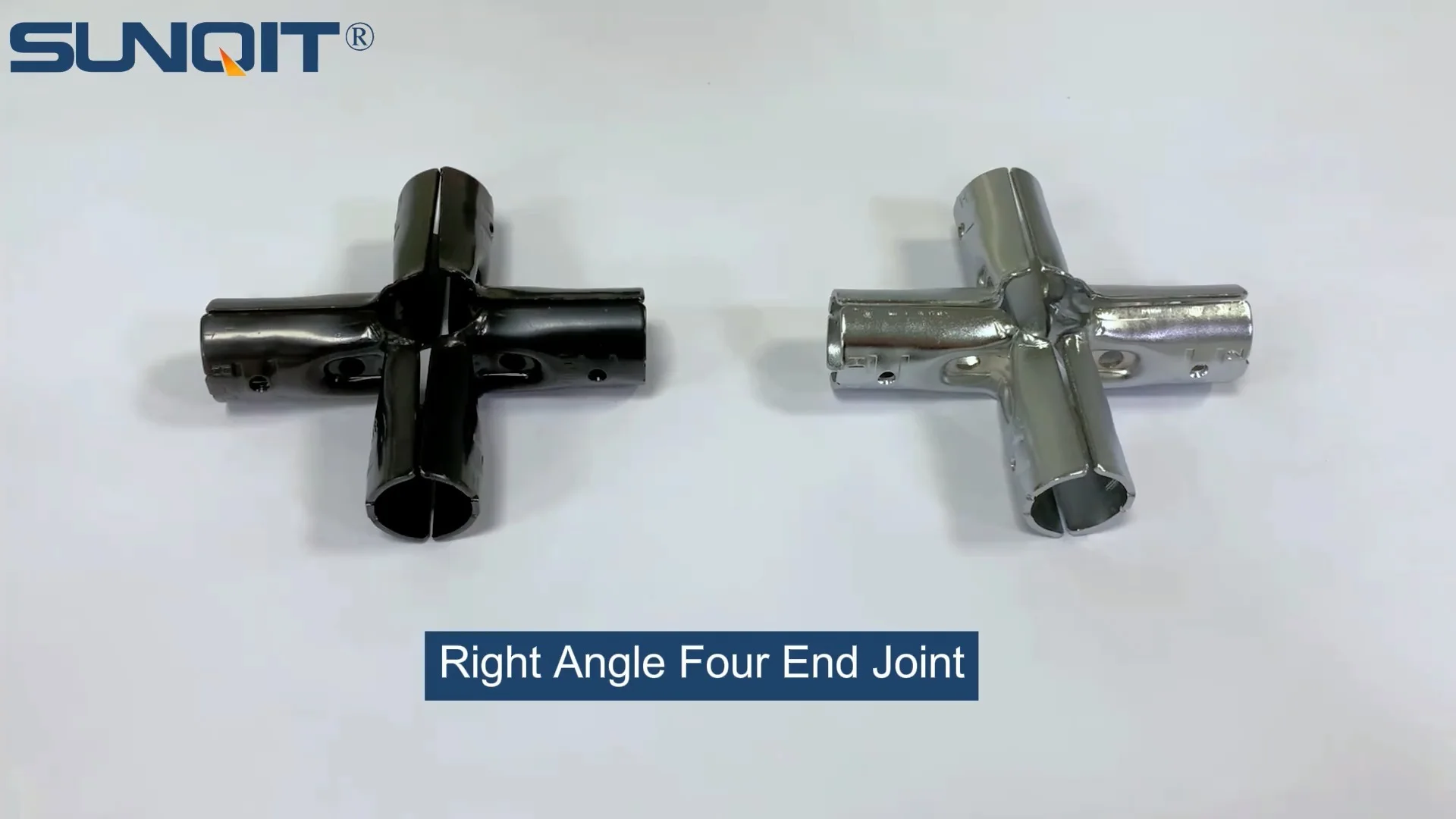
If you've ever walked through a busy production floor, you've probably seen them: the unsung heroes holding everything together. Lean pipe systems—those modular, flexible setups that power workbenches, flow racks, and material trolleys—rely on a network of components working in harmony. And at the heart of many of these setups? The five way straight lean pipe joint. It's the connective tissue that turns basic aluminum pipe or stainless steel tubing into functional, efficient workspaces. But like any hardworking component, it can run into problems. Let's dive into the common issues that plague five way straight lean pipe joints, how to spot them, and the fixes that will get your lean system back to peak performance.
Understanding the Five Way Straight Lean Pipe Joint: More Than Just a Connector
First, let's make sure we're on the same page. What exactly is a five way straight lean pipe joint? Imagine a small, sturdy piece of hardware with five connection points—typically four in a straight line and one perpendicular, though designs can vary. Its job? To link lean pipes (whether aluminum, steel, or PE-coated), aluminum profile sections, roller track, and accessories into stable structures. Think of it as the "hub" of a workbench E (single deck-without caster), where it might connect the legs, the shelf supports, and the roller track for material flow. Or in a material rack B (3 row and 3 floor), it could anchor the vertical posts to the horizontal beams that hold the shelves.
These joints are built to handle daily wear and tear—vibrations from conveyor systems, the weight of tools and materials, even the occasional bump from a turnover trolley. But they're not invincible. Over time, misalignment, corrosion, or simple overuse can take a toll. And when a five way joint fails, it's not just a minor annoyance. A loose joint in a flow rack might cause products to jam on the roller track. A corroded joint in an ESD workstation could compromise electrical conductivity, risking damage to sensitive electronics. That's why troubleshooting these joints isn't just about fixing a part—it's about protecting your entire lean system's efficiency.
Common Issues: What Can Go Wrong with Five Way Straight Lean Pipe Joints?
Let's get practical. What are the most frequent problems you're likely to encounter with these joints? We've talked to maintenance teams, production supervisors, and lean system suppliers to compile the top culprits.
1. Loose Connections: The Silent Saboteur
Loose joints are the number one complaint we hear. Picture this: You're using a workbench with a five way joint holding up the main shelf. One day, you notice the shelf is slightly tilted, or tools slide off more easily than usual. On closer inspection, the joint where the shelf support pipe meets the vertical leg is wobbly. That's a loose connection—and it's often caused by a few things:
- Under-tightening during assembly: Maybe the joint was never fully secured in the first place. Rushing through setup, using the wrong tool (like a pair of pliers instead of a hex key), or simply not applying enough torque can leave threads loose.
- Vibration fatigue: If your lean system is near a conveyor or heavy machinery, constant vibrations can slowly loosen the joint over time. The same goes for setups that see frequent loading and unloading, like a flow rack where boxes are slid onto the roller track multiple times an hour.
- Worn threads: Repeated assembly and disassembly (common in flexible lean systems that get reconfigured) can wear down the threads on the joint or the pipe, making a tight connection impossible.
2. Corrosion: The Hidden Enemy (Especially for Steel Joints)
If your facility deals with moisture, chemicals, or high humidity—think food processing, automotive painting, or even just a warehouse in a rainy climate—corrosion is a real threat. Steel five way joints are particularly susceptible. You might notice rust spots, pitting on the surface, or even a white, powdery residue (that's corrosion too, called "white rust" in some metals). Corrosion weakens the joint's structural integrity, turning a solid connection into a brittle one. In severe cases, the joint might snap under load, causing a shelf or workbench to collapse.
3. Misalignment: When "Straight" Isn't Straight
A five way joint is designed to keep pipes and profiles aligned—so when they're not, problems follow. Misalignment can happen during assembly if the joint isn't seated properly on the pipes, or over time if one side of the structure bears more weight than the other. For example, if a material rack B (3 row and 3 floor) is loaded unevenly—say, the top shelf is always stacked with heavy boxes while the bottom is empty—the vertical pipes might shift, pulling the five way joints out of alignment. The result? Crooked roller track that causes materials to get stuck, wobbly workbenches that make precision tasks impossible, or even stress cracks in the joint itself.
4. Incompatibility: Using the Wrong Joint for the Job
Not all five way joints are created equal. Some are designed for 28mm aluminum lean pipe, others for 30mm stainless steel pipe. Using a joint that's too small (or too large) for your pipes is a recipe for disaster. We've seen cases where teams tried to force a 28mm joint onto a 30mm aluminum pipe, only to have the joint split when pressure was applied. Or using a lightweight plastic joint (meant for light-duty shelving) on a heavy-duty material rack—predictably, it failed under the weight. Incompatibility isn't just about size, either: Using a non-ESD joint on an ESD workstation can compromise the system's ability to dissipate static, putting sensitive components at risk.
5. Wear and Tear on Moving Parts (Yes, Some Joints Have Them!)
While many five way joints are fixed, some designs include moving parts—like internal rotatory aluminum joints or swivel components. These are common in setups where pipes need to pivot slightly, such as adjustable workbenches or tiltable flow racks. Over time, the moving parts (like pins or bearings) can wear down, leading to stiffness, squeaking, or even complete seizing. Imagine trying to adjust a workbench height and finding the joint won't rotate—suddenly, that "flexible" lean system feels pretty rigid.

Troubleshooting 101: How to Diagnose Five Way Joint Issues
Now that we know what can go wrong, let's talk about how to spot these issues before they escalate. Troubleshooting a five way joint doesn't require fancy tools—just a keen eye, a few basic supplies, and a systematic approach.
Step 1: Visual Inspection—Start with the Obvious
Grab a flashlight and get up close. Look for:
- Rust or corrosion: Check all surfaces of the joint, especially where the pipes meet the connection points. Even small spots can indicate a bigger problem.
- Gaps between the joint and pipe: A tight connection should have no visible space. If you can wiggle the pipe inside the joint, it's loose.
- Cracks or deformation: Inspect the joint for hairline cracks (common around the connection points) or bent/misshapen parts. Deformation is a red flag—this joint needs to be replaced immediately.
- Misalignment: Stand back and look at the structure. Are the pipes straight? Is the workbench or rack level? A leaning structure often points to misaligned joints.
Step 2: The "Wiggle Test" (Yes, It's Scientific)
Gently but firmly grasp the pipes connected to the five way joint and try to wiggle them. A small amount of movement is normal (lean systems are designed to absorb some vibration), but if the joint shifts noticeably or the pipes feel "loose," that's a problem. For roller track setups, slide a box or container along the track—if it jams or tilts, check the joints supporting the track; misalignment here is often the culprit.
Step 3: Check Load Capacity—Are You Overdoing It?
Refer to your lean system supplier's specs. How much weight is the five way joint rated to handle? If you're using a joint meant for 50kg loads on a shelf that's holding 100kg, that's a recipe for failure. Overloading is a common cause of loose joints and deformation, so make sure your setup matches the joint's capacity.
Step 4: Test for Electrical Conductivity (For ESD Workstations)
If the joint is part of an ESD workstation, use a multimeter to check conductivity between the joint and the ground. A drop in conductivity could mean corrosion or a loose connection is blocking the static path—putting sensitive electronics at risk.

Fixes: From Quick Tweaks to Full Replacements
Once you've diagnosed the issue, it's time to fix it. Below are targeted solutions for each common problem, from DIY adjustments to when you should call in the pros (or order a replacement part).
| Issue | Symptoms | Fix |
|---|---|---|
| Loose Connection | Wobbly pipes, tilted shelves, tools sliding off workbenches | 1. Tighten with the correct tool (hex key or torque wrench). Torque specs vary by joint material—aluminum joints often need 15-20 Nm; steel, 20-25 Nm. 2. If threads are worn, apply thread locker (like Loctite) to the pipe before reinserting. 3. For severely worn threads, replace the joint or pipe. |
| Corrosion | Rust, pitting, white residue; joint feels brittle | 1. For minor rust: Scrub with a wire brush, then apply anti-corrosion spray (WD-40 Specialist Long-Term Corrosion Inhibitor works well). 2. For severe corrosion: replace the joint with a stainless steel or aluminum version (better for humid/moist environments). |
| Misalignment | Crooked roller track, uneven shelves, pipes that "bind" when moved | 1. Loosen the joint, realign the pipes using a level, then retighten. 2. Add shims (small pieces of aluminum or plastic) between the joint and pipe if needed to adjust angle. 3. For persistent misalignment, check if the floor is level—use adjustable leveling feet under the structure to compensate. |
| Incompatibility | Joint splits, pipes slip out, visible gaps between joint and pipe | 1. Check the pipe diameter and joint specs—replace with a compatible joint (e.g., 30mm joint for 30mm aluminum pipe). 2. Use bush adapters if you need to connect different pipe sizes temporarily (but replace with proper parts long-term). |
| Worn Moving Parts | Stiff/squeaky joints, inability to rotate/pivot | 1. Clean moving parts with a degreaser, then apply silicone lubricant (avoid oil-based lubes—they attract dust). 2. replace worn pins or bearings (available from lean pipe suppliers). 3. If the joint is seized beyond repair, swap it for a new internal rotatory aluminum joint. |
Pro Tip: When to replace vs. Repair
Not every joint can be fixed. If you see cracks, severe deformation, or stripped threads that thread locker can't save, it's time to replace. The good news? Five way joints are affordable, and most lean pipe suppliers stock them (along with lean pipe and accessories) for quick shipping. When replacing, opt for a joint made of the same material as your existing system—aluminum for lightweight, corrosion-resistant setups; stainless steel for heavy-duty or wet environments.

Preventive Maintenance: Keep Your Joints (and System) Happy
The best fix is the one you don't have to make. A little preventive maintenance goes a long way in keeping five way joints (and your entire lean system) running smoothly. Here's how to build a routine:
1. Weekly "Walk-and-Check" Inspections
Assign a team member to walk through the production floor weekly and check key joints. Focus on high-use areas: workbenches where tools are constantly placed/removed, flow racks with heavy or frequent loading, and trolleys that get moved around. Wiggle pipes, check for gaps, and note any signs of corrosion. A quick 10-minute check can catch issues before they become emergencies.
2. Quarterly Deep Cleaning
Dust, grease, and debris can build up in joint crevices, causing corrosion or blocking moving parts. Every three months, give joints a thorough cleaning: Use a brush to remove loose debris, wipe with a damp cloth, and dry completely. For steel joints, follow up with a light coat of anti-corrosion spray. For aluminum joints, avoid harsh chemicals—mild soap and water work best.
3. Train Your Team on Proper Use
Many joint issues stem from user error: overloading shelves, yanking on pipes instead of adjusting joints, or using the wrong tools to tighten connections. Hold a quick training session to show your team how to load racks evenly, adjust workbenches without forcing joints, and who to notify if they notice a wobbly structure. A little awareness can prevent a lot of damage.
4. Keep Spare Joints on Hand
There's nothing worse than discovering a failed joint and having to wait days for a replacement. Work with your lean pipe supplier to keep a small inventory of five way joints, along with common accessories like bush adapters and end caps. Store them in a dry, labeled bin so anyone can grab a replacement when needed.
Final Thoughts: The Joint That Keeps Your Lean System Lean
The five way straight lean pipe joint might not be the flashiest component in your production line, but it's one of the most critical. When it works well, you don't notice it—it just quietly holds everything together, making sure your workbenches stay level, your flow racks keep moving, and your team stays productive. When it fails, the whole system feels the impact.
By knowing the common issues, how to troubleshoot them, and how to keep joints maintained, you're not just fixing parts—you're protecting the efficiency, safety, and flexibility that make lean systems so valuable. So next time you walk past that workbench or flow rack, take a second to appreciate the five way joint doing its job. And if it's looking a little worse for wear? You now have the tools to set it right.
Here's to tighter connections, smoother workflows, and a lean system that keeps up with your team's best work.