- Company Articles
- Products and Technology
- Product knowledge
- Fixed Height vs. Adjustable Castor Install Base: Which Fits Your Workbench?

Fixed Height vs. Adjustable Castor Install Base: Which Fits Your Workbench?
Related Product
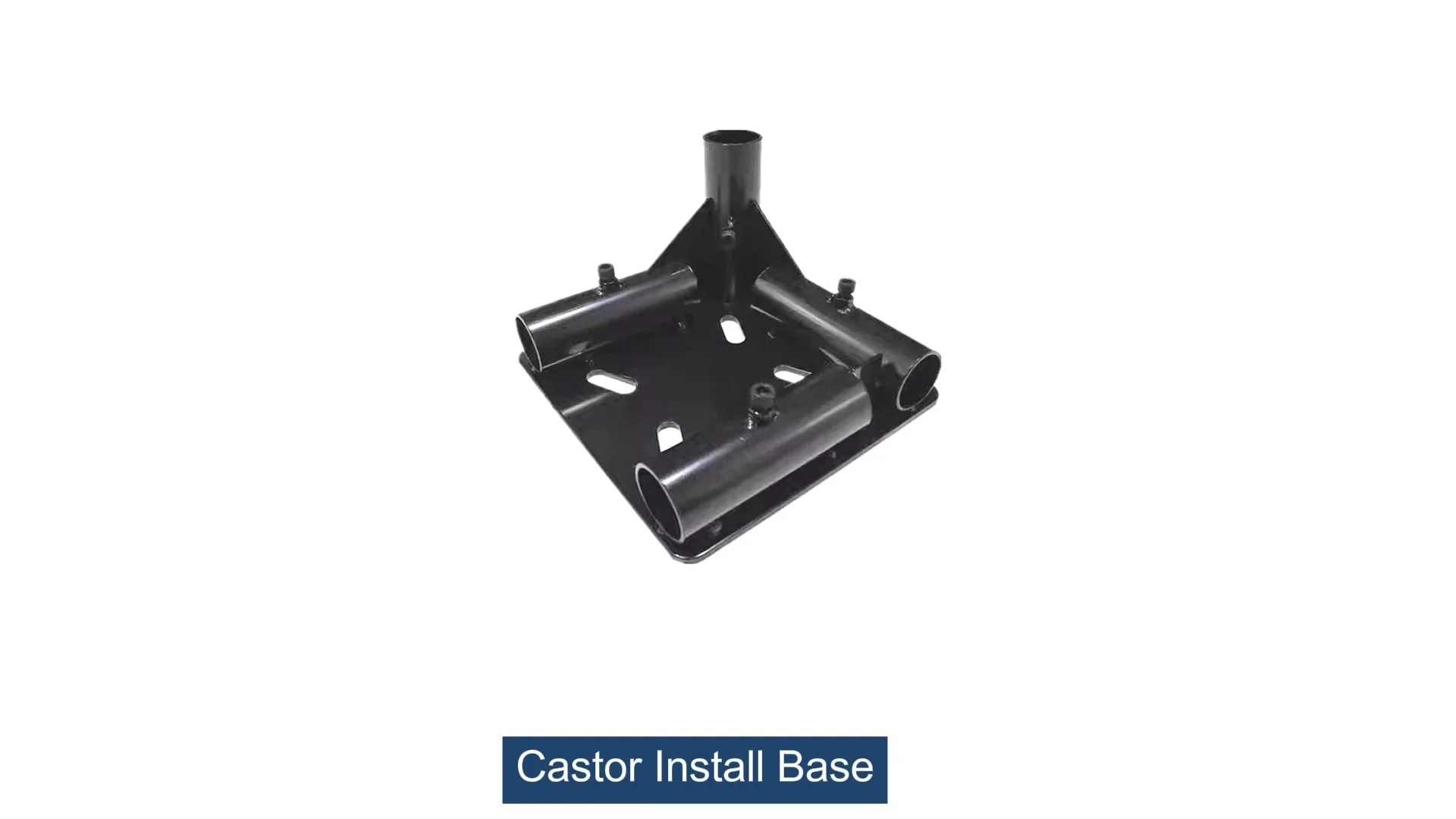
Castor Install Base
Castor install base, used for connection between pipe and castor, it can connect 4 pcs pipe by 1 pcs castor base, to make the structure strong and stable.
Walk into any workshop, factory floor, or even a home garage, and you'll notice one thing that ties them all together: the workbench. It's more than just a table—it's the command center of productivity. Whether you're assembling electronics, repairing machinery, or organizing tools, the right workbench setup can make or break your workflow. But here's the thing: not all workbenches are created equal, and a big part of that comes down to what's holding them up. Today, we're diving into two critical components that shape how your workbench performs: fixed height setups (often paired with adjustable leveling feet ) and adjustable castor install bases. Let's break down which one deserves a spot in your workspace.
First Things First: What Are We Actually Talking About?
Before we compare, let's make sure we're on the same page. When we say "fixed height workbench," we're referring to a setup where the work surface stays at a consistent height once installed. To keep it steady and level (because let's face it, no floor is perfect), these workbenches often use adjustable leveling feet —those small, threaded feet that screw in or out to tweak the height by fractions of an inch. They're like the tiny heroes that keep your bench from wobbling when you're hammering or soldering.
On the flip side, an "adjustable castor install base" is exactly what it sounds like: a base that attaches to the bottom of your workbench and comes with casters (wheels) that let you move the entire setup around. But here's the "adjustable" part: some castor bases let you tweak the height a bit, while others focus more on locking mechanisms to keep the bench steady once you've rolled it into place. The caster install base itself is the metal or plastic frame that connects the casters to the workbench legs, ensuring everything stays secure when you're on the move.
So, in short: fixed height = stability and precision; adjustable castor install base = mobility and flexibility. But as with most things in life, the choice isn't black and white. Let's dig deeper.
Stability vs. Mobility: The Core Trade-Off
Imagine you're a jeweler, carefully setting a stone into a ring. The last thing you need is your workbench shifting under your hands. That's where fixed height setups shine. With adjustable leveling feet firmly planted on the ground, there's zero wiggle room. You can lean into the bench, apply pressure with tools, and trust that the surface won't budge. It's the kind of stability that's non-negotiable for tasks requiring precision—think electronics assembly, watch repair, or detailed woodworking.
Now, picture a warehouse where assembly lines change weekly. One day you're building laptops, the next you're packaging shipments. If your workbench is bolted to the floor, rearranging the space becomes a nightmare. Enter the adjustable castor install base. With a quick unlock of the caster brakes, you can roll the entire bench across the floor, line it up with a new station, and lock it in place. It's like having a portable command center that adapts to your workflow on the fly. But here's the catch: all that mobility can sometimes mean sacrificing a bit of stability. Even with locked casters, a heavy load or uneven floor might cause a tiny wobble—nothing catastrophic, but enough to matter if you're working with delicate parts.

Let's Get Technical: Key Features Compared
| Feature | Fixed Height (with Adjustable Leveling Feet) | Adjustable Castor Install Base |
|---|---|---|
| Stability | Excellent—feet dig into the floor, minimal movement even under heavy use. | Good to Very Good—locks prevent rolling, but may have slight wobble on uneven surfaces. |
| Mobility | None—permanently fixed once leveled. | Excellent—casters allow easy movement; some models swivel 360° for tight spaces. |
| Height Adjustment | Micro-adjustments only (±1-2 inches via leveling feet) to fix uneven floors. | Some models offer height adjustment (up to 4-6 inches) for ergonomic tweaks. |
| Load Capacity | Typically higher (500-2000 lbs+) since weight is distributed directly to the floor. | Good (300-1500 lbs), but depends on caster quality and base design. |
| Installation | Simple—screw in leveling feet, tweak until level. No tools needed for basic setup. | Slightly more involved—attach castor install base to bench legs, secure casters, test locks. |
| Maintenance | Low—wipe feet clean occasionally; replace if threads wear out (rare). | Moderate—clean caster wheels, lubricate bearings, replace worn wheels or locks. |
| Ideal For | Precision work, heavy loads, static workstations (e.g., labs, jewelers, tool benches). | Dynamic environments, frequent reconfigurations, multi-use spaces (e.g., warehouses, workshops, schools). |

The Nitty-Gritty: Pros and Cons of Each
Fixed Height Workbenches (with Adjustable Leveling Feet)
Pros:
- Rock-Solid Stability: No movement means you can focus on the task, not keeping the bench steady. This is a game-changer for tasks like soldering circuit boards or using power tools.
- Lower Long-Term Costs: Adjustable leveling feet are cheap to replace if they wear out, and there's no need to repair or replace casters down the line.
- Quiet Operation: No creaky wheels or clanking locks—just a silent, steady surface.
- Better for Uneven Floors: Leveling feet let you compensate for dips or bumps, ensuring the bench is flat even if the floor isn't.
Cons:
- Zero Flexibility: If you need to rearrange your space, you'll either have to disassemble the bench or leave it where it is. Not ideal for growing businesses or multi-use areas.
- Harder to Clean Around: Dust and debris can collect under the bench, and you can't just roll it away to sweep—you'll have to get on your hands and knees.
- Ergonomic Limitations: Once set, the height doesn't change. If multiple people use the bench (e.g., a shared workshop), someone might end up hunching or stretching.
Adjustable Castor Install Bases
Pros:
- Ultimate Flexibility: Move the bench to where the work is, not the other way around. Perfect for warehouses, classrooms, or pop-up workspaces.
- Easier Cleaning: Roll the bench aside, sweep or mop, and roll it back. No more dust bunnies under the workstation.
- Ergonomic Adjustments: Some castor bases let you raise or lower the bench by a few inches, so you can switch between sitting and standing without buying a new workbench.
- Space-Saving: In small areas, you can tuck the bench against the wall when not in use, then roll it out when needed.
Cons:
- Stability Trade-Off: Even with locked casters, heavy vibrations (like from a drill press) might cause slight movement. Not ideal for ultra-precise tasks.
- Higher Maintenance: Caster wheels can get stuck on debris, bearings need lubrication, and locks can wear out over time. You'll need to check them regularly.
- Initial Cost: A quality caster install base with heavy-duty casters costs more than a set of leveling feet. If you're on a tight budget, this might sting.
- Weight Limits: While many castor bases handle heavy loads, they're not always as beefy as fixed setups. You'll need to check the weight rating before loading up tools.

Real-World Scenarios: When to Choose Which
Scenario 1: The Small Electronics Repair Shop
Maria runs a shop fixing smartphones and laptops. Her workspace is tight, but she needs absolute precision when soldering tiny components. A fixed height workbench with adjustable leveling feet is her best bet. She sets the height to a comfortable standing level, tweaks the feet to account for a slightly uneven concrete floor, and never has to worry about the bench moving mid-repair. Since she rarely rearranges her tools, the lack of mobility isn't an issue. Plus, the lower cost leaves room in her budget for specialized tools.
Scenario 2: The Busy Warehouse Assembly Line
Raj manages a warehouse where teams assemble different products each week—one week it's kitchen appliances, the next it's fitness gear. The assembly line layout changes constantly, so fixed workbenches would be a nightmare. Instead, his team uses lean pipe workbench setups with adjustable castor install bases. Each bench is on casters, so they can reconfigure the line in hours instead of days. When a bench needs to stay put during assembly, they lock the casters, and the stability is more than enough for screwdrivers and power drills. The mobility lets them adapt quickly to new orders, keeping the team productive.
Scenario 3: The Home Workshop Hobbyist
Jake is a weekend woodworker with a garage workshop. He builds everything from bookshelves to custom guitars, and he shares the space with his car. A fixed height bench would take up permanent floor space, leaving no room for his truck. Instead, he uses a workbench with an adjustable castor install base. During the week, he rolls it into the corner to park his car. On weekends, he rolls it out, locks the casters, and gets to work. The stability is enough for sawing and sanding, and he loves that he can move the bench outside for staining projects. For him, the mobility is worth the slight trade-off in stability.
How to Decide: A Quick Checklist
Still on the fence? Ask yourself these questions to narrow it down:
- Do I need to move the workbench more than once a month? If yes, go with a castor base. If no, fixed height is fine.
- Is precision critical to my work? (e.g., soldering, engraving, watch repair) Fixed height with leveling feet is safer here.
- Will multiple people use the bench? If they're different heights, a castor base with height adjustment could save everyone from back pain.
- What's my floor like? Super uneven? Leveling feet will help. Smooth and clean? Casters will roll easily.
- How much weight will the bench hold? Over 1000 lbs? Fixed height is more reliable. Under 800 lbs? A heavy-duty castor base should work.
- What's my budget? Castor bases cost more upfront, but if mobility saves you time (and money) in the long run, they're worth it.
The Bottom Line: It's About Your Workflow
At the end of the day, there's no "better" option—only the one that fits your needs. Fixed height workbenches with adjustable leveling feet are the unsung heroes of precision and stability, perfect for tasks where movement is the enemy. Adjustable castor install bases, on the other hand, are the chameleons of the workspace, adapting to your needs and keeping your workflow flexible.
If you're still not sure, consider a hybrid approach. Some workbenches let you swap out feet for casters depending on the task—though this is more common in industrial settings. For most of us, though, the choice comes down to that core trade-off: stability vs. mobility. And hey, there's no shame in prioritizing one over the other. After all, the best workbench is the one that helps you get the job done—without getting in your way.
So, take a look around your workspace. Imagine your next big project. Will a steady, fixed bench keep you focused? Or will a mobile setup let you work smarter, not harder? The answer is probably already there—you just needed to roll up your sleeves and think about how you work best. Now go build something great.