- Company Articles
- Products and Technology
- Product knowledge
- Fixed Lean Pipe Clamps vs. Clamps with Handles: Which Is More Efficient?

Fixed Lean Pipe Clamps vs. Clamps with Handles: Which Is More Efficient?
Related Product
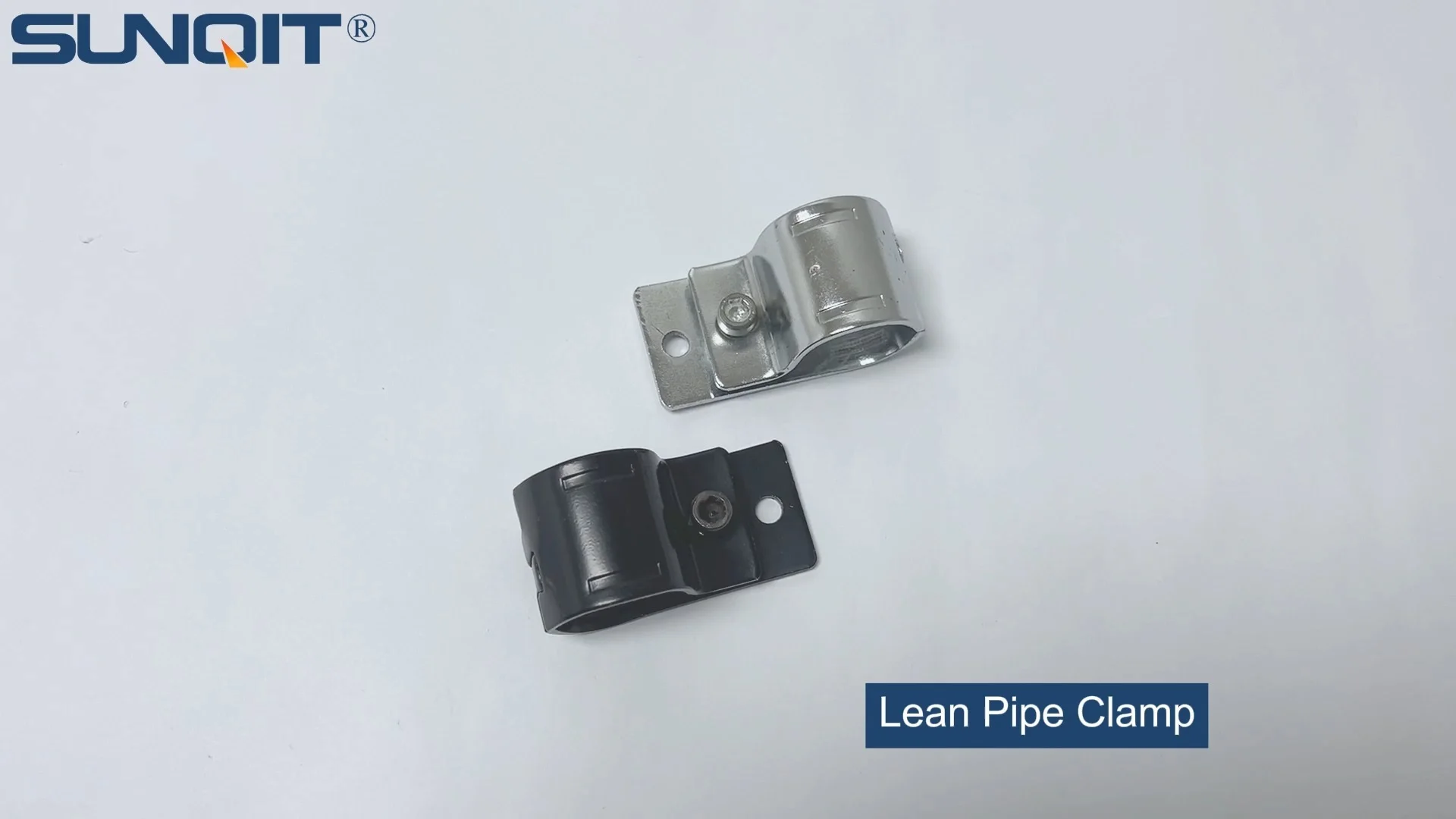
Lean Pipe Clamp
Lean pipe clamp is used for rack system hang monitor or other panel for workbenck, flowrack in production daily use.
In the world of lean manufacturing, where every second and every movement counts, the smallest components often hold the biggest power to make or break efficiency. Lean systems thrive on precision, adaptability, and seamless workflows—and at the heart of these systems lie unsung heroes like lean pipes, lean pipe joints, and the clamps that hold them all together. Today, we're diving into a debate that might seem trivial at first glance but has ripple effects across production floors: fixed lean pipe clamps versus clamps with handles. Which one truly delivers better efficiency? Let's unpack the details, real-world use cases, and what they mean for your workbench, turnover trolley, or entire lean system.
What Are Fixed Lean Pipe Clamps? The Silent Workhorses of Static Structures
First, let's get acquainted with fixed lean pipe clamps. As the name suggests, these clamps are designed for stability and permanence. They're the reliable, no-nonsense choice when you need a connection that stays put—no frills, no fuss. Picture this: a workbench in a electronics assembly line, where operators spend 8 hours a day soldering tiny components. That workbench can't wobble, shift, or require constant readjustment. Fixed clamps are the solution here.
Design & Mechanics: Built for Staying Power
Fixed lean pipe clamps are typically made from high-grade steel, often coated in anti-corrosive materials like zinc or plastic to withstand the wear and tear of factory environments. Their defining feature? No handle. Instead, they rely on bolts, screws, or Allen keys to tighten around lean pipes and lean pipe joints. Once secured, they form a rigid bond—think of them as the "glue" that turns individual lean pipes into a rock-solid structure.
Installation isn't a one-person job in a hurry, though. To get that perfect, wobble-free fit, you'll need tools: a wrench, maybe a torque driver to ensure even pressure. This makes them ideal for static setups—structures that, once built, stay in place for weeks, months, or even years. A material rack in a warehouse, a fixed assembly line workstation, or a storage shelf that never needs resizing? Fixed clamps are your best bet.
Pros & Cons: The Trade-Offs of Stability
Pros: Unmatched stability is their biggest win. Because they're tightened with tools, they can handle heavier loads—think 500+ pounds on a workbench without so much as a creak. They're also cost-effective; without the extra mechanism of a handle, they're often cheaper than their handle-equipped counterparts. Durability is another plus: no moving parts mean less wear, so they last longer in high-use environments.
Cons: Flexibility is their Achilles' heel. Need to reconfigure your workbench to fit a new product line? Grab your toolbox and set aside 15–20 minutes per clamp. In fast-paced settings where change is constant, this downtime adds up. They're also less worker-friendly for on-the-fly adjustments—no quick tweaks here; you'll need to pause, fetch tools, and retighten carefully to avoid uneven pressure (which can warp pipes over time).
Clamps with Handles: Convenience Redefined for Dynamic Workflows
Now, meet the opposite end of the spectrum: clamps with handles. These are the rebels of the lean component world—designed for speed, adaptability, and human-centric convenience. If fixed clamps are the anchors, handle clamps are the quick-release latches that let your lean system pivot at a moment's notice. They're a favorite in facilities where "change" is the only constant—think automotive plants switching between models daily or e-commerce warehouses handling seasonal product surges.
Design & Mechanics: Speed at Your Fingertips
Clamps with handles look similar to fixed clamps at first glance, but there's a game-changing addition: an integrated, ergonomic handle. This handle connects to an internal mechanism (usually a cam or lever) that tightens or loosens the clamp with a simple twist or flip—no tools required. Materials are still tough (steel, aluminum, or reinforced plastic), but the focus shifts from raw strength to user-friendly operation.
Here's how they work: To adjust, you flip the handle up to release tension, slide the pipe or joint into place, then flip the handle down to lock it. The best models even have a "click" to signal when they're fully tightened, so you don't second-guess if it's secure. It's a process that takes 10–15 seconds per clamp—no wrenches, no measuring, just muscle memory for operators.
Pros & Cons: The Upsides (and Limits) of Quick Adjustments
Pros: Speed and flexibility are non-negotiable here. Imagine a turnover trolley used to transport parts between three different assembly stations, each requiring a different shelf height. With handle clamps, a single operator can reconfigure the trolley in under a minute—no tools, no help, no production delays. They're also safer in fast environments: less time fumbling with tools means fewer distractions and lower risk of repetitive strain injuries from wrench work.
Cons: Stability takes a backseat. While modern handle clamps are sturdy, they can't match the torque of a tool-tightened fixed clamp. Most top out at around 300–400 pounds of load capacity, which is plenty for most dynamic setups but risky for heavy, static storage. They're also pricier—about 15–20% more than fixed clamps—thanks to the handle mechanism. And that mechanism? It's a moving part, which means occasional wear; handles can loosen over time, requiring maintenance to keep them clicking securely.

Head-to-Head Comparison: Fixed vs. Handle Clamps
Still on the fence? Let's break down the key differences with a side-by-side look at how these clamps perform in critical areas:
| Feature | Fixed Lean Pipe Clamps | Clamps with Handles |
|---|---|---|
| Installation Time | 5–10 minutes per clamp (requires tools) | 30 seconds–2 minutes per clamp (tool-free) |
| Reconfiguration Ease | Low (tools needed; time-consuming) | High (quick, tool-free adjustments) |
| Load Capacity | High (400–600+ lbs typical) | Medium (300–400 lbs typical) |
| Cost | Lower (no handle mechanism) | Higher (integrated handle design) |
| Best For | Static structures (fixed workbenches, heavy storage racks) | Dynamic setups (turnover trolleys, adjustable flow racks) |
| Maintenance Needs | Low (no moving parts) | Medium (handle mechanism may need occasional tightening/lubrication) |

Real-World Stories: How the Right Clamp Transforms Workflows
Numbers and specs tell part of the story, but real-world applications show the impact. Let's look at two scenarios where choosing fixed or handle clamps made all the difference.
Scenario 1: The Static Workbench in a Medical Device Lab
A medical device manufacturer builds precision tools—think scalpels and surgical robots—on a dedicated workbench. The bench holds microscopes, torque tools, and small parts bins, and it never moves. For this team, stability is non-negotiable; a wobbly surface could ruin a $10,000 component. They opted for fixed lean pipe clamps, paired with heavy-duty lean pipe and steel lean pipe joints. Installation took an hour, but once set, the bench has stayed solid for three years, handling daily use without a single adjustment. The verdict? Fixed clamps were the obvious choice here—no need for flexibility, just rock-solid reliability.
Scenario 2: The Turnover Trolley in a Fashion Retail Warehouse
A clothing retailer's warehouse ships seasonal items: bulky winter coats in December, lightweight summer dresses in June. Their turnover trolleys need to switch from 12-inch to 8-inch shelf heights monthly to fit different box sizes. With fixed clamps, reconfiguring one trolley took 20 minutes (tools, loosening, readjusting, retightening). With 50 trolleys, that's 16+ hours of downtime monthly. They switched to handle clamps, and now one worker can reconfigure a trolley in 5 minutes flat—cutting downtime to under 4 hours. The trade-off? Trolleys now hold 300 lbs instead of 400, but since their boxes max out at 250 lbs, it's a non-issue. Handle clamps turned a monthly headache into a quick, painless task.

Choosing Your Clamp: 5 Questions to Guide the Decision
Still unsure which clamp fits your lean system? Ask yourself these questions to narrow it down:
- How often do I need to reconfigure the structure? If it's once a quarter or less, fixed clamps save money. If it's weekly or daily, handle clamps save time.
- What's the maximum load the structure will bear? Over 400 lbs? Go fixed. Under 350 lbs? Handle clamps are safe.
- Who will be adjusting the clamps? If it's skilled maintenance staff with tools, fixed clamps work. If it's line operators needing quick changes, handle clamps reduce frustration.
- What's my budget? Tight budget + static setup = fixed clamps. Flexible budget + dynamic needs = handle clamps.
- Is stability or speed more critical? Precision manufacturing or heavy storage? Stability (fixed). Fast-paced, changing production? Speed (handles).
The Bottom Line: It's About Your Lean System's DNA
There's no "better" clamp—only the right clamp for your workflow. Fixed lean pipe clamps are the silent anchors of static, heavy-duty lean systems, while clamps with handles are the nimble problem-solvers of dynamic, ever-changing setups. The key is to match the clamp to your system's needs: stability vs. speed, cost vs. convenience, permanence vs. adaptability.
And remember: many lean systems thrive on a mix! A factory might use fixed clamps for its main assembly workbench (stable, rarely changed) and handle clamps for the turnover trolleys feeding that bench (adjustable, always on the move). The magic of lean manufacturing lies in balancing these small, intentional choices—right down to the clamps that hold it all together.
So, take a look at your production floor. Are your clamps holding you back, or propelling you forward? The answer might just be the key to unlocking your next level of efficiency.