- Company Articles
- Products and Technology
- Product knowledge
- Fixed vs Modular Workbenches: Why Aluminum Workbench C Offers More Flexibility

Fixed vs Modular Workbenches: Why Aluminum Workbench C Offers More Flexibility
Related Product
Aluminum Workbench C
aluminum-tube-workbench-is-more-flexible-and-durable,-compared-with-traditional-pe/abs-coated-steel-tube.-it-is-easy-to-assemble,-anti-corrosion,-rust-protection,-and-recycle-use-after-disassemble.
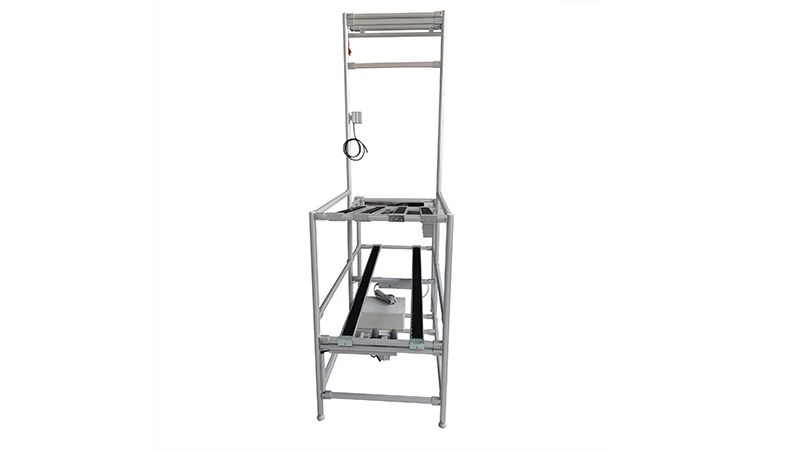
Walk into any manufacturing facility, warehouse, or workshop, and you'll likely spot the unsung hero of daily operations: the workbench. It's where assembly lines start, where tools are organized, where products take shape, and where teams collaborate to meet deadlines. For decades, workbenches have been the backbone of productivity—but not all workbenches are created equal. In recent years, a quiet revolution has been unfolding in how we design these critical workspaces, pitting traditional fixed workbenches against modern modular solutions. Today, we're diving deep into this showdown, with a spotlight on one standout modular option: Aluminum Workbench C. By the end, you'll understand why flexibility isn't just a nice-to-have in today's fast-paced work environments—it's a necessity, and why Aluminum Workbench C is leading the charge.
The Trouble with Fixed Workbenches: A Legacy of Rigidity
Let's start with the familiar: fixed workbenches. These are the heavy, immovable fixtures that have populated factories for generations. Typically built from solid wood, steel, or a mix of materials, they're designed to be "set it and forget it." You install them once, and they stay put—often for years, even decades. On the surface, this sounds reliable. After all, stability is key when you're assembling delicate electronics or heavy machinery, right? But reliability, it turns out, can quickly become rigidity in a world where workflows, team sizes, and product demands change overnight.
Consider a small automotive parts manufacturer I visited last year. They'd invested in a set of heavy steel fixed workbenches five years prior, back when their production line focused on a single part: brake calipers. The workbenches were perfect then—sturdy enough to handle the weight of tools, wide enough for assembly jigs, and bolted to the floor to prevent movement. But as the company grew, they expanded their product line to include suspension components, which required different tools, more storage, and taller work surfaces to accommodate larger parts. Suddenly, those "reliable" fixed workbenches became obstacles. The team couldn't adjust the height to reduce worker strain, couldn't add shelves for new tools without drilling into the steel (risking structural damage), and couldn't reposition the benches to create a more efficient assembly flow. They were stuck with a workspace that no longer fit their needs, and replacing the entire set would cost tens of thousands of dollars—a budget line they couldn't afford.
This scenario isn't unique. Fixed workbenches come with a long list of hidden costs, even if their upfront price tag seems appealing. First, they're inflexible . If your team grows, or you introduce a new product, or you want to adopt a leaner workflow (think 5S or Kaizen principles), a fixed workbench can't adapt. You're either forcing your process to fit the bench or wasting time and money working around it. Second, they're hard to repair . A cracked wooden top or a bent steel frame often means replacing the entire bench, not just the damaged part. Third, they're ergonomically limiting . Workers come in different heights, and tasks require different postures—fixed workbenches lock everyone into a one-size-fits-all setup, increasing the risk of repetitive strain injuries over time. And finally, they're space hogs . If you need to rearrange your floor plan for a seasonal rush or a new machine, you can't move a fixed bench; it becomes a permanent barrier to efficiency.
Modular Workbenches: The Flexibility Revolution
Enter modular workbenches: the solution to fixed workbenches' rigidity. Modular design isn't new—think of LEGO bricks, where interchangeable parts let you build, rebuild, and adapt structures on the fly. Modular workbenches apply this same logic to workspaces: they're constructed from standardized, interchangeable components that can be reconfigured, expanded, or modified to fit changing needs. No more drilling, welding, or permanent installations. Instead, you start with a base frame and add accessories—shelves, drawers, lighting, casters, you name it—as your workflow evolves. It's workspace design that grows with you, not against you.
At the heart of modular workbenches is material choice, and one material stands out for its perfect blend of strength, lightweight, and versatility: aluminum. Aluminum extrusion profile, in particular, has become the gold standard for modular systems. These profiles are long, hollow tubes of aluminum with a T-slot design running along their length—a simple feature that unlocks endless customization. The T-slots let you attach accessories (like shelves, tool hooks, or monitor arms) anywhere along the frame, without tools or drilling. Aluminum is also naturally corrosion-resistant, making it ideal for humid or industrial environments, and it's lightweight enough to move (with the right casters) but strong enough to support heavy loads. When you combine aluminum extrusion profile with aluminum profile accessories—think brackets, joints, and connectors—you get a workbench that's not just a piece of furniture, but a system designed for adaptability.
Take a mid-sized electronics manufacturer I worked with last year. They'd switched to modular aluminum workbenches after struggling with fixed wooden benches for years. Their production line shifts constantly—one week assembling circuit boards, the next testing prototypes, the next packing finished products. With modular benches, they reconfigure the workspace in hours: adding ESD (electrostatic discharge) mats for circuit board assembly, swapping out flat surfaces for tilted trays for testing, and attaching casters to roll benches to create temporary packing stations during rushes. "It's like having a workspace that thinks on its feet," their operations manager told me. "We don't just work around our benches anymore—our benches work around us."
The benefits of modular workbenches go beyond flexibility. They're also cost-effective over time . While the upfront cost might be higher than a basic fixed bench, you avoid the expense of replacing entire systems when your needs change. You can upgrade components (like swapping a wooden top for a stainless steel one) instead of buying new benches. They're easier to maintain : if a shelf bracket breaks, you replace just the bracket, not the whole frame. And they're ergonomically superior : adjust the height, add footrests, or tilt the work surface to keep workers comfortable and productive. In short, modular workbenches turn your workspace from a static obstacle into a dynamic tool.

Aluminum Workbench C: A Masterclass in Modular Design
Now, let's zoom in on a specific modular solution that's winning over manufacturers, warehouses, and workshops: Aluminum Workbench C. Designed with the challenges of modern workplaces in mind, this bench isn't just modular—it's a case study in how to build flexibility into every detail. Let's break down what makes it stand out, from its core frame to its customizable accessories.
The Backbone: Aluminum Extrusion Profile
Aluminum Workbench C starts with a frame built from high-grade aluminum extrusion profile. These profiles are precision-engineered with the T-slot design we mentioned earlier, which acts like a built-in "rail system" for accessories. The aluminum itself is lightweight (about 1/3 the weight of steel) but surprisingly strong—capable of supporting up to 500 lbs on the work surface alone. This combination of strength and lightness is key: it means the bench is sturdy enough for heavy tools but light enough to move (with the addition of caster wheels) when you need to rearrange your space.
But what really sets the extrusion profile apart is its versatility. Unlike fixed steel frames, which are welded or bolted into a single shape, Aluminum Workbench C's frame is assembled using aluminum profile accessories like corner brackets, T-joints, and end caps. These accessories snap or bolt into the T-slots, letting you build the frame to your exact specifications. Need a bench that's 6 feet long instead of 4? Just add another section of extrusion profile. Want to raise the height from 36 inches to 42 inches for taller workers? Swap out the vertical supports for longer ones. It's like building with a set of high-strength building blocks—no welding, no cutting, no permanent commitments.
Customization at Your Fingertips: Accessories for Every Need
If the frame is the backbone of Aluminum Workbench C, the accessories are its muscles—they let it adapt to almost any task. Let's walk through some of the most popular options and how they transform the bench:
- Adjustable Leveling Feet : Uneven floors? No problem. Aluminum Workbench C comes with adjustable leveling feet that screw into the base of the frame, letting you stabilize the bench on any surface. This isn't just about stability—it's about safety. A wobbly workbench increases the risk of tools or parts sliding off, and over time, uneven weight distribution can damage the frame. With leveling feet, you dial in the perfect balance in minutes.
- Caster and Accessories : Need mobility? Swap the leveling feet for caster wheels (another modular accessory). Choose from fixed casters for straight-line movement or swivel casters with brakes for 360-degree maneuverability and secure positioning. One electronics manufacturer I spoke to uses this feature to roll benches directly to assembly robots, reducing the time workers spend walking between stations. When they need the bench stationary, they flip the brakes, and it stays put—no more slipping or sliding.
- Shelving and Storage : Aluminum profile accessories include shelf brackets, which slide into the T-slots to add upper or lower shelves. Need more storage? Add a pegboard panel for tool hooks, or attach a drawer unit (another modular component) under the work surface. One warehouse team uses this to keep frequently used tools at arm's reach, cutting down on time wasted searching for supplies.
- Work Surface Options : The standard worktop is a durable aluminum composite panel, but you can swap it out for ESD-safe surfaces (critical for electronics), stainless steel (for food or medical applications), or even wood (for a warmer workshop feel). The T-slot frame makes swapping tops a breeze—no tools required, just lift off the old top and drop on the new one.
- Ergonomic Add-Ons : Tilt the work surface to reduce neck strain during detailed tasks, add a footrest bar for standing work, or attach a monitor arm to keep instructions visible without cluttering the bench. These small adjustments add up to big improvements in worker comfort and productivity.
The beauty of these accessories is that they're all designed to work together. You're not stuck choosing between "mobile" or "stationary"—you can have both, switching between casters and leveling feet as needed. You're not limited to one storage setup—add shelves in the morning for assembly, then remove them in the afternoon to make space for a large project. Aluminum Workbench C doesn't just let you customize your workspace; it lets you re -customize it, over and over again.
Built for Scalability: Grow Without Limits
Whether you're a small startup or a large manufacturer, scalability matters. Aluminum Workbench C grows with your team, thanks to its modular design. Start with one bench for a solo operator, then add more as you hire. Connect benches side-by-side to create a continuous work surface, or arrange them in a U-shape for collaborative projects. Need to expand into a new department? Disassemble the frame, move the components, and rebuild—no need to buy new benches for the new space.
A furniture manufacturer I worked with exemplifies this. They started with 5 Aluminum Workbench C units in their prototype shop. As demand grew, they added 10 more benches, connecting them into assembly lines for different product lines (tables, chairs, shelves). When they expanded to a second facility, they disassembled 3 benches, shipped the components, and rebuilt them in the new space—saving thousands on new furniture. "We didn't just invest in workbenches," their owner said. "We invested in a system that grows with our business."

Fixed vs. Aluminum Workbench C: A Side-by-Side Comparison
To truly understand the difference flexibility makes, let's put fixed workbenches and Aluminum Workbench C head-to-head. The table below breaks down key features, so you can see how they stack up in real-world scenarios:
| Feature | Fixed Workbench | Aluminum Workbench C |
|---|---|---|
| Flexibility | Limited to initial design; cannot adjust height, add/remove components, or reconfigure without permanent modifications (drilling, welding). | Fully customizable: adjust height, swap work surfaces, add shelves/casters/accessories, and reconfigure frame layout in hours with basic tools. |
| Cost Over Time | Low upfront cost, but high long-term cost: requires replacement of entire bench when needs change (e.g., new product lines, team growth). | Higher upfront cost, but lower long-term cost: upgrade components (e.g., shelves, casters) instead of replacing benches; adapts to changing needs. |
| Repair & Maintenance | Difficult to repair: damaged components (e.g., cracked top, bent frame) often require replacing the entire bench. | Easy maintenance: replace individual components (e.g., brackets, casters) without affecting the rest of the bench; T-slot design simplifies part swaps. |
| Ergonomics | One-size-fits-all design; cannot adjust height, tilt, or add ergonomic features (e.g., footrests) to reduce worker strain. | Ergonomically adaptable: adjust height, tilt work surface, add footrests, or attach monitor arms to fit workers of all sizes and tasks. |
| Scalability | Not scalable: adding new workspaces requires purchasing entirely new benches; cannot expand or reconfigure existing units. | Highly scalable: add components (e.g., longer extrusion profiles, extra shelves) to expand existing benches; connect multiple benches to create larger work surfaces. |
The table tells a clear story: while fixed workbenches might seem like a budget-friendly choice upfront, they cost more in the long run by limiting your ability to adapt. Aluminum Workbench C, by contrast, turns flexibility into a competitive advantage—letting you respond to changes quickly, keep workers comfortable, and grow without being held back by your workspace.

Why Aluminum? The Material Behind the Magic
We've talked a lot about Aluminum Workbench C's design, but it's worth pausing to appreciate the material that makes it all possible: aluminum. Why is aluminum the go-to for modular workbenches, and how does it compare to other materials like steel or wood?
First, strength-to-weight ratio . Aluminum is about 1/3 the weight of steel, but it's still strong enough to handle heavy loads. This makes Aluminum Workbench C easy to move (with casters) but sturdy enough for industrial use. A steel bench of the same size would be too heavy to reposition without machinery, limiting its flexibility. Wood, while lightweight, lacks the structural strength to support heavy tools or repeated reconfiguration—joints loosen, and wood warps over time.
Second, corrosion resistance . Aluminum naturally forms a protective oxide layer, making it resistant to rust and corrosion. This is a game-changer for environments with moisture (like food processing plants) or chemicals (like automotive workshops). Steel requires painting or coating to prevent rust, and wood absorbs moisture, leading to warping or mold. Aluminum Workbench C holds up in tough conditions without extra maintenance.
Third, sustainability . Aluminum is 100% recyclable, and recycling it uses just 5% of the energy required to produce new aluminum. For companies focused on reducing their environmental footprint, this is a big win. Fixed wooden benches often use hardwoods from unsustainable sources, and steel production is energy-intensive. Aluminum Workbench C lets you build a flexible workspace and reduce your carbon footprint.
Finally, precision manufacturing . Aluminum extrusion profile is made by forcing molten aluminum through a die, creating consistent, precise shapes. This means every T-slot, every bracket, and every joint fits together perfectly—no guesswork, no gaps, no wobbly connections. Wood and steel, by contrast, are prone to inconsistencies (knots in wood, warping in steel) that can throw off assembly and reduce durability.
In short, aluminum isn't just a material choice for Aluminum Workbench C—it's a design philosophy. It combines strength, lightness, durability, and sustainability to create a workbench that's as tough as it is flexible.
Is Aluminum Workbench C Right for You?
By now, you're probably wondering: does Aluminum Workbench C make sense for my workspace? The answer depends on one key question: do your needs change? If you're running a static operation with unchanging workflows, a small team, and no plans to grow, a fixed workbench might suffice. But if any of these apply, Aluminum Workbench C is worth considering:
- You introduce new products or processes regularly.
- Your team size is growing (or shrinking) seasonally.
- Worker ergonomics and comfort are priorities (e.g., reducing strain injuries).
- You want to adopt lean manufacturing principles (e.g., 5S, Kaizen) that require flexible workflows.
- You're tired of replacing workbenches every time your needs evolve.
A good litmus test is to ask: "Will this workbench still fit my needs in 5 years?" If the answer is "no" (or "I don't know"), modular is the way to go. Aluminum Workbench C isn't just a purchase—it's an investment in a workspace that can keep up with you.
Conclusion: Workbenches That Adapt, So You Can Thrive
In the end, the choice between fixed and modular workbenches isn't just about furniture—it's about how you approach productivity. Fixed workbenches are relics of a time when workflows were static, and change was slow. Modular workbenches like Aluminum Workbench C, built with aluminum extrusion profile and aluminum profile accessories, are tools for a world where adaptability is key. They turn your workspace from a set of limitations into a set of possibilities.
Aluminum Workbench C isn't perfect for every situation, but for companies that want to stay agile, keep workers comfortable, and avoid the cost of constant replacements, it's a game-changer. It's a workbench that doesn't just hold your tools—it holds your potential to grow, innovate, and thrive in a fast-paced world.
So, the next time you look at your workspace, ask yourself: Are my workbenches working for me, or am I working around them? If it's the latter, it might be time to embrace flexibility—and Aluminum Workbench C might be just the start.