Fixed vs Swivel Castor Installation Base: Which Suits Material Rack B Better?
Related Product
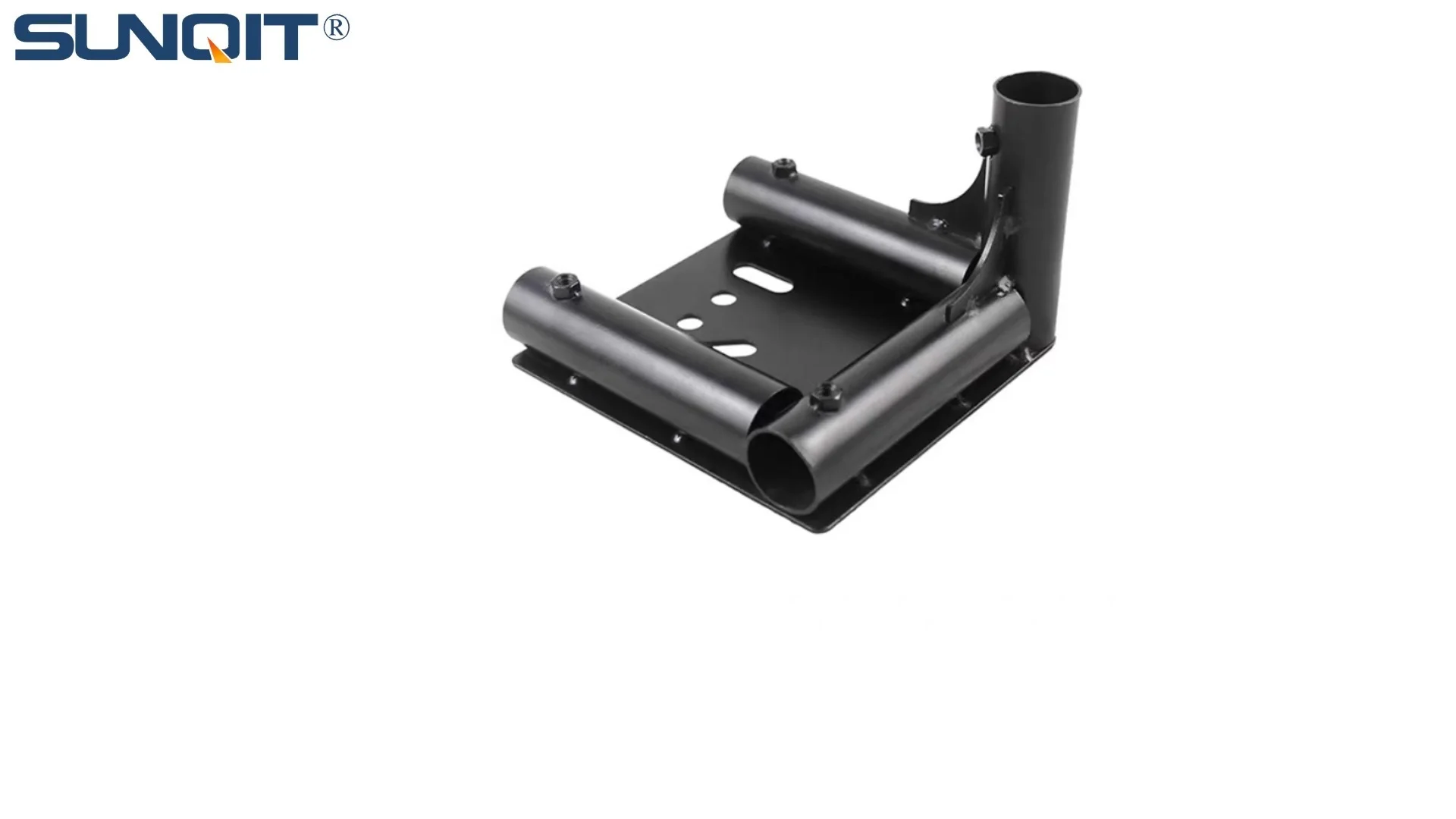
Castor Installation Base
Pipe fitting castor installation base,Well made, precise and strong. Made of high quality of steel,black painting surface treatment for greater resistance to corrosion. It is used for castor or foot lever connection with lean pipe.
Castor Installation Base

The Unsung Hero of Warehouse Efficiency: Material Racks and Their Wheels

Walk into any busy warehouse, manufacturing plant, or distribution center, and you'll notice a silent workforce hard at work: material racks. These unassuming structures hold the backbone of production—components, parts, tools, and supplies—keeping operations running smoothly. But not all material racks are created equal. Among the most popular options in modern facilities is the Material Rack B (3 row and 3 floor) , a versatile solution designed to maximize vertical space with three rows and three levels of storage. Its compact footprint and customizable design make it a favorite for storing small to medium-sized items, from electronics components to automotive parts.

Yet, even the best-designed rack is only as good as its ability to move. In dynamic workplaces where layouts shift, assembly lines reconfigure, and materials need to be transported from point A to point B quickly, the castor installation base —the component that connects the rack to its wheels—becomes a critical decision. Should you opt for fixed castors, which lock wheels in a straight path, or swivel castors, which rotate 360 degrees for easy maneuvering? It's a debate that has warehouse managers, facility planners, and operations teams weighing trade-offs between stability, mobility, and long-term efficiency. Let's dive into the details to figure out which castor installation base truly suits Material Rack B best.

Getting to Know Material Rack B: More Than Just a Storage Shelf

Before we compare castor types, let's take a closer look at the star of the show: Material Rack B (3 row and 3 floor). Imagine a rack that stands about 5 to 6 feet tall, with three vertical columns (rows) and three horizontal shelves (floors), each spaced evenly to accommodate different-sized items. Unlike bulky steel racks that are tough to move, Material Rack B is often constructed with lightweight yet durable materials—think aluminum profile frames, which offer the perfect balance of strength and portability. This makes it ideal for environments where frequent repositioning is needed, such as lean manufacturing facilities or e-commerce warehouses with ever-changing inventory flows.

Typically, Material Rack B is used to store small parts, tools, or subassemblies that need to be within arm's reach of assembly lines. For example, in an electronics factory, it might hold circuit boards on the top floor, connectors on the middle, and screws on the bottom—keeping everything organized and accessible. Its load capacity usually ranges from 100 to 300 kg per shelf, depending on the materials and design, which means when fully loaded, the entire rack can weigh upwards of 800 kg. That's a lot of weight to move around, which is why choosing the right castor installation base isn't just a matter of convenience—it's a decision that impacts safety, productivity, and even the lifespan of the rack itself.

Fixed Castor Installation Bases: The Steady Workhorses

Fixed castor installation bases are the no-nonsense, reliable option in the world of industrial mobility. As the name suggests, these bases have wheels that are fixed in a single direction—usually forward and backward—with no swivel mechanism. They're like the training wheels of the material handling world: simple, sturdy, and built for straight-line movement.

How They Work : A fixed castor base typically features two or four wheels mounted on a metal plate (the installation base), which is bolted to the bottom of Material Rack B. The wheels themselves are often made of rubber or polyurethane, with a rigid axle that keeps them aligned in one direction. When you push the rack, it moves forward or backward along that fixed path—no surprises, no detours.

The Pros of Fixed Castors :

  • Stability First : Since the wheels don't swivel, fixed castors provide unmatched stability, especially when the rack is fully loaded. There's no risk of the rack "wandering" or tipping during movement, which is crucial for heavy loads or uneven warehouse floors.
  • Higher Load Capacity : Fixed castor bases are designed to handle more weight than their swivel counterparts. The rigid axle distributes weight evenly, making them a top choice for Material Rack B when it's stacked with heavy items like metal components or dense tooling.
  • Durability and Low Maintenance : With fewer moving parts (no swivel joints or ball bearings to wear out), fixed castors are built to last. They're resistant to dust, debris, and accidental bumps—common in busy warehouses—and require minimal upkeep beyond occasional wheel lubrication.
  • Cost-Effective : Simpler design means lower manufacturing costs, so fixed castor installation bases are often more budget-friendly than swivel options. For facilities with tight budgets, this can be a deciding factor.

The Cons of Fixed Castors :

  • Limited Maneuverability : The biggest downside? Fixed castors only move forward and backward. If you need to navigate Material Rack B around corners, between tight aisles, or into a specific parking spot, you'll need to push, pull, and pivot—often requiring two people and a lot of effort. In a warehouse with narrow corridors or frequent layout changes, this can slow down operations.
  • Not Ideal for Dynamic Environments : If your facility regularly rearranges workstations (e.g., for seasonal demand or new product lines), fixed castors will feel restrictive. You might find yourself struggling to reposition Material Rack B without damaging walls, equipment, or the rack itself.

Swivel Castor Installation Bases: The Flexible Problem-Solvers

Now, let's turn to swivel castor installation bases—the agile, adaptable alternative. These bases feature wheels mounted on a swivel joint, allowing them to rotate 360 degrees. Think of them as the "all-terrain vehicles" of castors: they can go where fixed castors can't, making them a hit in environments that value flexibility.

How They Work : A swivel castor base has a similar metal plate to fixed bases, but the wheel assembly is mounted on a rotating joint (often a ball bearing raceway). When you push the rack, the wheels pivot to follow the direction of force, letting you glide around corners, squeeze through tight spaces, or even spin the rack in place. Many swivel castors also come with a locking mechanism—a small brake that locks the swivel joint, turning them into temporary fixed castors for stability when parked.

The Pros of Swivel Castors :

  • Unmatched Maneuverability : This is where swivel castors shine. With 360-degree rotation, a single person can easily push Material Rack B around obstacles, navigate narrow aisles, or position it exactly where it's needed—no more struggling with two-person lifts or awkward pivots. In facilities with complex layouts, this can cut down on material handling time by 30% or more.
  • Flexibility for Changing Layouts : In today's fast-paced warehouses, adaptability is key. Swivel castors let you reconfigure your workspace on the fly—moving Material Rack B from the east side of the plant to the west to support a new assembly line, or rearranging shelves to accommodate a sudden influx of inventory. This flexibility is a game-changer for lean operations or facilities with seasonal peaks.
  • Reduced Labor Strain : Pushing a swivel-castor-equipped rack is far less physically demanding than wrestling with a fixed one. This reduces the risk of workplace injuries (like strained backs) and makes material handling tasks more accessible to all team members, regardless of strength.

The Cons of Swivel Castors :

  • Stability Trade-offs : All that maneuverability comes with a catch: swivel castors are less stable than fixed ones, especially when the rack is fully loaded. The swivel joint can wobble under heavy weight, and if the locking mechanism fails, the rack might roll unexpectedly. This is a big concern for Material Rack B when it's stacked with heavy items like metal parts or machinery.
  • Higher Maintenance : The swivel joint has more moving parts—bearings, springs, and locking mechanisms—that can wear out or get clogged with dust and debris. Regular cleaning and lubrication are a must to keep them working smoothly, adding to long-term costs.
  • Price Tag : Swivel castor installation bases are more complex to manufacture, so they're usually pricier than fixed options. For facilities with multiple Material Rack B units, this cost can add up quickly.

Fixed vs. Swivel: A Side-by-Side Comparison for Material Rack B

To help you visualize the differences, let's break down how fixed and swivel castor installation bases stack up when paired with Material Rack B (3 row and 3 floor). The table below compares key factors like load capacity, maneuverability, and ideal use cases:

Factor Fixed Castor Installation Base Swivel Castor Installation Base
Load Capacity Higher (up to 500 kg per caster, ideal for fully loaded Material Rack B) Lower (typically 200–300 kg per caster; risk of wobbling with heavy loads)
Maneuverability Limited (only forward/backward; requires effort to pivot) Excellent (360-degree rotation; easy to navigate corners and tight spaces)
Stability Very high (no swivel joint; minimal wobble under load) Moderate (swivel joint may wobble; locking mechanisms needed for parking)
Maintenance Needs Low (minimal moving parts; occasional wheel lubrication) High (regular cleaning/lubrication of swivel joints and locks)
Cost Lower upfront cost Higher upfront cost
Ideal Environment Warehouses with straight aisles, fixed layouts, or heavy loads Facilities with tight spaces, frequent layout changes, or light-to-medium loads
Best For Material Rack B When... Storing heavy items (e.g., metal components) in a fixed location Storing light-to-medium items (e.g., electronics parts) that need frequent repositioning

Real-World Scenarios: When to Choose Fixed or Swivel for Material Rack B

Numbers and tables tell part of the story, but real-world examples bring it to life. Let's look at two facilities using Material Rack B and how their castor choices impacted operations:

Scenario 1: Automotive Parts Warehouse (Fixed Castors)
A mid-sized automotive parts distributor uses Material Rack B to store heavy metal brackets and engine components—each shelf loaded with 250 kg of parts. Their warehouse has wide, straight aisles, and the racks rarely need to be moved (they're positioned near loading docks for easy access). For them, fixed castor installation bases were the obvious choice. The stability ensures the racks don't tip during loading/unloading, and the low maintenance keeps costs down. "We tried swivel castors once, but the racks wobbled so much with heavy loads that we were worried about safety," says the warehouse manager. "Fixed castors give us peace of mind."

Scenario 2: Electronics Assembly Plant (Swivel Castors)
A lean manufacturing plant that assembles smartphones uses Material Rack B to hold small components like microchips, screens, and batteries. Their assembly lines are reconfigured weekly to produce new phone models, so the racks need to be moved daily—sometimes multiple times a day. Swivel castor installation bases were a no-brainer here. "With swivel castors, one person can move a rack from Line A to Line B in 2 minutes flat," explains the production supervisor. "Before, with fixed castors, it took two people and 10 minutes. The time savings alone made the extra cost worth it." They also added locking mechanisms to the swivel castors to keep the racks stable during assembly.

The Verdict: Which Castor Installation Base is Right for Your Material Rack B?

At the end of the day, there's no "one-size-fits-all" answer. The best castor installation base for Material Rack B depends on your specific needs. Here's a quick guide to help you decide:

Choose Fixed Castors If...
- Your Material Rack B stores heavy items (over 200 kg per shelf).
- The rack stays in one place most of the time (fixed warehouse layout).
- You prioritize stability and low maintenance over maneuverability.
- Budget is a primary concern.

Choose Swivel Castors If...
- Your Material Rack B needs frequent repositioning (dynamic layouts, lean operations).
- You're storing light-to-medium items (under 200 kg per shelf).
- Maneuverability in tight spaces is critical (narrow aisles, frequent obstacles).
- You're willing to invest in higher upfront costs for long-term productivity gains.

And if you're still on the fence? Consider a hybrid approach: some Material Rack B models can be fitted with two fixed castors and two swivel castors (with locks). This gives you the best of both worlds—stability from the fixed wheels and maneuverability from the swivel ones. It's a popular choice for facilities that need occasional mobility without sacrificing safety.

Ultimately, the goal is to make Material Rack B work for your team, not against them. Whether you choose fixed or swivel castor installation bases, the right choice will keep your warehouse efficient, your team safe, and your operations running like clockwork.

Final Thoughts: Beyond the Wheels—Partnering with the Right Supplier

As you weigh your options, remember that the quality of your castor installation base matters just as much as the type. Cheap, poorly made castors—whether fixed or swivel—can bend, break, or fail, putting your team and inventory at risk. That's why it's smart to work with a reputable supplier who specializes in material handling equipment, like a lean pipe supplier or material rack manufacturer with a track record of reliability.

A good supplier can help you assess your warehouse layout, load requirements, and mobility needs, then recommend the perfect castor installation base for your Material Rack B. They can also provide maintenance tips, replacement parts, and even custom solutions if your needs are unique. After all, the right wheels aren't just a purchase—they're an investment in your facility's long-term success.

So, take the time to evaluate your operations, talk to your team, and choose wisely. Whether you go fixed or swivel, your Material Rack B (3 row and 3 floor) will thank you—by keeping your workflow smooth, your inventory organized, and your warehouse moving forward.


Get In Touch with us

Hey there! Your message matters! It'll go straight into our CRM system. Expect a one-on-one reply from our CS within 7×24 hours. We value your feedback. Fill in the box and share your thoughts!