- Company Articles
- Products and Technology
- Product knowledge
- Fixed vs. Swivel Lean Pipe Clamps: When to Use Each Type

Fixed vs. Swivel Lean Pipe Clamps: When to Use Each Type
Related Product
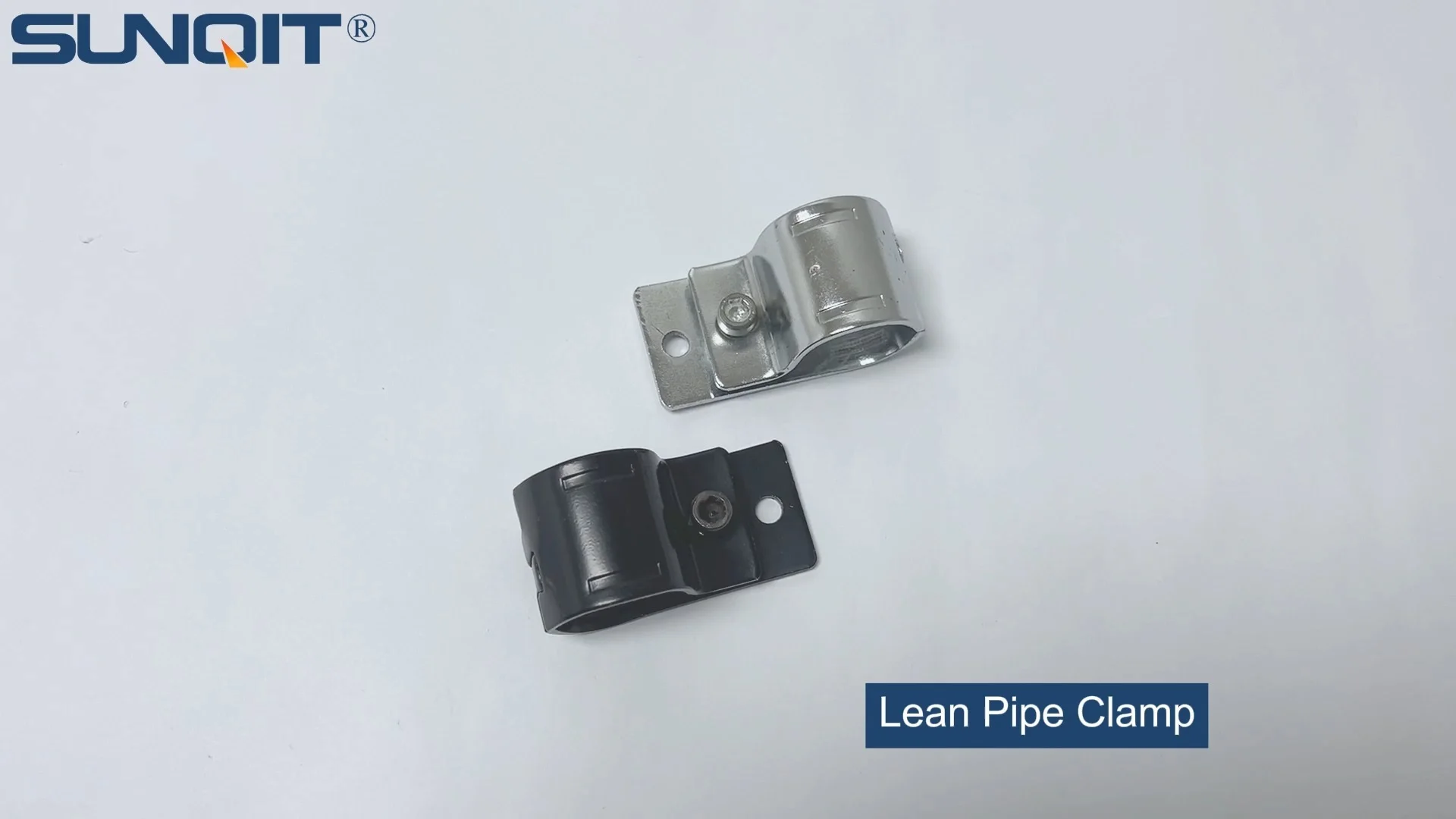
Lean Pipe Clamp
Lean pipe clamp is used for rack system hang monitor or other panel for workbenck, flowrack in production daily use.
Walk into any modern manufacturing facility, warehouse, or assembly plant, and you'll likely spot a common sight: sleek, modular structures made from metal pipes and joints, holding everything from tools to raw materials to finished products. These are lean pipe systems—quietly revolutionizing how businesses approach efficiency, flexibility, and waste reduction. But behind their seemingly simple design lies a world of precision engineering, where every component plays a critical role. Today, we're zeroing in on two unsung heroes of these systems: fixed and swivel lean pipe clamps. While they might look similar at first glance, choosing between them can make or break your workflow, safety, and bottom line. Let's unpack what makes each type unique, when to reach for one over the other, and how they fit into the bigger picture of building a truly lean operation.
Lean Pipe Systems: The Backbone of Modern Efficiency
Before we dive into clamps, let's take a step back to understand the star of the show: the lean pipe itself. Also known as "flexible pipe" or "kitchen pipe" in some circles, lean pipe is a lightweight yet durable tube—often made of steel with a plastic coating, aluminum, or even stainless steel—used to build modular structures. These structures are the cornerstone of lean system implementations, designed to eliminate waste, streamline workflows, and adapt to changing needs. From workbenches and material racks to conveyors and turnover trolleys, lean pipe systems are the chameleons of industrial design: they're customizable, cost-effective, and surprisingly strong.
But a lean pipe system is only as good as its connections. That's where components like lean pipe joint s and clamps come in. Think of lean pipe systems as a 3D puzzle: the pipes are the pieces, and the joints and clamps are the glue that holds them together. Without reliable clamps, even the sturdiest pipes can wobble, shift, or fail—leading to disrupted workflows, damaged materials, or worse, safety hazards. In short, clamps are the unsung guardians of stability and functionality in any lean setup.
Within the broader category of lean pipe and accessories , clamps stand out for their specificity. Unlike joints, which are often designed to connect pipes at fixed angles (like 90° or 45°), clamps serve a more targeted purpose: securing pipes to joints, reinforcing connections, or adding adjustability where needed. And among clamps, two types reign supreme: fixed and swivel. Let's start with the steady, unyielding one.
Fixed Lean Pipe Clamps: The Reliable Workhorses
If lean pipe systems were a team, fixed clamps would be the defensive linemen—steady, unshakable, and built to withstand pressure. As the name suggests, fixed clamps create a rigid, non-moving connection between pipes and joints. Once tightened, they lock into place, resisting rotation, tilting, or shifting under load. This makes them ideal for structures where stability is non-negotiable.
The Anatomy of a Fixed Clamp
Fixed clamps are deceptively simple in design, but that simplicity is part of their strength. Most consist of two curved metal plates (often steel or chrome-plated for corrosion resistance) that wrap around the lean pipe and a joint. A bolt or screw runs through the plates, and when tightened, the plates squeeze the pipe and joint together, creating a friction-based hold that won't budge. Some models include rubber or plastic liners to prevent scratching the pipe's surface, but the core function remains the same: no movement, no give.
What sets fixed clamps apart is their lack of moving parts. Unlike swivel clamps (which we'll get to later), there are no hinges, bearings, or adjustable hinges—just a solid, one-piece connection. This design gives them two key advantages: high load capacity and longevity. Without moving components to wear down, fixed clamps can handle heavier weights and last longer in high-stress environments.
When to Use Fixed Clamps: Scenarios Where Stability Trumps Flexibility
Fixed clamps shine in situations where the structure they're part of doesn't need to move or adjust. Let's look at some real-world examples where fixed clamps are the obvious choice:
1. Lean Pipe Workbenches
Walk into any assembly line, and you'll likely find a lean pipe workbench at the center of the action. These workstations are where operators spend hours assembling products, using tools, and placing components. A wobbly workbench isn't just annoying—it's dangerous. If a workbench shifts when an operator leans on it, tools could slide off, parts could misalign, and workers could lose balance. Fixed clamps solve this by locking the workbench's frame into place. Whether it's the legs, the shelf supports, or the crossbars, fixed clamps ensure the workbench stays rock-solid, even under the daily wear and tear of a busy production floor.
Consider a small electronics manufacturer I visited last year. Their assembly workbenches, built with aluminum lean pipe and fixed clamps, had been in use for over five years. "We never have to adjust them," the plant manager told me. "The clamps hold so tight, even when our technicians lean on the bench to reach for parts. We've had zero issues with wobbling or loose connections. That stability means our workers can focus on building, not fixing the workstation."
2. Material Racks and Storage Systems
Material racks—like the aptly named "material rack b (3 row and 3 floor)" from many lean pipe supplier catalogs—are another prime candidate for fixed clamps. These racks hold heavy boxes, pallets, or raw materials, and any movement could lead to spills, damaged inventory, or even collapse. Fixed clamps ensure the vertical supports and horizontal shelves stay perfectly aligned, even when loaded with hundreds of pounds of goods. In warehouses where safety is paramount, this peace of mind is invaluable.
A distribution center I consulted with once switched from generic clamps to fixed clamps on their material racks after a near-miss. A rack loaded with 50-pound boxes had started to lean due to loose connections, and it took two workers to stabilize it. After installing fixed clamps, they saw zero issues in the following year. "It was a small change, but it eliminated a huge risk," the warehouse supervisor noted. "Now we don't worry about racks shifting during loading or unloading."
3. High-Vibration Environments
Factories with heavy machinery—think stamping presses, CNC machines, or industrial mixers—generate constant vibration. Over time, this vibration can loosen even the tightest connections. Fixed clamps, with their rigid design, are far less likely to vibrate loose than swivel clamps. Their friction-based hold resists the tiny movements caused by vibration, ensuring the structure remains stable for longer.
An automotive parts manufacturer I worked with had this exact problem. Their welding stations, located near a large stamping machine, kept developing loose connections in their tool racks. They switched to fixed clamps, and the issue vanished. "The vibration used to rattle the swivel clamps loose every few weeks," the maintenance lead explained. "With fixed clamps, we check them monthly, and they're still tight as day one."
Pros and Cons of Fixed Clamps
Like any tool, fixed clamps have their strengths and weaknesses. Let's break them down:
-
Pros:
- High load capacity: Can handle heavier weights than swivel clamps (often up to 500+ pounds per clamp, depending on size).
- Low maintenance: No moving parts mean less wear and tear—just tighten once and forget (until it's time for a checkup).
- Cost-effective: Simpler design often makes them cheaper than swivel clamps.
- Safety: Rigid connections reduce the risk of structural failure or accidents in high-stress environments.
-
Cons:
- No adjustability: Once installed, you can't rotate or tilt the connected pipe without loosening the clamp.
- Harder to reconfigure: If you need to change the structure's layout, you'll have to fully remove and reinstall the clamps.
- Potential for over-tightening: Over-tightening can warp the pipe or strip the bolt, weakening the connection.

Swivel Lean Pipe Clamps: The Flexible Problem-Solvers
If fixed clamps are the defensive linemen, swivel clamps are the wide receivers—agile, adaptable, and ready to pivot at a moment's notice. Swivel clamps, also called "rotary clamps," allow the connected lean pipe to rotate or tilt within a certain range (often 180° or 360°, depending on the model). This adjustability makes them indispensable for structures that need to adapt to changing workflows, product sizes, or operator needs.
The Anatomy of a Swivel Clamp
Swivel clamps build on the basic design of fixed clamps but add a critical twist: a rotating joint. Instead of two solid plates, swivel clamps have one fixed plate and one rotating plate, connected by a hinge or bearing. The rotating plate can pivot around the hinge, allowing the pipe it's attached to rotate or tilt. A locking mechanism—usually a bolt or lever—lets you lock the swivel in place once you've set the desired angle.
This design adds complexity, but it's worth it for the flexibility. Some swivel clamps even allow for infinite adjustability (meaning you can set them to any angle, not just preset increments), while others have detents (small notches) that lock at common angles like 0°, 45°, or 90°. Materials-wise, swivel clamps are often made of the same steel or chrome-plated steel as fixed clamps, but with additional components like ball bearings or nylon washers to ensure smooth rotation.
When to Use Swivel Clamps: Scenarios Where Flexibility Matters Most
Swivel clamps are all about adaptability. They're the go-to choice when your structure needs to change angles, adjust to different product sizes, or accommodate varying operator heights. Here are some scenarios where swivel clamps shine:
1. Conveyor Systems and Roller Tracks
Conveyor systems—whether they're moving boxes, parts, or packages—rarely run in a straight line. They need to turn, tilt, or change elevation to navigate around obstacles or feed into different workstations. Swivel clamps make this possible by allowing sections of the conveyor (or the roller track that carries the items) to pivot. For example, a plastic roller track guide rail (yellow or grey, as you might see in supplier catalogs) can be mounted on swivel clamps, letting operators tilt the track slightly to redirect items without rebuilding the entire conveyor.
A food and beverage distributor I worked with used this to great effect. Their packaging line handles bottles of different sizes—from small 8-ounce containers to large 2-liter jugs. By mounting their roller tracks on swivel clamps, they can tilt the track by 5° for smaller bottles (to prevent tipping) and 10° for larger ones (to speed up flow). "With fixed clamps, we'd have needed two separate conveyors," the operations manager said. "Swivel clamps let us adjust on the fly—saving space and money."
2. Turnover Trolleys and Mobile Workstations
Turnover trolleys—used to move materials between workstations—often need to adapt to different loading heights. For example, a trolley might need to align with a low shelf in one area and a high workbench in another. Swivel clamps on the trolley's handle or shelf supports allow operators to adjust the height or angle of the handles, making it easier to push, pull, or load the trolley.
A furniture manufacturer I visited used swivel clamps on their upholstery trolleys. The trolleys carry large foam cushions, and the operators (who range in height from 5'2" to 6'1") can adjust the handle angle to avoid bending or straining. "Before swivel clamps, we had workers complaining about back pain," the HR director noted. "Now everyone can set the handle to their perfect height. Absenteeism dropped by 15% in that department alone."
3. Dynamic Assembly Lines
Modern assembly lines are rarely static. Products change, workflows evolve, and new tools are added. Swivel clamps let manufacturers reconfigure workstations quickly without rebuilding them from scratch. For example, a lean pipe workbench with swivel-clamped tool holders can have those holders rotated to face the operator, then swiveled out of the way when not in use. Or a parts bin rack can have its shelves tilted to improve access for different operators.
An electronics contract manufacturer I consulted with used this strategy during product launches. When they shift from assembling smartphones to tablets, the size and shape of the parts change. With swivel clamps on their workbench's parts bins, they can tilt the bins to better fit tablet components, then swivel them back for smartphones. "We used to spend 8 hours reconfiguring workstations for new products," the production manager said. "Now it takes 2 hours—all thanks to swivel clamps."
Pros and Cons of Swivel Clamps
Swivel clamps offer flexibility, but that comes with tradeoffs. Here's how they stack up:
-
Pros:
- Adjustability: Can rotate or tilt to accommodate changing needs, angles, or loads.
- Easy reconfiguration: No need to fully disassemble the structure to make changes—just loosen the clamp, adjust, and retighten.
- Ergonomics: Allows operators to adjust workstations to their height or preferred angle, reducing strain and fatigue.
- Space-saving: Eliminates the need for multiple fixed structures (e.g., one conveyor instead of two).
-
Cons:
- Lower load capacity: Moving parts reduce their ability to handle heavy weights (typically 200–400 pounds per clamp, depending on size).
- Higher maintenance: Bearings and hinges need occasional lubrication to prevent rust or sticking.
- Cost: More complex design makes them pricier than fixed clamps.
- Risk of loosening: If not properly locked, swivel clamps can shift under vibration or heavy loads.

Fixed vs. Swivel Clamps: A Side-by-Side Comparison
Still trying to decide which clamp is right for your setup? Let's put them head-to-head in a table to make the differences crystal clear:
| Feature | Fixed Lean Pipe Clamps | Swivel Lean Pipe Clamps |
|---|---|---|
| Movement | No rotation or tilt—rigid, fixed connection. | Allows rotation (up to 360°) and/or tilting (varies by model). |
| Load Capacity | High (300–600+ lbs per clamp, depending on size). | Moderate (200–400 lbs per clamp, depending on size). |
| Best For | Static structures, high loads, high vibration, safety-critical areas. | Dynamic setups, adjustable workstations, conveyors, ergonomic needs. |
| Installation Difficulty | Simple—tighten once and done. | Slightly more complex—requires aligning moving parts and setting initial angle. |
| Maintenance Needs | Low—check tightness quarterly; no moving parts to lubricate. | Moderate—lubricate hinges/bearings every 3–6 months; check locking mechanism for wear. |
| Cost | Lower (typically $5–$15 per clamp). | Higher (typically $10–$25 per clamp). |
| Lifespan | Longer (5–10+ years, with proper maintenance). | Shorter (3–7+ years, due to wear on moving parts). |
| Risk of Failure | Low—fails only if over-tightened, corroded, or overloaded. | Higher—risk of loosening if locking mechanism fails or moving parts wear out. |

How to Choose: A Step-by-Step Decision Guide
Choosing between fixed and swivel clamps isn't about picking "the better one"—it's about picking the right one for your specific needs. Here's a simple, step-by-step guide to help you decide:
Step 1: Define the Structure's Purpose
Start by asking: What will this structure do? Is it holding tools (static), moving products (dynamic), or storing heavy materials (high load)? For example:
- A material rack holding 50-pound boxes = static, high load → fixed clamps.
- A conveyor track that needs to tilt for different product sizes = dynamic, adjustable → swivel clamps.
Step 2: Assess Load Requirements
How much weight will the structure support? If you're dealing with loads over 400 pounds, fixed clamps are likely the safer bet. For lighter loads (under 300 pounds), swivel clamps offer flexibility without sacrificing safety.
Step 3: Consider Adjustment Frequency
Will you need to reconfigure the structure often? If you're in a fast-paced environment where workflows change monthly (or weekly), swivel clamps will save you time and frustration. If the structure will stay the same for years, fixed clamps are more cost-effective.
Step 4: Evaluate the Environment
Is the area prone to vibration, moisture, or corrosion? Fixed clamps handle vibration better, while swivel clamps may need extra maintenance (like stainless steel construction) in wet or corrosive environments.
Step 5: Factor in Ergonomics
Will operators interact with the structure daily? If so, swivel clamps can improve ergonomics by letting workers adjust heights or angles to reduce strain. For example, a lean pipe workbench with swivel-clamped tool holders can be customized to each operator's reach.
Step 6: Balance Cost and Longevity
Fixed clamps are cheaper upfront, but swivel clamps might save money long-term if they eliminate the need for multiple structures. For example, one swivel-clamped conveyor vs. two fixed-clamped conveyors for different product sizes.
Real-World Success Stories: When Clamps Made All the Difference
To bring this all to life, let's look at two real-world examples of businesses that chose the right clamp type and reaped the rewards.
Example 1: Automotive Plant Chooses Fixed Clamps for Safety
A mid-sized automotive parts manufacturer was struggling with loose connections in their welding booths. The booths, which held heavy welding tools and fixtures, were located near a stamping machine that generated constant vibration. Their original swivel clamps would loosen every few weeks, leading to wobbly tool racks and near-misses with falling equipment.
After switching to fixed clamps, the problem disappeared. The rigid connections resisted vibration, and the maintenance team only needed to check the clamps monthly (instead of weekly). "We haven't had a single loose connection in a year," the plant manager reported. "Fixed clamps turned a safety headache into a non-issue."
Example 2: E-Commerce Warehouse Uses Swivel Clamps to Boost Throughput
An e-commerce fulfillment center needed to speed up order processing during peak seasons (like Black Friday). Their existing static conveyor system couldn't keep up with the surge in orders, as it couldn't adapt to different package sizes.
They retrofitted the conveyor with swivel clamps, allowing sections of the roller track to tilt and turn. Now, during peak times, they can redirect packages to underused sorting stations, reducing bottlenecks. "We increased throughput by 25% without adding new conveyors," the operations director said. "Swivel clamps let us do more with less."
Maintenance Tips: Keeping Your Clamps in Top Shape
Whichever clamp type you choose, proper maintenance will extend its lifespan and ensure safety. Here are some pro tips:
For Fixed Clamps:
- Tighten properly: Use a torque wrench to avoid over-tightening (which can warp pipes) or under-tightening (which can loosen over time). Follow the manufacturer's torque guidelines.
- Inspect quarterly: Check for signs of corrosion, stripped bolts, or pipe damage. replace any clamps with bent plates or worn threads.
- Clean regularly: Wipe away dust, grease, or debris that could hide loose connections.
For Swivel Clamps:
- Lubricate moving parts: Apply a light machine oil or silicone spray to hinges and bearings every 3–6 months to prevent rust and ensure smooth rotation.
- Lock securely: Always fully engage the locking mechanism after adjusting the clamp. A loose lock can lead to shifting under load.
- Check for wear: Look for signs of wear on bearings (e.g., grinding sounds, stiff movement) or locking bolts (stripped threads). replace worn parts promptly.
Final Thoughts: Clamps as the Foundation of Lean Success
Fixed and swivel lean pipe clamps may be small components, but they play a huge role in the success of lean system s. Fixed clamps provide the stability needed for static, high-load structures, while swivel clamps offer the flexibility to adapt to changing workflows. The key is to match each clamp type to its ideal use case—no more, no less.
Remember, lean manufacturing is about eliminating waste, and choosing the wrong clamp is a form of waste: wasted time, wasted money, and wasted potential. By taking the time to assess your needs, load requirements, and environment, you can select clamps that keep your operations running smoothly, safely, and efficiently.
So, the next time you're designing a lean pipe structure, don't overlook the clamps. They might not be the flashiest part of the system, but they're the ones holding it all together—literally. And in lean manufacturing, that's more than enough to make them heroes.