- Company Articles
- Products and Technology
- Product knowledge
- Flat Adjustable Swivel Castor Wheels: Compatibility with Lean Tube Accessories

Flat Adjustable Swivel Castor Wheels: Compatibility with Lean Tube Accessories
Related Product
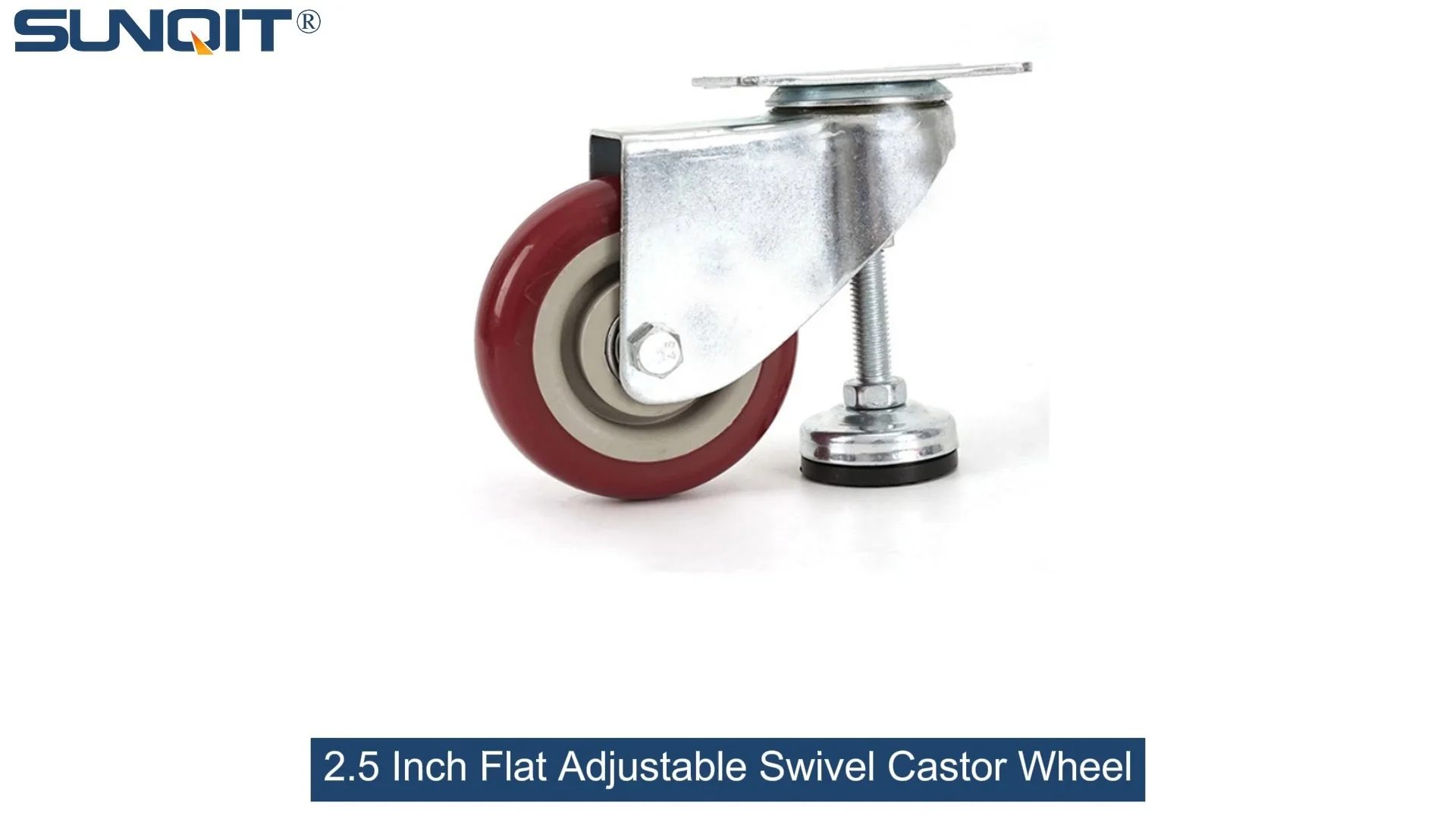
Flat Adjustable Swivel Castor Wheel
Swivel Chair Casters Ball Bearing Wheels Rubber Base with adjustable height function. Resistant to abrasion, impact and corrosion. Heavy payload can hold 80Kgs per pcs,which can make it works at a stable and smooth status.
Introduction: The Backbone of Flexible Workspaces
In the fast-paced world of manufacturing, warehousing, and logistics, the ability to adapt quickly isn't just a luxury—it's a necessity. Whether you're running a small workshop or a large-scale production facility, the layout of your workspace directly impacts efficiency, employee productivity, and even bottom-line results. This is where lean manufacturing principles come into play, emphasizing flexibility, waste reduction, and continuous improvement. At the heart of these principles lies the lean tube system—a modular, cost-effective solution that lets businesses build everything from workbenches to material racks with ease. But what truly brings these systems to life, turning static structures into dynamic tools for success? Often, it's the unsung heroes beneath them: castor wheels. Specifically, flat adjustable swivel castor wheels. These small but mighty components bridge the gap between rigid infrastructure and agile operation, allowing lean tube setups to move, adjust, and adapt to changing needs. In this article, we'll explore how flat adjustable swivel castor wheels integrate with lean tube accessories, why this compatibility matters, and how it transforms everyday workspaces into hubs of efficiency.
Understanding Flat Adjustable Swivel Castor Wheels: More Than Just "Wheels on a Stick"
Before diving into compatibility, let's take a closer look at what makes flat adjustable swivel castor wheels unique. At first glance, they might seem like any other wheeled component, but their design is purpose-built for the demands of industrial environments. Let's break down their key features:
Swivel Functionality: 360-Degree Freedom
Unlike fixed castors, which only roll forward and backward, swivel castors pivot on a vertical axis, allowing the wheel to rotate 360 degrees. This means the equipment they're attached to can move in any direction—no more awkward maneuvering in tight spaces. For lean tube systems, which often need to be repositioned to accommodate new workflows or seasonal demands, this flexibility is game-changing. Imagine a busy warehouse where a material rack needs to shift from one production line to another in minutes; swivel castors make that possible without disassembling the entire structure.
Flat Adjustable Design: Leveling the Playing Field
The "flat" in their name refers to the mounting plate—a broad, stable base that attaches to the bottom of lean tube structures like workbenches or trolleys. But the real star here is the "adjustable" feature. Most flat adjustable castors come with a height-adjustment mechanism, typically a threaded stem or a screw that allows users to raise or lower the wheel by a few centimeters. Why does this matter? Industrial floors are rarely perfectly level. A workshop might have minor dips from years of heavy equipment use, or a warehouse might have uneven concrete from expansion joints. Adjustable castors let you compensate for these imperfections, ensuring that your lean pipe workbench stays stable, your turnover trolley rolls smoothly, and your materials don't slide off shelves. It's a small adjustment that prevents big headaches—like wobbly work surfaces that throw off precision tasks or uneven weight distribution that leads to premature wear and tear.
Durable Construction: Built to Last in Tough Environments
Industrial settings are unforgiving. Castors here face heavy loads, constant movement, exposure to oils, chemicals, and debris, and sometimes even extreme temperatures. Flat adjustable swivel castor wheels are built to withstand this. The mounting plates are often made from heavy-gauge steel, while the wheels themselves might be rubber, polyurethane, or nylon—materials chosen for their shock absorption, grip, and resistance to wear. Many also include brake mechanisms, like a simple lever that locks the wheel in place, preventing unintended movement when stability is needed (think: a workbench during assembly or a material rack loaded with fragile goods).

Lean Tube Systems and Accessories: The Building Blocks of Flexibility
To understand why compatibility between flat adjustable swivel castor wheels and lean tube accessories matters, we first need to grasp what lean tube systems are and how they work. Lean tubes—also called "lean pipes" or "flexible pipes"—are lightweight, modular tubes (often made of steel, aluminum, or plastic-coated steel) that connect using simple joints and fittings. They're the backbone of lean manufacturing because they let businesses build custom structures without welding, drilling, or specialized tools. Need a new workbench? Connect a few tubes with joints, add a plywood top, and you're done. Need to expand a material rack? Just add more tubes and connectors. It's like industrial Lego for adults, but with a serious purpose: reducing lead times, cutting costs, and adapting to change on the fly.
Key Lean Tube Accessories: The Glue That Holds It All Together
Lean tube systems don't work in isolation—they rely on a range of accessories to function. These include:
- Joints and Connectors: These are the "hinges" of the system, allowing tubes to be joined at angles (90 degrees, 45 degrees, etc.) or in straight lines. Examples include 90° lean pipe joints, parallel lean pipe joints, and internal rotary aluminum joints.
- Mounting Plates and Brackets: Used to attach shelves, work surfaces, or other components to the tube frame. For castors, this often means a flat plate that bolts to the bottom of the lean tube structure, providing a stable base for the castor's mounting plate.
- Workbench Tops and Shelves: Plywood, metal, or plastic surfaces that turn a tube frame into a functional workbench or storage unit.
- Turnover Trolleys and Racks: Mobile carts or stationary racks built from lean tubes, used to transport materials or store goods.
The magic of lean tube accessories is their standardization. Most are designed to fit common tube diameters (like 28mm for steel lean pipes or 30mm for aluminum variants), so businesses don't have to worry about mismatched parts. This standardization is exactly what makes compatibility with castor wheels possible—and crucial.

Compatibility in Action: How Flat Adjustable Swivel Castors Integrate with Lean Tube Accessories
Now, let's get to the heart of the matter: how do flat adjustable swivel castor wheels work with lean tube accessories? At its core, compatibility here refers to how easily the castor's mounting plate attaches to the lean tube frame, how well it supports the weight of the structure, and how smoothly it interacts with other accessories like joints or brackets. Let's break this down with real-world examples, focusing on two common lean tube setups: the lean pipe workbench and the turnover trolley.
Case Study 1: Lean Pipe Workbench with Flat Adjustable Castors
A lean pipe workbench is one of the most versatile tools in any workshop. It can serve as an assembly station, a packing area, or even a temporary storage spot. But to maximize its utility, it needs to be mobile and stable—two things that flat adjustable swivel castors deliver. Here's how the integration works:
Step 1: Building the Frame. The workbench starts with a cube-shaped frame made of lean tubes connected by 90° joints. The frame's legs are typically 1.2m to 1.5m tall, depending on the desired work height. At the bottom of each leg, instead of leaving it flat on the floor, you'll attach a mounting plate—a flat, metal bracket that's designed to fit the lean tube's diameter. This plate is secured using a lean pipe clamp or a bolt that tightens around the tube, ensuring a snug fit.
Step 2: Attaching the Castor. The flat adjustable swivel castor wheel's mounting plate (the "flat" part) then bolts directly to the lean tube mounting plate. Most castors come with pre-drilled holes that align with standard plate sizes, making installation a matter of screwing in a few bolts. This connection needs to be strong—after all, the workbench might hold heavy tools, materials, or even an employee leaning on it. High-quality castors use reinforced mounting plates and high-tensile bolts to prevent stripping or bending under load.
Step 3: Adjusting for Stability. Once all four castors are attached, the "adjustable" feature comes into play. If the workshop floor is uneven, you can twist the castor's stem to raise or lower individual wheels, leveling the workbench. This is critical for tasks that require precision, like electronics assembly or quality inspection—imagine trying to solder a circuit board on a wobbly surface! The adjustment mechanism is usually a simple nut or a hand-crank, so no special tools are needed.
Step 4: Adding Brakes for Safety. Many flat adjustable swivel castors include a brake lever on the side of the wheel. When engaged, this brake locks the swivel motion and/or the wheel itself, preventing the workbench from rolling away during use. For example, during a long assembly project, the brakes keep the workbench steady; when it's time to reconfigure the workspace, release the brakes, and the swivel function lets you glide the bench into a new position with minimal effort.
Case Study 2: Turnover Trolley and Rack on Castors
Turnover trolleys are another staple of lean systems, used to transport materials from one part of the facility to another. Unlike workbenches, which are often semi-permanent, trolleys need to be lightweight, easy to push, and durable enough to handle daily use. Here's how flat adjustable swivel castors make them effective:
Designing for Mobility. A typical turnover trolley has a rectangular frame with shelves (often made of mesh or plywood) for holding boxes or parts. The frame is built using lean tubes and parallel lean pipe joints, which keep the structure rigid but lightweight. At the bottom, four castors are attached—two swivel and two fixed, or all four swivel for maximum maneuverability. Flat adjustable swivel castors are ideal here because their low-profile design (the "flat" mounting plate) keeps the trolley close to the ground, reducing the risk of tipping when loaded.
Weight Distribution Matters. Trolleys often carry uneven loads—maybe a heavy box on one shelf and lighter items on another. Adjustable castors help here by allowing users to tweak the height of each wheel, ensuring the trolley sits level and the weight is evenly distributed across all four castors. This not only makes the trolley easier to push but also extends the life of the wheels and axles by preventing overloading on one side.
Compatibility with Lean Tube Accessories. To attach the castors, the trolley's frame uses the same mounting plates and clamps as the workbench example. This standardization means that if a castor gets damaged, you can swap it out with a new one without replacing the entire trolley. It also lets businesses mix and match accessories—for example, adding a caster accessory like a wheel guard to protect the castor from debris, or a locking pin to secure the swivel motion when moving in straight lines.

The Benefits of Compatibility: Why It's Worth Getting Right
At this point, you might be thinking, "Okay, so castors and lean tube accessories work together—so what?" The truth is, their compatibility delivers tangible benefits that go beyond just "convenience." Let's explore why this matters for businesses of all sizes:
1. Flexibility to Reconfigure on the Fly
Lean manufacturing thrives on adaptability. A product line might change seasonally, or a new order might require a completely different workflow. With compatible castors and lean tube accessories, reconfiguring is as simple as unbolting the castors, moving the structure, and reattaching them. No need for a team of contractors or expensive equipment—just a few hand tools and a couple of employees. For example, a small electronics manufacturer might start the week with two assembly workbenches side by side, then split them into separate stations mid-week to handle a rush order. With flat adjustable swivel castors, this takes minutes, not hours.
2. Reduced Downtime and Maintenance Costs
When castors and lean tube accessories are incompatible, problems arise. A castor with a mounting plate that doesn't fit the lean tube clamp might loosen over time, leading to a wobbly workbench. A wheel that's too small for the trolley's load capacity might wear out quickly, requiring frequent replacements. Compatible components, on the other hand, are designed to work together, reducing the risk of breakdowns. Most manufacturers test their castors with standard lean tube accessories, ensuring a tight fit and optimal load distribution. This means fewer repairs, less downtime, and lower maintenance costs in the long run.
3. Improved Safety for Employees
A wobbly workbench or a trolley that drifts off course isn't just inefficient—it's dangerous. Employees could trip, tools might fall, or materials could be damaged. Flat adjustable swivel castors mitigate these risks by keeping structures stable (thanks to adjustability) and controlled (thanks to brakes). When paired with compatible lean tube accessories like reinforced clamps or anti-slip mounting plates, they create a safer work environment. For example, in a food processing plant, where floors are often wet, rubber-wheel castors with strong brakes prevent trolleys from sliding, reducing the risk of accidents.
4. Scalability for Growing Businesses
Startups and small businesses often begin with basic lean tube setups: a few workbenches, a couple of trolleys. As they grow, they need to expand—adding more workstations, larger material racks, or specialized equipment. Compatible castors and accessories make scaling easy because you can reuse existing components. Need a bigger workbench? Just add more tubes and a longer top, then attach the same castors you used before. This modularity keeps costs low and allows businesses to invest in growth without overhauling their infrastructure.
Compatibility Table: Matching Castors to Lean Tube Accessories
To help visualize how flat adjustable swivel castor wheels pair with common lean tube accessories, let's look at a quick reference table. This isn't an exhaustive list, but it highlights key pairings and their benefits:
| Lean Tube Accessory | Flat Adjustable Swivel Castor Feature | Common Use Case | Key Benefit |
|---|---|---|---|
| 90° Lean Pipe Joint | Reinforced mounting plate with 4-bolt pattern | Workbench legs | Secure connection prevents wobbling under heavy loads |
| Parallel Lean Pipe Joint | Low-profile design (≤50mm height) | Turnover trolley frames | Keeps trolley close to the ground, reducing tipping risk |
| Lean Pipe Clamp | Adjustable stem (10-20mm height range) | Uneven workshop floors | Levels structures without shimming or custom fabrication |
| Caster Accessory: Brake Lever | Foot-operated brake (no required) | Assembly workbenches | Quickly lock/unlock castors without stopping work |
| Mounting Plate (for aluminum profiles) | Rubberized wheel (non-marking) | Cleanrooms or labs | Prevents floor scratches and contamination |
This table illustrates a simple truth: compatibility isn't just about "fitting together"—it's about enhancing the functionality of both the castor and the accessory. A rubberized wheel paired with an aluminum profile mounting plate isn't just a wheel; it's a solution for cleanroom environments where hygiene and floor protection are critical.
Choosing the Right Pair: Tips for Selecting Compatible Castors and Accessories
Now that you understand the "why" and "how" of compatibility, let's talk about the "what"—how to choose the right flat adjustable swivel castor wheels and lean tube accessories for your needs. Here are some practical tips:
1. Start with Load Capacity
The first question to ask is: "How much weight will this structure hold?" Castors are rated for maximum load capacity (e.g., 200kg per wheel), and this rating decreases if the structure has more than four wheels (since weight isn't always evenly distributed). For a lean pipe workbench that holds 500kg of tools and materials, you'll need castors with a combined capacity of at least 600kg (to account for uneven loading). Always check the manufacturer's specs—cutting corners here can lead to castor failure and safety risks.
2. Consider the Environment
Where will the castors be used? A warehouse with concrete floors might call for polyurethane wheels (which are durable and quiet), while a food processing plant might need stainless steel castors (resistant to corrosion from water and chemicals). If the area is prone to debris (like a woodworking shop), look for castors with sealed bearings to prevent sawdust from jamming the wheel. The environment also impacts adjustability—outdoor or unheated spaces might need castors with rust-resistant adjustment stems.
3. Match Tube Diameter and Accessory Standards
Most lean tube systems use standard diameters: 28mm for steel pipes, 30mm for aluminum, and 25mm for mini systems. Castor mounting plates and clamps should be designed for your tube size. If you're unsure, ask the supplier for compatibility charts—reputable manufacturers (like lean pipe suppliers or caster specialists) will have these readily available. Avoid "one-size-fits-all" solutions, as they often compromise on stability.
4. Test Before Scaling
If you're building a large setup (e.g., 10+ workbenches), test a single unit first. Assemble the frame, attach the castors, and simulate real-world use: load it to capacity, move it around, adjust the height, and engage the brakes. This lets you catch issues early—like a castor that locks poorly or a mounting plate that loosens after a few moves—before investing in multiple units.
Conclusion: Small Components, Big Impact
Flat adjustable swivel castor wheels and lean tube accessories might not be the most glamorous parts of a manufacturing setup, but their compatibility is the foundation of flexible, efficient workspaces. They turn static lean tube structures into dynamic tools that adapt to change, reduce waste, and empower employees to work smarter. Whether you're building a lean pipe workbench for a small workshop or equipping an entire factory with turnover trolleys, choosing compatible components ensures that your investment delivers long-term value. So the next time you walk through a well-organized warehouse or a bustling production line, take a moment to look down—you might just spot the quiet heroes making it all possible: castors that move, adjust, and keep up with the pace of progress.
In the end, lean manufacturing isn't just about systems and processes—it's about the details. And when it comes to details, few are as critical as the compatibility between flat adjustable swivel castor wheels and the lean tube accessories that bring your workspace to life.