- Company Articles
- Products and Technology
- Product knowledge
- Flat Adjustable Swivel Castor Wheels: Customization Options for Specific Industry Needs

Flat Adjustable Swivel Castor Wheels: Customization Options for Specific Industry Needs
Related Product
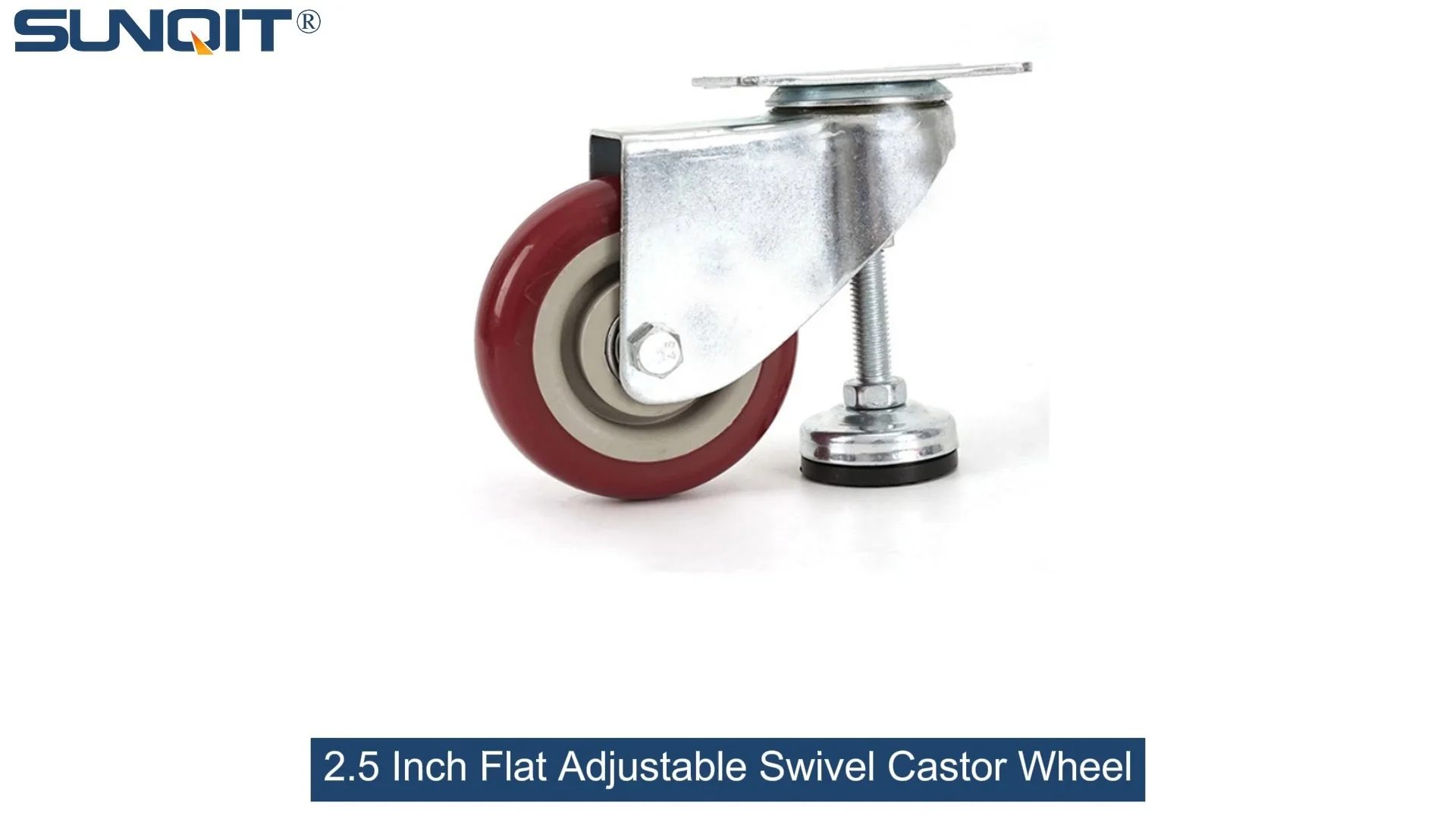
Flat Adjustable Swivel Castor Wheel
Swivel Chair Casters Ball Bearing Wheels Rubber Base with adjustable height function. Resistant to abrasion, impact and corrosion. Heavy payload can hold 80Kgs per pcs,which can make it works at a stable and smooth status.
The Unsung Heroes of Industrial Mobility
In the hum of a busy factory, the steady roll of a material cart, or the precise positioning of a workbench in a lab, there's a quiet workhorse keeping operations moving: the caster wheel. Yet for anyone who's pushed a stuck trolley across a concrete floor, adjusted a wobbly workbench by shimming it with scrap wood, or watched a loaded rack tip because its wheels couldn't handle the weight, it's clear— not all caster wheels are created equal . These small but critical components can make or break daily workflows, affecting everything from productivity to employee morale to product quality.
Enter flat adjustable swivel castor wheels: the unsung heroes designed to solve these headaches. More than just "wheels on a plate," they blend maneuverability, stability, and adaptability into a single package. Whether you're outfitting a lean system on a manufacturing floor, setting up an ESD workstation in an electronics lab, or building a mobile workbench for a healthcare clinic, the right flat adjustable swivel castor wheels don't just support equipment—they empower teams to work smarter, safer, and with less frustration. Let's dive into how these versatile tools are customized to meet the unique demands of specific industries, and why they've become indispensable for businesses aiming to streamline operations.
What Are Flat Adjustable Swivel Castor Wheels?
At first glance, a flat adjustable swivel castor wheel might look like any other caster, but its design hides thoughtful engineering. Let's break down the basics: swivel means the wheel can rotate 360 degrees, making tight turns and navigating crowded spaces a breeze. Adjustable refers to the ability to tweak the height of the wheel—often via a threaded stem or bolt—so you can level equipment on uneven floors, align work surfaces, or compensate for wear over time. And flat describes the mounting plate, a broad, stable base that attaches securely to trolleys, workbenches, or racks, ensuring the load is distributed evenly.
Think of them as the "Swiss Army knife" of mobility solutions. A standard caster might get the job done in a pinch, but when you need to move a 500-pound workbench loaded with sensitive electronics, then lock it into place with millimeter precision, or roll a cart through a narrow warehouse aisle without damaging floors, you need something more. These castors combine three core strengths: mobility (swivel), stability (adjustable height), and durability (robust materials). Let's explore how each component works together:
- The Caster Wheel Itself: The "foot" of the system, available in materials like rubber, polyurethane, steel, or nylon. Its tread, hardness, and size determine grip, noise level, and floor protection.
- Swivel Head: The pivot point that lets the wheel rotate. High-quality swivel heads use ball bearings or raceways to ensure smooth movement, even under heavy loads.
- Adjustment Mechanism: Usually a threaded rod or bolt that raises or lowers the wheel. Some models include a hand crank or tool slot for easy tweaks, while others are designed for one-time setup.
- Mounting Plate: The flat, metal plate that bolts or welds to the equipment. A larger plate distributes weight better, reducing stress on both the caster and the equipment it's attached to.
But what truly sets these castors apart is their customizability . Industries don't operate in one-size-fits-all environments, and neither should their mobility tools. Let's explore how manufacturers tailor flat adjustable swivel castor wheels to meet the unique needs of sectors like manufacturing, healthcare, and logistics.

The Art of Customization: Tailoring to Industry Demands
Imagine a food processing plant where floors are constantly wet with sanitizing solutions, a construction site with gravel and debris, and a cleanroom where even a speck of dust could ruin a batch of pharmaceuticals. Each environment demands something different from a caster wheel. Customization isn't just a "nice-to-have"—it's the difference between a tool that lasts for years and one that fails in weeks. Here's how manufacturers adapt flat adjustable swivel castor wheels to specific industry needs:
Material Selection: More Than Just "What It's Made Of"
The material of the caster wheel and its components directly impacts performance. For example, rubber wheels are a favorite in healthcare settings because they dampen noise (critical in patient areas) and won't mark floors, but they'd wear quickly on a factory floor with metal shavings. Polyurethane wheels , on the other hand, strike a balance: they're durable enough for manufacturing, gentle on warehouse floors, and resistant to oils and chemicals—making them a top choice for automotive plants. In labs or cleanrooms, stainless steel wheels shine (literally and figuratively) because they're easy to sanitize and resistant to corrosion from harsh cleaning agents.
Even the swivel head and mounting plate materials matter. A construction site might opt for heavy-gauge steel to withstand impacts, while a lightweight aluminum plate could be preferred in aerospace facilities where every ounce counts. The goal? Match the material to the environment's "personality"—whether that's wet, abrasive, sterile, or high-temperature.
Load Capacity: When "Good Enough" Isn't Enough
There's a reason load capacity is the first spec engineers check: a caster that's underrated for the job won't just fail—it could endanger workers. A small parts trolley in a retail stockroom might need to handle 200 pounds, but a workbench in a shipyard loaded with welding equipment? That could require 2,000 pounds per wheel. Flat adjustable swivel castors are built to scale, with reinforced swivel heads, thicker mounting plates, and larger wheels for heavier loads.
But it's not just about raw strength. The distribution of weight matters too. A lean system with unevenly loaded shelves might need casters with a higher dynamic load (for movement) than static load (for standing still). Manufacturers work with businesses to calculate not just the total weight, but how it shifts during use—ensuring the casters can handle both the steady grind of daily operations and the occasional unexpected jolt.
Wheel Design: Tread, Size, and More
The wheel itself is where function meets finesse. Let's start with tread pattern : a deep, knobby tread might grip well on outdoor gravel, but in a warehouse with smooth concrete, it would create unnecessary noise and vibration. Instead, a smooth or slightly grooved tread is better for indoor use, reducing rolling resistance and floor scuffs. For ESD workstations in electronics manufacturing, conductive treads are non-negotiable—they dissipate static electricity, protecting sensitive circuit boards from damage.
Wheel size is another key factor. Larger wheels (6–8 inches) roll over cracks and debris more easily, making them ideal for rough floors, while smaller wheels (2–4 inches) offer better precision for tight spaces, like lab benchtops or medical carts. And hardness , measured by the Shore durometer scale, affects both grip and durability: softer wheels (e.g., 60 Shore A) absorb shocks and protect floors but wear faster, while harder wheels (e.g., 90 Shore A) last longer but can be noisy on hard surfaces. It's a balancing act, and manufacturers often custom-blend materials to hit the sweet spot for each industry.
Adjustment and Locking Mechanisms: Control When You Need It
The "adjustable" in flat adjustable swivel castors is where they truly shine for precision work. Imagine a lab where a microscope must align perfectly with a sample on a mobile workbench—even a 1/8-inch height difference could throw off measurements. Here, a fine-thread adjustment mechanism allows for micro-level tweaks, often down to 1/16 of an inch. In contrast, a construction site might prioritize quick adjustments, using a hand crank or lever to raise or lower a scaffold cart in seconds.
Then there are locking systems : the difference between a cart that stays put and one that rolls away unexpectedly. Total-lock brakes (which lock both the wheel and swivel head) are critical for workbenches that need to stay stationary during use, while directional locks (which fix the wheel in a straight line) help with moving long loads, like pipe racks, in a straight path. Foot-operated brakes are a favorite in busy environments—no bending down or fumbling with tools; just a tap with your shoe to lock or release.

Industry Spotlight: Custom Solutions in Action
To truly appreciate the impact of customization, let's look at how flat adjustable swivel castor wheels solve real problems in specific sectors. These aren't just technical specs—they're stories of teams overcoming daily challenges, one well-designed wheel at a time.
Manufacturing: Where Durability Meets Lean Efficiency
In a manufacturing plant, downtime is the enemy. A stuck caster on a material cart can halt a production line, while uneven workbenches lead to misaligned parts and rework. For lean system suppliers, flat adjustable swivel castors are a cornerstone of efficient workflows. Take automotive assembly: carts loaded with heavy engine parts need to maneuver around robots and workers, then lock into place with zero movement during installation. Here, manufacturers might customize castors with polyurethane wheels (resistant to oil and grease), dual-locking brakes (wheel and swivel lock), and a 10,000-pound total load capacity per cart.
Adjustability is equally key. Many factory floors aren't perfectly level, especially in older facilities. A workbench with adjustable casters can be tweaked to keep assembly surfaces flat, ensuring parts fit together correctly the first time. One automotive supplier we worked with reported a 20% reduction in rework after upgrading to adjustable casters—all because their workbenches finally stayed level, even as the floor shifted slightly under the weight of machinery.
Healthcare: Sterility, Silence, and Safety
In hospitals and clinics, every detail matters—including the wheels on medical carts and workbenches. Imagine a nurse rushing to a patient's room with a medication cart that squeaks loudly or gets stuck on a hospital's uneven tile floor. Not only is it disruptive, but it could delay critical care. That's why healthcare-grade flat adjustable swivel castors prioritize quiet operation (soft rubber wheels), easy sanitization (stainless steel components), and non-marking treads (to protect clean floors).
Adjustability also plays a role in infection control. Mobile workstations in operating rooms need to align perfectly with surgical tables, and their height must be adjusted to match different clinicians' needs. A caster with a smooth, tool-free adjustment mechanism allows nurses or techs to tweak the height quickly between procedures, without touching dirty surfaces. In one children's hospital, upgrading to adjustable casters on mobile isolation carts reduced setup time for patient rooms by 15 minutes per shift—time that could be spent with kids instead of wrestling with equipment.
Logistics & Warehousing: Speed, Maneuverability, and Floor Care
Warehouses are all about movement: pallets, boxes, and material racks constantly shifting to keep up with orders. Here, flat adjustable swivel castors need to balance speed with control. Large polyurethane wheels (6–8 inches) roll smoothly over concrete, reducing the effort needed to push heavy carts, while swivel locks help keep long loads (like pipe racks) moving in a straight line. For facilities with automated systems, precision is critical—casters with precision bearings ensure carts glide along predefined paths without veering off course.
Floor protection is another priority. Many warehouses use polished concrete or epoxy floors, which are durable but prone to scratches. Soft-tread wheels or polyurethane-coated wheels prevent scuffs, extending floor life and reducing maintenance costs. One e-commerce fulfillment center reported saving $10,000 annually on floor repairs after switching to custom castors—proof that small upgrades can add up to big savings.
Customization Options by Industry: A Quick Reference
| Industry | Key Customization Needs | Recommended Wheel Material | Load Capacity (Per Wheel) | Locking System |
|---|---|---|---|---|
| Manufacturing | Oil/grease resistance, heavy loads, precision leveling | Polyurethane | 500–2,000 lbs | Total-lock (wheel + swivel) |
| Healthcare | Sterility, quiet operation, tool-free adjustment | Stainless steel with rubber tread | 200–500 lbs | Foot-operated total-lock |
| Logistics/Warehousing | Speed, floor protection, maneuverability | Polyurethane (large diameter) | 300–1,000 lbs | Directional lock + wheel lock |
| Electronics (ESD Workstations) | Static dissipation, precision alignment | Conductive polyurethane | 150–400 lbs | Fine-adjustment total-lock |

Choosing the Right Partner: Beyond the Product
Customization isn't just about specs on a page—it's about collaboration. The best flat adjustable swivel castor wheels come from suppliers who take the time to understand your workflow, challenges, and goals. A good lean system supplier or caster specialist won't just sell you a product; they'll visit your facility, watch your teams work, and ask questions: Where does the current equipment struggle? What would make your day easier? What's the biggest risk if the casters fail?
Look for suppliers who offer prototyping or sample testing. A caster that works on paper might behave differently in your unique environment, and testing a sample before committing to a bulk order can save time and money. Reputable suppliers also provide after-sales support—whether that's help with installation, replacement parts, or troubleshooting. In one manufacturing plant, a supplier's technician noticed that casters on a specific workbench were wearing unevenly; they adjusted the swivel head tension, extending the caster life by 6 months. That's the kind of partnership that turns a vendor into a long-term ally.
More Than Wheels: Investing in Operational Excellence
Flat adjustable swivel castor wheels might not be the first thing you think of when upgrading your facility, but they're a reminder that great operations are built on great details. A workbench that stays level, a cart that rolls smoothly, a team that doesn't waste energy fighting stuck wheels—these are the building blocks of efficiency, safety, and pride in work. When you customize castors to your industry's needs, you're not just buying equipment; you're investing in your team's ability to do their best work.
So the next time you push a trolley, adjust a workbench, or watch a material rack glide across the floor, take a moment to appreciate the caster wheels doing their job. They might be small, but their impact is huge. And if you're still dealing with wheels that stick, wobble, or fail, it might be time to explore the world of flat adjustable swivel castor wheels—where customization meets care, and every roll is a step toward a smoother, smarter operation.