- Company Articles
- Products and Technology
- Product knowledge
- Flat Adjustable Swivel Castor Wheels: Essential Components for Lean Manufacturing Equipment

Flat Adjustable Swivel Castor Wheels: Essential Components for Lean Manufacturing Equipment
Related Product
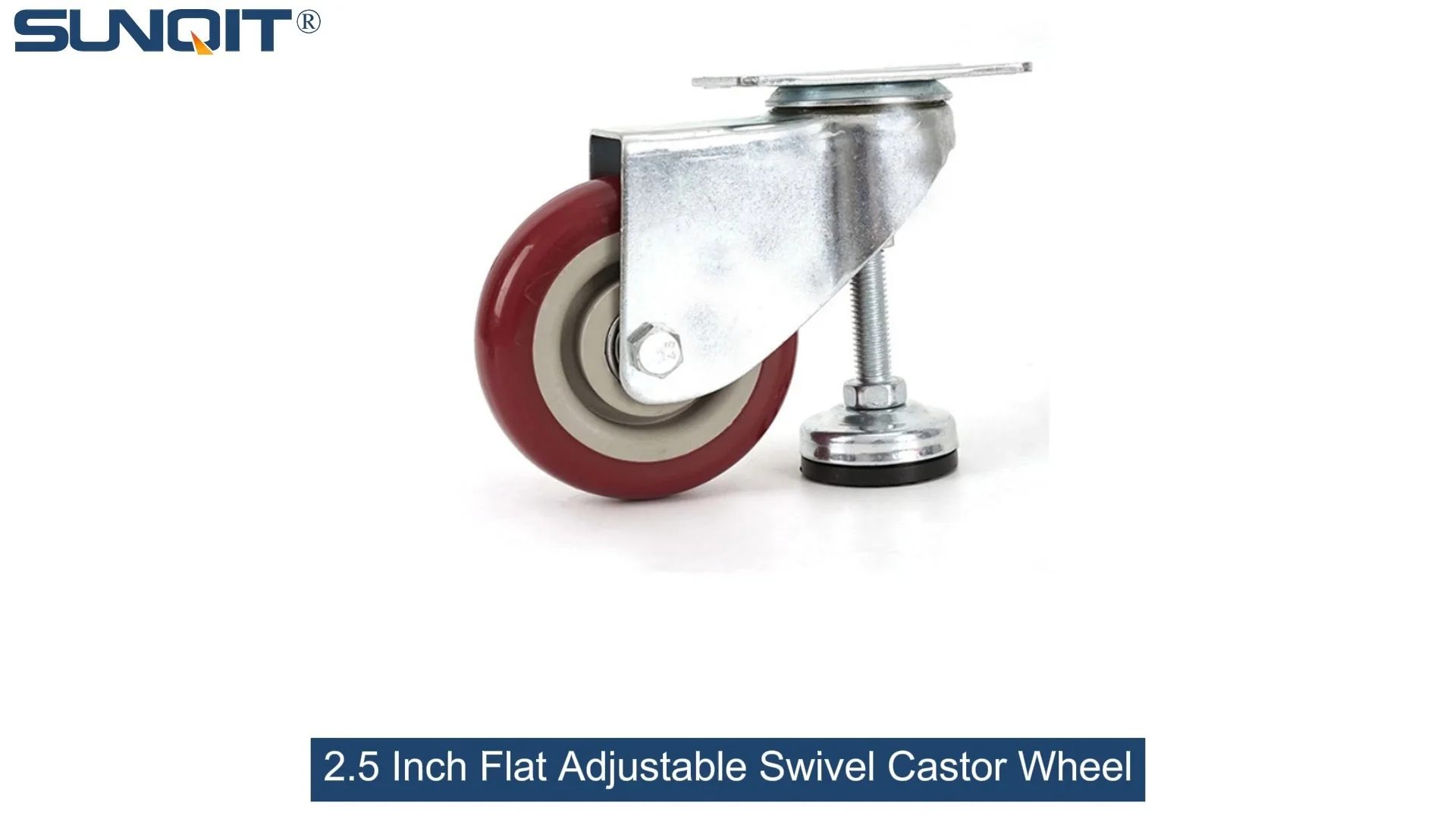
Flat Adjustable Swivel Castor Wheel
Swivel Chair Casters Ball Bearing Wheels Rubber Base with adjustable height function. Resistant to abrasion, impact and corrosion. Heavy payload can hold 80Kgs per pcs,which can make it works at a stable and smooth status.
The Unsung Heroes of Lean Manufacturing Mobility
In the fast-paced world of manufacturing, where production lines operate around the clock and efficiency is measured in seconds, the difference between a smooth workflow and a bottleneck often lies in the smallest details. Lean manufacturing—with its core principles of waste reduction, continuous improvement, and process optimization—relies heavily on equipment that can adapt, move, and align with dynamic production needs. Among these critical tools, flat adjustable swivel castor wheels stand out as quiet workhorses, enabling the flexibility and mobility that modern factories depend on. From workbenches that glide effortlessly across the shop floor to turnover trolleys that deliver materials exactly where they're needed, these components are the backbone of agile, lean operations.
At first glance, castor wheels might seem like simple additions to industrial equipment. But in reality, their design, functionality, and adaptability directly impact key lean metrics: reducing transportation waste, minimizing downtime during reconfiguration, and enhancing ergonomic safety for workers. For manufacturers aiming to streamline processes and maximize productivity, choosing the right castor wheels isn't just a purchase—it's an investment in operational excellence. This article explores why flat adjustable swivel castor wheels have become indispensable in lean systems, their key features, real-world applications, and how they integrate with other essential components like workbenches and material racks.
Understanding Flat Adjustable Swivel Castor Wheels
Beyond Basic Mobility: Design and Functionality
Flat adjustable swivel castor wheels are engineered to solve three critical challenges in manufacturing environments: mobility, stability, and adaptability. Unlike rigid castors that lock movement to a single direction or fixed-height wheels that struggle with uneven floors, these castors combine a 360-degree swivel mechanism with an adjustable height feature, making them uniquely versatile. Let's break down their core components:
The swivel head is the heart of the design, allowing the wheel to rotate freely around a vertical axis. This rotation is typically supported by precision ball bearings, ensuring smooth movement even under heavy loads—essential for equipment like loaded workbenches or material racks. The adjustable height mechanism , often a threaded stem or cam lever, lets operators raise or lower the castor by 1–4 inches, compensating for uneven concrete floors or aligning work surfaces with conveyors, assembly lines, or other equipment. Finally, the flat plate mounting provides a stable base for attaching to equipment, distributing weight evenly to prevent tipping and ensuring durability over thousands of movements.
Materials matter too. Most industrial-grade castors in lean systems use polyurethane wheels, which offer a balance of durability, floor protection, and noise reduction. For specialized environments—like electronics manufacturing where static control is critical—ESD (electrostatic discharge) compliant wheels are available, preventing damage to sensitive components. In heavy-duty applications, steel-reinforced wheels handle loads up to 1,200 pounds per castor, making them suitable for large turnover trolleys or multi-level material racks.

Why Lean Systems Can't Thrive Without Them
Aligning with Lean Principles
Lean manufacturing is built on eliminating seven types of waste: overproduction, waiting, transportation, defects, inventory, motion, and overprocessing. Flat adjustable swivel castor wheels directly target three of these—transportation, waiting, and motion—making them a cornerstone of lean implementation.
Consider transportation waste : in traditional static setups, materials or work-in-progress (WIP) often sit idle, requiring workers to travel long distances to retrieve them. With mobile equipment on swivel castors, materials move to the worker. For example, a turnover trolley equipped with flat adjustable castors can carry a day's worth of components directly to an assembly station, reducing foot traffic and cutting down on time spent fetching supplies. This aligns with the "just-in-time" (JIT) inventory philosophy, where materials arrive exactly when needed, minimizing storage waste.
Waiting waste occurs when production halts due to reconfiguration or equipment malfunctions. In industries with frequent product changes—like automotive parts manufacturing or electronics assembly—workstations must adapt quickly. A workbench with adjustable castors can be repositioned in minutes to form a U-shaped production cell for one batch, then rearranged into a linear line for another. Without this mobility, reconfiguration could take hours, leading to costly downtime. As one plant manager at a mid-sized electronics firm noted, "After switching to adjustable castor-equipped workbenches, our changeover time dropped from 4 hours to 45 minutes. That's a game-changer for meeting tight order deadlines."
Perhaps most importantly, these castors reduce motion waste by adapting to worker ergonomics. Adjustable height features let employees set workbench heights to their ideal level, reducing bending, stooping, or reaching—common causes of workplace injuries and fatigue. The Occupational Safety and Health Administration (OSHA) estimates that musculoskeletal disorders cost U.S. manufacturers over $20 billion annually in workers' compensation claims. By allowing height customization, flat adjustable castors not only boost productivity but also create safer, more sustainable work environments—an often-overlooked aspect of lean's "people-centric" philosophy.

Real-World Applications: From Workbenches to Turnover Trolleys
Where These Castors Make the Biggest Impact
Flat adjustable swivel castor wheels aren't one-size-fits-all—their value shines in specific, high-impact applications across the manufacturing floor. Let's explore how they integrate with key lean equipment:
1. Workbenches: The Hub of Assembly
Workbenches are the nerve centers of manufacturing, where skilled operators assemble, test, and package products. A static workbench limits flexibility: if a conveyor line is repositioned 6 inches higher, the bench becomes misaligned, forcing workers to lift heavy components or strain their shoulders. With flat adjustable swivel castors, operators can tweak the bench height in seconds, ensuring a seamless flow from conveyor to work surface. Swivel mobility also lets teams reposition benches to collaborate on large projects or create temporary stations during peak demand. For example, in a medical device plant producing surgical tools, workbenches on castors are moved to form a centralized inspection area when batches arrive, then dispersed back to individual stations afterward—eliminating the need for dedicated inspection tables and saving valuable floor space.
2. Turnover Trolleys and Material Racks: Moving Inventory Efficiently
Turnover trolleys and material racks are the lifelines of inventory management in lean systems, ferrying raw materials, WIP, and finished goods between stations. A trolley with rigid castors might get stuck on a cracked floor tile or require two workers to navigate around a forklift. Flat adjustable swivel castors solve this with their 360-degree rotation and height adjustment. For instance, a three-level material rack loaded with plastic components can be maneuvered through narrow aisles by a single worker, thanks to smooth swivel action. The adjustable height ensures the rack's shelves align with picking stations, so employees don't have to stretch or bend to reach items—a small change that reduces fatigue and speeds up order fulfillment.
3. ESD Workstations: Protecting Sensitive Electronics
In electronics manufacturing, ESD workstations prevent static electricity from damaging microchips, circuit boards, or semiconductors. These workstations require precise alignment with ESD-safe conveyors and grounding systems. Flat adjustable swivel castors with ESD-compliant wheels not only allow mobility but also maintain the workstation's grounding continuity, even when moved. A semiconductor plant in Arizona reported a 40% reduction in component defects after upgrading to ESD castor-equipped workstations, as the adjustable height feature ensured consistent contact with grounding mats during reconfigurations.

Comparing Castor Types: Why "Flat Adjustable Swivel" Leads the Pack
Not all castors are created equal. To understand why flat adjustable swivel castors are preferred in lean systems, let's compare them to other common types using real-world performance metrics:
| Castor Type | Load Capacity (lbs) | Swivel Range | Height Adjustment | Floor Protection | Best For | Lean Waste Reduction |
|---|---|---|---|---|---|---|
| Flat Adjustable Swivel (with brake) | 300–1,200 | 360° (full rotation) | 1–4 inches | High (polyurethane wheels) | Workbenches, ESD stations, mobile racks | Transportation, waiting, motion |
| Rigid Castor (fixed direction) | 500–2,000 | 0° (straight-line only) | None | Medium (rubber wheels) | Heavy machinery, fixed-route trolleys | Limited (only transportation) |
| Swivel Castor (non-adjustable) | 200–800 | 360° | None | High (polyurethane wheels) | Light tool carts, small trolleys | Transportation only |
| Locking Rigid Castor | 800–1,500 | 0° | None | Low (steel wheels) | Stationary heavy equipment | None (static by design) |
The table highlights a clear advantage: flat adjustable swivel castors offer the best balance of mobility, adaptability, and waste reduction. Their ability to rotate, adjust, and protect floors makes them indispensable in dynamic lean environments where equipment needs change daily.
Key Features to Look for in a Lean System Supplier
Choosing the right flat adjustable swivel castors starts with partnering with a reputable lean system supplier. Not all suppliers prioritize the features that matter most for lean operations. Here's what to demand:
- Load Rating Verification : Ensure the supplier provides certified load tests, not just marketing claims. A castor rated for 600 lbs should reliably support that weight over 100,000 cycles—critical for durability in 24/7 operations.
- Adjustment Precision : Look for castors with incremental height settings (e.g., 1/4-inch increments) rather than coarse adjustments. This precision ensures alignment with conveyors or assembly lines down to the millimeter.
- Swivel Resistance Control : High-quality castors let operators adjust swivel resistance, tightening it for heavy loads to prevent "wobbling" or loosening it for easy maneuvering of lighter equipment.
- Compatibility with Other Components : The best suppliers design castors to work seamlessly with their workbenches, material racks, and turnover trolleys. For example, a workbench E (single deck-without caster) should have pre-drilled mounting holes that match the castor's flat plate, reducing installation time.
- Warranty and Support : Lean systems depend on reliability, so opt for suppliers offering at least a 5-year warranty on castor components and responsive technical support for customization—like ESD coatings or custom wheel materials for extreme temperatures.
One Midwest automotive supplier learned this lesson the hard way after purchasing generic castors online. Within six months, the wheels began to crack under heavy loads, and the adjustment threads stripped, forcing a complete replacement. By switching to a specialized lean system supplier, they reduced maintenance costs by 70% and extended equipment lifespan from 2 years to over 5.
Maintenance Tips: Maximizing Castor Lifespan in Lean Environments
Even the best castors need care to deliver peak performance—a critical point for lean systems, where unplanned downtime from equipment failure is a major waste. Here's a maintenance routine to keep flat adjustable swivel castors operating smoothly:
Daily Inspections (2 Minutes per Equipment)
Have operators check for debris caught in the swivel head (e.g., metal shavings, plastic wrap) and ensure the brake mechanism engages fully. A stuck brake can lead to accidental movement, while debris in the swivel joint causes "stuttering" movement—both slow down workflows.
Weekly Lubrication
Apply a lithium-based grease to the swivel bearings and height adjustment threads. This prevents corrosion (especially in humid environments) and ensures smooth rotation/adjustment. Avoid over-lubricating, as excess grease attracts dust and creates a grinding paste over time.
Monthly Calibration
Use a spirit level to verify that adjustable castors are set to the correct height across all four corners of equipment. Uneven adjustment causes premature wear on wheels and can lead to equipment damage or worker strain.
Quarterly Load Testing
Periodically test castors with 125% of their rated load to identify fatigue cracks or weakened components. For example, a 600-lb rated castor should handle 750 lbs for 1,000 cycles without failure. This proactive step catches issues before they cause downtime.
A food packaging plant in Georgia credits this routine with reducing castor-related downtime from 8 hours per month to less than 1 hour, directly supporting their lean goal of 99.5% equipment uptime.
The Future of Lean Mobility: Innovations in Castor Design
As lean systems evolve toward "smart manufacturing" and Industry 4.0, castor wheels are getting smarter too. Suppliers are integrating sensors into adjustable castors to monitor load, temperature, and swivel wear in real time. Imagine a turnover trolley that alerts maintenance when a castor's bearing temperature rises—predicting failure before it happens—or a workbench that automatically adjusts its height based on a worker's biometric data, further reducing motion waste.
Another trend is the rise of aluminum lean pipe systems, where lightweight aluminum castors replace steel ones, reducing overall equipment weight without sacrificing strength. This makes manual movement easier for workers and aligns with lean's focus on energy efficiency. For example, an aluminum pipe workbench with aluminum castors weighs 30% less than its steel counterpart, cutting pushing force by nearly half and reducing worker fatigue.
Perhaps most exciting is the integration of "no-touch" mobility: castors with built-in motors and Bluetooth connectivity, allowing operators to reposition equipment via tablet. While still emerging, these smart castors could eliminate manual pushing entirely, further reducing motion waste and opening new possibilities for automated workflow reconfiguration.
Conclusion: Small Components, Big Impact on Lean Success
In the grand scheme of manufacturing, flat adjustable swivel castor wheels may seem. But as we've explored, their impact on lean systems is profound. They turn static workbenches into agile workstations, transform cumbersome material racks into nimble inventory transporters, and align equipment with the ever-changing demands of modern production. By reducing transportation, waiting, and motion waste, these castors don't just support lean principles—they make them actionable.
For manufacturers committed to continuous improvement, the message is clear: don't overlook the small components. Investing in high-quality flat adjustable swivel castors from a trusted lean system supplier isn't an expense; it's a strategic move to boost productivity, enhance safety, and stay competitive in an era where agility is everything. As one lean consultant put it, "You can't have a lean system without lean mobility—and lean mobility starts with the right castors."
So the next time you walk through a manufacturing plant, take a moment to notice the wheels beneath the workbenches, trolleys, and racks. Chances are, they're flat adjustable swivel castors—quietly driving the efficiency that keeps the world's products moving, one smooth roll at a time.