- Company Articles
- Products and Technology
- Product knowledge
- Flat Adjustable Swivel Castor Wheels: Floor Protection Features & Benefits

Flat Adjustable Swivel Castor Wheels: Floor Protection Features & Benefits
Related Product
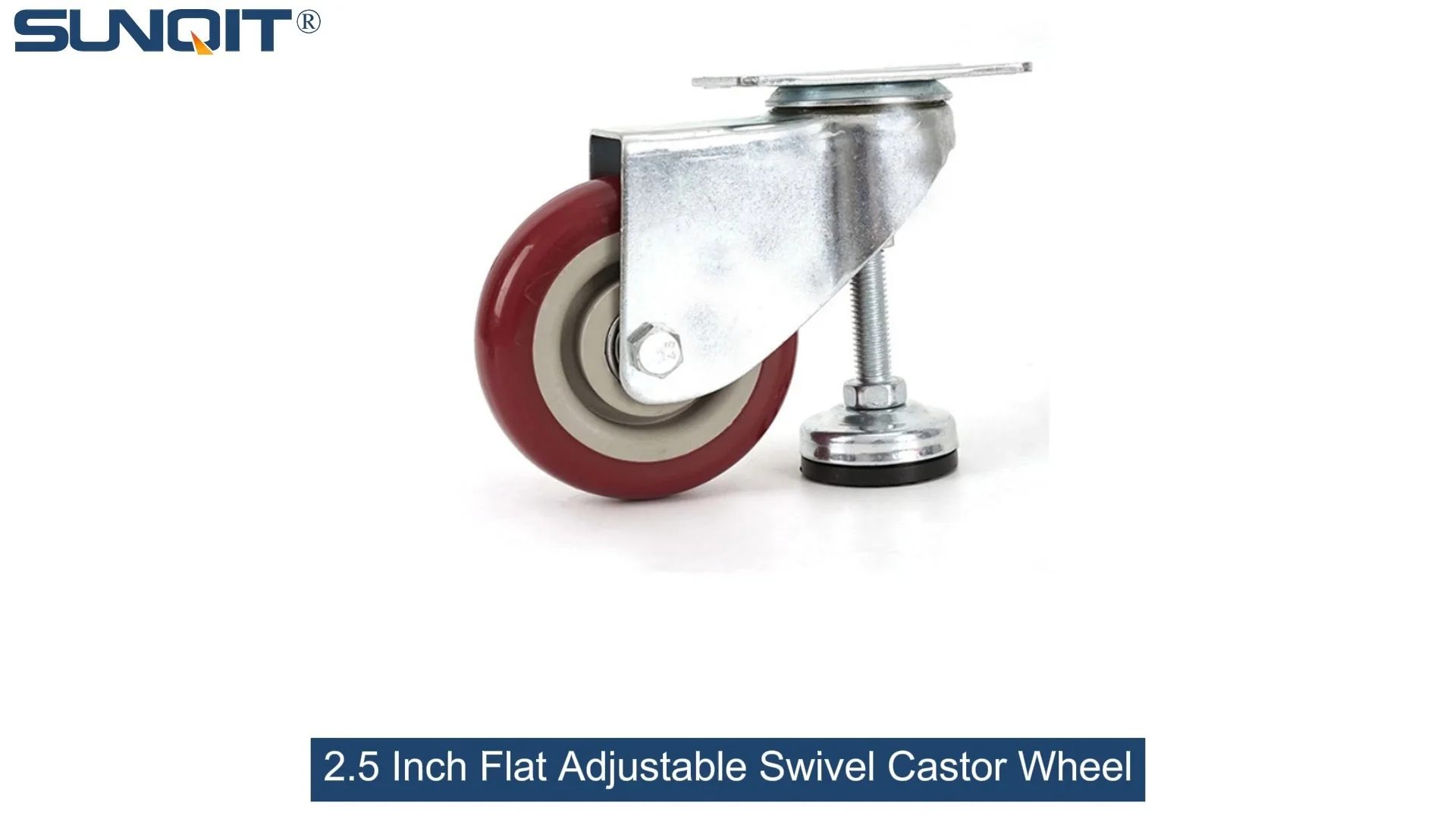
Flat Adjustable Swivel Castor Wheel
Swivel Chair Casters Ball Bearing Wheels Rubber Base with adjustable height function. Resistant to abrasion, impact and corrosion. Heavy payload can hold 80Kgs per pcs,which can make it works at a stable and smooth status.
The Hidden Cost of Floor Damage in Workplaces
Walk into any busy warehouse, factory, or even a bustling office, and you'll likely notice a common feature that's easy to take for granted: the floor. It's the silent foundation supporting every operation, from the heaviest machinery to the lightest office chair. Yet, despite its importance, floor maintenance often falls to the bottom of the priority list—until cracks, scratches, or stains start to appear. What many managers fail to realize is that floor damage isn't just an aesthetic issue; it's a financial and safety liability waiting to escalate.
Consider this: A single deep scratch in a concrete warehouse floor can cost hundreds of dollars to repair, especially if it leads to water seepage or weakens the surface over time. In manufacturing plants, uneven floors caused by repeated impact from equipment wheels can create tripping hazards, increasing the risk of workplace accidents. In healthcare settings, where sterility is critical, damaged floors trap dirt and bacteria, compromising patient safety. Even in offices, scuffed hardwood or vinyl floors can make a business appear unprofessional, leaving a poor impression on clients and visitors.
Much of this damage traces back to a seemingly small component: the castor wheels on carts, workbenches, and equipment. Standard castors, with hard plastic wheels or poor weight distribution, can drag, scrape, or indent floors with every movement. Over time, these small daily impacts add up, turning minor wear into major repair bills. But what if there was a solution that could protect floors while still delivering the mobility and functionality modern workplaces need? Enter flat adjustable swivel castor wheels—a game-changer in floor preservation and operational efficiency.
What Are Flat Adjustable Swivel Castor Wheels?
At first glance, flat adjustable swivel castor wheels might look similar to other castors, but their design hides a host of innovations tailored to address the unique challenges of floor protection. Let's break down their core components and how they differ from traditional options.
Starting with the basics: A "castor wheel" is a wheeled device mounted to the bottom of furniture, equipment, or carts to enable easy movement. "Swivel" means the wheel can rotate 360 degrees, allowing for smooth directional changes without dragging. "Adjustable" refers to the ability to modify the height of the castor, typically via a threaded stem or bolt, which helps level equipment on uneven surfaces. The "flat" descriptor highlights the base design—a broad, stable platform that distributes weight evenly, unlike narrow-stem castors that concentrate pressure on a single point.
But what truly sets these castors apart is their focus on balance: mobility without compromise. Traditional swivel castors often prioritize movement over stability, leading to wobbly carts that scrape floors when turning. Rigid castors (non-swivel) limit maneuverability, forcing users to drag equipment and floor wear. Flat adjustable swivel castors, however, combine the best of both worlds: 360-degree swivel for easy navigation, adjustable height for stability, and a flat base to protect floors from unnecessary strain.
These castors are engineered for versatility, too. They're found in industries ranging from manufacturing and logistics to healthcare and retail, supporting everything from lightweight tool trolleys to heavy-duty assembly line workbenches. And when paired with the right caster accessories—like brake mechanisms or wheel guards—they become even more adaptable to specific workplace needs.

Core Floor Protection Features of Flat Adjustable Swivel Castor Wheels
The magic of flat adjustable swivel castor wheels lies in their intentional design choices, each focused on minimizing floor contact stress and preventing damage. Let's explore the key features that make them a superior choice for floor protection.
Non-Marking Wheel Materials: Gentle on Every Surface
The first line of defense against floor damage is the wheel itself. Unlike standard castors that use hard rubber or plastic wheels prone to leaving scuff marks, flat adjustable swivel castors often feature wheels made from soft, non-marking materials like polyurethane (PU) or thermoplastic rubber (TPR). These materials have a high coefficient of friction, meaning they grip floors without sliding or skidding, but they're also flexible enough to avoid leaving permanent marks.
Take polyurethane, for example: It's resistant to oils, chemicals, and abrasion, making it ideal for industrial settings where spills are common. Yet, it's gentle enough to use on hardwood, vinyl, or polished concrete without scratching. In healthcare facilities, where floor cleanliness is paramount, TPR wheels are often preferred for their non-porous surface, which resists bacterial growth and won't leave black scuff marks on sterile tile floors. For even more sensitive surfaces, like marble or epoxy-coated floors, some models offer felt or rubberized wheel covers as optional caster accessories, adding an extra layer of protection.
Adjustable Height: Balancing Weight to Prevent Indentations
Uneven weight distribution is a silent floor killer. When equipment is tilted—even slightly—more pressure is placed on the castors on one side, creating indentations or cracks over time. Flat adjustable swivel castors solve this with their adjustable height feature, which allows users to fine-tune each castor's elevation to match the floor's contours. This ensures the load is spread evenly across all wheels, reducing pressure per square inch and preventing localized damage.
Imagine a heavy assembly workbench in a factory. If the floor has a minor slope, the workbench might tilt, causing two castors to bear most of the weight. Over weeks of use, those two points could start to wear into the concrete. With adjustable castors, a quick turn of the height-adjustment bolt levels the workbench, distributing the weight across all four wheels. The result? No more uneven wear, and a floor that stays intact for years longer.
This adjustability also makes these castors compatible with adjustable leveling feet, another accessory that enhances stability. By combining adjustable castors with leveling feet, businesses can create a hybrid system: use the castors for movement when needed, then lock the leveling feet into place to lift the wheels off the floor during stationary use, eliminating any risk of rolling or accidental movement.
Smooth Swivel Action: Reducing Drag and Scratches
Anyone who's ever pushed a cart with stiff swivel castors knows the struggle: the wheels resist turning, causing the cart to drag sideways and scrape the floor. This "drag effect" is a major source of floor scratches, especially when moving heavy loads. Flat adjustable swivel castors combat this with precision-engineered swivel mechanisms, often featuring ball bearings or roller bearings that reduce friction and allow for effortless rotation.
High-quality castors use sealed bearings to keep out dust and debris, ensuring smooth swivel action even in dirty environments like warehouses or construction sites. The result? When you push a cart with these castors, the wheels turn seamlessly with the direction of movement, eliminating sideways dragging. This not only protects floors but also reduces the physical strain on workers, making it easier to maneuver heavy equipment and lowering the risk of workplace injuries.
Flat Base Design: Spreading Weight for Lower Pressure
The "flat" in flat adjustable swivel castors isn't just a design choice—it's a functional one. Traditional castors often have narrow stems or small mounting plates, which concentrate the equipment's weight onto a tiny area of the floor. Over time, this concentrated pressure can cause dents, especially in softer floors like wood or vinyl. Flat adjustable castors, by contrast, feature wide, flat mounting bases that spread the load over a larger surface area.
Think of it like the difference between wearing high heels and sneakers on a wooden floor. High heels (narrow stems) dig into the floor, while sneakers (flat bases) distribute weight evenly. The same principle applies here: a flat base reduces the pressure per square inch, preventing indentations and extending floor life. This is especially critical for heavy equipment, like industrial material racks or turnover trolleys, which can weigh hundreds of pounds. With a flat base, even these heavy loads become manageable for floors.

Beyond Floor Protection: Additional Benefits of Flat Adjustable Swivel Castors
While floor protection is a standout feature, flat adjustable swivel castor wheels offer a range of other benefits that make them a smart investment for any workplace. Let's explore how they enhance efficiency, safety, and versatility.
Improved Operational Efficiency
Time is money in any business, and anything that slows down workflows eats into profits. Flat adjustable swivel castors streamline movement, making it faster and easier to transport materials, tools, or equipment. Their smooth swivel action reduces the effort needed to maneuver carts, cutting down on the time spent pushing or pulling heavy loads. In warehouses, this can translate to faster order fulfillment; in factories, it means quicker assembly line processes. Even in offices, employees waste less time struggling with stuck castors on filing cabinets or mobile workstations.
The adjustable height feature also plays a role in efficiency. When equipment is level, workers can operate it more comfortably, reducing fatigue and increasing productivity. For example, a properly leveled workbench ensures tools stay in place, so employees don't waste time retrieving items that slide off. In laboratories, level equipment is critical for accurate measurements—no more redoing experiments because a tilted scale threw off results.
Enhanced Safety for Workers and Equipment
Slips, trips, and falls are among the most common workplace accidents, often caused by unstable or hard-to-maneuver equipment. Flat adjustable swivel castors reduce these risks in several ways. First, their stable flat base minimizes wobbling, preventing carts from tipping over when cornering. Second, the smooth swivel action means less force is needed to move equipment, reducing the risk of strains or sprains from overexertion. Third, many models come with built-in brake systems (another valuable caster accessory) that lock the wheels in place, ensuring equipment stays stationary when not in use—no more runaway carts in busy aisles.
Safety also extends to the equipment itself. When loads are evenly distributed (thanks to adjustable height), there's less stress on the equipment's frame, reducing the risk of mechanical failure. For example, a tool trolley with unevenly weighted castors might develop cracks in its frame over time, leading to costly repairs or replacements. With flat adjustable castors, the trolley remains balanced, extending its lifespan and protecting your investment.
Versatility Across Industries and Applications
One of the biggest advantages of flat adjustable swivel castors is their adaptability. They're not limited to a single industry or use case—instead, they excel in a wide range of settings:
- Manufacturing: Used on assembly line workbenches, material racks, and turnover trolleys to transport parts between stations without damaging factory floors.
- Healthcare: Found on medical carts, mobile patient beds, and laboratory equipment, where non-marking wheels and smooth movement are critical for sterile, quiet environments.
- Retail: Used on display racks, stock trolleys, and mobile checkout stations, protecting polished store floors while allowing quick rearrangements for sales or events.
- Logistics: Integrated into warehouse carts and pallet jacks, making it easier to move heavy loads through tight spaces without scuffing concrete or epoxy floors.
- Education: Used on mobile classroom furniture, like whiteboard carts or lab tables, where frequent rearrangements are needed and floor protection preserves school budgets.
This versatility is further enhanced by the wide range of caster accessories available, from wheel locks and brake pedals to custom mounting plates. Whether you need castors for a lightweight office chair or a 500-pound industrial cart, there's a flat adjustable swivel castor wheel designed to meet your needs.

How Flat Adjustable Swivel Castors Compare to Other Castor Types
To truly appreciate the value of flat adjustable swivel castor wheels, it helps to compare them to other common castor types. Below is a breakdown of how they stack up against standard swivel castors, rigid castors, and heavy-duty industrial castors in key areas like floor protection, mobility, and adjustability.
| Feature | Flat Adjustable Swivel Castors | Standard Swivel Castors | Rigid Castors (Non-Swivel) | Heavy-Duty Industrial Castors |
|---|---|---|---|---|
| Floor Protection Rating | High (non-marking materials, even weight distribution) | Low to Medium (may use hard wheels; poor weight distribution) | Low (dragging causes scratches; no swivel to reduce friction) | Medium (durable but often use hard wheels; high pressure points) |
| Adjustability | High (height-adjustable for leveling on uneven floors) | Low (fixed height; no leveling capability) | Low (fixed height; rigid direction) | Medium (some height adjustment, but limited focus on leveling) |
| Mobility | High (360° swivel, smooth rotation) | Medium (swivel but may have stiff rotation) | Low (only moves forward/backward; hard to maneuver) | Medium (swivel available but often heavy and slow) |
| Load Capacity | Medium to High (depends on model; up to 1,000 lbs per castor) | Low to Medium (typically under 500 lbs per castor) | Medium to High (but limited by mobility) | Very High (up to 10,000+ lbs per castor) |
| Best For | General use, uneven floors, floor-sensitive environments | Lightweight equipment, smooth floors, low-cost applications | Straight-line movement, heavy loads with minimal direction changes | Extremely heavy loads (e.g., machinery, industrial ovens) |
As the table shows, flat adjustable swivel castors strike a unique balance: they offer the mobility of standard swivel castors, the stability of rigid castors, and the load capacity of some heavy-duty models—all while prioritizing floor protection. For most workplaces, this combination makes them the clear choice over one-dimensional alternatives.
Choosing the Right Flat Adjustable Swivel Castor Wheels for Your Needs
With so many options available, selecting the perfect flat adjustable swivel castor wheels can feel overwhelming. But by focusing on a few key factors, you can narrow down the choices and find the best fit for your workplace.
1. Assess the Load Capacity
Start by calculating the total weight of the equipment or cart the castors will support, then divide by the number of castors (typically 4). This gives you the minimum load capacity each castor needs to handle. For example, a 1,000-pound workbench with 4 castors requires castors rated for at least 250 pounds each. It's always wise to choose a higher capacity than needed to account for unexpected loads (e.g., adding heavy tools to a cart).
2. Consider the Floor Type
Different floor surfaces demand different wheel materials. For hardwood, vinyl, or marble floors, opt for soft polyurethane or rubber wheels to avoid scratches. For concrete or industrial floors, harder polyurethane or nylon wheels may be more durable, though still non-marking. If your workplace has multiple floor types (e.g., a warehouse with concrete and an office with hardwood), look for multi-surface wheels that perform well across all.
3. Evaluate the Environment
Environmental factors like moisture, chemicals, and temperature can affect castor performance. In wet areas (e.g., food processing plants), choose castors with rust-resistant materials like stainless steel. In chemical labs, look for wheels resistant to oils and solvents. For extreme temperatures (hot or cold), ensure the wheel material won't harden, crack, or melt under stress.
4. Don't Forget Caster Accessories
Accessories can elevate the functionality of your castors. If you need to lock equipment in place, add brake pedals or wheel locks. For extra stability on uneven floors, pair castors with adjustable leveling feet. If noise is a concern (e.g., hospitals, libraries), consider noise-dampening wheel covers. Always check compatibility—some accessories are designed for specific castor models.
Maintenance Tips to Maximize Floor Protection and Castor Lifespan
Even the best flat adjustable swivel castor wheels need regular care to maintain their performance and floor protection capabilities. Here are simple maintenance steps to keep them in top shape:
- Clean Wheels Regularly: Dirt, debris, and hair can get trapped in wheel bearings, causing stiff rotation and dragging. Wipe wheels with a damp cloth weekly, and use a brush to remove buildup from bearings.
- Lubricate Moving Parts: Apply a light machine oil to swivel joints and bearings every 3–6 months to keep rotation smooth. Avoid over-lubricating, as excess oil can attract dirt.
- Check Adjustments: Periodically inspect height adjustments to ensure equipment remains level. Tighten any loose bolts or stems to prevent uneven weight distribution.
- replace Worn Wheels: If wheels show signs of cracking, flattening, or loss of tread, replace them immediately. Worn wheels lose their non-marking properties and can damage floors.
- Test Brakes and Locks: Ensure brake mechanisms engage fully and release smoothly. Clean brake pads of debris to prevent slipping.
By following these steps, you'll extend the life of your castors and ensure they continue protecting your floors for years to come.
Conclusion: Investing in Floor Protection Pays Off
Floors are the unsung heroes of the workplace, supporting every operation and contributing to safety, efficiency, and professionalism. Yet, they're often overlooked until damage occurs—costing time, money, and peace of mind. Flat adjustable swivel castor wheels offer a proactive solution, combining floor protection with mobility, stability, and versatility.
From non-marking wheel materials and even weight distribution to smooth swivel action and adjustable height, these castors are engineered to prevent damage before it starts. They're not just a tool for movement—they're an investment in your workplace's future, reducing repair costs, enhancing safety, and streamlining workflows.
So, the next time you're shopping for castors, don't settle for the cheapest or most basic option. Choose flat adjustable swivel castor wheels, and give your floors the protection they deserve. Your wallet, your workers, and your workplace will thank you.