- Company Articles
- Products and Technology
- Product knowledge
- Flat Adjustable Swivel Castor Wheels for 3C Assembly Workbenches (Workbench E Guide)

Flat Adjustable Swivel Castor Wheels for 3C Assembly Workbenches (Workbench E Guide)
Related Product
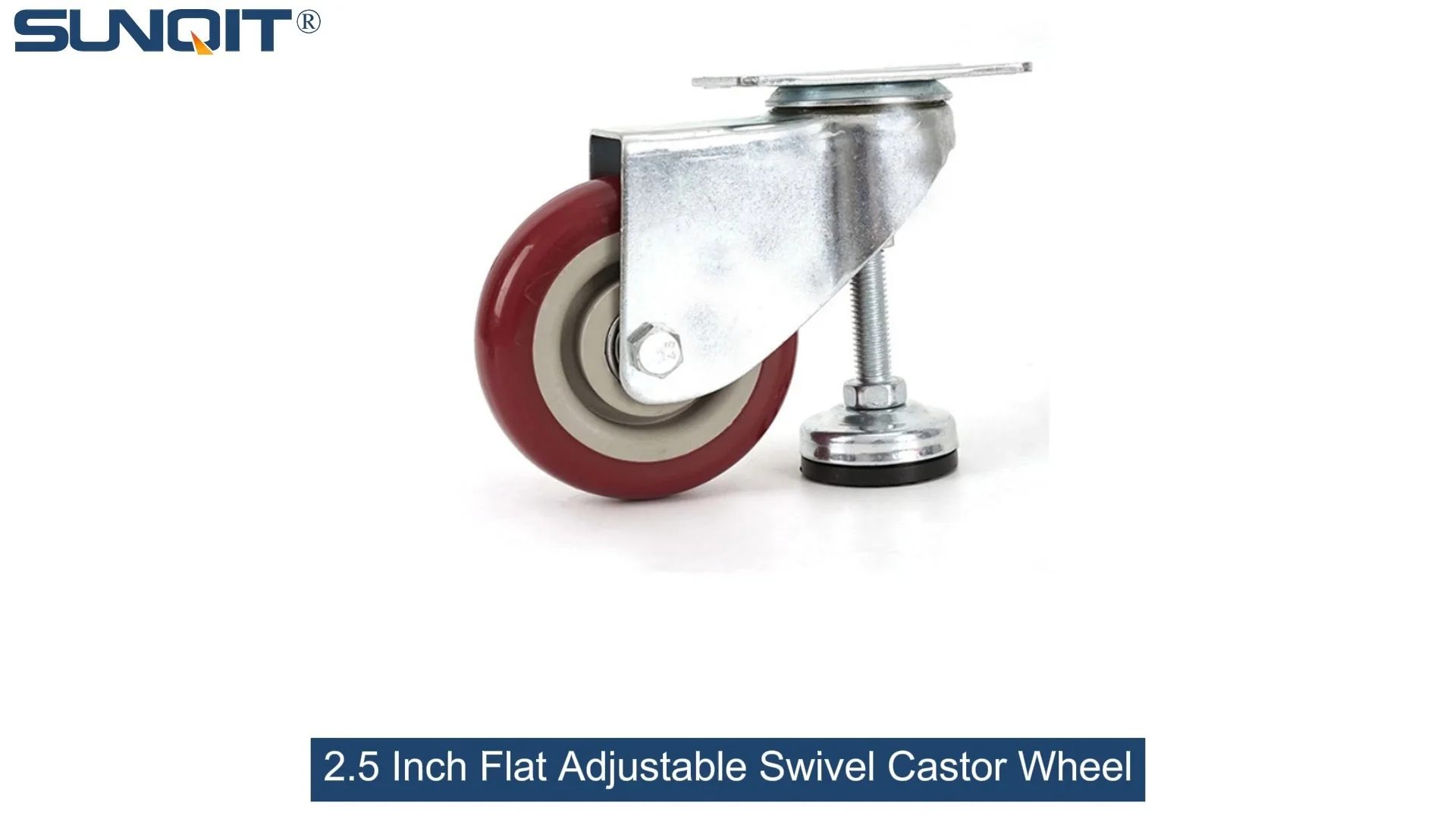
Flat Adjustable Swivel Castor Wheel
Swivel Chair Casters Ball Bearing Wheels Rubber Base with adjustable height function. Resistant to abrasion, impact and corrosion. Heavy payload can hold 80Kgs per pcs,which can make it works at a stable and smooth status.
In the fast-paced world of 3C manufacturing—where precision meets productivity—every tool and piece of equipment plays a critical role in keeping assembly lines moving smoothly. Among these, the humble workbench stands as the unsung hero: a stable, adaptable surface where technicians assemble smartphones, laptops, and other electronics that define our digital lives. But not all workbenches are created equal. Today, we're zeroing in on a specific model that's become a staple in modern factories: Workbench E (single deck-without caster). While its single-deck design and sturdy build make it ideal for detailed tasks, there's one upgrade that can transform its functionality from "reliable" to "indispensable": flat adjustable swivel castor wheels. Let's dive into why these small but mighty components matter, how they integrate with Workbench E, and why they're a game-changer for 3C assembly teams.
Understanding Workbench E: The Backbone of 3C Assembly
First, let's get to know Workbench E. As the name suggests, this model features a single deck (no upper shelves or drawers) and, crucially, no built-in casters. At first glance, you might wonder: Why omit wheels? The answer lies in stability. For tasks like soldering microchips or aligning circuit boards, even the slightest wobble can lead to costly errors. Workbench E's fixed, caster-free design ensures it stays rock-solid during precision work, with a flat, even surface that supports tools, components, and testing equipment without budging. Its frame, often constructed from durable aluminum profile, balances lightweight mobility (when moved manually) with the heft needed to withstand daily use—think 500+ pounds of load capacity, enough for a full day's worth of parts and a technician's toolkit.
But here's the catch: In a dynamic factory setting, "fixed" doesn't always mean "better." Imagine a scenario where a sudden rush of orders requires reconfiguring the assembly line. Or a technician needing to shift their workbench three feet to the left to collaborate with a colleague on a complex repair. Without wheels, moving Workbench E becomes a two-person job, involving dollies, brute force, and precious time lost. That's where flat adjustable swivel castor wheels step in. They bridge the gap between stability and mobility, letting Workbench E stay steady when needed and move smoothly when required—no sweat, no strain, no disruption to the workflow.
Flat Adjustable Swivel Castor Wheels: What Makes Them Special?
Not all caster wheels are created equal, especially when it comes to 3C assembly. Standard casters might offer mobility, but they often fall short in two key areas: adjustability and precision. Enter flat adjustable swivel castor wheels. Let's break down their design and why they're a cut above the rest.
1. Flat Design: Stability Meets Low Profile
The "flat" in their name isn't just a descriptor—it's a deliberate engineering choice. Unlike bulky, raised casters that can make a workbench feel top-heavy, flat adjustable swivel castor wheels sit close to the ground. When installed, they add just 2–3 inches to Workbench E's height, keeping the deck low enough to maintain ergonomic comfort (no more hunching over a raised surface) while minimizing sway during use. The flat mounting plate attaches directly to Workbench E's base, distributing weight evenly across four points (most setups use four casters per bench) to prevent tipping, even when the bench is loaded unevenly (say, with a heavy soldering iron on one corner and a box of screws on the other).
2. Adjustability: Tailored to Every Task (and Technician)
"Adjustable" is where these casters truly shine. Most models feature a height-adjustment mechanism—often a threaded stem or a lever—that lets users raise or lower the workbench by 1–3 inches. Why does this matter? In 3C assembly, technicians come in all heights, and ergonomics directly impact productivity and safety. A 5'4" technician might need the bench 32 inches high to avoid shoulder strain, while a 6'2" colleague works best at 36 inches. With adjustable casters, Workbench E can be tweaked in seconds to fit each person's needs, reducing fatigue and cutting down on workplace injuries. It's a small change that adds up to big wins: happier teams and fewer missed shifts due to back or neck pain.
3. Swivel Functionality: Maneuverability in Tight Spaces
Factories are busy places. Assembly lines snake through the floor, equipment is packed tightly, and every inch of space is optimized for efficiency. In such environments, a workbench that only rolls forward and backward is a liability. Flat adjustable swivel castor wheels solve this with a 360-degree swivel joint, allowing Workbench E to pivot, glide, and turn on a dime. Need to squeeze between two conveyor belts? No problem. Want to rotate the bench 90 degrees to face a testing station? Just a gentle push. The swivel mechanism, often fitted with ball bearings, ensures smooth movement with minimal effort—even when the bench is fully loaded. And when precision is needed again? Lock the swivel joint (many models include a brake) to keep the bench fixed in place.

Why Workbench E Needs Flat Adjustable Swivel Castor Wheels: The Case for Upgrading
By now, you might be thinking: "Workbench E is great on its own—why add casters?" Let's reframe the question: What if you could have the best of both worlds? The stability of a fixed workbench and the mobility of a rolling cart. That's exactly what flat adjustable swivel castor wheels deliver. Here are three scenarios where they prove their worth:
Scenario 1: Line Reconfiguration – 3C manufacturing is all about agility. A new product launch, a supply chain delay, or a shift in consumer demand can require rearranging assembly stations overnight. Without casters, moving Workbench E means recruiting a coworker, sliding a dolly underneath, and hoping you don't scratch the floor (or the bench). With casters? One technician can reposition it in under a minute, freeing up the team to focus on more critical tasks.
Scenario 2: Ergonomic Flexibility – We mentioned this earlier, but it's worth repeating: one size does not fit all. A 5'2" technician hunched over a workbench set to 36 inches will struggle to maintain focus; a taller colleague stooping to 30 inches risks chronic back pain. Adjustable casters let each team member customize their workspace, turning Workbench E into a personalized tool that adapts to them , not the other way around. The result? Fewer errors, faster task completion, and a team that feels valued.
Scenario 3: Material Handling – In many 3C factories, components are delivered to "central hubs" and then distributed to workbenches. Without casters, technicians spend valuable time walking back and forth to fetch parts. With a mobile Workbench E, they can roll directly to the hub, load up on components, and return to their station—cutting down on steps and keeping the assembly line flowing. It's a small change that adds up to hours saved per week.

Choosing the Right Castors: Key Features to Look For
Not all flat adjustable swivel castor wheels are created equal. To ensure they work seamlessly with Workbench E, keep an eye out for these critical features:
| Feature | Why It Matters | What to Look For |
|---|---|---|
| Load Capacity | Workbench E + tools + components can add up quickly. | At least 200 lbs per caster (800 lbs total for four casters) to handle heavy loads safely. |
| Adjustment Range | Accommodates different technician heights and floor unevenness. | 1–3 inches of vertical adjustment (enough to level the bench on sloped floors). |
| Swivel Lock | Ensures stability during precision work. | A foot-operated brake that locks both the wheel and swivel joint (no accidental movement). |
| Wheel Material | Protects factory floors and reduces noise. | Rubber or polyurethane wheels (gentler on concrete/vinyl than metal; quieter, too). |
| Mounting Plate Compatibility | Fits securely to Workbench E's frame. | Flat, square mounting plate with pre-drilled holes that align with Workbench E's base (check the manufacturer's specs for hole spacing). |
Pro tip: Don't overlook caster accessories. Items like caster installation bases (to reinforce the connection between the wheel and the bench) or anti-slip pads (for extra stability on smooth floors) can extend the life of your casters and improve safety. Many suppliers bundle these with the wheels, so ask about package deals.

Installing Flat Adjustable Swivel Castor Wheels on Workbench E: A Step-by-Step Guide
Ready to upgrade your Workbench E? Installing casters is a straightforward process that requires just a few tools and 30 minutes of your time. Here's how to do it:
Tools You'll Need:
- Drill (with bits matching the caster mounting screws)
- Screwdriver or impact driver
- Level (to ensure the bench sits evenly after installation)
- Measuring tape (to align casters symmetrically)
- Optional: Caster installation base (if recommended by the supplier)
Step 1: Prep the Workbench
Clear Workbench E of all tools, components, and debris. Flip it upside down (ask a colleague for help—safety first!) so the base frame is exposed. Wipe down the frame with a damp cloth to remove dust or grease; this ensures the casters mount securely.
Step 2: Mark the Mounting Points
Measure the distance between the corners of the base frame. For stability, casters should be mounted near the corners (not the center) to distribute weight evenly. Use a pencil to mark where each caster will go—aim for 2–3 inches in from the edge. Double-check with a measuring tape to ensure symmetry; uneven mounting can cause the bench to wobble.
Step 3: Drill Pilot Holes (If Needed)
Workbench E's aluminum profile frame is durable, but pre-drilling pilot holes will make screwing in the casters easier and prevent the metal from cracking. Use a drill bit slightly smaller than the screws provided with the casters (check the supplier's instructions for size).
Step 4: Attach the Casters
Align the mounting plate of each caster with the pilot holes. insert the screws and tighten them with a screwdriver or impact driver—snug, but not so tight that you strip the threads. Repeat for all four casters. If using caster installation bases, attach them to the frame first, then mount the casters to the bases for extra reinforcement.
Step 5: Test and Adjust
Flip Workbench E right-side up (again, with help) and test the casters. Roll it back and forth—does it move smoothly? Lock the swivel brakes—does it stay in place? Use the height adjustment lever/knob on each caster to level the bench (a bubble level on the deck will help). If one corner is higher than the others, tweak the adjustment until the bubble is centered.
Maintaining Your Casters: Keeping Workbench E Rolling Smoothly
Like any piece of equipment, flat adjustable swivel castor wheels need a little TLC to stay in top shape. Here's how to keep them rolling smoothly for years:
Clean Regularly – Factory floors collect dust, metal shavings, and sticky residues (think spilled flux or adhesive). These can gunk up the wheels and swivel joints, making movement stiff. Once a week, wipe the wheels with a damp cloth and use a toothbrush to dislodge debris from the bearings.
Lubricate the Swivel Joints – Every 3–6 months, apply a silicone-based lubricant (avoid oil-based products, which attract dust) to the swivel joint and brake mechanism. This keeps the casters turning smoothly and prevents rust, especially in humid factory environments.
Check for Wear and Tear – Inspect the wheels monthly for cracks, flat spots, or worn tread (rubber wheels degrade over time). If a wheel is damaged, replace it immediately—using a faulty caster can strain the bench frame or cause accidents. Also, tighten loose mounting screws; vibrations from daily use can loosen them over time.
Protect the Floor – If your factory has polished concrete or vinyl floors, consider adding caster accessories like floor protectors (rubber pads that fit over the wheels) to prevent scratches. This is especially important if Workbench E is moved frequently.
Real-World Results: How Casters Transform 3C Assembly Lines
Don't just take our word for it—let's hear from a 3C manufacturing plant that upgraded their Workbench E units with flat adjustable swivel castor wheels. "Before casters, moving a workbench was a hassle," says Maria, a production supervisor at a mid-sized electronics factory in Guangdong. "We'd have to stop the line, get two people, and spend 10 minutes shifting it. Now, with the casters, one tech can move it in 30 seconds. We've cut down on line downtime by 15% since the upgrade."
Another benefit? Ergonomics. "Our technicians used to complain about back pain from bending over fixed-height workbenches," Maria adds. "With the adjustable casters, they can tweak the height to match their posture. We've seen a 20% drop in reported strains in the past six months. It's a small change, but it's made a big difference in morale."
Final Thoughts: Workbench E + Casters = A Leaner, Smarter Workflow
In the world of 3C manufacturing, where every second and every cent counts, optimizing your tools isn't just about improving efficiency—it's about empowering your team to do their best work. Workbench E (single deck-without caster) is already a fantastic foundation, but flat adjustable swivel castor wheels elevate it from a static work surface to a dynamic, adaptable asset. They let you balance stability and mobility, customize ergonomics, and reconfigure your line on the fly—all while keeping costs low and productivity high.
So, if you're still using Workbench E without casters, ask yourself: What could your team accomplish with a little more flexibility? The answer might surprise you. After all, in manufacturing, the smallest upgrades often lead to the biggest breakthroughs. And when it comes to flat adjustable swivel castor wheels, the proof is in the roll.