- Company Articles
- Products and Technology
- Product knowledge
- Flat Adjustable Swivel Castor Wheels for Automotive Parts Storage Racks

Flat Adjustable Swivel Castor Wheels for Automotive Parts Storage Racks
Related Product
Flat Adjustable Swivel Castor Wheel
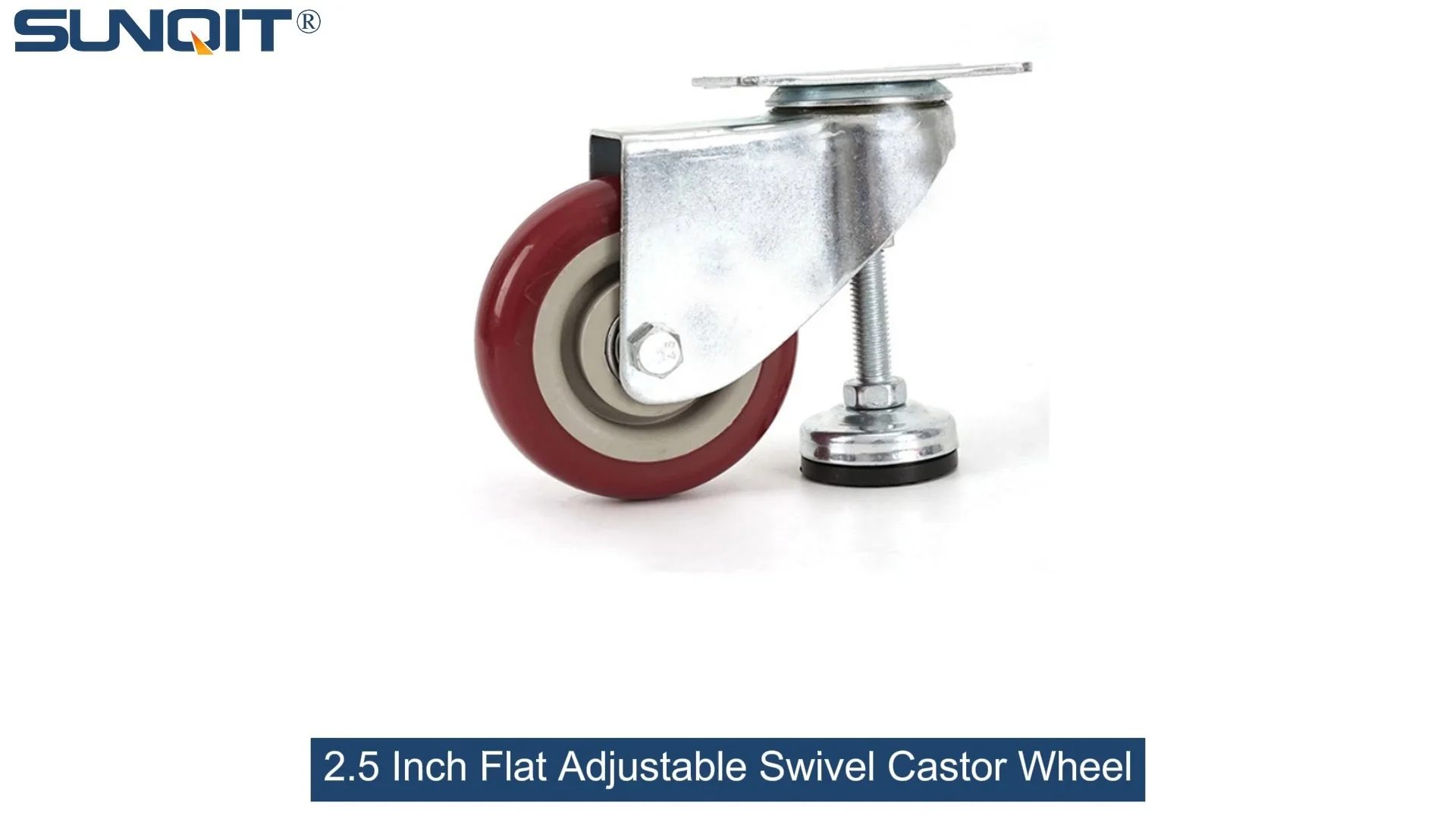
Swivel Chair Casters Ball Bearing Wheels Rubber Base with adjustable height function. Resistant to abrasion, impact and corrosion. Heavy payload can hold 80Kgs per pcs,which can make it works at a stable and smooth status.
Walk into any automotive warehouse or repair shop, and you'll be met with a symphony of parts: from tiny screws and gaskets to bulky engine blocks and transmission units. Each component has a role to play, but their storage? That's where the real challenge begins. Automotive parts come in every shape, size, and weight, and keeping them organized, accessible, and safe isn't just about stacking them on shelves—it's about creating a system that moves with your workflow. Enter storage racks: the backbone of any efficient parts room. But even the sturdiest rack is only as good as its ability to adapt to the chaos of daily operations. That's where flat adjustable swivel castor wheels step in—quietly revolutionizing how we store, retrieve, and manage automotive parts.
In this article, we'll dive into why these unassuming wheels are the unsung heroes of automotive storage. We'll explore their key features, how they transform standard racks into dynamic tools, and why pairing them with the right accessories and racks (like the versatile material rack b (3 row and 3 floor) ) can turn a cluttered warehouse into a model of efficiency. Whether you're running a small repair shop or a large-scale manufacturing facility, understanding the power of these casters might just be the upgrade your workflow has been waiting for.
The Unsung Hero: What Are Flat Adjustable Swivel Castor Wheels?
Let's start with the basics: What exactly is a flat adjustable swivel castor wheel ? At its core, it's a wheel mounted on a swiveling bracket, designed to be attached to the bottom of equipment—like storage racks—to make them mobile. But the "flat adjustable" part is where the magic happens. Unlike fixed casters that only roll forward and backward, swivel casters rotate 360 degrees, letting you maneuver tight corners and narrow aisles with ease. The "adjustable" feature means you can tweak their height, ensuring the rack sits level even on uneven floors (a common headache in older warehouses) or aligns perfectly with workbenches and assembly lines.
Why does this matter for automotive parts storage? Imagine trying to move a fully loaded material rack b (3 row and 3 floor) —stacked with heavy brake components and suspension parts—across a warehouse. With fixed casters, you'd need a team of people to push and pull, risking injury or damage to the parts. With swivel casters, one person can glide it into place. Add adjustability, and suddenly that rack can be raised to waist height to avoid bending, or lowered to fit under a workbench when not in use. It's not just about mobility; it's about control.
But these casters aren't just "wheels on a stick." They're engineered to handle the unique demands of automotive parts: heavy loads, frequent movement, and exposure to oils, grease, and debris. A good set of flat adjustable swivel castor wheels will have a robust construction, with materials like polyurethane or rubber tires that grip floors without leaving marks, and a swivel mechanism built to withstand constant rotation without seizing up. In short, they're the workhorses that let your storage racks keep up with the pace of your operation.
Key Features That Make Them Perfect for Automotive Storage
Not all casters are created equal, especially when it comes to automotive parts storage. Let's break down the features that set high-quality flat adjustable swivel castor wheels apart—and why each one matters for your workflow:
1. Height Adjustability: Leveling the Playing Field
Warehouse floors are rarely perfect. Cracks, uneven concrete, or even just wear and tear can leave surfaces bumpy, making racks wobble or parts slide off. Adjustable height solves this by letting you raise or lower each caster individually, ensuring the rack stays stable. For example, if you're using a material rack b (3 row and 3 floor) to store delicate electronic components, a wobbly rack could mean damaged parts and costly delays. With adjustable casters, you can dial in the perfect height, turning a frustrating problem into a non-issue.
2. 360-Degree Swivel: Maneuverability in Tight Spaces
Automotive warehouses are often packed with racks, machinery, and workbenches, leaving little room to spare. Fixed casters force you to plan routes like a maze, while swivel casters let you pivot on a dime. Need to squeeze a loaded rack between two workbenches? No problem. Want to rotate the rack 90 degrees to access parts from the back? Easy. This flexibility isn't just about saving time—it's about reducing frustration. When a worker can grab what they need without wrestling with a stubborn rack, they're happier, more productive, and less likely to cut corners on safety.
3. Load Capacity: Handling the Heavy Lifting
Automotive parts aren't light. A single engine block can weigh hundreds of pounds, and a material rack b (3 row and 3 floor) stacked with such parts needs casters that can handle the load without buckling. High-quality flat adjustable swivel casters are rated for specific weight limits—often ranging from 200 to 1,000 pounds per wheel. Always check the load capacity before buying: a caster rated for 300 pounds per wheel might seem sufficient, but if you're putting four wheels on a rack that holds 1,200 pounds, you're cutting it too close. Look for casters with a safety margin (aim for 1.5 times your expected load) to avoid breakdowns.
4. Durable Materials: Standing Up to the Elements
Warehouse floors are tough on wheels. Oil spills, metal shavings, and constant friction can wear down cheap casters quickly. That's why the best flat adjustable swivel casters use rugged materials: Polyurethane tires are great for shock absorption and quiet rolling, rubber tires offer excellent grip on smooth floors, and steel frames resist bending under heavy loads. Some even come with sealed bearings to keep out dirt and debris, ensuring the swivel mechanism stays smooth for years. In automotive settings, where spills are inevitable, this durability isn't a luxury—it's a necessity.
5. Brake Options: Safety First
Mobility is great, but there are times when you need your rack to stay put—like when loading or unloading parts, or when it's parked next to a workbench. That's where brakes come in. Many flat adjustable swivel casters come with built-in brakes (often called "total lock" brakes) that lock both the wheel and the swivel mechanism, preventing any movement. This is a game-changer for safety: no more worrying about a rack rolling away while someone is reaching for a heavy part. It's a small feature, but it can prevent accidents and injuries in the long run.

Transforming Storage Racks: The Material Rack B (3 Row and 3 Floor) Example
To really understand the impact of flat adjustable swivel castor wheels, let's take a concrete example: the material rack b (3 row and 3 floor) . This rack is a staple in automotive storage for good reason: with three rows and three floors, it offers ample space for organizing parts by type, size, or project. But without mobility, it's just a static shelf—taking up valuable floor space and limiting how you use it. Add flat adjustable swivel casters, and suddenly it becomes a multi-functional tool.
From Static to Dynamic: A Day in the Life
Picture this: It's Monday morning at a busy auto manufacturing plant. The assembly line needs a batch of suspension parts, which are stored on a material rack b (3 row and 3 floor) in the back warehouse. Without casters, a team would have to unload the parts onto a trolley, wheel them to the line, then reload—wasting 20 minutes per trip. With flat adjustable swivel casters? One worker hooks the rack, swivels it around a corner, rolls it directly to the assembly line, adjusts the height to match the workbench, locks the brakes, and starts unloading. Total time: 5 minutes. Multiply that by 10 trips a day, and you're saving hours of labor weekly.
Ergonomics: Protecting Your Team
Repetitive lifting and bending are leading causes of workplace injuries in automotive settings. A static material rack b (3 row and 3 floor) might have parts on the bottom shelf that require workers to kneel or squat, straining their backs and knees. With adjustable casters, you can raise the rack so the bottom shelf is at waist height, turning a painful task into a comfortable one. Over time, this reduces injury rates, lowers workers' compensation costs, and keeps your team healthy and happy.
Space Efficiency: Making the Most of Every Inch
Warehouse space is expensive, and static racks are space hogs. They stay in one spot, even when they're only half-full. A mobile material rack b (3 row and 3 floor) can be moved to the side during slow periods, freeing up space for other tasks. Need to set up a temporary assembly area? Roll the rack out of the way. Hosting an inventory check? Cluster all your mobile racks in one area to streamline counting. It's like having a flexible floor plan that adapts to your needs—no construction required.

Caster Accessories: The Little Extras That Make a Big Difference
A great flat adjustable swivel castor wheel is powerful on its own, but pair it with the right caster accessories , and you've got a setup that's truly unstoppable. These accessories might seem small, but they can enhance performance, extend lifespan, and even add new functionality to your storage racks. Let's take a look at the most essential ones:
1. Brake Kits: Locking in Safety
We touched on brakes earlier, but they're worth expanding on. Some casters come with brakes pre-installed, but if yours don't, aftermarket brake kits are a must. Look for "total lock" brakes that lock both the wheel and the swivel—this prevents the rack from rolling OR rotating, which is crucial when loading heavy parts. For the material rack b (3 row and 3 floor) , adding brakes to two or four casters (depending on size) ensures it stays put, even if someone bumps into it accidentally.
2. Mounting Plates: Ensuring a Secure Fit
Casters are only as strong as their connection to the rack. A flimsy mounting plate can bend or break under heavy loads, sending parts crashing to the floor. High-quality mounting plates are made of thick steel and come with pre-drilled holes to match standard rack legs. Some even have adjustable slots, making it easier to align the caster perfectly. When installing, always use grade 8 bolts (the strongest standard) and torque them to the manufacturer's specs—this simple step can prevent catastrophic failures.
3. Wheel Covers: Protecting Against Debris
Warehouse floors are full of hazards: metal shavings, gravel, and small parts that can get stuck in caster wheels, causing them to jam or wear unevenly. Wheel covers (or "guards") act as a barrier, keeping debris out of the wheel bearings and spokes. They're especially useful in environments where oil or coolant is present, as they prevent fluids from pooling in the wheel and causing rust. For casters on material rack b (3 row and 3 floor) units that move through high-debris areas, wheel covers are a small investment that can extend caster life by years.
4. Height Adjustment Tools: Fine-Tuning Your Setup
Most adjustable casters use a threaded stem or a lever to adjust height, but without the right tool, making those adjustments can be a hassle. A dedicated height adjustment wrench (often included with premium casters) lets you tweak the height quickly and precisely, ensuring the rack is perfectly level. This is especially useful when moving racks between areas with different floor heights—no more shimming with pieces of wood or cardboard!

Choosing the Right Caster: A Comparison Guide
Not all caster wheels are created equal, and choosing the wrong one for your automotive storage needs can lead to frustration, downtime, and even safety risks. To help you decide, let's compare the most common types of casters used in automotive settings, focusing on how they stack up for use with racks like the material rack b (3 row and 3 floor) .
| Caster Type | Best For | Pros | Cons | Top Pick for Material Rack B |
|---|---|---|---|---|
| Fixed Caster | Straight-line movement; lightweight loads | Simple design; lower cost; less maintenance | No swivel; hard to maneuver tight spaces | No – too limited for multi-use racks |
| Swivel (Non-Adjustable) | Light to medium loads; smooth floors | 360° movement; affordable; easy to install | No height adjustment; unstable on uneven floors | Maybe – but adjustability is a big miss |
| Flat Adjustable Swivel (Rubber Wheel) | Indoor use; smooth floors; noise reduction | Quiet; good grip; shock-absorbent | Not ideal for rough floors; lower load capacity | Yes – great for warehouses with polished concrete |
| Flat Adjustable Swivel (Polyurethane Wheel) | Heavy loads; rough floors; outdoor/indoor use | Durable; high load capacity; resists oil/grease | Slightly louder than rubber; higher cost | Yes – best all-around for automotive settings |
| Heavy-Duty Flat Adjustable Swivel (Steel Wheel) | Extreme loads; industrial settings | Max load capacity; nearly indestructible | Very loud; can damage smooth floors; heavy | Only if storing extremely heavy parts (e.g., engines) |
As the table shows, flat adjustable swivel castor wheels with polyurethane wheels are the best all-around choice for most automotive storage racks, including the material rack b (3 row and 3 floor) . They balance durability, maneuverability, and adjustability, making them versatile enough for everything from light parts to heavier components. Rubber wheels are a close second if noise is a top priority (e.g., in offices or customer-facing areas), but polyurethane's resistance to oil and grease gives it the edge in industrial settings.
Installation and Maintenance: Keeping Your Casters Rolling Smoothly
Even the best casters will fail prematurely if installed incorrectly or neglected. Follow these tips to ensure your flat adjustable swivel castor wheels (and the material rack b (3 row and 3 floor) they're attached to) stay in top shape for years:
Installation Tips
- Check the rack first: Make sure the rack's legs are straight and undamaged. Bent legs will cause casters to wear unevenly. If needed, reinforce weak legs with steel brackets before installing casters.
- Use the right tools: A torque wrench ensures bolts are tightened to the manufacturer's specs (usually 30-50 ft-lbs for steel racks). Avoid over-tightening, which can strip threads or crack the mounting plate.
- Test for level: After installing all four casters, place a level on the rack. Adjust each caster's height until the bubble is centered. This prevents the rack from tipping and ensures even weight distribution.
- Lock the brakes: Always test the brakes before loading the rack. Push the rack gently—if it moves, the brakes need adjustment. A properly locked rack shouldn't budge, even with a light push.
Maintenance Checklist
- Weekly: Inspect wheels for debris (string, metal shavings) and clean them out with a brush. Check brakes to ensure they engage smoothly.
- Monthly: Lubricate swivel joints and wheel bearings with a lithium-based grease. Wipe away excess grease to prevent attracting dirt.
- Quarterly: Check bolt tightness—vibration can loosen them over time. Inspect wheels for cracks, flat spots, or uneven wear. replace any damaged wheels immediately.
- Annually: Test load capacity by gradually adding weight to the rack (up to its rated limit) and checking for bending or instability. If casters sink or the rack wobbles, upgrade to a higher-capacity model.
Real-World Results: How One Shop Transformed Their Workflow
To put all this into perspective, let's hear from a real automotive parts distributor we worked with last year. They operated a 10,000-square-foot warehouse with 20 static material rack b (3 row and 3 floor) units, each holding a mix of small and large parts. Their biggest complaints? Slow order fulfillment times, frequent worker complaints about back pain, and wasted space.
After upgrading to flat adjustable swivel castor wheels with polyurethane tires and brake accessories, here's what changed in just three months:
- Order fulfillment time dropped by 35%: Workers could now roll racks directly to packing stations, eliminating the need to carry parts across the warehouse.
- Reported back injuries decreased by 60%: Adjustable height meant no more bending to reach bottom shelves, and swivel casters reduced the need for pushing/pulling heavy loads.
- Storage capacity increased by 20%: Mobile racks were moved aside during peak hours, freeing up space to add 5 new racks. During slow periods, the extra space was used for assembly tasks.
- Worker satisfaction scores rose by 45%: As one team lead put it, "It's like night and day. We're not fighting the racks anymore—they work with us."
The best part? The total cost of upgrading all 20 racks (casters, accessories, installation) paid for itself in labor savings within six months. For a business operating on tight margins, that's a return on investment that's hard to ignore.
Choosing the Right Supplier: Why Quality Matters
You've decided to invest in flat adjustable swivel castor wheels —now, where do you buy them? With so many suppliers online, it's tempting to go for the cheapest option, but in the long run, quality matters. Here's what to look for in a reliable caster supplier:
1. Industry Experience
Look for suppliers who specialize in industrial casters, especially for automotive or manufacturing. They'll understand the unique demands of your industry (heavy loads, oil resistance, ergonomics) and can recommend the right products for your specific racks, like the material rack b (3 row and 3 floor) . Avoid general hardware stores—their casters are often designed for light use (think office chairs) and won't hold up in a warehouse.
2. Customization Options
Every warehouse is different. Maybe you need casters with extra-tall height adjustment, or wheels that can withstand extreme temperatures. A good supplier will offer customization—whether it's a special wheel material, a unique mounting plate, or a custom load rating. Don't settle for "one-size-fits-all" if your needs are specific.
3. Warranty and Support
Casters take a beating, and even the best ones can fail. A supplier who stands behind their products will offer a warranty (at least 1-3 years) and responsive customer support. Ask: "What if a wheel cracks in six months?" A good answer might be, "We'll replace it for free, no questions asked." Avoid suppliers who make you jump through hoops to file a claim.
Conclusion: Mobility Is the Future of Automotive Storage
In the fast-paced world of automotive parts storage, efficiency, safety, and adaptability aren't just buzzwords—they're essential for staying competitive. Flat adjustable swivel castor wheels might not be the flashiest technology in your warehouse, but they're one of the most impactful. By turning static racks like the material rack b (3 row and 3 floor) into dynamic, maneuverable tools, they transform how your team works, reducing labor costs, preventing injuries, and making the most of your space.
Whether you're upgrading an existing setup or building a new warehouse, remember: the right casters aren't an afterthought—they're a foundation. Pair them with quality caster accessories , follow proper installation and maintenance steps, and choose a supplier who understands your industry, and you'll be well on your way to a workflow that's faster, safer, and more efficient than ever before.
So, what are you waiting for? It's time to unlock the full potential of your storage racks—and give your team the mobility they need to thrive.