- Company Articles
- Products and Technology
- Product knowledge
- Flat Adjustable Swivel Castor Wheels for Electronic Assembly: ESD-Safe Options

Flat Adjustable Swivel Castor Wheels for Electronic Assembly: ESD-Safe Options
Related Product
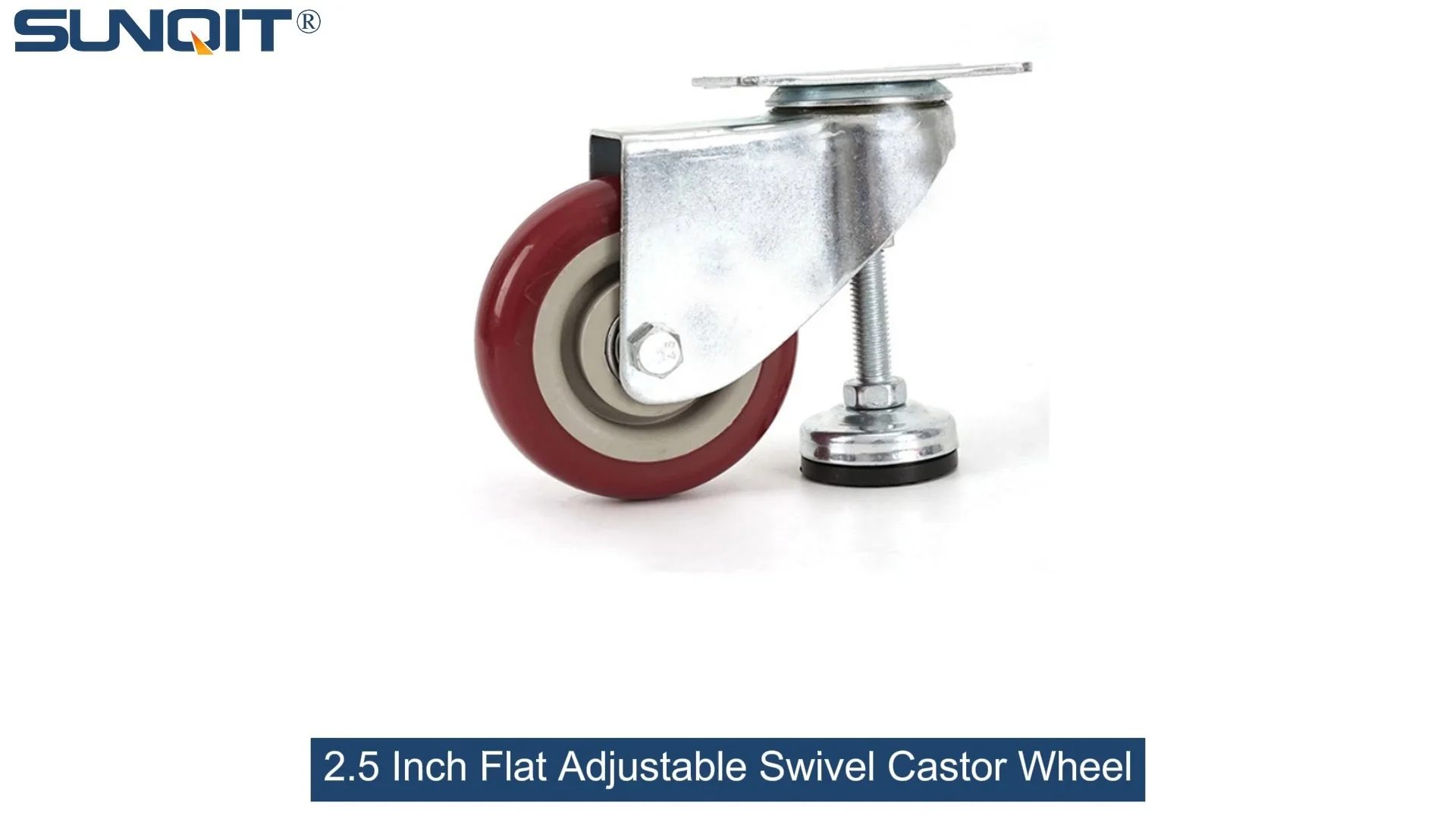
Flat Adjustable Swivel Castor Wheel
Swivel Chair Casters Ball Bearing Wheels Rubber Base with adjustable height function. Resistant to abrasion, impact and corrosion. Heavy payload can hold 80Kgs per pcs,which can make it works at a stable and smooth status.
Picture this: It's a Tuesday morning on the floor of a bustling electronic assembly plant. Technicians in blue smocks huddle over workbenches, their fingers deftly handling components smaller than a grain of rice—microchips, resistors, and delicate circuit boards that power everything from smartphones to medical devices. Nearby, a supervisor gestures toward a workstation that needs to be repositioned to accommodate a new production run. Two technicians grab the edges of the workbench and heave, but it's cumbersome; the wheels lock up, and the bench teeters slightly, sending a ripple of tension through the team. "Careful with that!" someone calls out. A single jolt or static spark could ruin the $500 microprocessor sitting on the bench.
This scene plays out in factories worldwide, and it underscores a quiet but critical truth: in electronic assembly, every detail matters—including the wheels beneath your workbench. When it comes to handling sensitive electronics, mobility and electrostatic discharge (ESD) safety aren't just conveniences; they're make-or-break factors for product quality and operational efficiency. Enter the
flat adjustable swivel castor wheel
: a humble component that's quietly revolutionizing how
ESD workstations
operate in lean, high-stakes environments.
In this article, we'll dive into why these specialized castor wheels are indispensable for modern electronic assembly. We'll explore how they balance mobility with ESD protection, support
lean system
goals, and adapt to the unique challenges of assembling delicate components. Whether you're a plant manager looking to optimize your workflow or a technician curious about the tools that keep your workbench steady and safe, read on to discover how the right wheels can turn chaos into precision.
The Hidden Risks of Static: Why ESD Workstations Can't Compromise
Before we talk about wheels, let's talk about the invisible enemy: static electricity. You've probably experienced static shock when touching a doorknob after shuffling across a carpet. That tiny spark carries about 3,000 volts of electricity—harmless to humans, but catastrophic for electronics. A microchip, for example, can be permanently damaged by a static charge as low as 250 volts, and some sensitive components (like MOSFETs or laser diodes) fail at just 10 volts. In short, static is the silent assassin of electronic assembly lines.
That's where ESD workstations come in. These aren't just ordinary tables; they're engineered systems designed to dissipate static electricity before it reaches components. From grounded work surfaces to anti-static mats and wrist straps, every part of an ESD workstation plays a role in channeling static safely to the ground. But here's the catch: if even one component breaks the "static chain," the entire system fails. And yes, that includes the wheels.
Imagine a workstation with non-ESD wheels. As the bench moves, friction between the wheels and the floor generates static. Without a conductive path to the ground, that static builds up on the workstation's frame, waiting to discharge when a technician picks up a component. Suddenly, your expensive ESD mat and wrist straps are rendered useless—the wheels have turned your workstation into a static generator.
ESD-safe castor wheels solve this by acting as a bridge between the workstation and the ground. Made with conductive materials (like carbon-infused rubber or metal alloys), they ensure that any static charge on the workstation flows harmlessly through the wheels and into the floor. For
workbench
setups in electronic assembly, this isn't optional—it's a compliance requirement. Standards like ANSI/ESD S20.20 mandate that all conductive paths in ESD-protected areas (EPAs) must have a surface resistance between 10^6 and 10^9 ohms, and that includes wheels.
Mobility in Lean Systems: Why Stagnant Workstations Are a Waste
Lean manufacturing isn't just a buzzword—it's a philosophy centered on eliminating waste and maximizing value. In a lean system, every action should add value to the product; anything else (like unnecessary movement, waiting, or rework) is considered "muda" (waste). So, what does this have to do with workbench wheels? A lot, it turns out.
Traditional fixed workstations are the antithesis of lean. If a production line needs to reconfigure for a new order, technicians might spend hours disassembling and rebuilding benches—a process that adds zero value to the product. In contrast, mobile workstations with swivel castors let teams rearrange layouts in minutes, adapting to changing demand, batch sizes, or workflow optimizations.
But mobility alone isn't enough. In lean systems, "flow" is king—the smooth, uninterrupted movement of materials and people. A workstation that rolls smoothly but can't lock into place becomes a hazard; one that locks but can't adjust to uneven floors creates ergonomic issues (and unhappy technicians). This is where adjustability comes into play. A
flat adjustable swivel castor wheel
lets operators level a workstation on sloped or cracked factory floors, ensuring components don't slide off and reducing strain on workers who'd otherwise hunch over an unbalanced bench.
Consider a typical lean goal: reducing changeover time. A manufacturer of automotive sensors, for example, might switch between producing 10 different sensor models daily. With fixed workstations, each changeover requires moving tools and materials manually—a process that takes 45 minutes. With mobile ESD workstations on adjustable swivel castors, the team can preconfigure benches for each model and roll them into place in 10 minutes flat. That's 35 minutes of saved time per changeover, adding up to hundreds of hours annually. Waste eliminated, value added.

What Makes a Flat Adjustable Swivel Castor Wheel "Special"?
By now, you might be thinking, "Can't I just slap any old swivel wheels on my workbench?" In a word: no.
Flat adjustable swivel castor wheels
are engineered for a specific purpose—balancing ESD safety, mobility, and adaptability in environments where precision is non-negotiable. Let's break down their key features:
1. Flat Mounting Plate: Stability First
Unlike recessed or stem-mounted castors, these wheels attach via a flat, wide mounting plate that bolts directly to the bottom of the workstation. This design distributes the bench's weight evenly, reducing the risk of tipping—critical when the bench is loaded with tools, components, and a technician leaning on it. The flat plate also minimizes gaps where dust or debris can collect, a plus for cleanroom environments common in electronics manufacturing. 2. Swivel Mechanism: 360-Degree Freedom
Swivel castors rotate 360 degrees, making workstations maneuverable even in tight spaces. Picture navigating a workstation around a pallet of inventory or into a corner for maintenance—fixed wheels would require multiple people and careful angling, while swivel wheels glide with a gentle push. High-quality swivel mechanisms use ball bearings (instead of plain bushings) to ensure smooth rotation, even under heavy loads. 3. Adjustable Height: Leveling the Playing Field
Factory floors are rarely perfect. Cracks, uneven concrete, or even minor slopes can turn a stable workbench into a wobbly mess. Adjustable castors solve this with a threaded stem or screw mechanism that lets operators raise or lower each wheel individually. Most models offer 1–2 inches of adjustment, enough to compensate for typical floor imperfections. Some even include a locking nut to keep the height setting secure after adjustment. 4. ESD-Safe Materials: Grounding from Wheel to Floor
The star feature for electronic assembly: ESD conductivity. These wheels are made with materials like conductive rubber, static-dissipative plastic, or metal (often aluminum or steel) embedded with conductive fibers. When the wheel touches the floor, it creates a low-resistance path for static charge to flow from the workstation to the ground. Reputable manufacturers test their wheels to meet ANSI/ESD S20.20 standards, ensuring surface resistance between 10^6 and 10^9 ohms—low enough to dissipate static, but not so low that it creates a shock hazard. 5. Integrated Brakes: Locking In Safety
Mobility is great, but a workstation that rolls unexpectedly is dangerous. Most flat adjustable swivel castors include two types of brakes: a wheel lock (which stops the wheel from rotating) and a swivel lock (which fixes the wheel in a straight-ahead position). Some models even have a "total lock" brake that engages both functions with a single pedal press—ideal for when the workstation needs to stay put during precision assembly. 6. Load Capacity: Built for Heavy Lifting
An ESD workstation isn't light. Between the bench itself, tools (soldering irons, microscopes), ESD mats, and bins of components, a typical setup can weigh 300–500 pounds. Flat adjustable swivel castors are rated for specific load capacities (usually 150–300 pounds per wheel), and it's critical to choose wheels that can handle your bench's total weight (divided by the number of wheels). Overloading a castor leads to premature wear, wobbly performance, and increased ESD risk as the wheel deforms and loses conductivity.
Unlike recessed or stem-mounted castors, these wheels attach via a flat, wide mounting plate that bolts directly to the bottom of the workstation. This design distributes the bench's weight evenly, reducing the risk of tipping—critical when the bench is loaded with tools, components, and a technician leaning on it. The flat plate also minimizes gaps where dust or debris can collect, a plus for cleanroom environments common in electronics manufacturing. 2. Swivel Mechanism: 360-Degree Freedom
Swivel castors rotate 360 degrees, making workstations maneuverable even in tight spaces. Picture navigating a workstation around a pallet of inventory or into a corner for maintenance—fixed wheels would require multiple people and careful angling, while swivel wheels glide with a gentle push. High-quality swivel mechanisms use ball bearings (instead of plain bushings) to ensure smooth rotation, even under heavy loads. 3. Adjustable Height: Leveling the Playing Field
Factory floors are rarely perfect. Cracks, uneven concrete, or even minor slopes can turn a stable workbench into a wobbly mess. Adjustable castors solve this with a threaded stem or screw mechanism that lets operators raise or lower each wheel individually. Most models offer 1–2 inches of adjustment, enough to compensate for typical floor imperfections. Some even include a locking nut to keep the height setting secure after adjustment. 4. ESD-Safe Materials: Grounding from Wheel to Floor
The star feature for electronic assembly: ESD conductivity. These wheels are made with materials like conductive rubber, static-dissipative plastic, or metal (often aluminum or steel) embedded with conductive fibers. When the wheel touches the floor, it creates a low-resistance path for static charge to flow from the workstation to the ground. Reputable manufacturers test their wheels to meet ANSI/ESD S20.20 standards, ensuring surface resistance between 10^6 and 10^9 ohms—low enough to dissipate static, but not so low that it creates a shock hazard. 5. Integrated Brakes: Locking In Safety
Mobility is great, but a workstation that rolls unexpectedly is dangerous. Most flat adjustable swivel castors include two types of brakes: a wheel lock (which stops the wheel from rotating) and a swivel lock (which fixes the wheel in a straight-ahead position). Some models even have a "total lock" brake that engages both functions with a single pedal press—ideal for when the workstation needs to stay put during precision assembly. 6. Load Capacity: Built for Heavy Lifting
An ESD workstation isn't light. Between the bench itself, tools (soldering irons, microscopes), ESD mats, and bins of components, a typical setup can weigh 300–500 pounds. Flat adjustable swivel castors are rated for specific load capacities (usually 150–300 pounds per wheel), and it's critical to choose wheels that can handle your bench's total weight (divided by the number of wheels). Overloading a castor leads to premature wear, wobbly performance, and increased ESD risk as the wheel deforms and loses conductivity.

Comparing Castor Wheels: Not All Are Created Equal
To understand why
flat adjustable swivel castor wheels
stand out, let's compare them to common alternatives. The table below breaks down key features across four wheel types:
As the table shows, the
flat adjustable swivel castor wheel
is the only option that checks all boxes for electronic assembly: ESD safety, mobility, adjustability, and stability. It's a jack-of-all-trades that doesn't compromise on any critical feature—a must for environments where cutting corners risks product failure.
| Feature | Standard Fixed Castor (Non-ESD) | Swivel Castor (Non-Adjustable, Non-ESD) | Adjustable Castor (Fixed Direction, ESD) | Flat Adjustable Swivel Castor (ESD) |
|---|---|---|---|---|
| Mobility | Low (only rolls forward/backward) | High (360° swivel) | Low (fixed direction) | High (360° swivel + smooth rolling) |
| ESD Protection | None (insulative materials) | None (insulative materials) | Yes (conductive materials) | Yes (conductive materials + tested to ANSI/ESD S20.20) |
| Adjustability | No (fixed height) | No (fixed height) | Yes (1–2 inches of height adjustment) | Yes (1–2 inches of height adjustment) |
| Stability | Medium (prone to tipping on uneven floors) | Medium (swivel can cause wobble at high speeds) | High (adjustable, but fixed direction limits maneuverability) | High (flat plate + adjustable height + swivel locks) |
| Best For | Heavy, rarely moved equipment | Light, frequently moved non-ESD equipment (e.g., storage racks) | Fixed ESD workstations on uneven floors | Mobile ESD workstations in lean assembly lines |
| Typical Load Capacity | 200–500 lbs/wheel | 100–300 lbs/wheel | 150–300 lbs/wheel | 150–300 lbs/wheel |

Choosing the Right Castor: 5 Questions to Ask Before You Buy
Now that you know what to look for, how do you select the perfect castor for your
ESD workstation
? Here are five key questions to guide your decision:
1. What's the total weight of my workstation?
Start with the basics: calculate the weight of the empty workbench, then add tools, components, and the average weight of a technician leaning on it (about 150 lbs). Divide this total by the number of castors (usually 4) to get the required load capacity per wheel. Always round up—if your calculation says 175 lbs per wheel, choose a 200-lb capacity model to be safe. 2. What type of floor will the wheels roll on?
Smooth concrete or epoxy floors work well with most wheels, but rough surfaces (like unfinished concrete or tile with grout lines) require larger, more durable wheels. For example, a 4-inch wheel with a soft rubber tread will roll more smoothly over cracks than a 2-inch hard plastic wheel. If your facility uses anti-fatigue mats, ensure the wheels can roll over them without catching. 3. How often will the workstation be moved?
If the bench stays in one spot 90% of the time, you might prioritize locking strength over swivel smoothness. If it's moved hourly, invest in castors with ball-bearing swivel mechanisms and high-quality treads to reduce wear. For cleanrooms, look for wheels with sealed bearings to prevent lubricant leakage (a common source of contamination). 4. What ESD standards does my industry require?
Most electronics manufacturers follow ANSI/ESD S20.20, but some (like aerospace or medical device makers) have stricter requirements. Check with your quality team to confirm the required surface resistance range (usually 10^6–10^9 ohms for ESD workstations). Reputable suppliers will provide test certificates for their wheels—don't buy without them. 5. Do I need additional accessories?
Caster accessories can enhance performance. Brake extensions, for example, let technicians lock/unlock wheels without bending down. Floor protectors (like rubber treads) prevent scuffing on polished floors. Anti-slip pads for the mounting plate add extra stability. Consider these "extras" based on your team's feedback—technicians on the floor often have great insights into what would make their jobs easier.
Start with the basics: calculate the weight of the empty workbench, then add tools, components, and the average weight of a technician leaning on it (about 150 lbs). Divide this total by the number of castors (usually 4) to get the required load capacity per wheel. Always round up—if your calculation says 175 lbs per wheel, choose a 200-lb capacity model to be safe. 2. What type of floor will the wheels roll on?
Smooth concrete or epoxy floors work well with most wheels, but rough surfaces (like unfinished concrete or tile with grout lines) require larger, more durable wheels. For example, a 4-inch wheel with a soft rubber tread will roll more smoothly over cracks than a 2-inch hard plastic wheel. If your facility uses anti-fatigue mats, ensure the wheels can roll over them without catching. 3. How often will the workstation be moved?
If the bench stays in one spot 90% of the time, you might prioritize locking strength over swivel smoothness. If it's moved hourly, invest in castors with ball-bearing swivel mechanisms and high-quality treads to reduce wear. For cleanrooms, look for wheels with sealed bearings to prevent lubricant leakage (a common source of contamination). 4. What ESD standards does my industry require?
Most electronics manufacturers follow ANSI/ESD S20.20, but some (like aerospace or medical device makers) have stricter requirements. Check with your quality team to confirm the required surface resistance range (usually 10^6–10^9 ohms for ESD workstations). Reputable suppliers will provide test certificates for their wheels—don't buy without them. 5. Do I need additional accessories?
Caster accessories can enhance performance. Brake extensions, for example, let technicians lock/unlock wheels without bending down. Floor protectors (like rubber treads) prevent scuffing on polished floors. Anti-slip pads for the mounting plate add extra stability. Consider these "extras" based on your team's feedback—technicians on the floor often have great insights into what would make their jobs easier.
From the Factory Floor: How One Manufacturer Cut Defects by 40% with the Right Wheels
Let's ground this in real-world results. Take "TechPro," a mid-sized manufacturer of printed circuit boards (PCBs) for industrial control systems. In 2023, TechPro was struggling with two issues: high ESD-related defects (12% of PCBs failed testing due to static damage) and low technician morale (complaints about wobbly workstations and back pain).
After an audit, the root causes became clear: their ESD workstations used non-conductive plastic castors, which trapped static charge, and the fixed-height wheels couldn't compensate for a slightly sloped factory floor (a legacy of the building's 1970s construction). The team decided to upgrade to
flat adjustable swivel castor wheels
with conductive rubber treads, ESD certification, and 1.5 inches of height adjustment.
The results were striking:
- ESD defects dropped from 12% to 7% in the first month, and to 5% within six months (a 40% reduction overall).
- Technician-reported back pain decreased by 65% after workstations were leveled.
- Changeover time for PCB models fell from 30 minutes to 15 minutes, as workstations could be repositioned quickly.
Maintaining Your Castors: Tips for Longevity and Safety
Even the best castors need care to perform well. Here's how to keep your
flat adjustable swivel castor wheels
in top shape:
1. Clean Them Regularly
Dust, oil, and debris can clog swivel mechanisms and insulate conductive wheels (reducing ESD protection). Wipe wheels with a damp cloth weekly, and use a brush to clean out the swivel housing monthly. For conductive wheels, avoid harsh chemicals—mild soap and water work best. 2. Inspect Brakes and Locks
Test the wheel and swivel locks daily before use. If a lock slips or requires excessive force to engage, tighten the brake mechanism or replace worn parts (like brake pads). A stuck lock is a safety hazard; don't use a workstation with faulty brakes. 3. Lubricate Moving Parts
Swivel joints and wheel bearings need lubrication to reduce friction. Use a dry PTFE spray (for cleanrooms) or lightweight machine oil (for general use) every 3–6 months. Avoid over-lubricating, as excess oil attracts dust. 4. Check ESD Conductivity Quarterly
Use an ESD surface resistance meter to test the wheels' conductivity. Place one probe on the wheel tread and the other on the mounting plate—resistance should stay between 10^6 and 10^9 ohms. If readings are too high (insulative), clean the wheel; if too low (conductive to ground), check for damage to the conductive layer. 5. replace Worn Treads Promptly
Cracks, flat spots, or worn treads reduce mobility and ESD performance. Most castors let you replace the wheel tread without replacing the entire castor—an affordable way to extend lifespan.
Dust, oil, and debris can clog swivel mechanisms and insulate conductive wheels (reducing ESD protection). Wipe wheels with a damp cloth weekly, and use a brush to clean out the swivel housing monthly. For conductive wheels, avoid harsh chemicals—mild soap and water work best. 2. Inspect Brakes and Locks
Test the wheel and swivel locks daily before use. If a lock slips or requires excessive force to engage, tighten the brake mechanism or replace worn parts (like brake pads). A stuck lock is a safety hazard; don't use a workstation with faulty brakes. 3. Lubricate Moving Parts
Swivel joints and wheel bearings need lubrication to reduce friction. Use a dry PTFE spray (for cleanrooms) or lightweight machine oil (for general use) every 3–6 months. Avoid over-lubricating, as excess oil attracts dust. 4. Check ESD Conductivity Quarterly
Use an ESD surface resistance meter to test the wheels' conductivity. Place one probe on the wheel tread and the other on the mounting plate—resistance should stay between 10^6 and 10^9 ohms. If readings are too high (insulative), clean the wheel; if too low (conductive to ground), check for damage to the conductive layer. 5. replace Worn Treads Promptly
Cracks, flat spots, or worn treads reduce mobility and ESD performance. Most castors let you replace the wheel tread without replacing the entire castor—an affordable way to extend lifespan.
Conclusion: The Wheels That Drive Lean, Safe, and Efficient Assembly
In the world of electronic assembly, success hinges on the details—the microscopes that magnify tiny components, the ESD mats that protect against static, and yes, the wheels that keep workstations moving smoothly and safely.
Flat adjustable swivel castor wheels
may not be the most glamorous tools in the factory, but they're the unsung heroes that bridge mobility and precision, ESD safety and lean efficiency.
For
ESD workstations
tasked with assembling the devices that power our lives, these wheels do more than roll—they ensure that every component, every technician, and every production run stays protected, productive, and adaptable. They turn a wobbly bench into a steady workspace, a static hazard into a grounded system, and a rigid workflow into a lean, responsive operation.
So the next time you walk through an electronic assembly plant, take a moment to look down. The wheels beneath those workbenches might just be the reason the microchips on the line work flawlessly, the technicians stand tall, and the factory meets its deadlines. After all, in a world where precision matters, even the smallest components—like a well-engineered castor wheel—can make the biggest difference.