- Company Articles
- Products and Technology
- Product knowledge
- Flat Adjustable Swivel Castor Wheels for Flexible Conveyors: Key Considerations

Flat Adjustable Swivel Castor Wheels for Flexible Conveyors: Key Considerations
Related Product
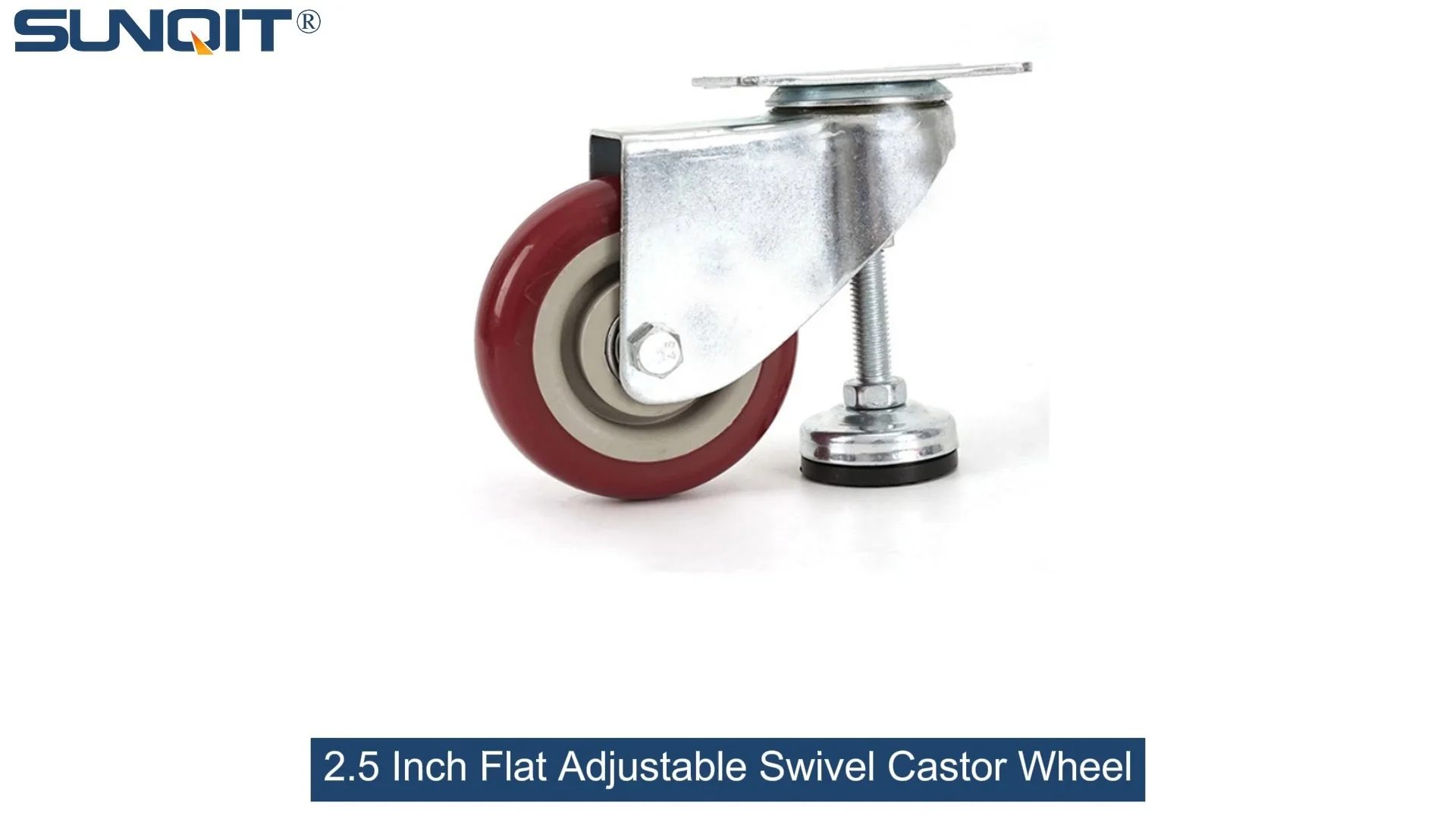
Flat Adjustable Swivel Castor Wheel
Swivel Chair Casters Ball Bearing Wheels Rubber Base with adjustable height function. Resistant to abrasion, impact and corrosion. Heavy payload can hold 80Kgs per pcs,which can make it works at a stable and smooth status.
In the fast-paced world of modern manufacturing and logistics, efficiency isn't just a buzzword—it's the backbone of operations. Every component, no matter how small, plays a role in keeping workflows smooth, costs in check, and productivity high. When we talk about flexible conveyors—the workhorses that move materials, products, and parts across factories, warehouses, and assembly lines—one might focus on their motor power, belt speed, or load capacity. But there's a quieter hero in this setup: the flat adjustable swivel castor wheel. These unassuming components might not grab headlines, but they're the reason conveyors can adapt to changing layouts, navigate tight spaces, and maintain stability even on less-than-perfect floors. In this article, we'll dive into what makes these castor wheels essential, and walk through the key factors you need to consider when choosing them for your flexible conveyor system.
Understanding Flat Adjustable Swivel Castor Wheels: More Than Just "Wheels"
Before we jump into the details, let's clarify what we mean by "flat adjustable swivel castor wheels." At first glance, they might look like any other wheel attached to a conveyor's base, but their design packs a punch of functionality. Let's break it down:
Swivel capability: Unlike fixed castors, which only roll forward and backward, swivel castors can rotate 360 degrees. This is game-changing for flexible conveyors, which often need to be repositioned to align with new production lines, obstacles, or connect with other equipment. Imagine trying to maneuver a 20-foot conveyor around a corner with fixed wheels—it would be clunky at best, impossible at worst. Swivel castors turn that challenge into a smooth, one-person job.
Adjustable height: "Flat" here refers to the mounting plate, which sits flush against the conveyor's frame, but the real magic is in the adjustability. Most models come with a threaded stem or eccentric bolt that lets you tweak the wheel height by small increments (often 1/4 inch to 2 inches). Why does this matter? Floors in warehouses and factories are rarely perfectly level. A conveyor that wobbles because one corner is slightly higher than the others isn't just annoying—it can cause materials to shift, damage products, or even lead to operator fatigue. Adjustability ensures the conveyor stays stable, even on uneven ground. It also lets you align the conveyor's surface with other equipment, like roller tracks or workbenches, so materials glide seamlessly from one step to the next.
Flat mounting: The flat base plate distributes the conveyor's weight evenly across the wheel assembly, reducing stress on both the castor and the floor. This is especially important for heavy-duty conveyors carrying metal parts or bulk materials—you don't want a small, pointed mounting bracket digging into the floor or failing under pressure.
In short, these castors are the bridge between a rigid, immovable conveyor and a truly flexible one. They turn static equipment into something that can adapt to your workflow, not the other way around. Now, let's explore what you need to keep in mind when selecting them.
Key Considerations When Choosing Flat Adjustable Swivel Castor Wheels
1. Load Capacity: Don't Underestimate the Weight
The first question you should ask is: How much weight will these castors actually need to support? It's a deceptively simple question, but getting it wrong can lead to premature wear, broken wheels, or even safety hazards. Load capacity isn't just about the conveyor itself—it includes the maximum weight of the materials, products, or parts that will be on the conveyor at any given time. For example, a small conveyor used to move lightweight electronics might only need to support 500 lbs, but a conveyor in an automotive plant carrying engine blocks could need to handle 3,000 lbs or more.
To calculate the required load capacity per castor, start with the total weight (conveyor weight + maximum material weight) and divide by the number of castors. But here's a pro tip: always add a safety margin of 20-30%. Why? Because loads aren't always evenly distributed. A sudden shift in materials, or a conveyor that's temporarily overloaded during peak hours, can push castors beyond their limits. If a castor fails under stress, it could cause the conveyor to tip, damage products, or even injure someone nearby.
To help visualize this, let's look at a table of common load ranges and their typical applications. This will give you a starting point for matching castor capacity to your needs:
| Load Capacity Range (lbs per castor) | Typical Conveyor Application | Common Wheel Materials | Adjustment Mechanism |
|---|---|---|---|
| 0 – 500 | Light-duty conveyors (small parts, pharmaceuticals, cosmetics) | Rubber, Nylon | Threaded stem (manual adjustment with wrench) |
| 501 – 1,500 | Medium-duty conveyors (electronics assemblies, food packaging, small appliances) | Polyurethane, Cast Iron | Threaded stem with lock nut (prevents unintended height changes) |
| 1,501 – 3,000 | Heavy-duty conveyors (automotive parts, metal components, bulk materials like grains or plastics) | Steel, Polyurethane (reinforced) | Eccentric bolt (for precise, tool-free adjustments) |
| 3,001+ | Extra-heavy conveyors (industrial machinery parts, construction materials) | Forged Steel, Cast Iron | Hydraulic or gear-driven adjustment (for large height ranges) |
2. Wheel Material: The Right Grip, Durability, and Floor Protection
Once you've nailed down the load capacity, the next big decision is wheel material. This isn't just about aesthetics—different materials interact with floors, environments, and usage patterns in unique ways. Let's break down the most common options and when to choose them:
Rubber: If floor protection is a priority, rubber wheels are a solid choice. They're soft enough to grip without scratching concrete, tile, or even polished warehouse floors. They also absorb shocks, which is great for delicate products like glassware or electronics. The downside? They're not the most durable. Over time, rubber can wear down, especially if exposed to oils, chemicals, or extreme temperatures. They're best for light to medium loads and indoor use in clean, dry environments.
Polyurethane (PU): Think of polyurethane as rubber's tougher cousin. It combines the floor-friendly grip of rubber with the durability of plastic. PU wheels resist abrasion, oils, and most chemicals, making them versatile for both indoor and covered outdoor use. They're also quieter than steel or cast iron, which is a big plus in busy warehouses where noise levels can affect worker comfort. For medium to heavy loads (up to 1,500 lbs), PU is often the go-to choice.
Nylon: Nylon wheels are all about durability. They're hard, resistant to wear, and can handle high temperatures (up to 250°F in some cases). They're also lightweight, which makes swiveling easier for manual conveyors. The tradeoff? They're stiffer than rubber or PU, so they don't absorb shocks as well. They can also be noisy on hard floors and may leave scuff marks if the floor isn't sealed. Nylon works well for light to medium loads in dry, industrial settings where longevity is key.
Steel/Cast Iron: When you need to move really heavy loads (1,500 lbs and up), steel or cast iron wheels are the workhorses. They're virtually indestructible under normal use and can handle rough surfaces, oils, and chemicals without breaking a sweat. The downside? They're loud, heavy, and will scratch or dent soft floors (like wood or vinyl). Save these for outdoor yards, factories with concrete floors, or applications where load capacity trumps noise and floor aesthetics.
Pro tip: If your environment has specific challenges—like exposure to acids, extreme cold, or constant moisture—look for specialized materials. For example, some manufacturers offer "ESD-safe" wheels (static-dissipative polyurethane) for electronics manufacturing, where static electricity could damage sensitive components. Or, if you're in the food industry, opt for FDA-approved materials that resist bacteria growth and are easy to clean.
3. Adjustability: More Than Just "Leveling Up"
We touched on adjustability earlier, but it's worth diving deeper—because not all "adjustable" castors are created equal. The goal here is to ensure your conveyor stays stable, aligned, and functional, no matter the conditions. Let's break down the key aspects of adjustability:
Height range: How much can you actually adjust the wheel height? Most standard models offer 1/2 inch to 1 inch of adjustment, which is enough for minor floor unevenness. But if your facility has significant dips or slopes (common in older warehouses), you might need castors with a larger range—up to 2 inches or more. Keep in mind that more adjustment often means a bulkier design, so balance need with space constraints.
Adjustment mechanism: How do you actually change the height? The most common type is a threaded stem: the wheel is attached to a bolt that screws into the mounting plate. Turn the stem clockwise to lower the wheel, counterclockwise to raise it. This is simple and reliable, but it requires a wrench or socket—fine for one-time setup, but a hassle if you need to adjust frequently. For conveyors that move often, look for "tool-free" adjustment, like a hand-crank or lever, or eccentric bolts that can be turned with just your fingers. These save time and reduce the risk of stripped threads from over-tightening.
Locking features: Once you've adjusted the height, you need to keep it there. A loose adjustment can cause the wheel to slowly lower over time, throwing the conveyor out of alignment. Look for castors with lock nuts (they tighten against the mounting plate to prevent the stem from turning) or built-in locking pins. Some advanced models even have "self-locking" threads that grip tighter as weight is applied—no extra tools needed.
Don't forget about caster accessories here. Adjustment wrenches, replacement lock nuts, or height gauges can make setup and maintenance easier. A good supplier will offer these accessories alongside the castors, so you're not scrambling to find compatible parts later.
4. Swivel Mechanism: Smooth Rotation = Less Effort, More Safety
A swivel castor is only as good as its swivel mechanism. If the rotation is stiff, jerky, or prone to seizing, your "flexible" conveyor will feel more like a stubborn boulder. Here's what to look for in a quality swivel mechanism:
Bearings: The swivel plate (the part that connects the wheel to the mounting plate) relies on bearings to rotate smoothly. There are two main types: ball bearings and roller bearings. Ball bearings are common in light to medium-duty castors—they're affordable and provide low friction. For heavier loads or frequent swiveling, roller bearings are better. They distribute weight more evenly, reducing wear and tear, and can handle higher radial loads (the force pushing down on the castor as it swivels).
Seals and lubrication: Dirt, dust, and debris are the enemies of smooth rotation. A swivel mechanism without proper seals will quickly get clogged, leading to stiff movement or rust. Look for castors with rubber or metal seals that keep contaminants out. Also, check if the bearings are pre-lubricated with grease or oil. Some models have grease fittings, so you can re-lubricate them periodically—this extends their lifespan, especially in dirty or high-moisture environments.
Swivel radius: This is the distance from the center of the swivel plate to the edge of the wheel. A smaller radius means the castor can swivel in tighter spaces, which is great for conveyors that need to navigate narrow aisles. However, a larger radius can provide more stability, especially for tall conveyors that might tip if the swivel is too "tippy." Balance maneuverability with stability based on your layout.
A quick test: If you can spin the swivel plate with one finger and it keeps rotating smoothly for a few seconds, that's a sign of good bearings and low friction. If it feels gritty or stops abruptly, keep looking.
5. Compatibility with Conveyor Design and Roller Track Systems
Even the best castor wheel won't work if it doesn't play well with your conveyor. Here's how to ensure compatibility:
Mounting plate size: Conveyors come in all shapes and sizes, and their frames (often made of aluminum profile or steel) have specific mounting hole patterns. Your castor's mounting plate needs to match these holes, or you'll end up drilling new ones (which weakens the frame) or using adapters (which add bulk and cost). Measure the distance between existing holes on your conveyor's base, and check the castor's mounting plate dimensions before buying.
Wheel size and spacing: The diameter of the wheel affects how easily the conveyor rolls. Larger wheels (5 inches or more) roll over cracks, debris, and uneven floors better than smaller ones (3 inches or less). But they also raise the conveyor's overall height, which might be an issue if you need it to align with low roller track systems. As a rule of thumb, for every 100 lbs of load, aim for at least a 4-inch wheel diameter—this reduces stress on the wheel and makes rolling easier.
Spacing between castors is also critical. Too close, and the conveyor may tip; too far, and it becomes hard to maneuver. A good guideline is to place castors at least 2/3 the length of the conveyor apart (e.g., a 12-foot conveyor needs castors 8 feet apart). If your conveyor has overhangs (like a loading end that extends beyond the frame), add extra castors to support the weight.
Integration with roller track: Many flexible conveyors work alongside roller track systems—slotted rails with rollers that let materials glide from the conveyor to a workbench or storage rack. For this to work, the conveyor's surface must be level with the roller track. This is where adjustable castors shine: you can tweak the height to ensure a seamless transition, so boxes or parts don't get stuck on a "lip" between the two.
6. Environment: Matching Castors to Your Workplace Conditions
Your workplace isn't just a room with a floor—it's a unique environment with its own challenges. Here's how to tailor castor selection to common conditions:
Wet or humid environments (e.g., food processing, car washes): Moisture can cause rust, so look for castors with stainless steel frames or zinc-plated components. Wheel materials like polyurethane or nylon resist water better than rubber, which can degrade over time. Sealed bearings are a must here—they prevent water from getting inside and causing corrosion.
Chemically exposed areas (e.g., laboratories, paint shops): Oils, solvents, and acids can eat through standard wheels and frames. For these settings, opt for wheels made of chemical-resistant materials like polypropylene or Viton rubber. Aluminum or stainless steel frames are also better than plain steel, which will corrode quickly.
Cleanrooms (e.g., electronics manufacturing, pharmaceuticals): Dust and debris are enemies here, so castors should have smooth surfaces with no crevices where particles can hide. Look for "cleanroom-rated" models with sealed bearings, non-shedding wheel materials (like polyurethane), and easy-to-clean frames. Some manufacturers even offer castors with conductive materials to prevent static buildup, which can damage sensitive electronics.
Outdoor or rough terrain (e.g., construction sites, loading docks): Gravel, mud, and uneven ground call for rugged castors. Steel or pneumatic (air-filled) wheels handle rough surfaces best, and larger diameters (6 inches or more) help roll over obstacles. Look for heavy-duty swivel mechanisms with grease fittings, so you can keep them lubricated even in dusty conditions.
7. Maintenance: Keep Them Rolling Smoothly for Years
Even the highest-quality castors need a little TLC to stay in top shape. Neglecting maintenance can lead to premature wear, noisy operation, or sudden failure. Here's what to include in your maintenance routine:
Lubrication: Swivel bearings and wheel axles need regular lubrication to reduce friction. How often? It depends on usage—light-duty conveyors might need lubrication every 6 months, while heavy-duty ones in dusty environments could need it monthly. Use a lithium-based grease for most applications; avoid oil, which can attract dust and gum up the works.
Inspections: Every month, check for loose bolts, worn wheels, or damaged seals. Look for cracks in the wheel tread, which can cause the wheel to fail under load. If the swivel plate feels stiff, clean it with a brush and re-lubricate. Catching small issues early saves you from costly repairs later.
Replacement parts: Over time, wheels will wear down, bearings will fail, or adjustment mechanisms will strip. Choose castors that have replaceable parts (wheels, bearings, stems) instead of "disposable" models that need to be replaced entirely. This is more cost-effective in the long run and reduces downtime when something breaks.
8. Cost vs. Value: Investing in Quality Pays Off
It's tempting to opt for the cheapest castors to save money upfront, but this is often a false economy. A $20 castor might work for a few months, but if it fails and causes a conveyor to tip, damaging $1,000 worth of products, the "savings" vanish. On the flip side, the most expensive castor isn't always the best—you might be paying for features you don't need (like chemical resistance in a dry warehouse).
Instead of focusing on upfront cost, think about total cost of ownership (TCO). This includes: purchase price + maintenance costs + downtime from failures + replacement costs. A mid-range castor ($50–$100) with good load capacity, durable materials, and replaceable parts will often have a lower TCO than a cheap model. It will last longer, require less maintenance, and reduce the risk of costly accidents.
When comparing quotes, ask suppliers about warranty coverage. A reputable supplier will stand behind their products with a 1–5 year warranty, which gives you peace of mind that they believe in their quality.

Why This Matters for Lean System Success
At the end of the day, the goal of any flexible conveyor system is to support lean manufacturing principles: reducing waste, improving flow, and maximizing value. Flat adjustable swivel castor wheels play a direct role in this. By allowing conveyors to be repositioned quickly, they eliminate the waste of fixed, underused equipment. By ensuring stability and alignment, they reduce the waste of damaged products or rework. And by requiring minimal maintenance, they free up time for workers to focus on value-adding tasks, not fixing broken wheels.
In short, these small components are a big part of making your lean system work. They turn "rigid" into "responsive," and "frustration" into "flow."

Final Thoughts: Your Conveyor's Foundation
Flat adjustable swivel castor wheels might not be the most glamorous part of your flexible conveyor system, but they're undoubtedly one of the most critical. By taking the time to consider load capacity, wheel material, adjustability, swivel mechanism, compatibility, environment, maintenance, and cost, you'll choose castors that keep your conveyor rolling smoothly—today, tomorrow, and for years to come. Remember: the best castor is the one that works so well, you forget it's there. And when that happens, you'll know you've made the right choice.