- Company Articles
- Products and Technology
- Solution
- Flat Adjustable Swivel Castor Wheels for Food Processing Equipment: Sanitary Solutions

Flat Adjustable Swivel Castor Wheels for Food Processing Equipment: Sanitary Solutions
Related Product
Flat Adjustable Swivel Castor Wheel
Swivel Chair Casters Ball Bearing Wheels Rubber Base with adjustable height function. Resistant to abrasion, impact and corrosion. Heavy payload can hold 80Kgs per pcs,which can make it works at a stable and smooth status.
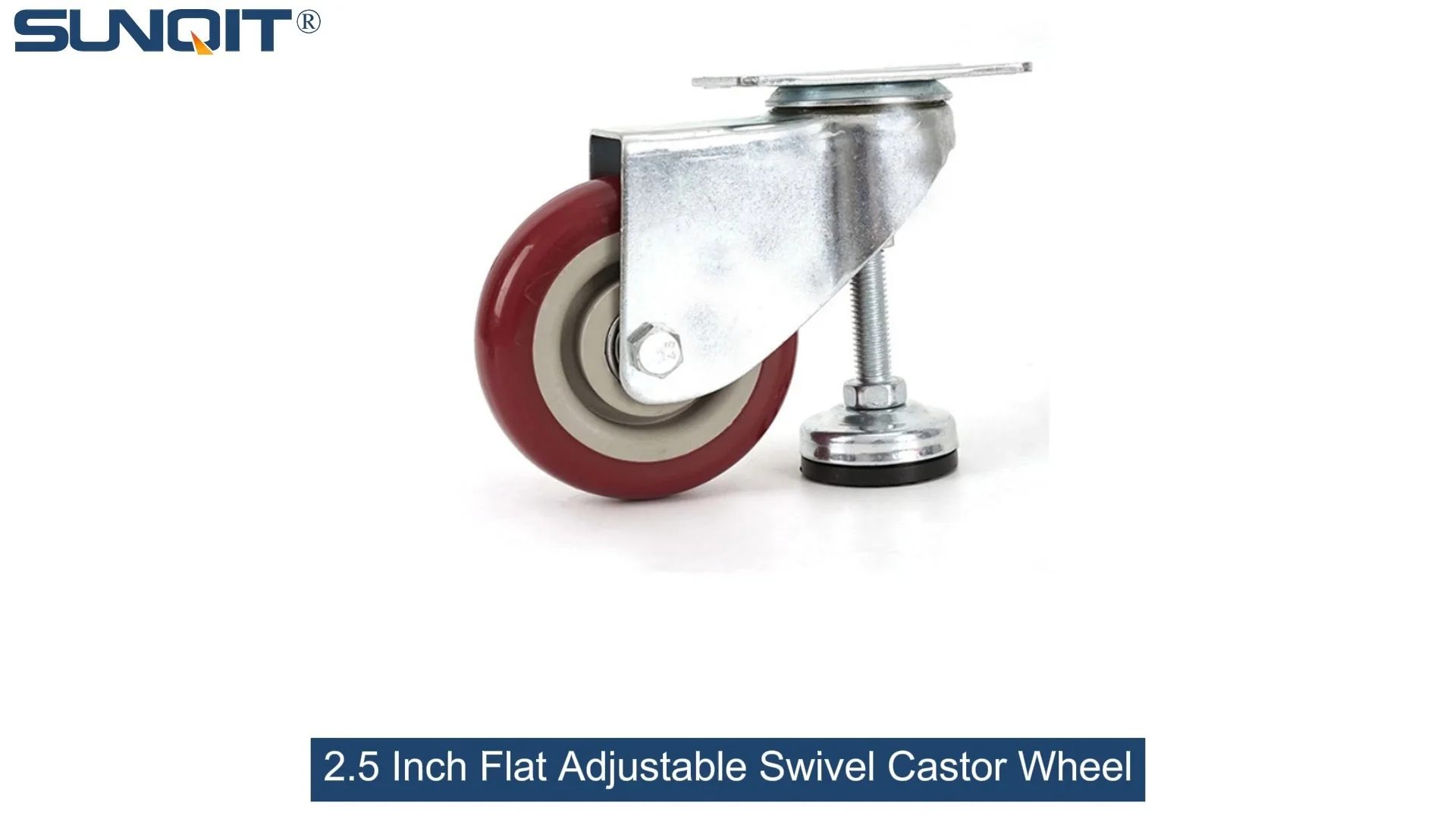
Walk through any food processing facility, and you'll notice a silent but critical player in daily operations: the wheels beneath the equipment. From dough mixers in bakeries to meat-cutting tables in poultry plants, mobility is non-negotiable. But in an industry where a single bacterial contaminant can trigger recalls or endanger consumer health, mobility can't come at the cost of sanitation. This is where flat adjustable swivel castor wheels step in—designs engineered to marry the convenience of movement with the strict hygiene standards that food processing demands. Let's dive into why these castors are becoming indispensable, how they solve long-standing sanitation challenges, and why they're more than just "wheels" for your equipment.
The Stakes of Sanitation in Food Processing
Food processing environments are battlefields against contamination. Regulatory bodies like the FDA (U.S.) and EFSA (EU) enforce rigorous standards, with guidelines like FDA 21 CFR Part 110 mandating that equipment "be designed, constructed, and used so as to prevent the adulteration of food." What does this mean for the wheels under your machinery? It means no crevices where bacteria can hide, no materials that corrode or harbor pathogens, and no gaps that trap water or food particles during cleaning.
Consider a typical scenario: A dairy plant uses a mobile mixing tank to transport milk between pasteurization and packaging lines. After each use, the tank is sanitized with high-pressure hoses and chemical cleaners. If the wheels under that tank have seams, rough edges, or hard-to-reach joints, those areas become breeding grounds for Listeria or E. coli—microorganisms that thrive in moist, overlooked spaces. Over time, these contaminants can transfer to the tank, then to the milk, and ultimately to consumers. The consequences? Product recalls, damaged brand reputation, and even legal liability. Sanitation isn't just a box to check; it's the foundation of trust in food production.
The Mobility-Sanitation Balancing Act
Why not just bolt equipment to the floor, then? Fixed machinery eliminates mobility risks, but it creates new problems. Food processing lines are dynamic: seasonal demand shifts, recipe changes, and maintenance needs require flexibility. A bakery might switch from making bread to pastries overnight, needing to reposition ovens and cooling racks. A meat processor might deep-clean a production line on weekends, requiring equipment to be moved for thorough sanitization of floors and drains. Without mobile equipment, these tasks become time-consuming, labor-intensive, and prone to errors.
The ideal solution? Equipment that moves smoothly when needed but stays put—and clean—when stationary. Traditional castor wheels have long tried to fill this role, but they often fall short. Many are designed for general industrial use, not the hyper-specific demands of food processing. They prioritize load capacity or cost over features like seamless construction or corrosion resistance, leaving facilities to choose between mobility and sanitation. Until now.

Traditional Castor Wheels: Where They Fall Short
To appreciate the innovation of flat adjustable swivel castor wheels, it helps to first understand the limitations of traditional designs in food settings:
- Crevices and Seams: Many standard castors have joints, welds, or bolt heads that create tiny gaps. These are perfect hiding spots for food particles, grease, and water—all of which feed bacteria. Even after cleaning, a quick swab test might reveal pathogens lingering in these micro-crevices.
- Non-Adjustable Heights: Uneven floors are common in older facilities. Traditional castors with fixed heights can leave equipment teetering, creating gaps between the equipment base and the floor. Water from cleaning pools here, turning into a stagnant breeding ground for mold and mildew.
- Subpar Materials: Cast iron or low-grade steel castors corrode when exposed to frequent washdowns. Plastic wheels might warp or crack under high temperatures (e.g., near ovens), while rubber wheels can degrade when exposed to harsh sanitizers, leaving behind particles that contaminate products.
- Clunky Swivel Mechanisms: Poorly designed swivel joints drag or stick, making equipment hard to maneuver. This not only slows down workflows but also leads to operators "muscling" equipment into place, which can damage floors or loosen castor components—creating even more gaps for contamination.
- Exposed Bearings and Lubricants: Open bearings in swivel mechanisms collect debris and require frequent lubrication. The lubricant itself can leak, potentially mixing with food products, while debris trapped in bearings accelerates wear, leading to more frequent replacements (and more downtime).
In short, traditional castors treat sanitation as an afterthought. For food processors, this isn't just inconvenient—it's a compliance risk.

Flat Adjustable Swivel Castor Wheels: A Sanitary Revolution
Flat adjustable swivel castor wheels are redefining what "sanitary mobility" looks like. Unlike their traditional counterparts, these castors are engineered from the ground up with food processing's unique challenges in mind. Let's break down their key design elements and how they address each of the issues above.
Core Design: Flat, Seamless, and Adjustable
The "flat" in their name is no accident. These castors feature a low-profile, flat top plate that mounts flush against the equipment base. This eliminates the gap between the castor and the equipment—no more space for water or debris to collect. The "adjustable" component refers to height: a threaded stem or bolt allows operators to tweak the castor height by small increments (often 0.5–2 inches), ensuring equipment sits level even on uneven floors. And "swivel" means 360-degree rotation, making maneuvering tight corners (common in food facilities) effortless.
But the real magic is in the details: no external bolts, no weld seams, and no decorative grooves. Every surface is smooth, rounded, and easy to wipe down. Imagine running a sanitizing cloth over the castor—no snags, no missed spots. That's the goal.

Key Features That Drive Sanitation
Let's zoom into the features that make flat adjustable swivel castor wheels a game-changer for food processing:
1. Adjustable Height: No More Pooling Water
Uneven floors are a reality, but they don't have to be a sanitation hazard. The height-adjustable mechanism lets operators level equipment precisely. After cleaning, this ensures water runs off the equipment base and into drains, rather than pooling around the castors. For example, in a seafood processing plant, a mobile scaling table with adjustable castors can be leveled to prevent brine or fish juice from collecting—critical for avoiding cross-contamination between batches.
2. Seamless Construction: No Hiding Spots
Traditional castors often have separate components (e.g., a wheel, fork, and top plate) held together by bolts or pins. Each connection is a potential gap. Flat adjustable swivel castors, by contrast, use one-piece fork designs or welded joints that are ground smooth. Some models even integrate the wheel and fork into a single unit, leaving no seams at all. This design leaves bacteria with nowhere to hide—even under magnification, there are no micro-crevices to harbor pathogens.
3. Food-Grade Materials: Resistant to Corrosion and Chemicals
Material choice is critical. These castors typically use 304 or 316 stainless steel for frames and forks—alloys that resist rust and corrosion even after daily washdowns. Wheels are often made from FDA-approved thermoplastics (like polypropylene) or rubber compounds that stand up to high temperatures (up to 250°F/121°C) and aggressive sanitizers (e.g., chlorine, peracetic acid). Unlike standard rubber, these materials don't degrade or leach chemicals into the environment, ensuring they meet food contact regulations.
4. Sealed Swivel Bearings: Keeping Debris and Lubricants In (or Out)
The swivel joint is a weak point in many castors. Traditional designs use open bearings that require frequent lubrication, which can attract dust and food particles. Flat adjustable swivel castors solve this with sealed, maintenance-free bearings. These are pre-lubricated with food-grade grease and enclosed in a rubber or plastic seal, preventing lubricant leakage (which could contaminate products) and blocking debris from entering the bearing—extending lifespan and reducing maintenance.
5. Sanitary Brakes: Stopping Power Without Compromise
When equipment is stationary, brakes are essential. But traditional brake levers or pedals can have nooks where food builds up. Sanitary castor brakes are designed with smooth, contoured levers that are easy to clean. Some models even feature "foot-friendly" designs—large, flat brake pedals that operators can engage with a quick tap of their shoe, eliminating the need to bend down (and reducing the risk of touching dirty surfaces).
Sanitary Benefits in Action: A Day in the Life
Let's put this all together with a real-world example. Imagine a ready-to-eat meal facility that produces pre-packaged salads and sandwiches. Their assembly line includes mobile workstations where employees portion ingredients, and these workstations need to be moved nightly for floor cleaning. Here's how flat adjustable swivel castor wheels transform their process:
Morning Setup: Operators roll the workstations into place. The swivel castors glide smoothly, even with heavy ingredient bins on top. A quick adjustment of the height bolts ensures each workstation is level—no wobbling, which could spill ingredients or strain workers.
Production: During the day, the workstations stay put thanks to the sanitary brakes, which are easy to engage with a foot tap. The smooth, seamless castor surfaces mean any spilled lettuce or dressing can be wiped off with a cloth—no need for picks or brushes to clean crevices.
Nightly Cleaning: Brakes are released, and the workstations are rolled to the cleaning area. High-pressure hoses blast away debris from the castors, which have no seams to trap water. The adjustable height is reset to tilt the workstations slightly, letting water drain off completely. By morning, the castors are dry, sanitized, and ready for another day—no bacterial growth, no lingering odors, no risk of cross-contamination.
This isn't just efficiency; it's peace of mind. Facility managers can trust that their equipment isn't just mobile, but actively supporting their sanitation goals.
Caster Accessories: Enhancing Sanitation Further
Flat adjustable swivel castor wheels are powerful on their own, but the right caster accessories can elevate their performance even more. These aren't afterthoughts—they're designed to address specific pain points in food processing:
- Stem Guards: For castors mounted with stems (instead of top plates), stem guards are flexible sleeves that cover the gap between the stem and the equipment base. They prevent water, food, or debris from seeping into the mounting hole, where it could breed bacteria.
- Brake Covers: These snap-on covers shield brake mechanisms from splashes and spills, making them easier to clean and extending their life. They're often made from the same food-grade plastic as the wheels, ensuring compatibility with sanitizers.
- Mounting Plates with Drainage: Some manufacturers offer top plates with tiny drainage holes, ensuring water doesn't pool between the castor and the equipment base during washdowns.
- Replaceable Wheels: Over time, wheel treads can wear or become scratched (creating new crevices). Accessories like replaceable wheel inserts let facilities swap out worn wheels without replacing the entire castor, reducing costs and downtime.
The best part? These accessories are designed to integrate seamlessly with flat adjustable swivel castors, maintaining the smooth, crevice-free profile that makes the castors sanitary in the first place.
Choosing the Right Castor: It's About More Than Specifications
With so many options on the market, how do you select the right flat adjustable swivel castor wheels for your facility? Start by asking these questions:
- What's the Load Capacity? A 500-lb mixer needs sturdier castors than a 100-lb ingredient cart. Overloading castors can bend frames, creating gaps or uneven wear—both sanitation risks.
- What's the Environment Like? Will the castors be exposed to high temperatures (e.g., near ovens), corrosive chemicals (e.g., in meat processing), or frequent washdowns? Choose materials accordingly (e.g., 316 stainless steel for saltwater environments, heat-resistant plastics for bakeries).
- What's the Floor Type? Smooth concrete floors work with most wheel materials, but uneven or wet floors might require non-marking, slip-resistant treads to prevent accidents.
- Are They Certified? Look for castors that meet FDA, NSF, or EU 10/2020 standards for food contact. Certification ensures the materials and design have been tested for safety.
Remember: The cheapest castor might save money upfront, but if it fails a sanitation audit or causes a recall, the cost is exponentially higher. Investing in quality castors and caster accessories is an investment in your facility's reputation and compliance.
Traditional vs. Flat Adjustable Swivel Castor Wheels: A Quick Comparison
| Feature | Traditional Castor Wheels | Flat Adjustable Swivel Castor Wheels |
|---|---|---|
| Sanitary Design | Seams, bolts, and crevices; hard to clean. | Seamless, flat surfaces; rounded edges; no hidden gaps. |
| Height Adjustment | Fixed height; may leave equipment unlevel. | Adjustable (0.5–2 inches); ensures level placement, prevents water pooling. |
| Material Resistance | Prone to corrosion; may degrade in washdowns. | 304/316 stainless steel frames; food-grade plastics/rubber wheels; chemical and heat resistant. |
| Swivel Mechanism | Open bearings; requires frequent lubrication; attracts debris. | Sealed, maintenance-free bearings; pre-lubricated with food-grade grease. |
| Maintenance Ease | High: frequent cleaning of crevices; bearing replacements. | Low: wipe-down cleaning; sealed components reduce upkeep. |
| Compliance Risk | Higher: potential for bacterial harboring; non-certified materials. | Lower: meets FDA/NSF standards; designed for food contact. |
Conclusion: Mobility Without Compromise
In food processing, every component of your operation contributes to product safety—including the wheels under your equipment. Flat adjustable swivel castor wheels aren't just a "nice-to-have"; they're a critical tool in the fight against contamination, designed to keep your facility compliant, your products safe, and your operations running smoothly. By prioritizing seamless design, adjustable heights, food-grade materials, and sealed components, these castors prove that mobility and sanitation don't have to be enemies.
So the next time you're evaluating equipment for your facility, don't overlook the wheels. Ask: Do they protect our products? Simplify cleaning? Meet regulatory standards? With flat adjustable swivel castor wheels, the answer is a resounding yes. After all, in food processing, the smallest details often make the biggest difference.