- Company Articles
- Products and Technology
- Product knowledge
- Flat Adjustable Swivel Castor Wheels for Logistics Distribution Trolleys: Efficiency Guide

Flat Adjustable Swivel Castor Wheels for Logistics Distribution Trolleys: Efficiency Guide
Related Product
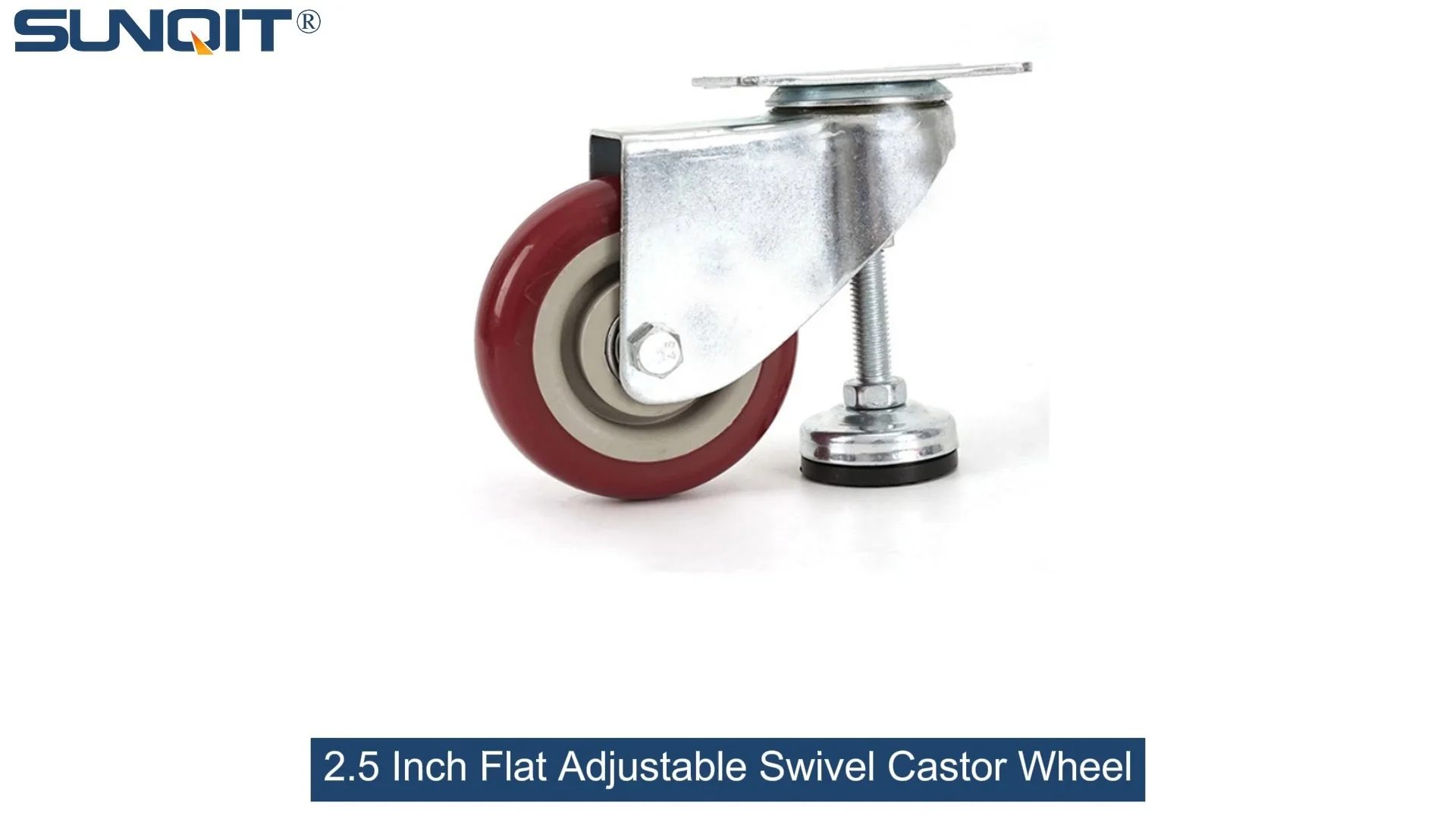
Flat Adjustable Swivel Castor Wheel
Swivel Chair Casters Ball Bearing Wheels Rubber Base with adjustable height function. Resistant to abrasion, impact and corrosion. Heavy payload can hold 80Kgs per pcs,which can make it works at a stable and smooth status.
Imagine stepping into a bustling logistics warehouse on a typical Tuesday morning. Pallets are being loaded onto trucks, workers in high-visibility vests hurry between stations, and everywhere you look, trolleys glide across the floor—carrying boxes, tools, and raw materials to their next destination. In this orchestrated chaos, there's an unsung hero quietly ensuring the rhythm never falters: the wheels beneath those trolleys. Not just any wheels, but flat adjustable swivel castor wheels —the small but mighty components that turn a clunky cart into a precision tool for efficiency. For logistics managers and warehouse teams, choosing the right castor wheels isn't just about durability; it's about unlocking smoother workflows, reducing worker fatigue, and aligning with the lean principles that keep modern supply chains competitive. In this guide, we'll dive deep into how flat adjustable swivel castor wheels transform logistics distribution trolleys, why they matter for operational efficiency, and how they integrate seamlessly with systems like lean management to drive success.
The Backbone of Logistics Mobility: Why Castor Wheels Matter
Logistics distribution trolleys are the workhorses of warehouses, factories, and distribution centers. From moving inventory between storage racks to transporting finished goods to shipping docks, these trolleys handle everything from lightweight packages to heavy machinery parts. But their effectiveness hinges entirely on one critical component: their wheels. A trolley with poorly designed wheels becomes a liability—slowing down workers, damaging floors, and even causing injuries when it jams or tips. On the flip side, a trolley equipped with high-quality castor wheels becomes an extension of the team, making tasks feel effortless and keeping operations on track.
This is where flat adjustable swivel castor wheels stand out. Unlike rigid castors (which only move forward and backward) or non-adjustable swivel castors (which lack height customization), these wheels combine three key features: a flat mounting plate for stable attachment to trolleys, an adjustable height mechanism to adapt to different tasks, and 360-degree swivel rotation for unmatched maneuverability. For logistics teams, this trio of benefits translates to fewer delays, less physical strain, and a more adaptable workspace—all of which are cornerstones of lean system implementation, where waste reduction and continuous improvement are prioritized.
What Are Flat Adjustable Swivel Castor Wheels?
Let's start with the basics: What exactly makes a castor wheel "flat adjustable swivel"? Let's break down the terminology:
- Flat: Refers to the mounting plate—a flat, sturdy base that attaches to the bottom of the trolley. This design ensures even weight distribution, reducing stress on the trolley frame and preventing wobbling, even when carrying heavy loads.
- Adjustable: These castors include a height-adjustment mechanism, typically a threaded stem or a lever, that lets users raise or lower the wheel to match different floor heights, loading docks, or workflow needs. For example, a trolley might need to be slightly taller to align with a conveyor belt or shorter to fit under a low storage shelf.
- Swivel: The wheel assembly can rotate 360 degrees, allowing the trolley to pivot, turn, and navigate tight corners without the need to backtrack. This is especially crucial in crowded warehouses where space is limited.
Together, these features make flat adjustable swivel castor wheels a versatile choice for logistics distribution trolleys, including specialized models like turnover trolley and rack systems, which are designed to transport and store goods efficiently in high-volume environments.
Key Features That Drive Efficiency
Not all flat adjustable swivel castor wheels are created equal. The best models include additional features that enhance their performance in logistics settings. Let's explore the most impactful ones:
1. Durable Wheel Materials: The wheel itself is often made from polyurethane (PU), rubber, or steel. PU wheels strike a balance between grip (to prevent slipping on smooth warehouse floors), durability (to withstand constant use), and floor protection (to avoid scuffing or scratching concrete or tile). Steel wheels, on the other hand, are ideal for extremely heavy loads but may require a smoother floor surface to avoid noise and damage.
2. Load Capacity Ratings: Every castor wheel has a maximum load it can safely carry. For logistics trolleys, which may transport anything from 50kg to 500kg, choosing a castor with the right load rating is critical. Overloading a castor can lead to premature wear, wheel failure, or even trolley tipping—all of which disrupt operations.
3. Swivel Locks: A swivel lock (or "total lock") mechanism allows users to lock both the swivel rotation and the wheel itself, keeping the trolley stationary during loading, unloading, or when parked on inclines. This feature is a safety must, preventing accidental movement that could cause spills or injuries.
4. Noise Reduction: In busy warehouses, noise levels can reach 85 decibels or higher—equivalent to heavy traffic. Quiet castor wheels (often made with rubber or PU) reduce noise pollution, creating a more pleasant work environment and helping teams communicate better without shouting.
5. Corrosion Resistance: For logistics operations in humid environments (like food storage facilities) or those handling chemicals, castors with corrosion-resistant materials (such as stainless steel frames) prevent rust and extend lifespan, reducing replacement costs over time.

How Flat Adjustable Swivel Castor Wheels Boost Logistics Efficiency
Efficiency in logistics is all about reducing waste—whether it's wasted time, wasted effort, or wasted resources. Flat adjustable swivel castor wheels contribute to this goal in ways that might seem small individually but add up to significant improvements when scaled across a warehouse or distribution center. Let's explore the top benefits:
1. Maneuverability in Tight Spaces
Warehouses are rarely spacious. Aisles are narrow, storage racks are closely packed, and workers often need to navigate around other trolleys, forklifts, and stationary equipment. Rigid castors force users to make wide turns or backtrack, eating up precious time. Swivel castors, by contrast, allow trolleys to pivot on a dime. Add adjustability into the mix, and workers can lower the trolley slightly to glide under low-hanging obstacles or raise it to clear uneven floor seams—all without stopping to reposition the load. This agility reduces the time it takes to move goods from Point A to Point B by as much as 20%, according to a study by the Material Handling Equipment Distributors Association (MHEDA).
2. Reduced Worker Fatigue
Manual material handling is a leading cause of workplace injuries, particularly strains and sprains. Pushing or pulling a trolley with stiff, non-swivel wheels requires significantly more force—up to 50% more, research shows—than one with smooth-rolling swivel castors. Flat adjustable models take this a step further by allowing workers to adjust the trolley height to match their natural gait, reducing bending, stooping, and awkward lifting. Over a full shift, this translates to less fatigue, fewer sick days, and a more engaged, productive team.
3. Adaptability to Multiple Workflows
Logistics operations rarely stick to a single workflow. One hour, a trolley might be used to transport small parts to an assembly line; the next, it could be loaded with bulky boxes for shipping. Flat adjustable swivel castor wheels make trolleys "multi-taskers." For example, a turnover trolley and rack equipped with these castors can be adjusted to hold lightweight bins at waist height for picking orders, then raised to shoulder height to unload onto a high shelf—all without switching to a different trolley. This versatility eliminates the need to maintain multiple specialized trolleys, saving storage space and simplifying inventory management.
4. Integration with Lean Systems
Lean management is all about optimizing processes to eliminate waste (muda in Japanese). Inefficient material handling is a classic example of muda—waste of motion. By making trolleys easier to move, adjust, and park, flat adjustable swivel castor wheels directly support lean goals: fewer steps to complete a task, less time spent on non-value-added activities (like struggling with a stuck wheel), and smoother flow of materials through the supply chain. In fact, companies that upgrade to adjustable swivel castors often report a 15-25% reduction in "motion waste" within the first six months, according to lean consulting firm Kaizen Institute.
5. Longer Trolley Lifespan
Trolleys are an investment, and frequent replacements eat into budgets. Poor-quality castors cause uneven wear on trolley frames, leading to cracks or bent legs over time. Flat adjustable swivel castors, with their stable mounting plates and shock-absorbing wheel materials, distribute weight evenly and reduce stress on the trolley. Additionally, adjustable height mechanisms prevent the trolley from dragging on rough floors, which can scrape or damage the frame. The result? Trolleys that last 2-3 times longer than those with basic castors, lowering long-term costs.

Comparing Castor Wheel Types: Why Flat Adjustable Swivel Stands Out
To truly appreciate the value of flat adjustable swivel castor wheels, it helps to compare them to other common castor types. The table below breaks down key differences in maneuverability, adjustability, and ideal use cases:
| Castor Type | Maneuverability | Adjustability | Load Capacity (Typical Range) | Ideal For |
|---|---|---|---|---|
| Rigid Castors | Low (only forward/backward) | None | 50-500kg | Straight-line transport (e.g., moving pallets along fixed paths) |
| Standard Swivel Castors | High (360° rotation) | None | 50-1000kg | General-purpose trolleys in open spaces |
| Locking Swivel Castors | High (with swivel lock for stability) | None | 100-1500kg | Trolleys needing secure parking (e.g., loading docks) |
| Flat Adjustable Swivel Castors | Very High (360° rotation + obstacle navigation) | Yes (height adjustment) | 100-2000kg | Logistics distribution trolleys, turnover trolley and rack systems, lean environments |
As the table shows, flat adjustable swivel castors excel in versatility and performance, making them the top choice for dynamic logistics environments where adaptability and efficiency are priorities.

Caster Accessories: Enhancing Performance Even Further
While the castor wheel itself is the star, caster accessories play a supporting role that shouldn't be overlooked. These add-ons can customize the castor to specific tasks, extend its lifespan, or improve safety. Here are the most useful accessories for logistics applications:
- Swivel Locks: As mentioned earlier, these locks prevent the wheel from rotating, turning a swivel castor into a rigid one when needed. Some advanced models include a "total lock" that freezes both swivel and wheel movement.
- Wheel Brakes: Separate from swivel locks, wheel brakes (often foot-operated) stop the wheel from rolling while allowing the swivel to rotate. Useful for temporary parking during loading.
- Stem Extensions: For trolleys with thick frames, stem extensions allow the castor to reach the floor without compromising stability.
- Wheel Guards: Metal or plastic shields that protect the wheel from debris (like loose screws or packaging tape) that could jam the swivel mechanism.
- Shock Absorbers: For fragile loads (e.g., electronics or glassware), shock-absorbing accessories reduce vibration, preventing damage during transport.
Investing in the right accessories ensures that flat adjustable swivel castor wheels perform optimally, even in challenging conditions.
Real-World Success Stories: How Companies Benefited
Theory is one thing, but real-world results speak louder. Let's look at two case studies of companies that upgraded to flat adjustable swivel castor wheels and saw measurable improvements in efficiency:
Case Study 1: E-Commerce Fulfillment Center
A large e-commerce fulfillment center in the Midwest was struggling with order processing delays during peak seasons. Workers were spending too much time navigating narrow aisles with rigid-castor trolleys, and complaints of back pain were rising. The center replaced 200 standard trolleys with models equipped with flat adjustable swivel castor wheels and added swivel locks for stability during order picking. Within three months:
- Order processing time per trolley decreased by 18%.
- Worker-reported fatigue dropped by 35%.
- Accidents (e.g., trolley collisions) fell by 40% due to improved maneuverability.
Case Study 2: Automotive Parts Warehouse
An automotive parts distributor was using turnover trolley and rack systems to transport heavy engine components. The trolleys had non-adjustable swivel castors, which made it hard to align with conveyor belts of varying heights. The company switched to flat adjustable swivel castors, allowing workers to raise or lower the trolley by up to 5cm. The result:
- Time spent aligning trolleys with conveyors dropped from 2 minutes per load to 30 seconds.
- Damage to parts (from rough handling during alignment) decreased by 25%.
- The warehouse was able to process 10% more orders daily without adding staff.
Maintenance Tips to Keep Castors Rolling Smoothly
Even the best castor wheels won't perform well if neglected. Regular maintenance ensures they stay in top condition, extending their lifespan and preventing unexpected breakdowns. Here's a simple maintenance checklist:
Daily Checks:
- Inspect wheels for debris (string, tape, small rocks) that could jam the swivel.
- Test swivel locks and brakes to ensure they engage smoothly.
- Check for unusual noise (squeaking or grinding), which may indicate a loose bearing or worn wheel.
Weekly Maintenance:
- Clean wheels with a damp cloth to remove dirt and grease.
- Lubricate swivel joints with a silicone-based lubricant (avoid oil, which attracts dust).
- Tighten loose bolts on the mounting plate or adjustment mechanism.
Monthly Deep Dive:
- Check wheel tread for wear (replace if tread depth is less than 2mm).
- Verify load capacity hasn't been exceeded (overloading is a common cause of failure).
- Test height adjustment to ensure it moves freely and locks securely.
Choosing the Right Flat Adjustable Swivel Castor Wheels for Your Needs
With so many options on the market, selecting the right flat adjustable swivel castor wheels can feel overwhelming. Here are the key factors to consider:
1. Load Capacity
Start by calculating the maximum weight the trolley will carry, including the trolley itself. Choose castors with a load rating that exceeds this weight by 20% to account for uneven loading or occasional overloading.
2. Floor Type
Smooth concrete floors work well with polyurethane or rubber wheels. For rough surfaces (e.g., asphalt or gravel), opt for steel wheels with thicker treads. Soft floors (e.g., vinyl or wood) require non-marking wheels to avoid scratches.
3. Environment
Consider factors like moisture (stainless steel frames for humidity), temperature extremes (heat-resistant wheels for warehouses with ovens), and chemicals (polyurethane resists oils and solvents).
4. Adjustment Range
Measure the minimum and maximum heights you'll need. Most adjustable castors offer 3-10cm of height range, but specialized models can go higher for unique applications.
5. Swivel Lock Type
Choose between foot-operated locks (easier for quick use) or hand-operated locks (more secure for heavy loads). Some models include both for versatility.
Conclusion: Small Wheels, Big Impact on Logistics Efficiency
In the fast-paced world of logistics and distribution, every second counts. Flat adjustable swivel castor wheels may seem like a minor detail, but they play a pivotal role in keeping operations running smoothly, safely, and efficiently. By combining maneuverability, adjustability, and durability, these wheels transform ordinary trolleys into tools that support lean system goals, reduce worker fatigue, and lower long-term costs. Whether you're managing a small warehouse or a large distribution center, investing in high-quality flat adjustable swivel castor wheels is an investment in your team's productivity and your company's bottom line. After all, in logistics, it's often the smallest components that keep the biggest machines moving forward.
So the next time you see a trolley gliding through a warehouse, take a moment to appreciate the wheels beneath it. Chances are, they're not just wheels—they're flat adjustable swivel castor wheels, quietly driving efficiency one smooth roll at a time.